
Home vs Virtual Business Address: Key Choices
Discover pros, cons, costs, and legal insights for choosing between home and virtual business addresses to boost professionalism and privacy.
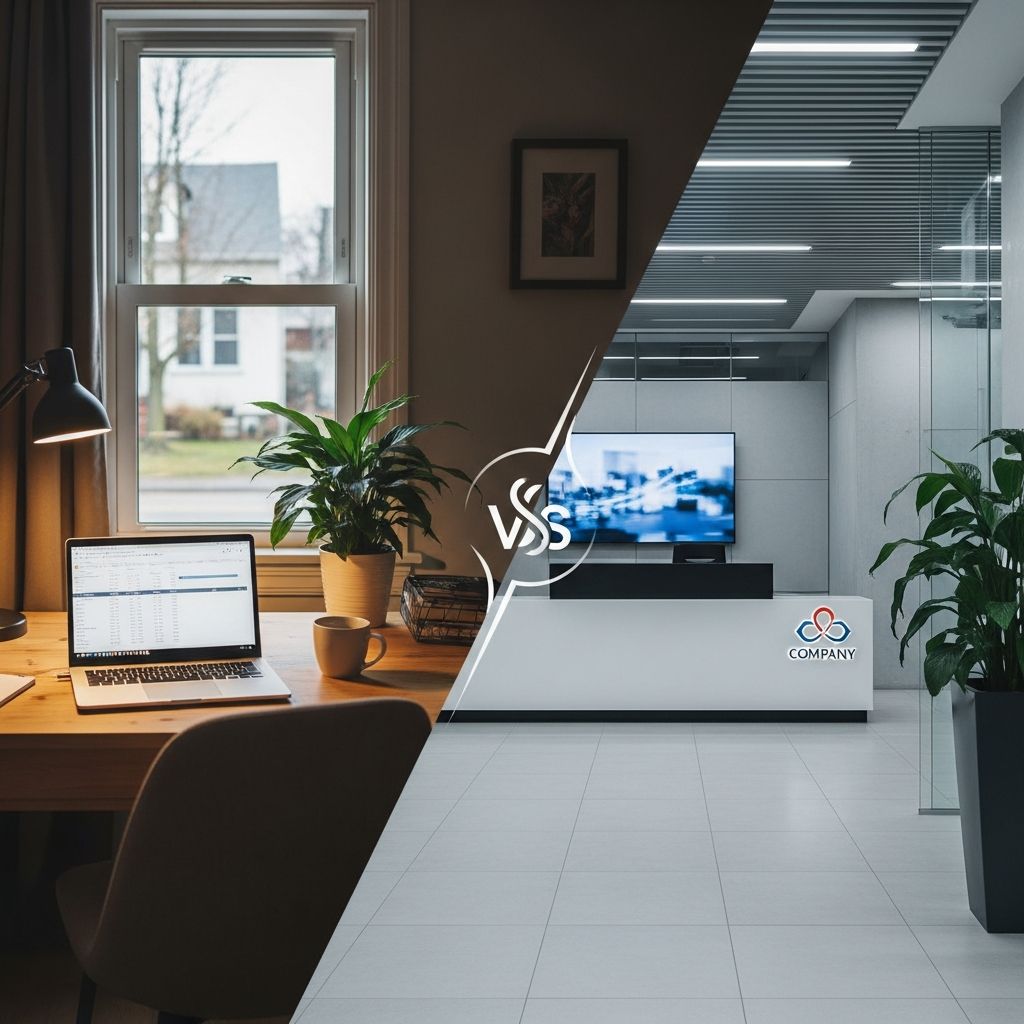
Selecting the right business address is a foundational decision for entrepreneurs, freelancers, and remote teams. A home address offers simplicity and zero extra cost, while a virtual business address delivers professionalism, privacy, and flexibility. This guide breaks down differences, advantages, drawbacks, costs, legal considerations, and practical tips to help you decide.
Understanding Business Address Fundamentals
Every business needs an official address for mail, registrations, banking, and public listings. A home business address uses your residential location, ideal for solo operators with low overhead. In contrast, a virtual business address—provided by commercial mail receiving agencies (CMRAs)—is a real street address at a professional site, handling mail remotely without requiring your physical presence.
Virtual addresses differ from P.O. boxes by offering street addresses (e.g., ‘123 Main St, Suite 200’) acceptable for most official uses, unlike box numbers which banks and states often reject. They support remote management via apps for viewing scans, forwarding, or shredding mail from any carrier.
Advantages of Operating from a Home Address
Using your home keeps things straightforward, especially for bootstrapped ventures.
- Zero additional costs: No subscriptions or fees beyond normal home expenses, freeing budget for growth areas like marketing.
- Ultimate convenience: No commute; work and receive mail where you live, supporting flexible schedules.
- Simple setup: Immediate availability for registrations, taxes, and basic banking without third-party involvement.
For micro-businesses or side hustles with minimal client interaction, this setup suffices without complications.
Drawbacks of Exposing Your Home Address
While cost-free, home addresses carry risks that can hinder scaling.
- Privacy vulnerabilities: Public records like LLC filings expose your residence to anyone, risking unwanted visits or identity theft.
- Unprofessional perception: Residential addresses on websites or cards may signal a ‘hobby’ operation, eroding trust from enterprise clients.
- Regulatory hurdles: Zoning laws, HOAs, or leases often prohibit commercial mail volume or signage, with fines up to thousands.
- Scalability limits: Hard to add team members or expand without a dedicated space.
These issues make home addresses risky for client-facing or growth-oriented businesses.
Why Virtual Business Addresses Excel for Modern Operations
Virtual addresses bridge remote work with professional stature, perfect for digital nomads and startups.
- Enhanced privacy: Shields personal residence from public view, crucial for safety and separation of life spheres.
- Professional image: Prestigious locations (e.g., downtown suites) boost credibility on websites, proposals, and Google Maps.
- Remote mail handling: Apps let you preview scans, forward packages worldwide, accept all carriers—far beyond home or P.O. boxes.
- Added perks: Many include meeting rooms, phone services, or admin support, mimicking a full office.
- Multi-location flexibility: Establish presence in key markets without leases.
Remote teams report higher productivity sans commutes, plus better local SEO from commercial addresses.
Cost Breakdown: Home vs Virtual Options
Home addresses win on price but virtual ones offer ROI through growth enablement. Monthly virtual plans range $40–$200, scaling with features.
| Feature | Home Address | Virtual Address |
|---|---|---|
| Base Cost | $0 | $40–$150/mo |
| Mail Handling | Personal pickup | Scanning + forwarding |
| Privacy | None | Full |
| Professionalism | Low | High |
| Add-ons (Meetings/Phone) | N/A | $20–$50 extra |
| Scalability | Limited | High (multi-locations) |
P.O. boxes cost $20–$50 but lack street addresses and remote features, making virtual superior for compliance. Long-term, virtual saves by avoiding physical office rents ($2,000+/mo).
Legal and Compliance Considerations
Both options work for registered agents, but virtual shines in official uses. States accept CMRA addresses for LLCs/corporations if Form 1583 is filed with USPS. IRS permits them for business taxes (not personal returns). Banks vary—many prefer street addresses over P.O. boxes.
- Home restrictions: Check local zoning; some ban business operations.
- Virtual compliance: Ensures real-street validity, vital for licenses and filings.
Always verify state rules; virtual addresses reduce rejection risks on applications.
Ideal Scenarios for Each Address Type
| Business Type | Best Choice | Reason |
|---|---|---|
| Solo freelancer (low mail) | Home | Cost savings, simplicity |
| Client-facing consultant | Virtual | Professional image, privacy |
| Startup forming LLC | Virtual | Compliance, scalability |
| E-commerce with packages | Virtual | All-carrier handling |
| Remote team expanding | Virtual | Multi-locations, perks |
Freelancers prioritize privacy; e-commerce needs robust logistics.
Step-by-Step: Switching to a Virtual Address
- Research providers: Choose accredited CMRAs with app access and good reviews.
- Sign up and verify: Complete USPS Form 1583 with ID notarization.
- Update records: Notify banks, states, clients; use for new filings.
- Redirect mail: USPS change-of-address to virtual spot.
- Leverage features: Add phone/meetings as needed.
Transition takes 1–2 weeks; test with low-stakes mail first.
Common Pitfalls and Pro Tips
- Avoid P.O. boxes for business: Often invalid for banks/states.
- Check HOA/leases: Home bans can lead to eviction.
- Scale wisely: Start mail-only ($50/mo), upgrade later.
- Boost SEO: Virtual addresses improve local search rankings.
Pro tip: Use virtual for public-facing (website, filings) and home for internal if compliant.
Frequently Asked Questions
Can I use a home address for my LLC?
Yes, most states allow it, but check zoning and privacy risks. Virtual is safer for public filings.
Is a virtual address accepted by banks?
Generally yes, as it’s a real street address via CMRA. Confirm with your bank; provide Form 1583 if asked.
How much does a virtual business address cost?
$40–$200/month, depending on location and services like forwarding or workspaces.
What’s better than a P.O. box for business mail?
Virtual addresses: real streets, remote access, all carriers—ideal for credibility and convenience.
Do virtual addresses help with business growth?
Absolutely—professional image attracts clients, privacy protects owners, flexibility supports expansion.
References
- Home Business Address vs. Virtual Business Address — Anytime Mailbox. 2024-05-15. https://www.anytimemailbox.com/blog/virtual-vs-home-business-address
- P.O. Box vs. Virtual Business Address: Full Comparison — Davinci Virtual. 2024-08-22. https://www.davincivirtual.com/blog/po-box-vs-virtual-business-address
- What’s the Difference Between a Virtual Address and a Physical Address — iPostal1. 2024-03-10. https://ipostal1.com/virtual-address-vs-physical-address.php
- What is the difference between a mailing address and a physical address — Regus. 2024-06-01. https://www.regus.com/en/virtual-offices/virtual-office-plans/what-is-the-difference-between-a-mailing-address-and-a-physical-address
- Home Business Address vs. Virtual Business Address: Which is Right? — Alliance Virtual Offices. 2024-02-28. https://www.alliancevirtualoffices.com/virtual-office-blog/home-business-address-vs-virtual-business-address/
Similar Articles








Read full bio of Sneha Tete


