
Hitchhiking Legality: State-By-State Guide & Safety Tips
Navigate the patchwork of hitchhiking regulations in the U.S.: where it's permitted, prohibited, and everything in between for safe travels.
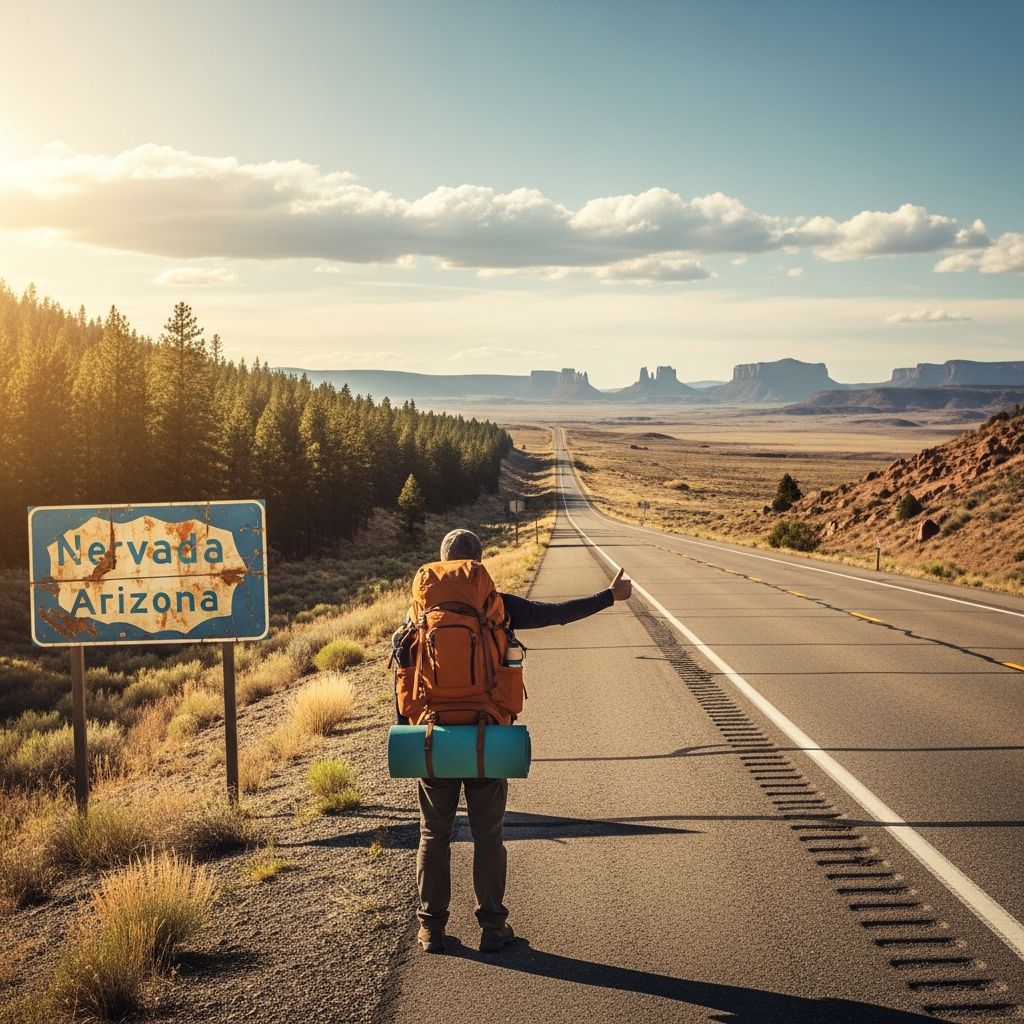
Hitchhiking, the age-old practice of soliciting free rides from passing motorists, remains a viable yet legally nuanced mode of travel in the United States. While no comprehensive federal ban exists outside specific jurisdictions, state laws create a varied landscape where roadside thumbing is often permitted on shoulders but prohibited on traveled roadways. This guide synthesizes current regulations, drawing from official statutes and authoritative analyses to help travelers understand where they can legally stand, the risks for drivers offering rides, and strategies for minimizing encounters with law enforcement.
Understanding Federal and Interstate Constraints
At the national level, hitchhiking faces restrictions primarily under the Code of Federal Regulations, specifically 36 CFR 4.31, which bans soliciting rides on Department of Interior properties like National Parks, Scenic Byways, and Recreation Areas. Park superintendents may grant exceptions, but violations can lead to citations or removal. Interstates present another hurdle: pedestrians are generally barred from these limited-access highways, including on-ramps, though enforcement varies. Standing just beyond “no pedestrians” signs at entry points is a common, de facto tolerated practice despite technical illegality.
The Uniform Vehicle Code, adopted variably by states, defines “roadway” as the traveled portion excluding shoulders, allowing hitchers to position safely off-pavement in many areas. This distinction is pivotal: most prohibitions target standing “in a roadway,” preserving legality on verges.
State Variations: A Nationwide Overview
Hitchhiking legality hinges on state-specific statutes, with common themes prohibiting solicitation from roadways while permitting it from shoulders or adjacent areas. Fully permissive states like South Dakota, Wyoming (post-2013 decriminalization), and Utah stand out, imposing few restrictions. Others enforce nuanced rules, often with fines ranging from $35 to several hundred dollars.
| State | Key Statute Summary | Legality on Shoulder | Typical Penalty |
|---|---|---|---|
| Alabama | No standing in roadway to solicit. | Generally Allowed | Fine |
| Alaska | No distracting solicitation on highway. | Allowed if non-distracting | Fine |
| Connecticut | Infraction on traveled portion; shoulder OK except limited access. | Allowed on shoulder | $35 fine |
| Georgia | No roadway standing. | Allowed | Fine |
| Hawaii | No occupying highway for rides. | County-dependent | Fine |
| Idaho | No highway standing. | Allowed off-roadway | Fine |
| Illinois | No roadway solicitation. | Shoulder permitted | Fine |
| Iowa | No roadway for private vehicles. | Allowed | Fine |
| Maine | Banned on traveled ways, limited access, nighttime. | Limited; emergencies OK | Fine |
| New Hampshire | Lawful off paved portion. | Explicitly Allowed | None specified |
This table highlights patterns in 10 states; similar language prevails elsewhere. Nevada, New Jersey, New York, Pennsylvania, and others mirror “no standing on highway/roadway” rules, creating gray areas for sidewalk or shoulder use.
Strict Prohibition Zones and Recent Changes
Some locales impose blanket bans. Kansas turnpikes prohibit all solicitation and stopping for hitchers. North Carolina outlaws it on interstates and controlled-access roads, extending to drivers halting. Oregon deems any roadway solicitation an offense. Wyoming’s 2013 repeal marked a liberalization trend, reflecting shifting attitudes amid declining practice due to ridesharing apps.
Urban and municipal ordinances add layers: certain towns ban hitchhiking outright, though de facto tolerance persists. California exemplifies controlled-access restrictions beyond interstates.
Implications for Drivers: Picking Up Hitchhikers
Liability extends to motorists. Stopping on roadways or interstates risks tickets for impeding traffic or unsafe parking. In North Carolina, halting for hitchers on controlled highways is explicitly unlawful. Insurance complications arise if incidents occur with picked-up passengers, potentially voiding coverage for non-prearranged riders. Always pull fully off-road in safe, legal spots.
- Verify Legality: Confirm state rules before stopping; use shoulders or designated areas.
- Safety First: Assess hitcher demeanor, travel in daylight, and share trip details.
- Documentation: Note license plates or use apps for virtual check-ins.
Practical Strategies for Legal Hitchhiking
To comply and succeed:
- Choose Spots Wisely: Opt for high-visibility shoulders, rest areas, or on-ramps beyond signs. Avoid medians or bridges.
- Signage Matters: Hold clear, destination-specific signs (e.g., “Going West”) to appear non-threatening.
- Timing and Attire: Daytime travel in clean clothes boosts success rates; avoid nights in restrictive states like Maine.
- Apps as Backup: Platforms like rideshares complement when thumbs fail.
Enforcement is inconsistent—officers may warn, cite, or ignore based on context. Politeness and compliance de-escalate stops.
Safety Protocols for Hitchers and Drivers Alike
Beyond legality, risks loom: media-highlighted 1970s incidents fueled bans, though stats show low violence rates with precautions.
- Trust instincts; decline uneasy vibes.
- Share locations via phone apps.
- Travel light; avoid valuables.
- For groups, split if needed but stay visible.
Women and solo travelers: Buddy systems or women-only ride networks enhance security.
Historical Context and Modern Decline
Once a 1930s Depression staple, hitchhiking peaked post-WWII with car culture, then waned by the 1970s amid fuel crises, safety fears, and ubiquity of vehicles. Today, it’s niche, sustained by budget adventurers despite apps like Uber.
Frequently Asked Questions (FAQs)
Is hitchhiking legal on U.S. interstates?
No, pedestrians are prohibited on interstates, but on-ramps are often tolerated if off-pavement.
Which states fully allow hitchhiking?
South Dakota, Wyoming, Utah, and New Hampshire have permissive laws.
Can drivers get fined for picking up hitchhikers?
Yes, if stopping violates traffic laws, like on roadways or controlled highways.
What’s the fine for illegal hitchhiking?
Varies: $35 in Connecticut, higher elsewhere; often warnings first.
Is hitchhiking safer now than in the 1970s?
With tech tracking, yes, but vigilance remains essential.
Navigating Grey Areas and Future Trends
As electric vehicles and autonomous tech evolve, hitchhiking may integrate with formalized systems. For now, knowledge of “roadway” definitions empowers safe practice. Always prioritize personal security over convenience.
References
- United States of America — Hitchwiki. Accessed 2026. https://hitchwiki.org/en/United_States_of_America
- Is Hitchhiking Legal? — Anthem Injury Lawyers. Accessed 2026. https://www.antheminjurylaw.com/faqs/is-hitchhiking-legal/
- Hitchhiking Is Legal In More States Than You Might Expect — Jalopnik. 2023-10-10. https://www.jalopnik.com/1996210/hitchhiking-illegal-us-states/
- 14 Ways to Safely Hitchhike the United States in 2026 — Nomadic Matt. 2026. https://www.nomadicmatt.com/travel-blogs/hitchhike-across-united-states/
- Hitchhiking Legal States 2026 — World Population Review. 2026. https://worldpopulationreview.com/state-rankings/hitchhiking-legal-states
Similar Articles








Read full bio of Sneha Tete


