
The High Stakes of “Remain in Mexico” at the Supreme Court
Analyzing the human toll, legal battles, and executive power impacts of MPP.
Introduction
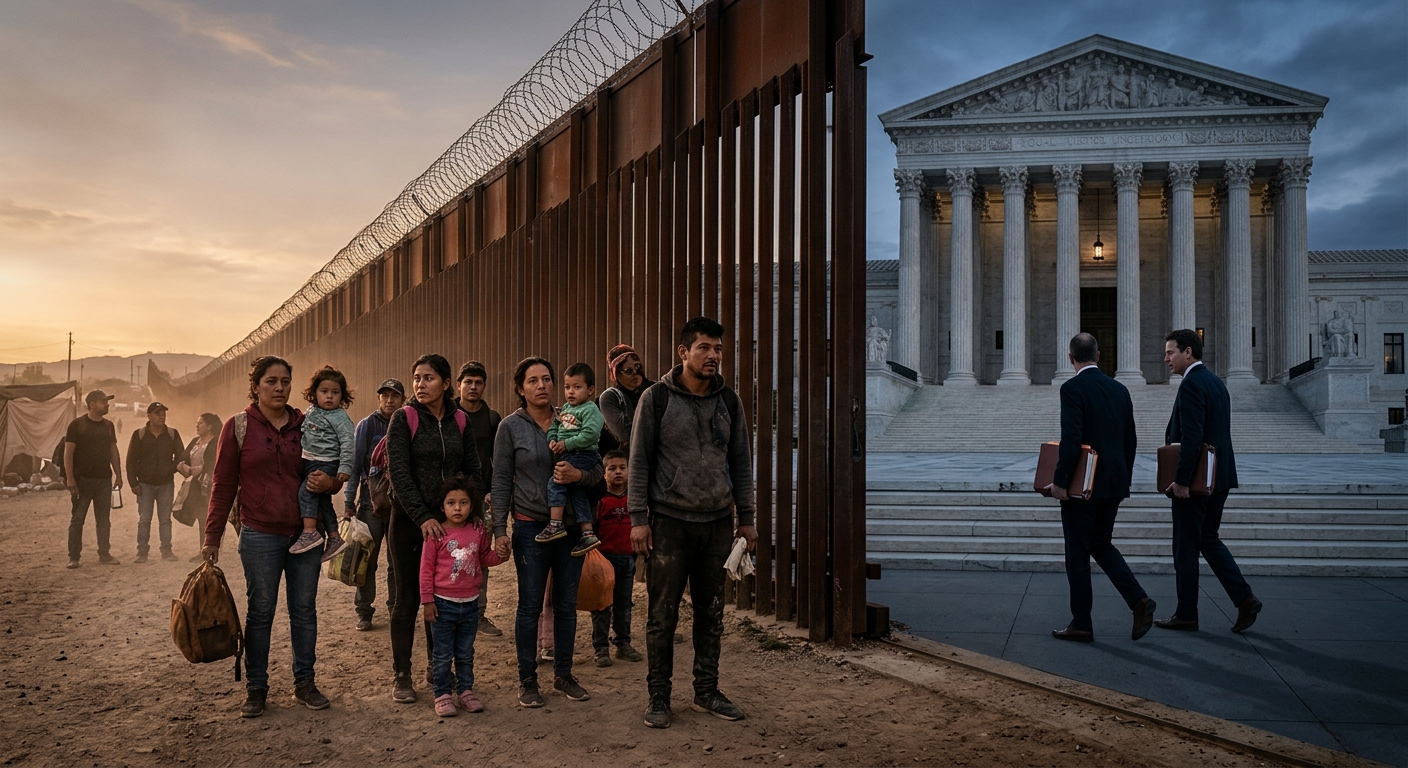
The United States asylum system has been a cornerstone of humanitarian protection for decades, offering a legal pathway for individuals fleeing persecution. However, the system faced one of its most severe and controversial stress tests with the introduction of the Migrant Protection Protocols (MPP), colloquially known as the “Remain in Mexico” policy. This initiative fundamentally altered the processing of asylum seekers at the southern border, igniting fierce legal battles that ultimately reached the highest court in the nation. The Supreme Court case Biden v. Texas became a defining moment for immigration law, executive branch authority, and the fundamental human rights of tens of thousands of migrants. To understand the gravity of this legal showdown, it is essential to trace the origins of the policy, its devastating on-the-ground impacts, and the constitutional friction it caused between state governments and the federal executive branch.
Understanding the Migrant Protection Protocols (MPP)
Announced in December 2018 by the Department of Homeland Security (DHS) under the Trump administration, the Migrant Protection Protocols marked a drastic departure from previous border processing procedures. Officially implemented in January 2019, MPP required certain non-Mexican foreign nationals who arrived at the U.S. southern border seeking asylum to be returned to Mexico to wait for their immigration court hearings .
Historically, asylum seekers who presented themselves at ports of entry or were apprehended between ports were often paroled or detained within the United States pending their hearings. The Trump administration leveraged a rarely utilized provision of the Immigration and Nationality Act (INA)—specifically Section 235(b)(2)(C)—which permits the government to return an alien arriving on land from a contiguous foreign territory back to that territory pending proceedings.
The stated goal of the program was to deter fraudulent asylum claims, reduce the backlog in U.S. immigration courts, and prevent migrants from disappearing into the U.S. interior while their cases were pending. However, the application of this statute on such a massive scale was unprecedented. Under MPP, asylum seekers were handed a Notice to Appear (NTA) for a future court date in the U.S. and immediately escorted back across the border. This structural shift effectively outsourced the housing and immediate care of vulnerable populations to Mexican border cities, completely restructuring the dynamic of asylum processing at the U.S.-Mexico border.
The Human Toll: Dangers Awaiting Asylum Seekers in Mexico
While the policy was framed by its architects as a bureaucratic solution to border management, the reality on the ground manifested as a profound humanitarian crisis. Returning tens of thousands of people to unfamiliar and often dangerous border cities in Northern Mexico exposed them to extreme vulnerabilities.
Human rights organizations extensively documented the perilous conditions faced by those enrolled in MPP . Migrants were systematically targeted by cartels and organized crime groups. Reports of kidnapping for ransom, extortion, sexual assault, and physical violence were widespread. Many asylum seekers found themselves stranded in makeshift encampments lacking basic sanitation, adequate food, or secure shelter, surviving in conditions that exacerbated the trauma they had already fled in their home countries.
Furthermore, the policy severely undermined the fundamental right to due process. Asylum cases are notoriously complex, and securing legal representation is often the determining factor in whether a claim is successful. Under MPP, accessing U.S.-based immigration attorneys while stuck in Mexico was practically impossible for the vast majority of migrants. According to data tracked by various immigration research councils, only a minuscule fraction of those forced into MPP were able to secure legal counsel . Without a lawyer, navigating the labyrinthine U.S. immigration system, gathering necessary evidence, and communicating with the court proved to be insurmountable obstacles for most. The logistical nightmare of presenting oneself at a port of entry at a specific time for a court hearing, sometimes requiring travel through cartel-controlled territory, resulted in high numbers of in absentia removal orders for those who simply could not safely make it to the border on their scheduled dates.
The Complex Legal Journey: From Implementation to Injunction
The legal challenges against MPP began almost immediately after its inception. Various immigrant rights groups and civil liberties organizations filed lawsuits arguing that the policy violated both the Administrative Procedure Act (APA) and the United States’ obligations under international non-refoulement principles (the practice of not forcing refugees to return to a country where they are liable to face persecution).
When President Joe Biden took office in January 2021, his administration immediately suspended new enrollments in the program, keeping a major campaign promise. In June 2021, DHS Secretary Alejandro Mayorkas issued a memorandum officially terminating the Migrant Protection Protocols, citing the policy’s unjustifiable human costs and its failure to effectively manage migration in a humane manner.
However, the states of Texas and Missouri quickly filed a lawsuit, arguing that the termination of MPP violated the APA because the Biden administration had failed to adequately consider the consequences of ending the program, including the potential burden on state resources. Furthermore, the states argued that the INA required the federal government to return migrants to Mexico if they could not be detained within the United States due to limited detention capacity.
A federal district court judge in Texas ruled in favor of the states, issuing a nationwide injunction that mandated the Biden administration to reinstate MPP “in good faith.” The U.S. Court of Appeals for the Fifth Circuit upheld this decision. In response, DHS issued a more comprehensive termination memorandum in October 2021, attempting to address the procedural deficiencies cited by the district court, but the Fifth Circuit again ruled that the administration must continue the program. This set the stage for a dramatic showdown at the Supreme Court.
Inside the Supreme Court Case: Biden v. Texas
The core legal dispute in Biden v. Texas centered on statutory interpretation and the limits of executive power in the realm of immigration and foreign affairs. The Supreme Court heard oral arguments in April 2022, facing two primary questions: First, did Section 1225 of the INA compel the DHS to return asylum seekers to Mexico if there was insufficient detention space in the U.S.? Second, did the October 2021 DHS memorandum constitute a valid final agency action that legally terminated the program?
On June 30, 2022, the Supreme Court delivered a 5-4 decision in favor of the Biden administration, authoring a significant victory for the executive branch’s authority over immigration enforcement . Chief Justice John Roberts, writing for the majority, concluded that the language of the INA was discretionary, not mandatory. The statute states that the government “may” return an alien to a contiguous territory, which the Court interpreted as conferring a choice, rather than imposing a mandate.
The Court thoroughly rejected the lower court’s interpretation that the federal government is legally forced to choose between detaining every single asylum seeker or returning them to Mexico. The majority opinion highlighted that reading the statute as a strict mandate would compel the Executive Branch to continuously engage in complex and delicate diplomatic negotiations with Mexico, as returning foreign nationals requires the consent of the receiving foreign government. The Supreme Court emphasized that the judiciary should not mandate foreign policy decisions or force the hand of the executive branch in international relations .
Additionally, the Court held that the October 29 memorandum issued by Secretary Mayorkas was indeed a final agency action under the APA. The ruling allowed the case to be remanded so the lower courts could review the October memo, but importantly, it lifted the injunction that had forced the resumption of the “Remain in Mexico” policy.
Executive Authority and Foreign Relations Implications
The Biden v. Texas ruling extends far beyond the specific fate of the Migrant Protection Protocols; it serves as a critical reinforcement of presidential authority over border management and foreign diplomacy. By ruling that lower courts cannot force the federal government to implement a policy that explicitly requires the cooperation of a foreign sovereign state, the Supreme Court preserved the traditional separation of powers.
If the Fifth Circuit’s ruling had been allowed to stand, it would have set a precedent allowing state governments to effectively dictate federal immigration and foreign policy through the judicial system. It would have forced the U.S. government to demand that Mexico accept non-Mexican nationals against the Biden administration’s broader diplomatic strategy. The Supreme Court’s decision underscored that the President, not individual states or lower court judges, holds the constitutional prerogative to conduct foreign relations and manage the operational realities of the federal immigration apparatus.
The Aftermath: Where Does the Asylum System Stand Now?
Following the Supreme Court’s decision, the Biden administration moved to officially end the reimplementation of MPP. DHS announced that individuals would no longer be newly enrolled in the program and that those currently in Mexico under MPP would be disenrolled when they returned for their scheduled court dates.
While the legal termination of “Remain in Mexico” was widely celebrated by immigrant rights advocates, the challenges surrounding the U.S. asylum system persist. The border continues to see high numbers of encounters, and the federal government has implemented new, alternative mechanisms for border enforcement and asylum processing. Policies such as the use of mobile applications for scheduling asylum appointments and the introduction of new rules restricting asylum eligibility for those who cross unlawfully have drawn their own waves of criticism and litigation.
The legacy of MPP remains a stark reminder of the fragile nature of asylum rights and the severe human consequences of restrictive border policies. The thousands of individuals who suffered under the program represent a dark chapter in U.S. immigration history. Although Biden v. Texas resolved the immediate legal mandate of MPP, the broader debate over how the United States should treat those arriving at its borders in search of safety remains one of the most polarizing and complex issues in American politics.
Frequently Asked Questions (FAQs)
- What was the “Remain in Mexico” policy?
The Migrant Protection Protocols (MPP), or “Remain in Mexico,” was a policy initiated in 2019 that required certain non-Mexican asylum seekers arriving at the U.S. southern border to stay in Mexico while their immigration cases were processed in U.S. courts. - Why was MPP so controversial?
The policy was highly criticized because it forced vulnerable individuals into dangerous Mexican border cities where they faced high rates of kidnapping, extortion, and assault. It also made it exceptionally difficult for asylum seekers to secure U.S. legal representation, effectively denying them due process. - What did the Supreme Court decide in Biden v. Texas?
In a 5-4 decision in June 2022, the Supreme Court ruled that the Biden administration had the legal authority to terminate MPP. The Court determined that federal immigration law gives the government the discretion, but not the obligation, to return asylum seekers to Mexico . - Does ending MPP solve the border crisis?
No. While ending MPP removed a policy that caused severe humanitarian harm, the U.S. asylum system remains heavily backlogged, and border management continues to be a major logistical and political challenge requiring comprehensive legislative reform. - Can a future president reinstate MPP?
Because the Supreme Court ruled that returning migrants to Mexico is a discretionary power of the executive branch under the INA, a future presidential administration could theoretically attempt to reinstate a similar program, provided they comply with the Administrative Procedure Act and secure Mexico’s diplomatic cooperation.
References
- Biden v. Texas, 597 U.S. 785 — Supreme Court of the United States. 2022-06-30. https://www.supremecourt.gov/opinions/21pdf/21-954_7l48.pdf
- The “Migrant Protection Protocols”: an Explanation of the Remain in Mexico Program — American Immigration Council. 2024-02-26. https://www.americanimmigrationcouncil.org/research/migrant-protection-protocols
- ‘Remain in Mexico’ Overview and Resources — Human Rights Watch. 2022-02-07. https://www.hrw.org/news/2022/02/07/remain-mexico-overview-and-resources
Similar Articles








Read full bio of medha deb


