
The Hidden Power of Down-Ballot Elections
Discover how local elections shape your civil liberties and daily life.
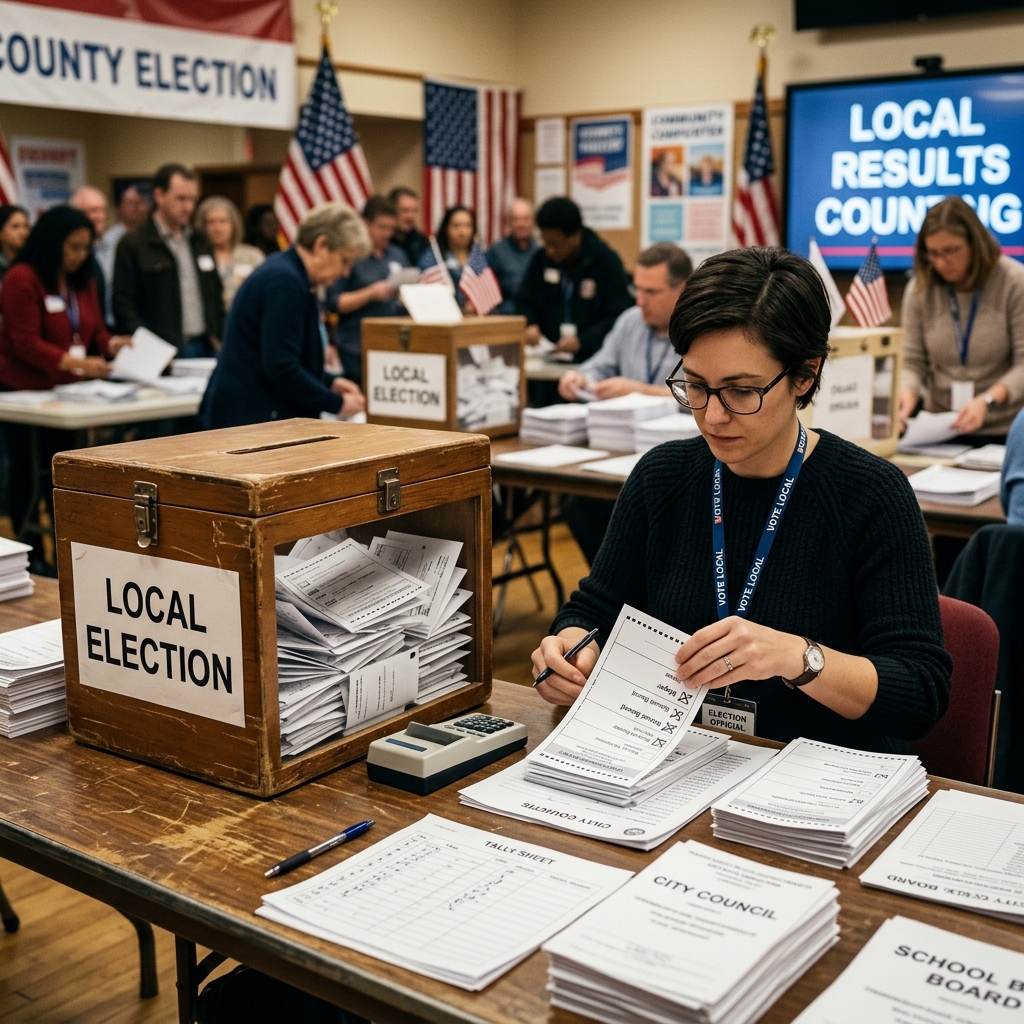
Every major election cycle, the collective gaze of the American public inevitably turns toward the top of the ticket. Presidential candidates and congressional showdowns dominate the airwaves, consuming billions of dollars in campaign spending and monopolizing the political discourse. However, beneath the noise of federal campaigns lies a quieter, yet arguably more consequential, domain of American democracy: local and state elections. While federal races dictate national policy and international relations, it is the down-ballot races that forge the immediate reality of our daily lives.
From the curriculum taught in neighborhood schools to the policing tactics deployed on city streets, local officials possess extraordinary power over the civil liberties of their constituents. The individuals occupying these oft-overlooked offices—state legislators, district attorneys, sheriffs, school board members, and state supreme court justices—are the primary architects of community standards. They determine whether marginalized groups are protected or persecuted, whether justice systems prioritize rehabilitation or mass incarceration, and whether democratic processes like voting remain accessible to all.
Despite their immense influence, these lower-profile contests frequently suffer from a severe lack of voter participation. Many citizens remain unaware of the profound impact that local governance has on fundamental human rights. By examining the specific roles of these down-ballot offices, we can better understand why prioritizing local elections is not merely a civic duty, but a vital strategy for safeguarding civil liberties and shaping a more equitable society.
The Phenomenon of Ballot Roll-Off
To comprehend the neglected power of local elections, one must first understand a pervasive electoral trend known as “ballot roll-off.” This phenomenon occurs when voters cast their choices for high-profile offices at the top of the ballot—such as President or Governor—but leave the remaining sections blank. Driven by voter fatigue, confusing ballot designs, or simply a lack of information regarding local candidates, ballot roll-off results in a drastically reduced electorate deciding the fate of critical local institutions.
According to analyses by the Brookings Institution, down-ballot races for state legislatures, governorships, and state supreme courts are historically susceptible to low voter engagement, which paradoxically increases their vulnerability to election subversion and partisan manipulation. When a significant portion of the electorate disengages from these races, a highly motivated and often ideologically extreme minority can easily dictate the outcome. This dynamic allows well-organized special interest groups to install candidates who may not reflect the broader values of the community.
The consequences of this selective voting are profound. When citizens ignore the lower half of their ballot, they inadvertently surrender their voice on issues that directly impact their day-to-day existence. Overcoming ballot roll-off requires comprehensive voter education and a fundamental shift in how we perceive political power. Recognizing that real, tangible change often originates from the bottom up is the first step toward reclaiming agency over local civil liberties.
State Legislatures: The True Architects of Daily Life
While the United States Congress frequently commands the spotlight, the reality of modern American politics is that federal gridlock has largely shifted the burden of policymaking to state legislatures. These legislative bodies are the engines of domestic policy, wielding the authority to draft, debate, and enact laws that govern nearly every facet of civilian life. Their influence over civil rights is absolute; they are the gatekeepers of democratic participation and personal autonomy.
One of the most consequential powers held by state legislatures is the authority to draw electoral maps. Following the decennial census, state lawmakers engage in redistricting, a process that is frequently manipulated through gerrymandering to dilute the voting power of minority communities and entrench partisan dominance. Furthermore, state legislatures dictate election laws, establishing the rules surrounding voter identification requirements, early voting windows, and mail-in ballot accessibility. Through these mechanisms, lawmakers can either expand the franchise to encourage democratic participation or construct deliberate barriers to disenfranchise vulnerable populations.
Beyond electoral mechanics, state legislatures are the primary battlegrounds for reproductive rights, civil protections, and environmental regulations. In recent years, state assemblies have passed sweeping legislation that directly impacts the bodily autonomy of millions, either by codifying reproductive freedoms or enacting stringent bans. By electing state representatives who champion civil liberties, voters can ensure that their state serves as a bulwark against federal overreach and a sanctuary for fundamental human rights.
County Justice: The Reach of Prosecutors and Sheriffs
The American criminal justice system is heavily decentralized, with the vast majority of law enforcement and prosecutorial decisions occurring at the county level. The officials who helm these local systems—district attorneys and county sheriffs—exercise an astonishing degree of discretionary power, making their elections some of the most critical contests for civil rights advocates.
Elected prosecutors are arguably the most powerful figures in the legal system. They possess the unilateral authority to decide whether to bring criminal charges, what specific charges to file, and whether to negotiate plea deals. This discretion allows them to shape the penal landscape of their jurisdictions. A reform-minded prosecutor can choose to decline charges for low-level, non-violent offenses, thereby mitigating the devastating effects of the school-to-prison pipeline. Conversely, overly punitive prosecutors can prioritize maximum sentencing and cash bail, policies that disproportionately target low-income communities and communities of color. Research highlighted by Harvard University experts underscores that the political incentives of local prosecutor elections have historically been a significant driver of mass incarceration in the United States.
Similarly, county sheriffs hold massive sway over local law enforcement and detention facilities. Unlike appointed police chiefs who report to a mayor or city council, sheriffs are directly elected by the public, affording them a unique level of autonomy. They oversee the administration of county jails, establishing policies regarding inmate treatment, healthcare access, and solitary confinement. Furthermore, sheriffs determine the extent to which their departments will cooperate with federal immigration enforcement agencies.
Local law enforcement officials impact civil liberties by:
- Determining the enforcement of low-level drug offenses and setting bail recommendations.
- Managing county jail conditions and establishing protocols for rehabilitation.
- Deciding the level of cooperation with federal immigration agencies, which deeply affects community trust.
- Implementing pre-trial diversion programs aimed at mental health support rather than incarceration.
State Supreme Courts: The Final Arbiters of Justice
As federal courts increasingly defer to state law on matters of civil liberties, the importance of state supreme courts has skyrocketed. These judicial bodies serve as the final arbiters of state constitutions, which often contain broader protections for individual rights than the United States Constitution. Consequently, state supreme court justices hold the power to uphold or strike down controversial legislation, making their ideological leanings a matter of intense public interest.
The Brennan Center for Justice notes that state supreme court elections have become highly competitive and heavily funded, reflecting their critical role in the modern political ecosystem. These courts are tasked with adjudicating high-stakes disputes over partisan gerrymandering, the legality of restrictive voting laws, and the enforcement of personal autonomies. When a state legislature passes a law that infringes upon civil liberties, the state supreme court represents the ultimate safeguard for the citizenry.
Because many states elect their supreme court justices—either through partisan elections, non-partisan contests, or retention votes—citizens have a direct mechanism to influence the judicial philosophy of their highest state court. An informed electorate can ensure that the bench is occupied by jurists who are committed to equitable justice and the protection of constitutional rights.
The School Board Battleground: Education and Civil Rights
Historically viewed as non-partisan, administrative entities focused on budget approvals and facility maintenance, local school boards have recently transformed into intense ideological battlegrounds. The individuals elected to these boards now find themselves at the center of national culture wars, tasked with navigating complex debates over curricula, library materials, and the civil rights of marginalized students.
School boards dictate educational standards and approve the curricula taught in classrooms. This authority has become highly contentious as debates over the teaching of history, systemic racism, and human identity have polarized communities. The Pew Research Center has documented the deep divisions among the American public regarding how schools should address sensitive socio-cultural topics. Consequently, school board elections directly determine whether a district will adopt inclusive educational frameworks that reflect diverse histories or implement restrictive policies that silence marginalized voices.
The push for book bans and the censorship of educational materials have profound First Amendment implications. When school boards capitulate to demands to remove specific literature or restrict discussions of racial inequality, they deny students access to a comprehensive and constitutionally protected education. Furthermore, these culturally divisive conflicts carry substantial financial and administrative burdens. According to a late 2024 analysis reported by Chalkbeat, school districts nationwide spent an estimated $3.2 billion in a single year responding to heightened conflicts, including costs associated with legal fees, security, and staff turnover.
Summary of Local Electoral Power
To fully grasp the magnitude of these offices, it is helpful to categorize their direct influence over daily life and civil liberties.
| Elected Office | Primary Impact on Civil Liberties |
|---|---|
| State Legislators | Drafting laws on voting access, healthcare rights, and drawing electoral district maps. |
| District Attorneys | Deciding criminal charges, plea deals, and shaping local mass incarceration trends. |
| County Sheriffs | Overseeing jail conditions, eviction enforcement, and immigration cooperation. |
| School Board Members | Setting curriculum standards, managing book challenges, and protecting marginalized students. |
| State Supreme Court Justices | Serving as the final arbiters on state constitutional rights and gerrymandering disputes. |
Why Every Vote Matters
The health of a democracy is not measured solely by the turnout in presidential elections, but by the sustained engagement of its citizens at every level of governance. Down-ballot races offer voters an unparalleled opportunity to effect direct, measurable change within their communities. By researching local candidates and understanding the specific powers of obscure offices, individuals can actively participate in the defense of civil liberties.
Progress is rarely achieved through sweeping federal mandates alone; it is meticulously built, precinct by precinct, by local officials who are accountable to the people they serve. Whether it involves electing a sheriff who prioritizes rehabilitation, a school board member who champions intellectual freedom, or a state legislator who protects voting access, every vote cast in a local election is a vital stroke in painting the broader picture of American justice. Neglecting the lower half of the ballot means abandoning the very levers of power that control our most immediate rights.
Frequently Asked Questions
What is ballot roll-off?
Ballot roll-off is the tendency for voters to complete the top sections of their election ballots—such as voting for President or Governor—while leaving the lower sections, which feature local and municipal races, completely blank. This often happens due to voter fatigue or a lack of knowledge about local candidates.
How do local prosecutors influence mass incarceration?
Elected prosecutors have immense discretion in the criminal justice system. They independently decide whether to file criminal charges, what severity of charges to pursue, and whether to offer plea deals or pre-trial diversion programs. Their internal office policies directly affect incarceration rates and can either exacerbate or alleviate racial disparities in the justice system.
Why are state supreme court elections suddenly so prominent?
As federal courts increasingly rule that major legal disputes over gerrymandering and reproductive rights should be decided by individual states, state supreme courts have become the final authority on these critical civil liberties. Consequently, political groups are investing heavily in these races to influence state-level legal interpretations.
What role do school boards play in protecting civil rights?
School boards establish district policies regarding curricula, library book selections, and student protections. They determine whether a school environment is inclusive for all students and whether educational materials accurately reflect diverse histories, directly impacting the First Amendment rights and overall well-being of the student body.
References
- US down-ballot races in 2025 deserve close attention — Brookings Institution. 2025-04-30. https://www.brookings.edu/articles/us-down-ballot-races-in-2025-deserve-close-attention/
- Race and LGBTQ Issues in K-12 Schools — Pew Research Center. 2024-02-22. https://www.pewresearch.org/social-trends/2024/02/22/race-and-lgbtq-issues-in-k-12-schools/
- State Supreme Court Elections to Watch in 2024 — Brennan Center for Justice. 2024-03-08. https://www.brennancenter.org/our-work/research-reports/state-supreme-court-elections-watch-2024
- New research puts a cost on school board conflict: $3.2 billion last year alone — Chalkbeat. 2024-10-22. https://www.chalkbeat.org/2024/10/22/new-research-puts-a-cost-on-school-board-conflict-3-2-billion-last-year-alone/
- Looking at role of prosecutors, politics in mass incarceration — Harvard University. 2021-12-08. https://news.harvard.edu/gazette/story/2021/12/looking-at-role-of-prosecutors-politics-in-mass-incarceration/ (Included for unique authoritative data on historical prosecutorial election impacts on incarceration).
Similar Articles








Read full bio of Sneha Tete


