
The Hidden Penalty of Seeking Help: How Nuisance Ordinances Endanger Renters
Crime-free housing policies force vulnerable tenants into an impossible choice: tolerate abuse or face eviction.
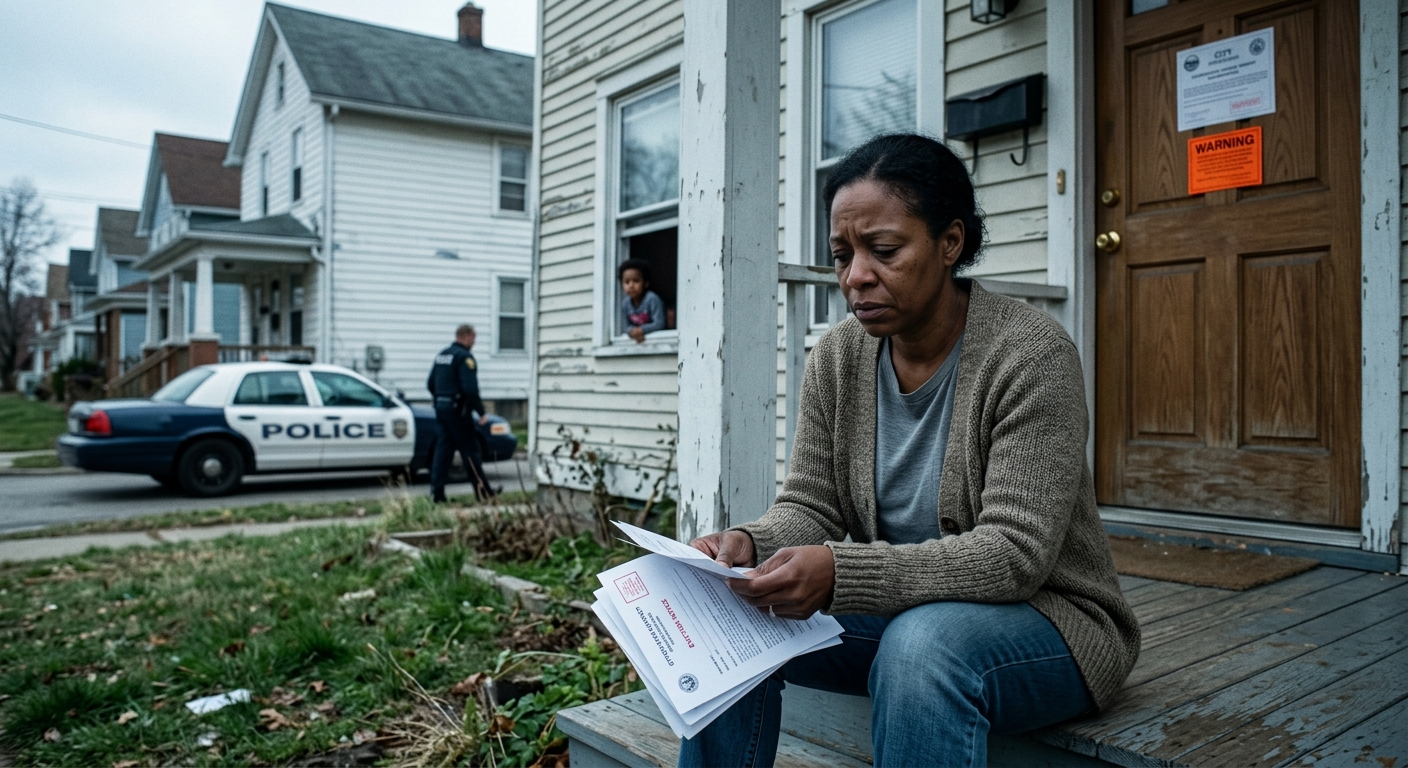
In an emergency, the most instinctual reaction for anyone in danger is to pick up the phone and dial 911. It is a universal lifeline, a fundamental civic service designed to protect lives, maintain public order, and dispatch urgent medical care. Yet, for thousands of renters across the United States, utilizing this essential service carries a devastating and hidden penalty: the loss of their home. Through municipal policies commonly known as ‘nuisance ordinances’ or ‘crime-free housing programs,’ local governments have increasingly incentivized or legally compelled landlords to evict tenants who make frequent calls for police or emergency medical assistance.
While these laws are ostensibly drafted to preserve neighborhood tranquility, reduce crime, and alleviate the operational burden on local law enforcement, they inherently punish the most vulnerable members of society. By penalizing the act of seeking help, nuisance ordinances force residents into an impossible dilemma: endure severe abuse, medical emergencies, or criminal activity in silence, or reach out for life-saving assistance and face imminent homelessness. This dynamic not only undermines public safety but also actively violates fundamental civil rights, disproportionately impacting survivors of domestic violence, individuals with disabilities, and communities of color.
Deconstructing Nuisance and Crime-Free Ordinances
To understand how emergency calls lead to eviction, one must examine the operational mechanics of nuisance ordinances at the municipal level. These local laws dictate that a property becomes a ‘nuisance’ if a specified number of emergency calls, police visits, or alleged criminal incidents occur at the address within a certain timeframe. In many jurisdictions, this threshold is shockingly low—sometimes as few as two or three 911 calls within a six-month period.
When a property crosses this arbitrary threshold, the municipality typically sends a formal warning or citation to the landlord. To avoid severe penalties, which can include exorbitant daily fines, the suspension or revocation of their residential rental license, or even criminal prosecution, the landlord is pressured to ‘abate’ the nuisance. In the context of residential housing, abatement almost universally translates to initiating eviction proceedings against the tenant associated with the emergency calls.
Crucially, many of these ordinances do not require a criminal conviction, or even an arrest, to trigger a nuisance designation. The mere occurrence of police responding to the property is deemed sufficient evidence of a disturbance. This policy framework effectively deputizes landlords, forcing them to act as law enforcement agents and judges over their tenants’ right to remain housed, while casting a wide net that captures both perpetrators and victims alike.
Types of Emergency Calls Misclassified as Nuisances
| Call Type | Typical Emergency Context | How Ordinances Misclassify It |
|---|---|---|
| Domestic Disturbance | A victim calling to report physical abuse, threats, or a violated protective order. | Treated as a ‘disorderly conduct’ violation that disrupts the neighborhood. |
| Medical Emergency | Repeated ambulance dispatches for chronic illness, overdoses, or acute mental health crises. | Categorized as an excessive drain on municipal emergency resources. |
| Property Crime | A tenant reports a burglary, vandalism, or theft at their own residence. | The tenant is blamed for ‘attracting’ criminal activity to the property. |
| Noise Complaint | Neighbors reporting loud arguments, crying children, or general noise. | Used as unverified evidence of an ‘unruly’ household without formal investigation. |
The Disproportionate Toll on Domestic Violence Survivors
The intersection of nuisance ordinances and intimate partner violence (IPV) represents one of the most severe public health and housing crises generated by these policies. According to the Centers for Disease Control and Prevention (CDC), IPV is a widespread issue that affects millions of individuals annually. The CDC’s 2023/2024 National Intimate Partner and Sexual Violence Survey (NISVS) data brief highlights the staggering rates of IPV in the United States, emphasizing that millions of women and men experience contact sexual violence, physical violence, or stalking by an intimate partner each year .
For survivors of IPV, the ability to safely call 911 is often the only immediate barrier between life and death. However, when a municipality enforces a strict crime-free housing policy, the survivor’s desperate cry for help is bureaucratically transformed into a lease violation. Landlords, fearful of municipal sanctions, issue eviction notices to the household, effectively penalizing the survivor for the violence committed against them by their abuser.
This creates an unimaginable trap for victims of domestic abuse. They are forced to calculate whether the immediate, physical threat of their abuser outweighs the long-term, systemic devastation of being evicted, losing their housing voucher, and acquiring an eviction record that will practically guarantee future homelessness. Consequently, these ordinances have a profound and measurable chilling effect on crime reporting, driving abuse deeper into the shadows.
Furthermore, abusers frequently weaponize nuisance ordinances as an instrument of psychological and coercive control. An abuser may explicitly threaten to create a loud disturbance or remind the victim that calling the police will result in the entire family being thrown out onto the street. By essentially turning the local police force into an extension of the abuser’s power, municipalities inadvertently foster environments where violence can continue unchecked and unpunished.
The Psychological Impact of Surveillance and Coercion
Living under a strict crime-free housing ordinance imposes a heavy psychological burden on tenants. Beyond the immediate legal and financial threats, the constant fear of eviction breeds a deeply stressful, surveilled existence. For a domestic violence survivor, the home is already a compromised environment where safety is precarious. When the local government mandates that emergency calls could lead to homelessness, the home transforms from a sanctuary into a site of state-sponsored entrapment.
This dynamic fosters a pervasive sense of isolation and helplessness. Mental health professionals note that the inability to call for help significantly exacerbates trauma, leading to heightened rates of anxiety, depression, and post-traumatic stress disorder (PTSD). Victims internalize the message that their safety is a burden to the community and that they are entirely alone in managing their crises.
Federal Fair Housing and Civil Rights Violations
Because domestic violence survivors are overwhelmingly women, policies that penalize households for domestic violence-related police calls have a starkly disparate impact based on sex. This statistical reality places nuisance ordinances directly in the crosshairs of federal civil rights laws, most notably the Fair Housing Act (FHA), which strictly prohibits discrimination in housing based on race, color, national origin, religion, sex, familial status, and disability.
Recognizing this systemic inequality, federal agencies have taken an increasingly firm stance against the enforcement of discriminatory crime-free programs. In September 2016, the U.S. Department of Housing and Urban Development (HUD) issued formal guidance explicitly warning municipalities that nuisance ordinances could violate the FHA if they disproportionately harm protected classes, particularly female survivors of domestic violence . The HUD guidance established that local governments cannot rely on the enforcement of these codes if they result in unjustifiable discriminatory effects, nor can they rely upon harmful stereotypes about persons engaging in nuisance activities.
More recently, the momentum against these policies has grown within the highest levels of federal law enforcement. In August 2024, the U.S. Department of Justice (DOJ) issued a stark warning letter to state and local law enforcement and government agencies, advising that ‘crime-free’ and ‘nuisance’ policies that unfairly penalize survivors of intimate partner violence, communities of color, or people with disabilities violate federal fair housing protections . The DOJ underscored that blanket housing restrictions based solely on police contact or alleged nuisances are legally unacceptable when they force survivors to choose between emergency services and housing stability.
Expanding the Scope: Race and Disability Discrimination
While the impact on domestic violence survivors is profound, the discriminatory reach of nuisance ordinances extends deeply into marginalized communities, including people of color and individuals with disabilities, further violating federal civil rights.
- Racial Bias and Over-Policing: Statistical analyses of municipal data frequently reveal that properties in Black and Hispanic neighborhoods are cited as nuisances at disproportionately higher rates than those in predominantly white neighborhoods. Because enforcement relies heavily on police contact, the inherent biases within policing and neighborhood surveillance directly translate into housing displacement. A minor noise complaint or a dispute that might be resolved privately in a wealthy suburb often results in a police dispatch—and a subsequent nuisance citation—in a heavily policed community of color.
- Disability and Medical Needs: Individuals with chronic illnesses, severe mental health conditions, or intellectual disabilities may require frequent interventions from paramedics, social workers, or crisis response teams. Nuisance ordinances rarely differentiate between a call for a heart attack, a mental health breakdown, or a criminal act. By classifying excessive emergency medical dispatches as a ‘nuisance,’ local governments actively penalize residents for having a disability, which stands in direct violation of the Americans with Disabilities Act (ADA) and the Fair Housing Act.
The Path Forward: Legal Pushback and Legislative Reform
The glaring unconstitutionality and discriminatory impact of these ordinances have sparked a wave of legal pushback and legislative reform across the country. Civil rights organizations and housing advocates are actively dismantling these laws through targeted litigation, representing tenants who were unlawfully evicted merely for seeking police protection.
When municipalities are sued over these ordinances, they frequently face significant financial liability and are forced to enter into federal consent decrees. These legally binding agreements typically require the city to completely repeal the offending ordinance, revise their police operating procedures, and implement comprehensive training on fair housing rights and domestic violence response protocols.
At the legislative level, several states have proactively stepped in to shield tenants from these punitive local laws. State legislatures are increasingly passing ‘right to call 911’ bills. These state statutes explicitly prohibit landlords and municipalities from penalizing a tenant, restricting their lease, or initiating an eviction based on legitimate requests for police or emergency medical assistance.
For housing providers and property managers, the regulatory landscape is rapidly shifting. It is becoming a legal necessity to ensure that property management practices do not blindly adhere to local crime-free ordinances at the expense of federal civil rights compliance. Landlords are increasingly encouraged to adopt independent, evidence-based methods for ensuring property safety that do not rely on raw, contextless 911 call data.
Conclusion
The fundamental premise of any functional community relies on the mutual trust between its residents and its emergency responders. Nuisance ordinances and crime-free housing policies shatter that foundational trust by turning the simple, often desperate act of dialing 911 into a catalyst for eviction and homelessness. As federal agencies like the DOJ and HUD clarify the legal boundaries, and as state legislatures move to protect vulnerable tenants, the message from the civil rights community is becoming undeniable: safety and shelter are inextricably linked. No one should ever have to wager their home for their life, and the eradication of punitive nuisance ordinances is a necessary step toward equitable, secure housing for all citizens.
Frequently Asked Questions (FAQs)
What exactly is a ‘nuisance ordinance’ in housing?
A nuisance ordinance is a local municipal law that designates a property as a ‘nuisance’ if there is a certain volume of police or emergency service calls to that address within a specific timeframe. These ordinances often force landlords to evict the tenants associated with the calls or face severe fines, criminal charges, and the loss of their rental licenses.
Can my landlord legally evict me just for calling 911?
Under strict local nuisance ordinances, landlords are pressured to do exactly that. However, federal laws, including the Fair Housing Act, and growing state-level protections prohibit evictions that disproportionately impact domestic violence survivors or people with disabilities. Evicting someone for seeking emergency help often violates federal civil rights laws.
How do these policies affect domestic violence survivors?
These policies are particularly harmful to domestic violence survivors because they frequently need to call law enforcement for physical protection. If calling 911 triggers a nuisance citation, survivors are forced into an impossible choice: endure the abuse in silence or call the police and risk becoming homeless.
Are crime-free and nuisance ordinances legal?
Their legality is heavily contested and increasingly struck down in court. The U.S. Department of Justice and the Department of Housing and Urban Development have issued guidance stating that enforcing these ordinances can violate federal civil rights and fair housing laws if they discriminate against protected classes, such as women, people of color, and individuals with disabilities.
What should I do if I am facing eviction solely for calling the police?
If you are threatened with eviction due to utilizing emergency services, you should immediately contact a local legal aid organization, a fair housing center, or a tenant advocacy group. You likely have strong protections under federal and state civil rights laws that can halt the eviction.
References
- Office of General Counsel Guidance on Application of Fair Housing Act Standards to the Enforcement of Local Nuisance and Crime-Free Housing Ordinances — U.S. Department of Housing and Urban Development (HUD). 2016-09-13. https://www.hud.gov/sites/documents/FINALNUISANCEORDGDNCE.PDF
- DOJ Issues Letter to State and Local Law Enforcement Agencies Suggesting “Crime-Free” or “Nuisance” Policies May Violate Federal Fair Housing Laws — U.S. Department of Justice. 2024-08-15. https://nlihc.org/resource/doj-issues-letter-state-and-local-law-enforcement-agencies-suggesting-crime-free-or
- 2023/2024 Intimate Partner Violence Data Brief — Centers for Disease Control and Prevention (CDC). 2026-02-11. https://www.cdc.gov/violenceprevention/pdf/nisvs/nisvs-ipv-databrief-2023-2024-508.pdf
Similar Articles








Read full bio of medha deb


