
The Hidden Expansion of the US Carceral System
Uncovering the hidden realities behind community corrections.
Beyond the Walls: The Illusion of Decarceration
When discussing the American criminal justice system, the conversation almost inevitably gravitates toward towering concrete walls, barbed wire, and overcrowded cell blocks. The United States holds the grim title of incarcerating a larger share of its population than any other nation. In response to mounting public pressure, human rights campaigns, and strained state budgets, a bipartisan consensus has emerged in recent decades: the necessity of decarceration. Consequently, policymakers have enthusiastically embraced “alternatives to incarceration.”
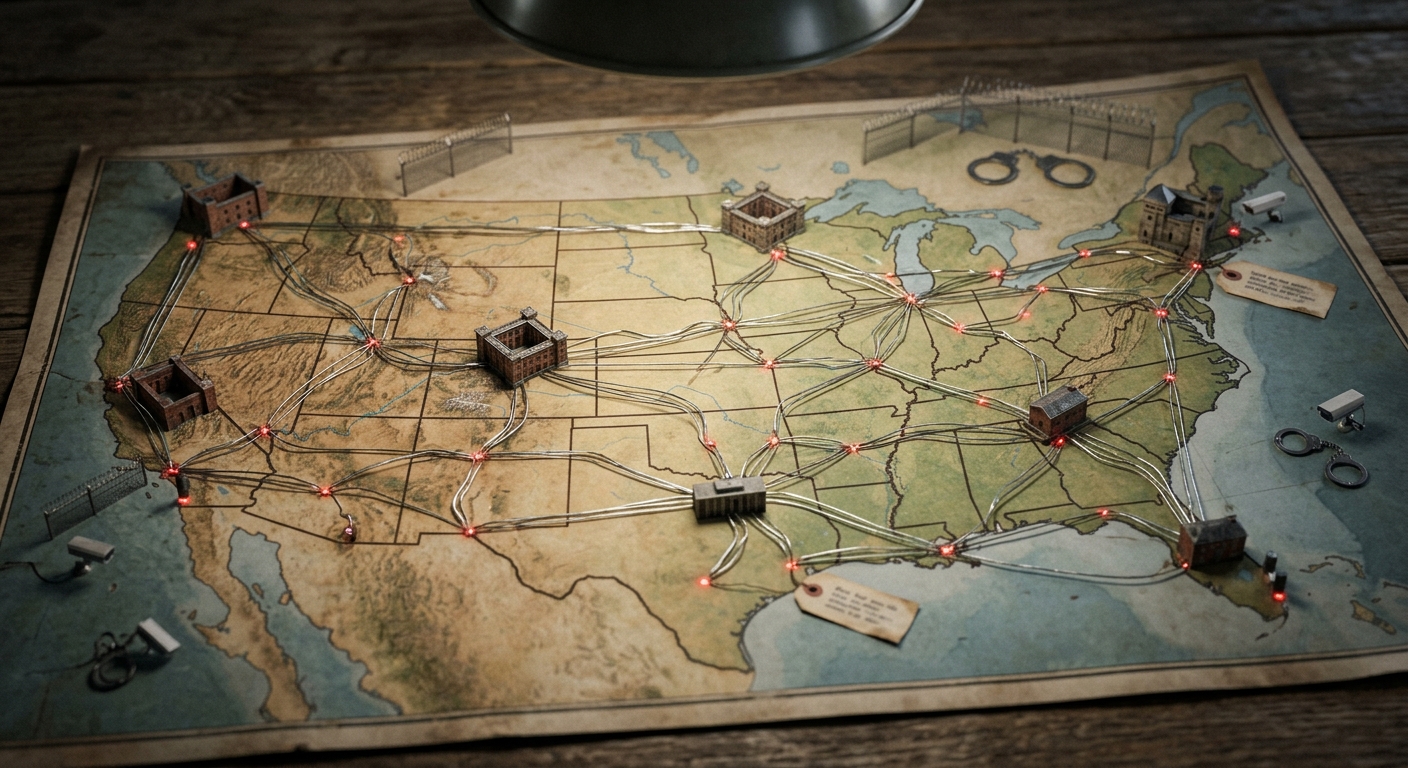
These initiativesranging from residential reentry centers to GPS ankle monitorsare frequently marketed as humane, cost-effective off-ramps from the traditional prison system. However, a deeper examination reveals a more troubling reality. Rather than dismantling the infrastructure of mass incarceration, many of these alternatives have simply decentralized it. By moving the mechanisms of control out of traditional cell blocks and into neighborhoods, the state has covertly expanded its surveillance apparatus. This phenomenon transforms community spaces into invisible extensions of the penitentiary, raising urgent questions about whether we are truly reducing the prison population or merely changing the address of confinement.
The Metamorphosis of the Halfway House
To understand the current landscape of community corrections, one must examine the historical evolution of transitional housing. In the mid-twentieth century, early iterations of transitional facilities were largely spearheaded by religious organizations, community activists, and philanthropic groups. Their primary objective was genuine reintegration: providing individuals returning from prison with a stable, familial environment, temporary lodging, and assistance in securing employment. These grassroots environments were fundamentally designed to operate outside the penal system, focusing on care rather than control.
However, the political climate of the 1960s and 1970s radically altered this trajectory. As the federal government began to funnel massive amounts of funding into law enforcement and crime control, the underlying philosophy of the halfway house was co-opted. Grassroots shelters morphed into formalized, state-contracted institutions. Today, the Federal Bureau of Prisons relies heavily on what it officially designates as Residential Reentry Centers (RRCs). Despite the clinical and supportive terminology, modern RRCs often function as medium-security carceral outposts.
Residents of contemporary halfway houses are subjected to intense scrutiny. They must adhere to rigid curfews, endure random drug testing, and navigate a labyrinth of bureaucratic rules. Movement is strictly regulated through highly restrictive pass systems. The physical architecture of these facilities often mirrors traditional lockups, complete with security checkpoints, shared dormitories, and surveillance cameras. Crucially, infractions that would be considered minor inconveniences in everyday lifesuch as returning a few minutes late from a job shift due to public transit delayscan trigger technical violations. These violations frequently result in immediate re-incarceration. Thus, rather than serving as a bridge to freedom, the modern halfway house often acts as a revolving door back to the penitentiary, maintaining tens of thousands of individuals in a state of suspended carceral animation.
Understanding the Trap of Net-Widening
The expansion of community corrections introduces a well-documented sociological danger known as “net-widening.” In an ideal reform scenario, an alternative to incarceration is utilized strictly as a substitute for a prison sentence. A judge who intended to sentence a defendant to three years in state lockup might instead opt for an intensive community supervision program. In practice, however, alternatives are frequently layered on top of existing sanctions or applied to individuals who previously would have faced minimal intervention, such as a nominal fine or a straightforward warning.
Net-widening occurs when the introduction of a new, seemingly lenient penal option inadvertently increases the total number of people subjected to state control. Because the alternative is perceived as less severe, judges and prosecutors are more willing to utilize it. The statistics paint a stark picture of this reality. According to the Bureau of Justice Statistics, at the end of 2022, an estimated 3.66 million adults in the United States were under community supervision, including probation and parole. This figure vastly eclipses the number of individuals physically held in prisons and jails.
The sheer scale of this supervised population highlights the insidious nature of the net-widening effect. When millions of people are bound by complex, burdensome conditions of release, the probability of failure skyrockets. Technical violationsnon-criminal acts that break the rules of supervision, like failing to pay a court fee, missing a meeting with a parole officer, or associating with individuals who have a criminal recordbecome primary drivers of re-incarceration. Instead of serving as an alternative to prison, community supervision frequently becomes a delayed entry ticket, ensnaring marginalized individuals in a permanent cycle of criminalization.
The Architectural Shift: From Concrete to Code
While traditional prisons rely on high walls, reinforced steel, and armed guards to maintain order, the shadow penal system utilizes invisible, yet equally rigid, boundaries. The architectural shift from concrete to code is a defining characteristic of modern penal expansion. In a physical prison, the deprivation of liberty is overt and undeniable. In contrast, community corrections operate under a veneer of freedom. An individual may be permitted to walk to the local grocery store or sit in their own living room, but they are constantly aware that an invisible tether dictates their every move.
This state of hyper-vigilance fundamentally alters the human experience. The psychological weight of knowing that an algorithm, a remote monitoring officer, or a slight deviation from a pre-approved transit route could result in sudden imprisonment fosters chronic anxiety. Furthermore, this invisible architecture turns family members and employers into de facto wardens. A spouse must accommodate strict curfews, and an employer must field invasive phone calls from probation officers. This erosion of trust and privacy destabilizes the very community support structures that are essential for successful reentry and long-term rehabilitation.
E-Carceration: The Digital Panopticon
As technology has advanced, the physical architecture of the halfway house has increasingly been supplementedand in some cases replacedby digital confinement. This phenomenon, aptly termed “e-carceration” by legal scholars, represents the newest frontier of the shadow penal system. Electronic monitoring (EM) devices, predominantly GPS-enabled ankle monitors, allow the state to track an individual’s geographical coordinates in real-time. In recent years, this technology has expanded to include biometric smartphone applications, voice recognition check-ins, and continuous remote alcohol monitoring sensors.
Proponents of electronic monitoring champion it as a progressive breakthrough, arguing that it allows individuals to remain in their homes, maintain employment, and support their families. Yet, the lived experience of e-carceration is profoundly punitive. Ankle monitors are notoriously unreliable, prone to false alerts, GPS drift, and rapid battery depletion. A dying battery or a lost cellular signal can register as an escape attempt, resulting in a terrifying wake-up call from law enforcement or immediate arrest.
Furthermore, electronic monitoring shifts the psychological burden of imprisonment directly into the home, fundamentally altering familial dynamics. The home ceases to be a sanctuary and becomes a node of state surveillance. Beyond the psychological toll, e-carceration imposes a devastating financial burden. In many jurisdictions, the cost of the surveillance equipment is passed entirely onto the wearer. Individuals are often required to pay exorbitant setup fees and daily user rates just for the privilege of being tracked. For indigent defendants, these daily fees accumulate rapidly, leading to insurmountable debt that further hinders their ability to successfully reintegrate into society.
The Commercialization of Community Control
It is impossible to fully comprehend the hidden expansion of the carceral state without analyzing the powerful financial incentives that drive it. Mass incarceration is a multi-billion dollar industry, and as public sentiment turns against the construction of new brick-and-mortar prisons, private corporations have rapidly pivoted to corner the market on alternatives. The same private equity firms and multinational corporations that operate for-profit prisons have heavily invested in the infrastructure of community corrections.
These corporations secure lucrative government contracts to manage Residential Reentry Centers, manufacture electronic monitoring devices, and develop the software used by probation departments. This commercialization creates a perverse incentive structure. When companies rely on high volumes of supervised individuals to generate shareholder value, the ultimate goal of rehabilitation becomes fundamentally incompatible with their business model.
A corporation paid per day, per monitored individual, has no financial incentive to see that individual successfully complete their supervision and exit the system. Instead, the economic imperative is to lobby for stricter monitoring requirements, longer periods of supervision, and the continuous expansion of the net. The commodification of reentry transforms marginalized populations into captive revenue streams, prioritizing corporate profit margins over public safety and human dignity.
Charting a Path Toward Authentic Decarceration
If the current suite of “alternatives” merely shifts the location of punishment without altering its fundamental nature, how can society achieve true decarceration? The answer lies in transitioning from a framework of state control to a paradigm of community investment. Authentic justice reform requires dismantling the punitive infrastructure, rather than endlessly redesigning it.
True alternatives to incarceration must be entirely decoupled from the criminal justice system. When an individual is struggling with substance abuse, poverty, or mental health crises, the response should be routed through public health channels, not probation departments. Effective solutions involve heavy investments in root-cause interventions:
- Permanent Supportive Housing: Ensuring that individuals returning from prison have immediate access to safe, affordable housing without the constant threat of eviction triggered by law enforcement or technical violations.
- Voluntary Treatment Programs: Providing free, accessible, and completely voluntary mental health counseling and addiction treatment that does not report back to a parole officer.
- Economic Empowerment: Removing occupational licensing bans for formerly incarcerated individuals and creating robust, state-sponsored employment initiatives that offer living wages.
- Eliminating Financial Penalties: Banning the practice of shifting the cost of surveillance onto defendants and eliminating predatory daily fees for community supervision and ankle monitors.
Ending mass incarceration requires more than merely unlocking the gates of the penitentiary. It demands a profound societal commitment to stop treating poverty, trauma, and addiction as criminal offenses. Until policymakers recognize that real safety is derived from community well-being rather than pervasive surveillance, the carceral net will continue to widen, capturing vulnerable lives in a disguised, yet equally devastating, web of control.
Frequently Asked Questions (FAQs)
What exactly is a halfway house in the modern criminal justice system?
In the contemporary system, a halfway houseofficially referred to by the federal government as a Residential Reentry Center (RRC)is a contracted facility where individuals reside before the end of their sentence or during parole. While initially intended to facilitate reintegration, modern facilities are highly structured, rule-bound institutions that heavily monitor residents’ movements, employment, and behavior, often functioning similarly to minimum-security prisons.
What does the term “net-widening” mean?
Net-widening is a sociological and criminological concept referring to reforms or alternatives that unintentionally increase the number of people under the control of the criminal justice system. Instead of replacing severe punishments like prison, these alternatives are often applied to individuals who would have previously faced no punishment or very light sanctions, thereby widening the net of state surveillance.
How does electronic monitoring impact an individual’s life?
Electronic monitoring, often executed via a GPS ankle bracelet, subjects individuals to continuous geographic tracking. Beyond restricting physical movement, it creates significant psychological stress, carries a deep social stigma that can hinder employment, and often imposes steep daily financial costs on the wearer. Technical glitches, like a low battery or loss of cell signal, can result in immediate re-incarceration.
Is community supervision effective at reducing crime?
While community supervision was ostensibly designed to help individuals transition safely, research shows that overly strict conditions often lead to high rates of technical violations (such as missing a curfew or failing to pay a court fee). These non-criminal violations are a primary reason people return to prison, suggesting the system often perpetuates a cycle of incarceration rather than reducing actual crime.
What is “e-carceration”?
E-carceration, or electronic incarceration, is a term used by scholars to describe the modern expansion of the prison system through digital surveillance technologies. It highlights the reality that tools like GPS ankle monitors, biometric tracking apps, and continuous remote monitoring do not end incarceration, but rather transform a person’s home and community into a virtual, invisible prison.
References
- Probation and Parole in the United States, 2022 Bureau of Justice Statistics. 2024-05-30. https://bjs.ojp.gov/library/publications/probation-and-parole-united-states-2022
- Residential Reentry Management Centers Federal Bureau of Prisons. 2024-01-01. https://www.bop.gov/about/facilities/residential_reentry_management_centers.jsp
- From Decarceration to E-Carceration Chaz Arnett, Cardozo Law Review. 2019-01-01. https://larc.cardozo.yu.edu/faculty-articles/451/
- Critique: No Soul In The New Machine: Technofallacies In The Electronic Monitoring Movement Justice Quarterly. 1991-09-03. Scholarly warnings regarding the technofallacies of electronic monitoring have been well-documented for decades; this foundational text remains uniquely authoritative in predicting today’s systemic net-widening. https://www.tandfonline.com/doi/abs/10.1080/07418829100091091
Similar Articles








Read full bio of Sneha Tete


