
The Hidden Crisis of Algorithmic Misidentification
How flawed facial recognition software leads to wrongful arrests nationwide.
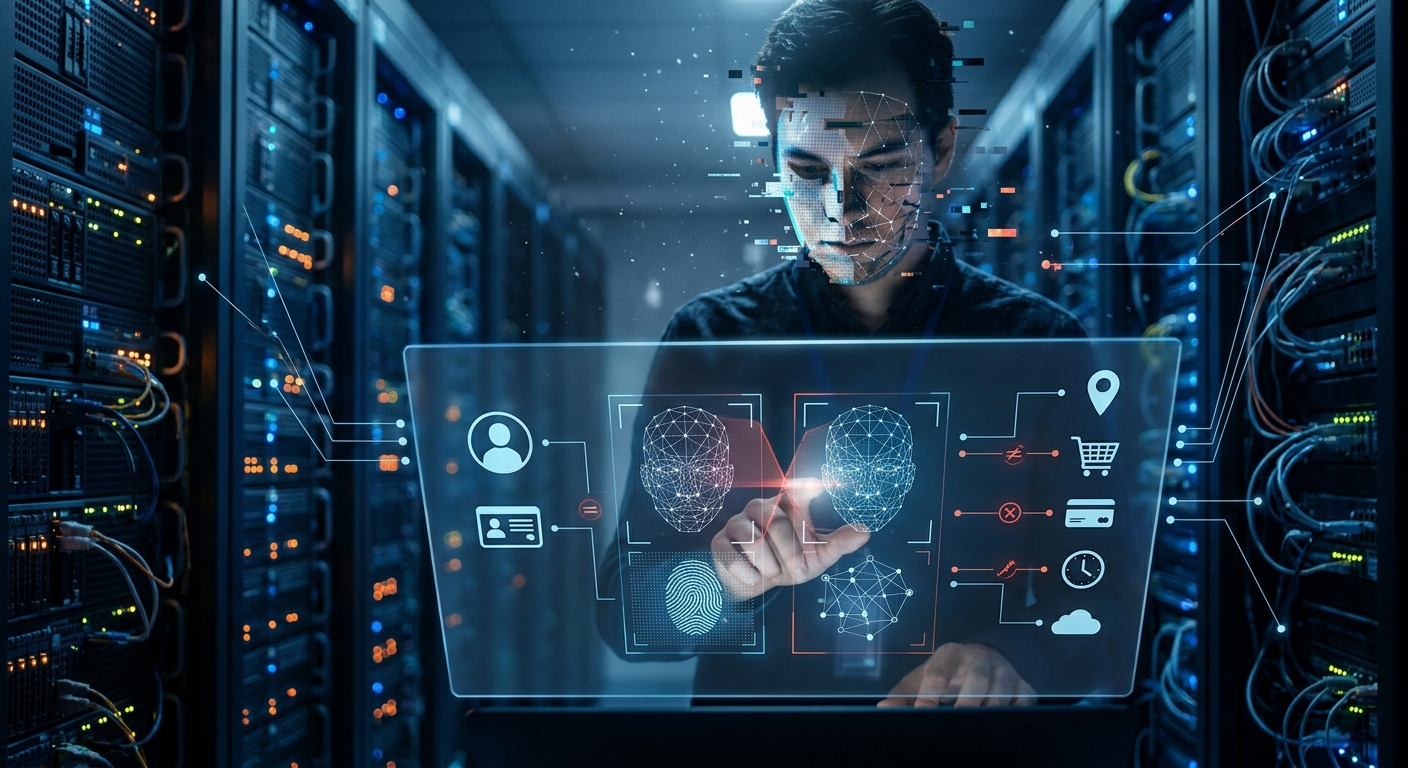
The rapid integration of artificial intelligence into the sphere of public safety has ushered in a supposedly revolutionary era of digital policing. Proponents of facial recognition technology often herald it as the ultimate impartial detective—an unblinking, unbiased machine capable of plucking criminals from obscurity with absolute certainty. However, beneath the surface of this technological utopianism lies a profoundly disturbing reality. Across the country, an unseen crisis is unfolding where innocent individuals are being ensnared in a digital dragnet, facing catastrophic disruptions to their lives due to algorithmic misidentification.
The belief that machine-learning algorithms operate with infallible precision is not just scientifically inaccurate; it is fundamentally dangerous when deployed by law enforcement agencies without rigorous oversight. As society races to embrace next-generation investigative tools, we must pause to examine the profound collateral damage inflicted upon those wrongfully accused by lines of code. This is not merely a theoretical debate about privacy; it is a tangible emergency threatening the very foundations of civil liberty, due process, and equal protection under the law. We are witnessing the rise of a system where a single computational error can rewrite the trajectory of an innocent person’s life.
The Mechanics of Machine Error: How Facial Recognition Fails
To comprehend the magnitude of algorithmic misidentification, one must first demystify the mechanics of facial recognition technology. At its core, the software does not “see” a face the way a human being does. Instead, it translates an image into a complex mathematical equation, mapping out the distances between specific nodal points—such as the width of the nose, the depth of the eye sockets, and the contour of the cheekbones. The system then compares this mathematical signature against a massive database of existing images, often compiled from state driver’s licenses, mugshots, or scraped social media profiles, returning a list of possible matches accompanied by a variable “confidence score.”
It is crucial to differentiate between one-to-one verification and one-to-many identification. When you use your face to unlock a smartphone, the system performs a one-to-one match: it simply asks, “Is this the exact person authorized to access this device?” Law enforcement, however, predominantly utilizes one-to-many identification. The system asks, “Does this unknown face match any of the millions of faces within our vast, uncurated databases?” This operational distinction exponentially increases the mathematical probability of an error. When algorithms sift through millions of unrelated records, identifying a lookalike rather than the actual perpetrator becomes an alarming statistical probability.
The fatal flaw in this process frequently originates from the quality of the initial photograph, commonly referred to as the probe image. In real-world law enforcement scenarios, these probe images are rarely pristine, well-lit portraits. They are more often grainy, distorted stills pulled from low-resolution surveillance cameras, captured at awkward angles, or obscured by poor lighting and weather conditions. When an algorithm is forced to extrapolate missing data from a severely degraded image, the probability of generating a false match skyrockets.
Furthermore, the algorithms themselves are not immune to the biases of their creators or the limitations of their training data. A landmark 2019 study conducted by the National Institute of Standards and Technology (NIST) analyzed demographic effects across dozens of facial recognition algorithms. The report unequivocally demonstrated that false positive rates were highly dependent on demographics, with significantly higher rates of misidentification for women, the elderly, and people of color compared to white men. When a system inherently struggles to differentiate between individuals of certain demographic groups, deploying it as a primary tool for criminal identification inevitably leads to disproportionate harm against those already marginalized by the justice system.
The Cascade of Consequences in a Digital Witch Hunt
When a facial recognition algorithm returns a false match, it triggers a devastating cascade of events that can utterly dismantle an innocent person’s life. The fundamental issue lies in a psychological phenomenon known as automation bias—the human tendency to defer to machine-generated information, even in the face of contradictory evidence. When a detective is presented with a computerized match, the presumption of innocence is often silently replaced by a presumption of technological infallibility. The algorithm’s output, originally intended only as an “investigative lead,” quickly morphs into the primary, unassailable basis for an arrest warrant.
The real-world consequences of this automation bias are harrowing. Major news outlets have documented numerous instances of wrongful arrests directly tied to flawed facial recognition software. For example, the Associated Press reported on the wrongful arrest of a pregnant woman in Detroit who was falsely implicated in a carjacking entirely due to a technological mismatch. Similarly, a Georgia man was jailed for days after authorities wrongly arrested him based on a flawed facial recognition match generated by out-of-state law enforcement. In these scenarios, the victims were entirely disconnected from the crimes they were accused of committing, yet they were forced to endure the humiliation and terror of being treated as dangerous criminals.
The trauma of a wrongful arrest extends far beyond the initial detention. Victims face the immediate physical dangers and psychological distress of incarceration. They are subjected to mugshots and fingerprinting, their names are etched into permanent police records, and they are forced to drain their savings to secure competent legal representation. In many cases, the mere public accusation of a severe crime can lead to instant termination from employment, eviction from housing, and irreparable damage to personal reputations. The algorithm simply moves on to process the next image, entirely unaccountable for the shattered lives left in its wake.
The Opaque Justice System: When Algorithms Operate in the Shadows
Perhaps the most insidious aspect of facial recognition in law enforcement is the shroud of secrecy that surrounds its deployment. The American legal system is theoretically built upon the right of the accused to confront their accusers and examine the evidence against them. This principle, enshrined in the Brady rule, mandates that prosecutors disclose exculpatory evidence to the defense. However, when the “accuser” is a proprietary algorithm, this fundamental constitutional right is routinely bypassed.
In an alarming number of cases, defendants are never informed that facial recognition technology was utilized in their investigation. Law enforcement agencies often engage in a controversial practice known as “parallel construction,” where they use the algorithm to identify a suspect and then build a secondary, seemingly independent chain of evidence to justify the arrest—such as orchestrating a physical photo lineup based entirely on the computer’s initial suggestion. By concealing the initial algorithmic identification, police circumvent defense attorneys’ ability to challenge the accuracy of the software, the quality of the probe image, or the inherent biases of the specific system used.
The legal community is actively grappling with the constitutional implications of this opacity. Defense attorneys cannot effectively cross-examine an algorithm, especially when private technology companies shield their source code under strict trade secret laws. This transforms the machine into a silent, unquestionable witness, completely insulated from the adversarial legal processes designed to protect innocence.
This lack of transparency is compounded by a startling absence of standardized training and regulatory oversight. A comprehensive report issued by the U.S. Government Accountability Office (GAO) in 2023 reviewed federal law enforcement agencies’ use of facial recognition. The GAO found that many agencies lacked adequate training requirements, civil liberties safeguards, and cohesive policies regarding the technology’s deployment. When federal entities operate with such a staggering deficit of accountability, the prospects for transparency at the state and municipal levels become even more dismal. The justice system cannot function equitably when its most powerful investigative tools operate in a black box, immune from public scrutiny and legal challenge.
Coercion by Circumstance: Pretrial Detention and the Plea Bargain Machine
The true number of individuals wrongfully implicated by facial recognition will likely never be known, largely due to the coercive nature of the American pretrial justice system. The highly publicized lawsuits and eventual exonerations represent merely the tip of a massive, submerged iceberg. The unseen majority of victims are those who are swallowed whole by the system before they ever have the opportunity to prove their innocence in a court of law.
When an individual is arrested based on a flawed algorithmic match, they are immediately thrust into a high-stakes battle for their physical freedom. Many jurisdictions still rely heavily on cash bail systems, meaning that those who cannot afford to pay for their release are subjected to prolonged pretrial detention. Sitting in a jail cell for weeks or months awaiting a trial date exerts an unimaginable psychological and financial pressure on an innocent person. They are separated from their families, they lose their income, and they face the constant physical threat inherent in the prison environment.
Faced with this grim reality, prosecutors frequently present a seemingly straightforward exit strategy: the plea bargain. Defendants are offered a terrible choice between maintaining their innocence and waiting months in a cell for a trial that carries the risk of a severe maximum sentence, or pleading guilty to a lesser charge in exchange for immediate release or probation. For an individual whose life is rapidly disintegrating due to an unexplainable algorithmic error, the pressure to confess to a crime they did not commit is often insurmountable. Consequently, countless false positive matches are quietly converted into official criminal convictions, permanently hiding the algorithm’s failure behind a forced admission of guilt.
Reclaiming Civil Liberties: The Path Forward
Addressing the crisis of algorithmic misidentification requires immediate, decisive action from legislators, the judiciary, and the public. We cannot allow technological convenience to override fundamental constitutional rights. First and foremost, there must be a paradigm shift in how facial recognition is legally classified. It must never be accepted as the sole basis for establishing probable cause or securing an arrest warrant. Law enforcement must be strictly required to obtain rigorous, independent corroborating evidence before an individual identified by an algorithm is ever approached or detained as a suspect.
Furthermore, absolute transparency must be mandated throughout the legal process. Any use of facial recognition technology in a criminal investigation must be immediately disclosed to the defense, complete with the name of the software used, the confidence score generated, and the original probe image analyzed. Without this mandatory disclosure, defendants are stripped of their ability to mount a competent, informed legal defense against machine error.
Finally, policymakers must seriously consider the implementation of strict moratoriums on the law enforcement use of facial recognition until comprehensive, independent audits can guarantee the elimination of demographic biases and high error rates. The tools of public safety should exist to protect the public, not to subject marginalized communities to a perpetual, error-prone digital lineup. Until the technology can be proven undeniably safe, transparent, and equitable, its unchecked deployment remains a profound threat to justice.
Frequently Asked Questions
What is facial recognition technology and how does it work?
Facial recognition technology is a biometric software application capable of verifying or identifying a person by comparing and analyzing patterns based on their facial contours. The system uses mathematical algorithms to map nodal points on a face—such as the distance between the eyes or the shape of the jawline—and compares this mathematical map against a database of known faces to find a probabilistic match.
Why is facial recognition technology prone to error?
Errors in facial recognition frequently occur due to poor quality “probe” images, such as blurry surveillance footage, bad lighting, or obscured faces. Additionally, algorithms are only as unbiased as the data they are trained on. Studies have consistently shown that many systems struggle with demographic variations, leading to significantly higher rates of false positives for women, the elderly, and people of color.
Do police have to disclose if they used facial recognition to identify a suspect?
Currently, there is no universal federal mandate requiring law enforcement to disclose the use of facial recognition to a defendant. Many agencies use the technology solely as an “investigative lead” and subsequently build a traditional case around the suspect, concealing the algorithm’s involvement from the defense and the courts. Civil rights advocates are fighting to make this legal disclosure mandatory.
What are the consequences of a false algorithmic match?
A false match can lead to wrongful arrest, pretrial detention, traumatic interactions with law enforcement, severe financial burdens from legal fees, and the loss of employment or housing. Furthermore, due to the pressures of the cash bail system, innocent individuals may be coerced into accepting plea bargains for crimes they did not commit just to secure their release from jail.
How can society prevent wrongful arrests caused by AI?
Prevention requires strict legislative regulation, including mandatory disclosure rules during the discovery phase of a criminal trial. Legal standards must dictate that an algorithmic match alone cannot constitute probable cause for an arrest. Additionally, independent audits of police technology and comprehensive training for officers on the limitations of AI are essential safeguards.
References
- Face Recognition Vendor Test (FRVT) Part 3: Demographic Effects — National Institute of Standards and Technology (NIST). 2019-12-19. https://doi.org/10.6028/NIST.IR.8280
- Facial Recognition Services: Federal Law Enforcement Agencies Should Take Actions to Implement Training, and Policies for Civil Liberties — U.S. Government Accountability Office (GAO). 2023-09-12. https://www.gao.gov/products/gao-23-105607
- Detroit police changing facial-recognition policy after pregnant woman says she was wrongly charged — Associated Press (AP News). 2023-08-10. https://apnews.com/article/detroit-police-facial-recognition-lawsuit-pregnant-woman-4481076f8c7b8d85f8e537e23117565d
- Facial recognition technology jailed a man for days. His lawsuit joins others from Black plaintiffs — Associated Press (AP News). 2023-09-24. https://apnews.com/article/facial-recognition-wrongful-arrest-lawsuit-black-man-278018e69e061ffea511c911b33346e9
Similar Articles








Read full bio of Sneha Tete




