
The Hidden Cost of Plea Bargains in Criminal Justice
Uncovering the coercive tactics that have eliminated the jury trial.
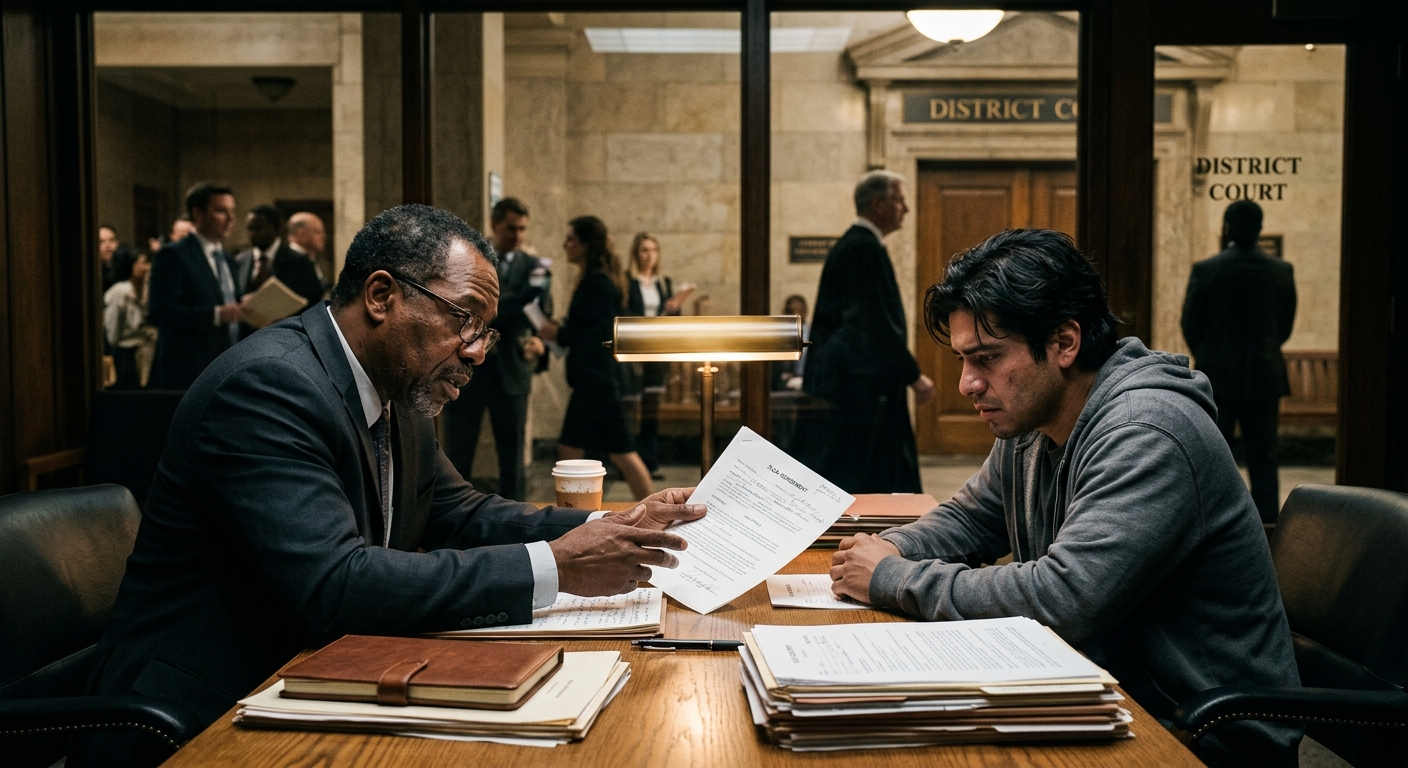
When Americans picture the criminal justice system, they envision a courtroom. They imagine an adversarial battle where a defense attorney and a prosecutor present evidence before a judge and a jury of their peers. This imagery is deeply ingrained in the cultural consciousness, reinforced by decades of television procedurals and movies. Furthermore, it is a vision explicitly promised by the Sixth Amendment of the United States Constitution, which guarantees the right to a speedy and public trial by an impartial jury. However, the reality of modern criminal adjudication is vastly different. The courtroom drama is an illusion, a relic of a bygone era. Today, the American justice system is an administrative processing machine fueled almost entirely by plea bargains.
According to data compiled by the Bureau of Justice Statistics, an estimated 90 to 95 percent of both federal and state court criminal cases are resolved through plea agreements rather than trials . The constitutional right to a trial has been functionally replaced by a closed-door negotiation process. While proponents argue that plea bargaining is necessary to manage overwhelming caseloads, the reality is that the practice has evolved into an inherently coercive system. It places disproportionate power in the hands of prosecutors, routinely pressures defendants to waive their constitutional rights, and has fundamentally poisoned the pursuit of true justice.
The Architecture of Coercion: Pretrial Detention
To understand why so many defendants forfeit their right to a trial, one must examine the environment in which these decisions are made. The most potent tool of coercion in the plea bargaining system is pretrial detention. When an individual is arrested, they are often subjected to a cash bail system. If they cannot afford to pay, they are incarcerated in a local jail while awaiting the resolution of their case.
Pretrial detention is not meant to be punitive; legally, these individuals are presumed innocent. Yet, the conditions in many county jails are notoriously harsh. Beyond the physical and psychological toll of incarceration, detained individuals face immediate, devastating collateral consequences. Within days, a person sitting in jail can lose their job, face eviction from their housing, and be separated from their children or dependent family members. The desperation to return to their daily lives becomes an overwhelming psychological pressure point.
Prosecutors are acutely aware of this dynamic. An individual in jail is highly motivated to accept a plea deal that offers immediate release, even if it results in a permanent criminal record. Often, the offer is framed as a “time served” sentence or a period of probation, contingent upon an immediate guilty plea. For a defendant who cannot afford bail, fighting the charges from behind bars could mean waiting months or even years for a trial date. The choice is stark: maintain your innocence and stay in a cage, or plead guilty and go home. In this context, the plea agreement is less a negotiation and more an act of extortion.
Decoding the Threat of the “Trial Penalty”
The second major mechanism of coercion is the phenomenon known as the “trial penalty.” This refers to the substantial, often extreme discrepancy between the sentence a prosecutor offers during plea negotiations and the sentence a defendant will face if they choose to go to trial and are convicted.
In a truly fair system, the sentence for a crime would be commensurate with the offense itself. However, the modern penal code provides prosecutors with an arsenal of overlapping charges and mandatory minimum sentences. When extending a plea offer, a prosecutor might agree to drop the most serious charges, resulting in a relatively lenient sentence. If the defendant rejects the offer and invokes their right to a trial, the prosecutor typically pursues the maximum possible charges, triggering severe statutory minimums.
The National Association of Criminal Defense Lawyers (NACDL) extensively documented this practice, noting that over the past fifty years, the rate of criminal jury trials has plummeted to less than 3 percent of state and federal cases . Their research indicates that defendants are acutely aware of the trial penalty, realizing that exercising their constitutional right to a jury carries an exponential risk. A defendant might be offered a two-year sentence in a plea deal but face a twenty-year mandatory minimum if they lose at trial. This differential is not based on the severity of the crime or the defendant’s background; it is a direct punishment for forcing the state to prove its case. When the stakes are life-altering, the risk of going to trial becomes mathematically and psychologically prohibitive.
Collateral Damage: Transparency and Innocence
The normalization of coercive plea bargaining produces severe collateral damage, most notably the conviction of innocent people and the suppression of law enforcement transparency.
The idea that an innocent person would voluntarily confess to a crime seems counterintuitive, but the data tells a different story. The National Registry of Exonerations reports that roughly 18 to 22 percent of known wrongful convictions involved individuals who pleaded guilty . When faced with the agonizing pressure of pretrial detention or the catastrophic threat of the trial penalty, innocent defendants routinely perform a grim cost-benefit analysis. A mother might plead guilty to a misdemeanor she did not commit simply to avoid the risk of a felony conviction that would strip her of child custody. A young man might accept a plea to escape the violence of pretrial lockup. These are not acts of genuine contrition; they are acts of survival.
Furthermore, plea bargaining acts as a thick blanket over the criminal justice system, shielding police and prosecutorial misconduct from public view. Trials are public forums. They require the state to present its evidence, subject witnesses to cross-examination, and justify the legality of arrests and searches. When 95 percent of cases are pleaded out, the evidence is rarely scrutinized. Faulty forensic methods, systemic racial profiling, illegal searches, and officer dishonesty are buried in paperwork. By avoiding trials, the system insulates itself from the very mechanisms designed to hold it accountable.
Demographic Disparities in the Plea Process
The coercive nature of plea bargaining does not impact all demographics equally. The system exacerbates existing socioeconomic and racial disparities. Wealthy defendants can afford private attorneys who have the time and resources to thoroughly investigate charges, file pretrial motions, and negotiate from a position of strength. They can also post bail, allowing them to fight their cases from the comfort of their homes without the threat of imminent job loss or family separation.
Conversely, low-income defendants rely on overburdened public defenders. While many public defenders are dedicated and highly skilled, they are frequently constrained by crushing caseloads that make it impossible to take every case to trial. Consequently, the triage process naturally favors negotiating pleas. Furthermore, communities of color are disproportionately targeted by aggressive policing, leading to higher rates of arrest and pretrial detention. The overlapping vulnerabilities of poverty and systemic bias mean that marginalized communities bear the brunt of the coercive plea system, churning out criminal records that further disenfranchise entire neighborhoods.
System Comparisons: The Breakdown of Adjudication
To fully grasp the deviation from the intended constitutional design, it is helpful to look at how the intended system compares to the operational reality of the courts today.
| Feature | Constitutional Model (Trial-Based) | Current Reality (Plea-Based) |
|---|---|---|
| Burden of Proof | State must prove guilt beyond a reasonable doubt to a jury. | Burden shifts to the defendant to prove innocence during rushed negotiations. |
| Transparency | Public trial, open records, cross-examination of witnesses. | Closed-door negotiations, sealed evidence, shielded law enforcement. |
| Sentencing Driver | Judicial discretion based on conviction severity and facts. | Prosecutorial leverage utilizing mandatory minimums to force compliance. |
| Role of the Public | Active participation through jury service and oversight. | Bypassed entirely; juries are rarely impaneled. |
Pathways to a Fairer Legal Framework
Reversing the damage caused by coercive plea bargaining requires comprehensive, systemic reform. While eliminating plea bargaining entirely is unlikely given the volume of modern criminal dockets, the coercion can be removed, restoring balance and fairness to the process.
In 2023, the American Bar Association’s Criminal Justice Section Plea Bargain Task Force published a comprehensive report outlining vital principles for reform . Drawing from these principles and the advocacy of criminal justice reformers, several pathways emerge:
- Comprehensive Bail Reform: By ending wealth-based pretrial detention, the justice system can remove the primary lever used to force quick pleas from innocent or overcharged defendants. If individuals are only detained pretrial when they pose a genuine, proven threat to public safety, the desperation that drives false pleas will drastically decrease.
- Mandating Open Discovery: The system must mandate robust, open discovery before plea deadlines. In many jurisdictions, prosecutors are not required to share all the evidence they have—or lack—before demanding a defendant accept a plea. Mandating that all exculpatory evidence be provided ensures that defendants are making informed decisions.
- Eliminating the Trial Penalty: Legislative bodies and judicial oversight committees must actively work to dismantle the trial penalty. Judges should be empowered to scrutinize the gap between plea offers and trial sentences, ensuring that defendants are not punished merely for exercising their Sixth Amendment rights. Rolling back mandatory minimum sentences would strip prosecutors of the disproportionate leverage they currently use.
Conclusion
The reliance on coercive plea bargaining has quietly eroded the foundation of the criminal justice system. It has traded the constitutional guarantee of a fair trial for administrative efficiency, resulting in a system that coerces the vulnerable, protects misconduct, and routinely punishes innocence. True justice is not measured by the speed at which cases are cleared from a docket, but by the integrity of the process. Reforming the plea bargaining system is not merely an administrative adjustment; it is a moral imperative required to restore the rights guaranteed to every citizen and to ensure that the courtroom is once again a place of truth rather than a theater of coercion.
Frequently Asked Questions
What exactly is a plea bargain?
A plea bargain is a negotiated agreement in a criminal case where the defendant agrees to plead guilty to a particular charge in exchange for some concession from the prosecutor. This concession usually involves dropping more serious charges, reducing the number of charges, or recommending a lighter sentence than the maximum allowed by law.
Why would an innocent person plead guilty to a crime?
Innocent people often plead guilty due to the immense pressures of the system. If they are held in pretrial detention because they cannot afford bail, pleading guilty might be the quickest way to be released and avoid losing their jobs or housing. Additionally, the fear of losing at trial and facing a massive mandatory prison sentence forces many innocent defendants to accept a smaller, guaranteed penalty to mitigate risk.
What is the “trial penalty”?
The trial penalty refers to the significant difference between the sentence offered in a plea deal and the much harsher sentence a defendant will receive if they choose to go to trial and are found guilty. This penalty effectively punishes individuals for exercising their constitutional right to a jury trial.
How does plea bargaining affect police accountability?
Because the vast majority of criminal cases end in plea bargains, the evidence gathered by law enforcement is rarely subjected to public scrutiny in a courtroom. Without trials, unethical behavior, illegal searches, or faulty evidence often go unchallenged, shielding misconduct from the public and the judicial system.
Can the current system be reformed?
Yes. Advocates suggest several reforms, including eliminating cash bail to reduce pretrial detention pressures, requiring prosecutors to share all evidence before plea negotiations, and removing mandatory minimum sentences to reduce the extreme leverage prosecutors hold during the bargaining process.
References
- Plea and Charge Bargaining — Bureau of Justice Assistance. 2011-01-01. https://bja.ojp.gov/sites/g/files/xyckuh186/files/media/document/PleaBargainingResearchSummary.pdf
- The Trial Penalty: The Sixth Amendment Right to Trial on the Verge of Extinction and How to Save It — National Association of Criminal Defense Lawyers (NACDL). 2018-07-10. https://www.nacdl.org/Document/TrialPenaltySixthAmendmentRighttoTrialNearExtinct
- Limitations on the Ability to Negotiate Justice: Attorney Perspectives on Guilt, Innocence, and Legal Advice in the Current Plea System — National Center for Biotechnology Information / PMC. 2019-10-23. https://www.ncbi.nlm.nih.gov/pmc/articles/PMC7216669/
- Resolution in Support of the 14 Principles in the ABA CJS Plea Bargain Task Force Report — American Bar Association / NACDL. 2023-02-22. https://www.nacdl.org/Article/ResolutioninSupportofthe14PrinciplesintheABACJSP
Similar Articles








Read full bio of Sneha Tete




