
The Hidden Bias of Capital Jury Selection
How the death qualification process compromises fairness and justice.
The Foundation of Capital Trials and Jury Integrity
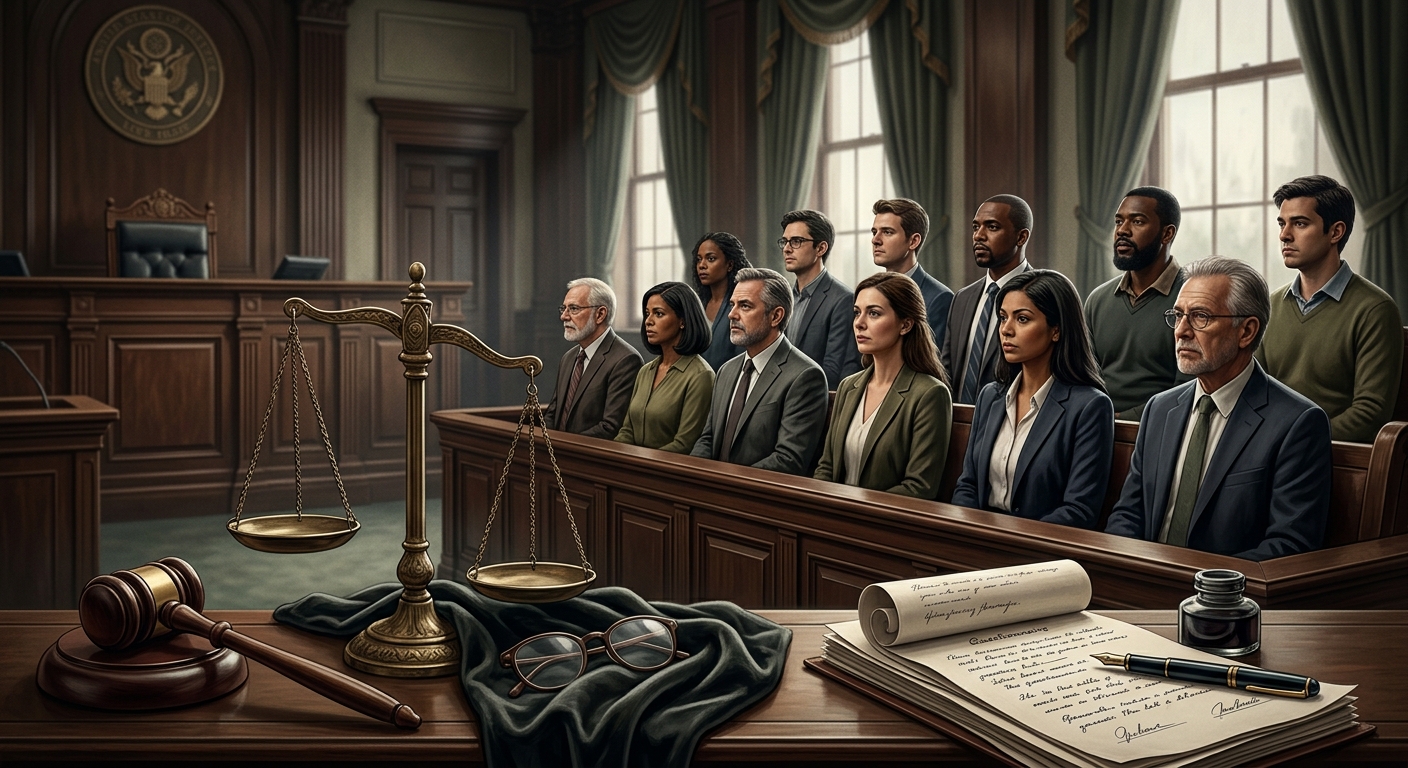
The cornerstone of the American legal system is the constitutional guarantee of a fair and impartial trial by a jury of one’s peers. This principle is designed to ensure that the awesome power of the state is checked by the collective conscience of the community. In criminal proceedings, this protection is paramount, but in capital cases—where the state seeks the ultimate, irreversible punishment of death—the integrity of the jury selection process becomes a matter of literal life and death. Yet, beneath the veneer of procedural fairness lies a highly controversial mechanism unique to capital trials: a specialized vetting procedure that fundamentally alters the demographic and psychological composition of the jury before the first piece of evidence is ever introduced.
This procedure, a legal requirement in jurisdictions that retain capital punishment, requires potential jurors to be questioned extensively about their personal, moral, and religious views on the death penalty. While the stated goal is to seat a jury capable of following the law and considering all legally authorized punishments, the practical application of this rule results in a systemic filtering process. This process does not merely remove individuals who refuse to follow the law; it systematically purges specific demographics, creating juries that are whiter, more male, and inherently more prone to convict than juries in any other type of criminal proceeding.
Understanding the Vetting Mechanism
To grasp the depth of this issue, one must understand the mechanics of voir dire—the preliminary examination of prospective jurors by a judge or counsel. In a standard criminal trial, jurors are questioned to uncover clear biases or conflicts of interest. However, in a capital trial, the voir dire process includes an additional, exhaustive phase specifically focused on capital punishment.
The Legal Standard of Exclusion
Under current legal frameworks established by decades of appellate jurisprudence, a potential juror can be struck “for cause” if their views on capital punishment would “prevent or substantially impair the performance of their duties as a juror in accordance with their instructions and their oath.” In simpler terms, if a citizen is morally, philosophically, or religiously opposed to the death penalty to the extent that they could never vote to impose it, they are legally disqualified from serving on the jury.
Conversely, those who state they would automatically vote for the death penalty upon a conviction for capital murder are also excluded. However, empirical legal research consistently demonstrates that the sweeping exclusion of death penalty opponents happens at a drastically higher rate than the exclusion of automatic death penalty supporters. This asymmetrical exclusion shrinks the jury pool, leaving behind a group of citizens who are affirmatively willing to sentence another human being to death.
Demographic Purging: A Statistical Reality
The most profound and troubling consequence of this legal mechanism is its disparate demographic impact. Beliefs regarding the justice system and capital punishment are not distributed randomly across the population; they are deeply tied to historical experiences, cultural backgrounds, and sociopolitical realities. Because different demographic groups hold vastly different views on the death penalty, a process that filters based on those views inevitably filters based on demographics.
The Disproportionate Exclusion of Minority Communities
Decades of sociological and polling data reveal that Black Americans, Hispanic Americans, and other marginalized communities oppose the death penalty at significantly higher rates than White Americans. This opposition is often rooted in a historical understanding of how the criminal justice system has disproportionately targeted minority communities. As a direct result, when prosecutors and judges apply the vetting criteria to remove death penalty opponents, they disproportionately remove citizens of color from the jury pool.
This creates a deeply cyclical problem. Minority communities possess a justified skepticism of capital punishment due to historical inequities, which leads to their systemic removal from capital juries. Their removal results in overwhelmingly white juries determining the fate of minority defendants, which often perpetuates the very disparities that cause minority skepticism in the first place.
Gender Dynamics and Exclusions
Race is not the only demographic axis affected by this process. Statistical analyses consistently show a gender divide in attitudes toward capital punishment, with women generally exhibiting less support for the death penalty than men. Consequently, the specialized vetting process disproportionately strikes female jurors. When combined with racial exclusions, the resulting panels frequently fail to represent a true cross-section of the community, tilting heavily toward white, male, and older demographics.
Impact Table: Demographic Shifts in Capital Jury Pools
| Demographic Group | Historical Trends in Capital Punishment Support | Resulting Impact of the Vetting Process |
|---|---|---|
| White Americans | Statistically higher baseline support for the death penalty compared to other groups. | Overrepresented on capital juries relative to their proportion in the general population. |
| Black Americans | Consistently higher rates of opposition, often citing systemic biases. | Disproportionately excluded, leading to significant underrepresentation on final panels. |
| Women | Generally display lower levels of support for state-sanctioned executions than men. | Struck at higher rates than men, skewing the final jury composition toward male majorities. |
| Religious Minorities | Certain denominations hold strict theological objections to capital punishment. | Systematically removed for cause when religious beliefs conflict with sentencing options. |
The Psychology of the Remaining Jurors
Beyond the stark demographic skew, the vetting process fundamentally alters the psychological makeup of the jury. By systematically excluding individuals with strong misgivings about state execution, the system selects for a specific set of psychological traits and worldviews. Legal scholars and psychologists refer to this as creating a “conviction-prone” jury.
Authoritarian Traits and Presumption of Guilt
Extensive psychological research has demonstrated that individuals who strongly support the death penalty—and thus survive the vetting process—tend to share certain commonalities. They are statistically more likely to score higher on measures of authoritarianism, more likely to trust the testimony of law enforcement officers implicitly, and less likely to prioritize the constitutional rights of the accused.
Furthermore, these jurors are measurably less receptive to “mitigating evidence”—the crucial background information presented during the penalty phase (such as a defendant’s severe childhood trauma, intellectual disability, or mental illness) that is meant to argue for a life sentence rather than death. By filtering out empathetic individuals who might heavily weigh this mitigation, the process stacks the deck against the defendant.
Preconditioning the Jury
The very act of undergoing this intensive questioning subtly preconditions the jurors. During a capital voir dire, jurors spend hours, sometimes days, being questioned by the judge and attorneys about what they would do in the “penalty phase.” They are asked to imagine a scenario where the defendant has already been found guilty of a horrific crime. This extensive discussion of punishment occurs before the jurors have heard a single witness or seen a single piece of evidence regarding guilt. Psychologists note that this can subconsciously erode the presumption of innocence, leading jurors to internalize the assumption that the defendant is likely guilty merely because the state is already heavily focusing on their execution.
Constitutional Tensions and The Sixth Amendment
The practice of selectively vetting juries in this manner creates profound friction with the text and spirit of the United States Constitution. The Sixth Amendment guarantees a criminal defendant the right to an “impartial jury” drawn from a “fair cross-section of the community.” The conflict is readily apparent: how can a jury be a fair cross-section of the community if large, distinct, and cognizable demographic groups are systematically excluded based on their legal philosophies?
Historically, the courts have navigated this tension by creating a distinction between the broader jury “pool” (the initial group of citizens summoned to the courthouse) and the “petit jury” (the final twelve people seated in the box). While the pool must represent a fair cross-section, appellate rulings have generally held that the final jury does not have to be a perfect demographic mirror, provided the state’s exclusions are based on the legal requirement of finding jurors who will follow the law. However, as modern empirical evidence continues to mount showing the overwhelming racial and psychological bias created by this process, a growing chorus of legal scholars, civil rights advocates, and dissenting judges argue that the practice renders a truly impartial trial impossible.
Reimagining the Process: Pathways to Reform
Given the deeply entrenched systemic biases associated with the current vetting methodology, criminal justice advocates and legal reformers have proposed several structural changes aimed at restoring constitutional fairness to capital trials.
- Bifurcated Jury Systems: One of the most frequently proposed reforms is the use of two entirely separate juries. The first jury, drawn from a true, unvetted cross-section of the community, would hear the evidence and determine guilt or innocence. If a conviction is reached, a second, specialized jury would be seated solely to determine the penalty. This prevents the psychological “conviction-proneness” from infecting the guilt-or-innocence phase.
- Stricter Limitations on “For Cause” Strikes: Reformers argue for raising the threshold required to strike a juror for cause based on their death penalty views. Under this proposal, unless a juror states unequivocally that they would sabotage the trial, their mere reluctance or moral objection to the death penalty should not be grounds for removal.
- Comprehensive Moratoriums: Recognizing that the bias may be an inextricable feature of capital litigation, several jurisdictions have cited the impossibility of seating a truly fair capital jury as a primary reason for enacting moratoriums or outright abolishing capital punishment within their borders.
Frequently Asked Questions (FAQs)
What exactly does it mean to vet a capital jury?
Vetting a capital jury involves a specific questioning process during voir dire where potential jurors are asked about their views on capital punishment. The goal is to determine if their personal beliefs would prevent them from considering either a life sentence or a death sentence. Those who absolutely cannot impose the death penalty are legally disqualified from serving on the jury.
Why does this vetting process disproportionately affect minority communities?
Statistical data shows that minority communities, particularly Black and Hispanic Americans, oppose the death penalty at higher rates than White Americans, often due to historically disparate treatment by the criminal justice system. Because they are more likely to oppose the death penalty, they are consequently more likely to be struck from the jury pool during the vetting process.
Does this process make a jury more likely to convict?
Yes. Decades of psychological studies indicate that jurors who survive the vetting process—those who support the death penalty—are statistically more “conviction-prone.” They tend to view law enforcement more favorably, require less evidence to convict, and are less responsive to mitigating evidence presented by the defense.
Does this violate the Sixth Amendment?
This is a matter of intense legal debate. The Sixth Amendment guarantees a jury drawn from a “fair cross-section of the community.” While current Supreme Court precedent allows for the exclusion of jurors who cannot follow capital sentencing laws, critics argue that the resulting demographic skew actively violates the spirit of the Sixth Amendment by creating panels that are distinctly unrepresentative of the broader community.
Conclusion
The pursuit of justice demands mechanisms that are fundamentally fair, objective, and representative of the community at large. The current specialized vetting process utilized in capital jury selection stands in stark opposition to these ideals. By systematically stripping away minority voices, individuals with compassionate or reformative justice ideologies, and those critical of state power, the system manufactures an artificial environment. The resulting juries are not a reflection of the public conscience, but rather a carefully curated subset primed for conviction and execution. Until these systemic flaws are addressed, whether through comprehensive procedural reform or the broader reevaluation of capital punishment itself, the promise of a truly impartial jury in a capital trial remains an unfulfilled constitutional ideal.
References
- Death Qualification — Death Penalty Information Center. 2023-01-15. https://deathpenaltyinfo.org/policy-issues/death-qualification
- Race and the Jury: Illegal Discrimination in Jury Selection — Equal Justice Initiative. 2021-08-01. https://eji.org/reports/race-and-the-jury/
- Jury Representation in Criminal Trials — National Bureau of Economic Research. 2022-05-10. https://www.nber.org/papers/w29831
- The Demographics of Death Qualification — Cornell Law Review. 2020-11-20. https://www.cornelllawreview.org/2020/11/20/the-demographics-of-death-qualification/
Similar Articles








Read full bio of Sneha Tete


