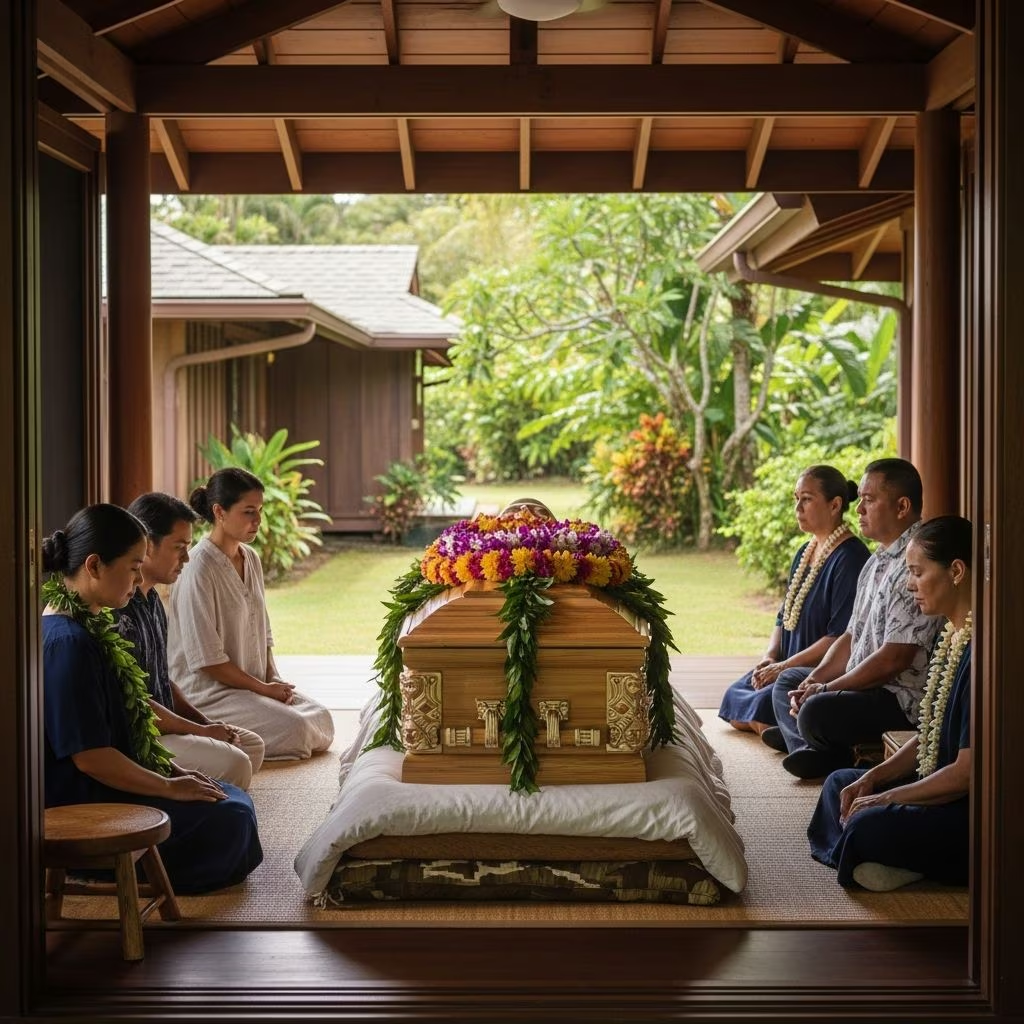
Conducting a home funeral in Hawaii allows families to personally manage the care and disposition of a loved one’s remains, offering a meaningful and cost-effective alternative to traditional funeral services. This practice is legally supported, provided specific state requirements are met, including timelines for disposition, permit acquisition, and documentation filing.
Legal Foundation for Family-Led Arrangements
Hawaii statutes affirm that families have the right to keep a deceased person’s body at home following death, without mandatory involvement of a licensed funeral director. Haw. Rev. Stat. § 338-1 explicitly states that “any person” can serve as the “person in charge of disposition,” enabling direct family oversight of final arrangements. This provision underscores Hawaii’s recognition of personal autonomy in end-of-life decisions.
Key to this process is understanding the hierarchy of authority for body disposition, outlined in Haw. Rev. Stat. § 531B-4. Priority goes to:
- The surviving spouse
- Adult children, collectively
- Parents
- Adult siblings
- Legal guardian or designated person in charge
If individuals within the same priority level disagree, resolution may require court intervention. To prevent disputes, individuals can pre-designate a trusted decision-maker through legal documents like a durable power of attorney for health care or specific disposition instructions.
Handling Remains Post-Death
Upon death, families may transport and care for the body at home without immediate professional intervention. However, Hawaii mandates prompt action: remains must be embalmed, cremated, buried, or placed in approved refrigerated storage within 30 hours of death, unless under coroner custody.
For cases involving the coroner, medical examiner, or county physician, the 30-hour clock starts upon release, with options for refrigeration in a state-approved facility if needed (Hawaii Department of Health Administrative Rule § 11-22-4). Exceptions exist for traditional Hawaiian cultural practices, where preparation consistent with customs does not violate these timelines (Haw. Rev. Stat. § 338-25).
Families should consult a physician if the death involves contagious diseases, as additional precautions may apply, though embalming is not universally required. Refrigeration below 45°F is recommended after 30 hours to comply with health regulations.
Death Certificate Procedures
Families managing home funerals must independently file the death certificate with the Hawaii Department of Health within three days of death (Haw. Rev. Stat. § 338-9). The process involves:
- Obtaining a death certificate worksheet from the local health department.
- Completing the personal data section (demographic details).
- Having the deceased’s physician, advanced practice nurse, or coroner’s physician certify the medical portion, including cause, date, and time of death.
- Submitting the completed form electronically or via paper to the health department.
Hawaii’s electronic death registration system streamlines this, but paper options remain available. Accurate completion is crucial, as it precedes any disposition permits.
Essential Permits for Disposition
No final disposition—burial, cremation, or transport—can occur without written authorization from the local health department agent (Haw. Rev. Stat. § 338-23). This permit is issued only after the death certificate is filed and health regulations are satisfied (Haw. Rev. Stat. § 338-25).
Transporting remains outside the death’s registration district also requires this permit. In emergencies, such as accident-related deaths, oral authorization may allow initial airlift to Honolulu for processing, followed by written permits. Families must present the burial-transit permit for cremation, which suffices without a separate cremation permit.
Burial Guidelines and Locations
Burials in Hawaii are restricted to cemeteries approved by the county council and the Department of Health Director (Haw. Rev. Stat. § 441-2; Administrative Rule § 11-22-5). Private land burials or family cemeteries demand prior approval from the local registrar to ensure compliance with zoning, health, and environmental standards.
Interment must reach a depth preventing accidental disturbance, typically 3-6 feet, though specifics vary by site. For Native Hawaiian ancestral remains, additional protections under HRS Chapter 6E apply, involving burial treatment plans, consultations with the State Historic Preservation Division (SHPD), and cultural councils.
| Burial Type | Requirements | Authority |
|---|---|---|
| Public Cemetery | County-approved site; burial-transit permit | Department of Health |
| Private Land/Family Plot | Prior registrar approval; depth standards | Local Health Dept. & County |
| Native Hawaiian Remains | Burial treatment plan; cultural consultation | SHPD & Burial Councils |
Cremation Processes for Families
Cremation is a viable option, authorized by the same burial-transit permit used for burial—no extra paperwork needed (Haw. Rev. Stat. § 338-23). However, some crematories insist on funeral director involvement; families must confirm direct acceptance policies upfront.
There is no mandatory waiting period for cremation in Hawaii, unlike some states, allowing flexibility for timely arrangements. Cultural exemptions ensure traditional practices align with cremation if applicable.
Respecting Cultural and Traditional Practices
Hawaii uniquely accommodates Native Hawaiian customs in body preparation and disposition. Preparation methods consistent with traditional practices are exempt from standard embalming or timeline violations, preserving cultural integrity (Haw. Rev. Stat. § 338-25).
For iwi kūpuna (ancestral bones), stringent laws under HRS § 6E-43 mandate preservation in place or culturally appropriate relocation via burial treatment plans developed with SHPD and island burial councils. These processes prioritize lineal descendants’ input and documented cultural norms.
Practical Steps for a Smooth Home Funeral
To execute a home funeral effectively:
- Pre-plan: Designate an agent and document wishes.
- Notify: Physician or coroner promptly for certification.
- Document: File death certificate within 72 hours.
- Secure permits: Obtain health department authorization before any disposition.
- Choose site: Verify cemetery or private land approvals.
- Handle transport: Use permit for any movement.
Care for remains respectfully, using ice packs or cooling for short-term holding, and consider community resources for vigils or ceremonies.
Potential Challenges and Resolutions
Common hurdles include permit delays, crematory policies, or family disagreements. Mitigate by starting paperwork immediately and communicating with health officials early. For complex cases like infectious diseases, physician guidance ensures compliance. Court orders can resolve authority disputes if needed.
Frequently Asked Questions (FAQs)
Can I keep my loved one’s body at home in Hawaii?
Yes, it is legal to care for remains at home without a funeral director, as long as you meet the 30-hour disposition timeline or refrigeration requirements.
Who files the death certificate for a home funeral?
The family or person in charge must obtain and file it within three days, with medical certification from a doctor or coroner.
Is embalming required in Hawaii?
No, except to meet the 30-hour rule if not cremating or burying promptly; refrigeration is an alternative.
Can I bury on private property?
Possible with local health department and county approval; standard burials require approved cemeteries.
Do I need a separate permit for cremation?
No, the burial-transit permit covers it, but confirm crematory accepts direct family delivery.
What about Native Hawaiian traditions?
Exemptions allow cultural preparations without violating timelines; special rules protect ancestral remains.
This guide empowers families to honor loved ones through personalized home funerals while adhering to Hawaii’s regulations. Always verify current rules with the Department of Health, as laws evolve.
References
- Hawaii Home Funeral Laws — Nolo. 2024. https://www.nolo.com/legal-encyclopedia/hawaii-home-funeral-laws.html
- Hawaii Funeral Guide — Funeral Consumers Alliance. 2016. https://funerals.org/wp-content/uploads/2016/06/HI.pdf
- Hawaii Home Funeral Laws — National Home Funeral Alliance. Accessed 2026. https://www.homefuneralalliance.org/hawaii.html
- Administrative Rules Title 11, Chapter 22 — Hawaii Department of Health. 2015. https://health.hawaii.gov/opppd/files/2015/06/11-22.pdf
- Summary of Hawaii Burial Laws — Hawaii DLNR SHPD. 2015. https://dlnr.hawaii.gov/shpd/files/2015/06/SUMMARY-OF-HAWAII-BURIAL-LAWS.pdf
- Quick Guide to Home Funerals by State — National Home Funeral Association. Accessed 2026. https://www.nhfuneral.org/uploads/1/1/7/5/117550115/quick_guide_to_home_funerals_by_state.pdf