
Understanding Hawaii’s Operating Under the Influence Laws
Comprehensive guide to OVUII charges, penalties, and legal defenses in Hawaii.
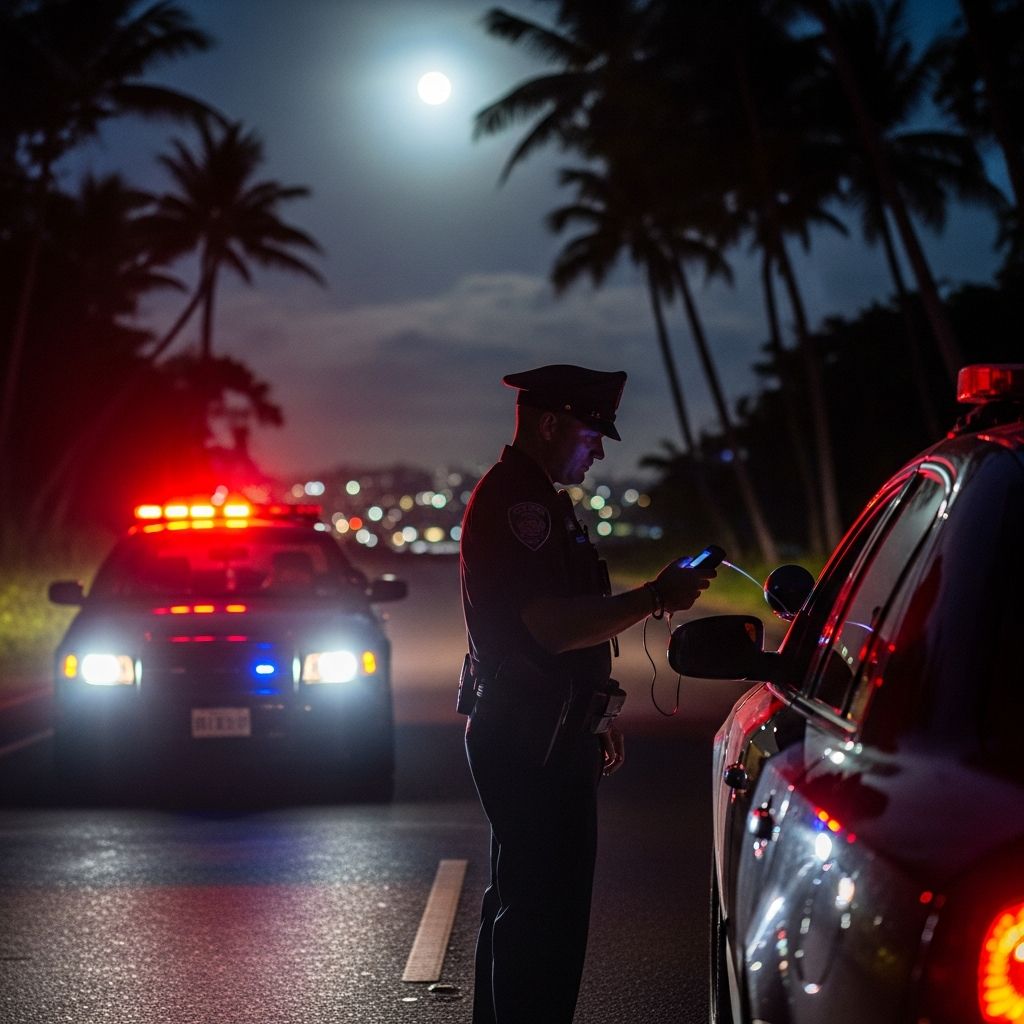
Driving under the influence remains a serious concern in Hawaii, with alcohol-related incidents contributing significantly to traffic fatalities across the islands. The state has established comprehensive legal frameworks to address impaired driving, referred to as Operating Under the Influence of Intoxicants (OVUII) rather than the more commonly known DUI terminology used on the mainland. Understanding these laws, their penalties, and recent legislative efforts is essential for anyone facing charges or concerned about highway safety in Hawaii.
The Scope of Impaired Driving in Hawaii
Hawaii faces a notable challenge with alcohol-related traffic incidents. According to recent data, approximately forty percent of traffic fatalities on Hawaiian roads involve alcohol, a rate that exceeds the national average. This elevated percentage underscores the importance of stringent enforcement and prevention measures throughout the state. The proportion of alcohol-involved fatalities has increased since 2021, remaining relatively stable between 2023 and 2024, indicating a persistent public health challenge that continues to demand legislative and enforcement attention.
In response to these sobering statistics, state officials and advocacy groups have worked to strengthen existing laws and propose new measures. The Hawaii Alcohol Policy Alliance (HIAPA), in collaboration with Mothers Against Drunk Driving, has advocated for legislative reforms aimed at reducing impaired driving incidents and protecting residents. These efforts reflect a growing recognition that existing legal frameworks may require enhancement to achieve greater public safety outcomes.
Legal Thresholds and Chemical Testing Standards
Hawaii law establishes clear legal limits for operating a vehicle while under the influence of alcohol or controlled substances. The standard blood alcohol concentration (BAC) threshold is 0.08 percent, consistent with federal guidelines adopted by most states. However, law enforcement personnel may initiate impaired driving investigations at lower BAC levels if behavioral indicators or failed sobriety tests suggest impairment.
For commercial drivers operating vehicles designed to transport sixteen or more passengers, the legal limit is reduced to 0.04 percent, reflecting the heightened responsibility associated with transporting the public. Additionally, drivers under the age of twenty-one are subject to a zero-tolerance policy, meaning any detectable level of alcohol in their system can result in charges.
Law enforcement agencies utilize breath and blood tests to determine BAC levels. Breath tests conducted at roadside checkpoints or in police facilities use breathalyzer technology, while blood tests provide more precise measurements and are often requested by defendants to verify initial findings. Refusal to submit to chemical testing carries separate legal consequences distinct from the underlying OVUII charge.
Classification of Offenses and Sentencing Framework
Hawaii categorizes OVUII offenses by severity, with penalties escalating based on prior conviction history and the circumstances surrounding each incident. The state recognizes distinct offense levels that determine the range of potential sanctions:
- First-time offenses are classified as misdemeanors subject to variable penalties depending on specific circumstances of the arrest
- Aggravated violations occurring with BAC levels above 0.15 percent receive enhanced classification and more severe penalties
- Repeat offenses within defined timeframes trigger escalated charges and mandatory minimum sentences
- Habitual traffic offenders with multiple violations may face felony charges and extended incarceration
Second offenses within five years are classified as class A misdemeanors, carrying substantially greater penalties than first-time convictions. The state’s approach recognizes that repeat violators represent an elevated public safety risk and warrant more aggressive legal intervention.
Mandatory Minimum Penalties for First Convictions
A first OVUII conviction in Hawaii carries mandatory minimum penalties established by statute. Individuals convicted of this offense face fines ranging from $150 to $1,000, reflecting the seriousness with which the state treats impaired driving. In addition to financial sanctions, convicted individuals must complete 240 hours of community service, a substantial commitment designed to reinforce social responsibility and provide public benefit.
Incarceration requirements for first offenses typically range from brief detention periods up to thirty days, depending on mitigating or aggravating factors presented during sentencing. Judges retain discretion to impose sentences within statutory ranges, considering factors such as the defendant’s prior criminal history, BAC level, and whether the offense involved property damage or injury to others.
All first-time offenders must also participate in an alcohol education program approved by the state, designed to educate participants about the dangers of impaired driving and promote behavioral change. This requirement reflects evidence-based approaches that prioritize rehabilitation alongside punishment.
Enhanced Penalties for Elevated BAC Levels
Hawaii imposes increased penalties when a driver’s BAC exceeds 0.15 percent, recognizing that substantially elevated alcohol levels indicate severe impairment and heightened danger to public safety. These enhanced violations carry more severe consequences that reflect the elevated risk posed by extreme impairment.
The rationale behind these graduated penalties acknowledges that individuals operating vehicles with BAC levels significantly above the legal threshold have demonstrated profound judgment impairment and pose substantially greater risks of causing accidents, injuries, and fatalities. By imposing enhanced sanctions for elevated BAC levels, Hawaii’s legal framework incentivizes compliance and acknowledges the correlation between alcohol concentration and driving danger.
License Suspension and Driving Privileges
Conviction for OVUII in Hawaii results in mandatory license suspension, effectively preventing the offender from legally operating a motor vehicle for defined periods. The length of suspension varies based on offense classification and prior conviction history. First-time offenders typically face suspension periods measured in months, while repeat offenders may experience suspensions lasting years.
Administrative license suspension may occur separately from criminal proceedings, initiated by the Department of Motor Vehicles following arrest and chemical testing. This dual process ensures immediate removal of driving privileges even before criminal conviction, enhancing public safety during the judicial process.
Some jurisdictions in Hawaii offer hardship licenses or limited driving privileges that permit individuals to operate vehicles for essential purposes such as employment or medical treatment. Eligibility for such restricted licenses depends on specific circumstances and judicial discretion.
Recent Legislative Developments and Future Directions
Hawaii’s approach to impaired driving continues to evolve. In January 2026, the state implemented the “Green Fee,” a new tax on tourist accommodations and cruise ship passengers designed to fund climate and environmental initiatives. While not directly related to OVUII enforcement, this legislation demonstrates the state’s broader commitment to public welfare and safety investments.
More directly relevant to impaired driving prevention, Hawaii officials have explored lowering the legal BAC threshold from 0.08 to 0.05 percent, a measure that would align Hawaii with more restrictive standards designed to prevent impaired driving before it reaches current legal thresholds. The Hawaii Alcohol Policy Alliance has advocated for this change for multiple consecutive legislative sessions, demonstrating sustained commitment to enhanced prevention measures. State leadership has identified this proposal as a priority, citing its potential to reduce impaired driving fatalities through earlier intervention.
Testing Procedures and Legal Protections
When law enforcement suspects impaired driving, officers conduct field sobriety tests and may request chemical analysis of breath or blood samples. Individuals facing such requests should understand their rights and the implications of compliance or refusal. Hawaii law permits breath testing and blood testing when lawfully requested by law enforcement operating under proper authority.
Drivers have the right to consult with an attorney before submitting to chemical testing, though actual delayed testing is generally not permitted. The results of properly administered tests are typically admissible evidence in criminal proceedings, while improperly obtained samples may be subject to exclusion challenges.
Consequences Beyond Criminal Penalties
OVUII convictions in Hawaii extend consequences beyond criminal penalties and license suspension. Insurance rates typically increase substantially following conviction, and some insurers may decline to renew coverage. Employment consequences may occur, particularly for positions requiring valid driving privileges or those involving public safety responsibilities.
Professional licensing may also be affected, as many professional boards consider criminal convictions in determining fitness for licensure. Individuals in regulated professions should consult with their licensing boards regarding potential impacts of OVUII convictions on their professional standing.
Defenses and Mitigation Strategies
Individuals facing OVUII charges have the right to legal representation and the opportunity to challenge evidence presented by prosecutors. Defense strategies may involve questioning the lawfulness of the initial traffic stop, the administration and accuracy of sobriety testing procedures, or the reliability of chemical analysis results.
Challenging the foundation for chemical test results requires understanding the procedures followed, the maintenance and calibration of testing equipment, and the qualifications of personnel administering tests. An experienced attorney can identify procedural defects that may render evidence inadmissible or unreliable.
Frequently Asked Questions
Q: What is the difference between OVUII and DUI?
A: Hawaii uses the terminology “Operating Under the Influence of Intoxicants” (OVUII) rather than DUI (Driving Under the Influence). The terms describe the same offense but Hawaii’s statutory language is unique to the state.
Q: What BAC level triggers mandatory enhanced penalties?
A: BAC levels exceeding 0.15 percent trigger enhanced penalties and more severe classification of the offense. This elevated threshold reflects substantially greater impairment and danger.
Q: Can I refuse a breath or blood test?
A: While individuals have certain legal rights, refusal to submit to lawfully requested chemical testing carries separate legal consequences distinct from the underlying OVUII charge and may result in license suspension and other penalties.
Q: How long does a license suspension last?
A: License suspension duration varies based on offense classification and prior conviction history. First-time offenders typically face suspension periods measured in months, while repeat offenders may experience longer suspensions.
Q: Are there options for limited driving privileges?
A: Some jurisdictions in Hawaii offer hardship licenses or restricted driving privileges for essential purposes such as employment or medical treatment, subject to judicial approval and specific eligibility requirements.
Q: What is the Hawaii Alcohol Policy Alliance advocating for?
A: The Alliance has repeatedly advocated for lowering Hawaii’s legal BAC threshold from 0.08 to 0.05 percent, a measure designed to prevent impaired driving at earlier intervention points and reduce alcohol-related fatalities.
References
- Notable new state laws taking effect in 2026 cover hotels, AI and more — ABC News. 2026-01-01. https://abcnews.go.com/Politics/notable-new-state-laws-taking-effect-2026-cover/story
- States ring in 2026 with laws on climate, AI, DUI, wages, immigration and more — SAN. 2026-01-01. https://san.com/cc/states-ring-in-2026-with-laws-on-climate-ai-dui-wages-immigration-and-more/
- Hawaii DUI/OVUII Laws and Penalties 2025 – All You Need to Know — The Law Office of R. Patrick McPherson. 2025. https://www.patrickmcphersondui.com/blog/hawaii-dui-ovuii-laws-and-penalties/
- Driving Change: The Fight for a 0.05 BAC in Hawai’i — Hawaii Alcohol Policy Alliance. 2025. https://www.hiphi.org/driving-change-the-fight-for-a-0-05-bac-in-hawaii/
- Criminal Status of State Drunken Driving Laws — National Conference of State Legislatures. 2025-07-22. https://www.ncsl.org/transportation/criminal-status-of-state-drunken-driving-laws
Similar Articles








Read full bio of medha deb




