Damaged currency, whether from everyday wear, accidents, or disasters, remains valuable under U.S. law. The Federal Reserve and Bureau of Engraving and Printing (BEP) provide clear pathways for redemption, ensuring individuals recover funds from torn bills, burned notes, or chewed coins. This guide outlines official processes, eligibility criteria, and practical steps to maximize recovery.
Understanding Types of Currency Damage
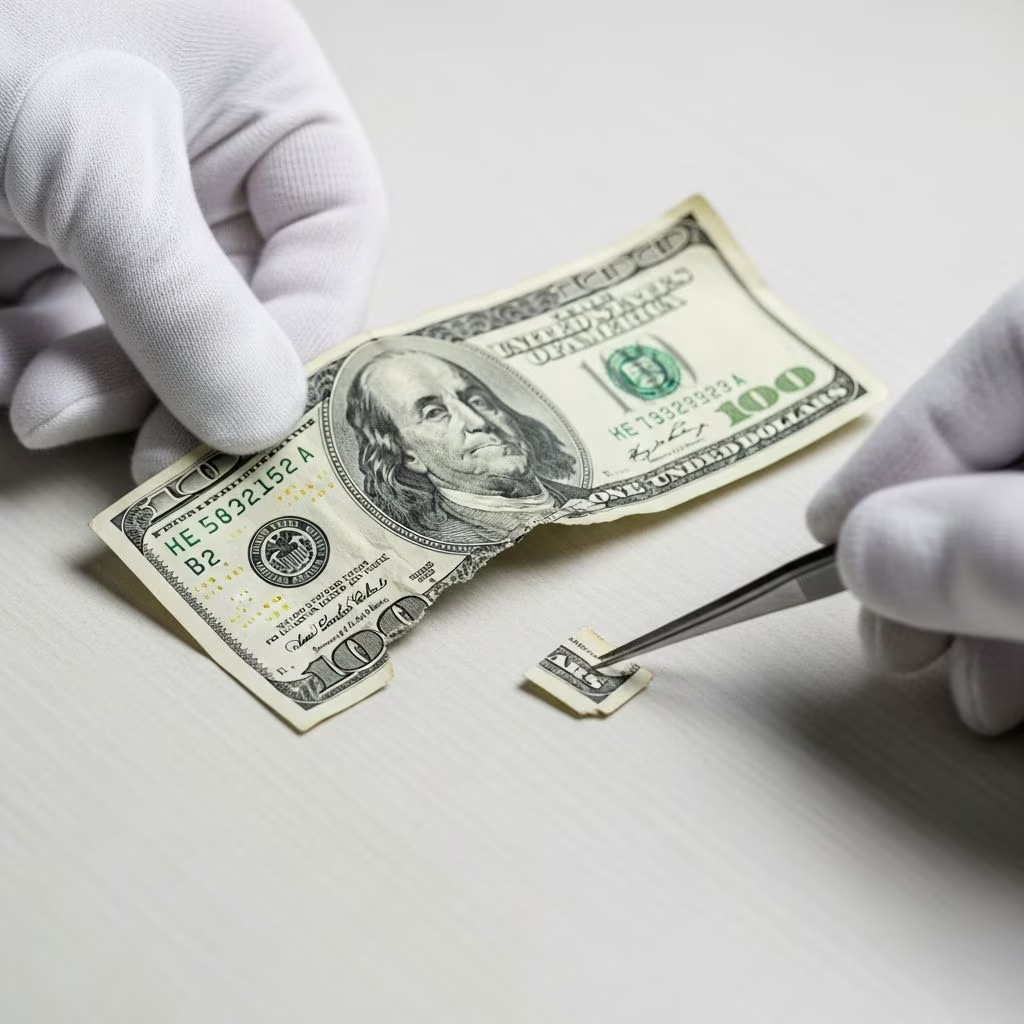
Currency damage varies in severity, determining the redemption path. Minor issues like dirt or tears allow simple bank exchanges, while extreme mutilation requires federal evaluation. Recognizing the category speeds up the process and prevents unnecessary complications.
- Worn or soiled notes: Everyday deterioration from handling, making them limp, dirty, or slightly torn but still over 50% intact.
- Torn or partially missing bills: More than half remains identifiable, usable at banks without special review.
- Mutilated currency: Less than 50% survives or value is questionable due to fire, water, animals, or chemicals.
- Contaminated money: Exposed to biohazards, chemicals, or other risks requiring safe handling protocols.
- Damaged coins: Bent, corroded, or mutilated, often redeemable at face or melt value.
The Federal Reserve defines unfit currency as notes unsuitable for circulation due to physical defects like tears or defacement. About 85% of deposited notes remain fit, with machines and experts sorting the rest at Fed facilities.
Exchanging Lightly Damaged Paper Money at Banks
For bills with more than 50% intact and clearly identifiable—without needing expert scrutiny—local banks handle exchanges seamlessly. Commercial banks accept these in deposits sent to the Federal Reserve, replacing them with fresh notes.
Process overview:
- Visit your bank or credit union.
- Present notes showing over half the original design, serial numbers, and denomination.
- Bank verifies and credits your account or provides new bills.
No special forms needed; this applies to worn, dirty, or minorly torn currency. Federal Reserve high-speed equipment confirms fitness post-deposit, removing unfit notes for shredding and recycling.
| Damage Level | Bank Acceptance | Example |
|---|---|---|
| Minor tear (>50% left) | Yes | Folded corner, light soil |
| Heavy wear, limp | Yes | Dirty from use |
| <50% or questionable | No | Burned edges, major missing sections |
Banks forward acceptable notes to the Fed, where 15% typically get flagged as unfit and repurposed into compost or shredded souvenirs.
Navigating Mutilated Currency Redemption
Severely damaged bills—less than half remaining or authenticity/value in doubt—fall under the BEP’s Mutilated Currency Division. This free public service processes over 22,000 claims annually, redeeming about $35 million.
Mutilation examples include fire, floods, animal damage, or burial deterioration. Do not send to the Federal Reserve; route directly to BEP.
Step-by-Step Submission Process
- Prepare documentation: Write a letter detailing estimated value, damage cause (e.g., house fire), your contact info, and preferred redemption method (check or deposit).
- Package securely: For brittle fragments, wrap in plastic and cotton without disturbing pieces. Use original containers if applicable. Avoid tape or adhesives.
- Mail or deliver: Send to BEP Mutilated Currency Division, Office of Currency Standards, Washington, DC 20220. Personal delivery available at BEP facilities.
- Await evaluation: Experts use specialized tools for authenticity and value assessment. Processing takes 6-36 months.
- Receive reimbursement: Proportional to recoverable value; fully destroyed portions not redeemed unless evidence shows total loss.
BEP redeems if missing parts are verified destroyed (e.g., fire evidence). Common cases: burned (most frequent), water, or animal-chewed notes.
Dealing with Contaminated or Hazardous Currency
Currency exposed to chemicals, bodily fluids, or biohazards poses health risks. Banks may accept with disclosure, following Fed packaging guidelines for safe transport.
- Provide full incident details to the bank.
- Notes absorb contaminants easily, unlike coins.
- Fed disposes of contaminated currency safely without recycling.
For severe cases, BEP handles alongside mutilation claims. Consult bank first for minor contamination.
Redeeming Damaged Coins: Mint Procedures
U.S. Mint redeems mutilated coins at face value if identifiable, or bullion/melt value for precious metals. Banks accept mildly damaged coins at discretion, forwarding to Fed.
| Coin Type | Redemption Option | Value Basis |
|---|---|---|
| Common (copper/nickel) | Bank or Mint | Face value if >50% intact |
| Gold/Silver | Mint/Dealers | Bullion melt value |
| Uncurrent (circulation-worn) | Mint | Face value |
For extreme damage, submit to U.S. Mint with description. Dealers often buy at melt for efficiency.
Practical Tips for Successful Claims
Maximize recovery with these strategies:
- Preserve evidence: Photos, witness statements, or remnants aid verification.
- Track submission: Use certified mail; email BEP at mutilatedcurrency@bep.gov for status.
- Avoid DIY fixes: No taping or altering; it complicates evaluation.
- Batch small claims: Combine multiple notes to justify shipping.
- Know timelines: Patience required; high volume causes delays.
Annual BEP volume underscores demand: 22,000+ cases, $30-40M redeemed, primarily from burns and floods.
Frequently Asked Questions (FAQs)
What if my bill is torn but over half remains?
Take it to a local bank for immediate exchange; no federal involvement needed.
How long does BEP processing take?
Typically 6-36 months due to thorough examination.
Can I spend damaged money at stores?
Merchants accept at discretion if identifiable; banks are reliable.
What about foreign or counterfeit suspicions?
BEP verifies authenticity; counterfeits get no redemption.
Is there a fee for redemption?
No, it’s a free public service.
Preventing Currency Damage in Daily Life
While redemption exists, prevention saves time:
- Store cash in waterproof wallets or safes.
- Avoid pet-accessible areas.
- Use digital payments for disaster-prone activities.
- Monitor inheritance or found money for deterioration.
Fed facilities now recycle unfit notes into compost, reducing environmental impact over past burning practices.
References
- What to Do with Ripped, Torn or Damaged Money — Federal Reserve Bank of St. Louis. 2019-10-29. https://www.stlouisfed.org/open-vault/2019/october/what-to-do-with-ripped-damaged-money
- What to Do With Mutilated Currency — Great American Coin Company. N/A. https://www.greatamericancoincompany.com/blogs/news/what-to-do-with-mutilated-currency
- What should I do if I have damaged or mutilated currency? — Board of Governors of the Federal Reserve System. N/A. https://www.federalreserve.gov/faqs/what-should-i-do-if-i-have-damaged-or-mutilated-currency.htm
- How the government handles your mutilated money — YouTube (Bureau of Engraving and Printing reference). N/A. https://www.youtube.com/watch?v=xQ5NBrvPv_g
- Mutilated Currency Packing Directions — U.S. Bureau of Engraving and Printing. N/A. https://www.bep.gov/services/mutilated-currency-redemption/packing-directions
- Damaged Currency? The U.S. Bureau of Engraving and Printing Can Exchange It for You — CEI FX. N/A. https://www.ceifx.com/news/damaged-currency-the-us-bureau-of-engraving-and-printing-can-exchange-it-for-you
- Mutilated Currency Redemption — U.S. Bureau of Engraving and Printing. N/A. https://www.bep.gov/services/mutilated-currency-redemption