
Handling Bounced Checks: Practical Recovery Guide For Businesses
Master the process of recovering funds from bounced checks with legal notices, fees, and escalation strategies for businesses.
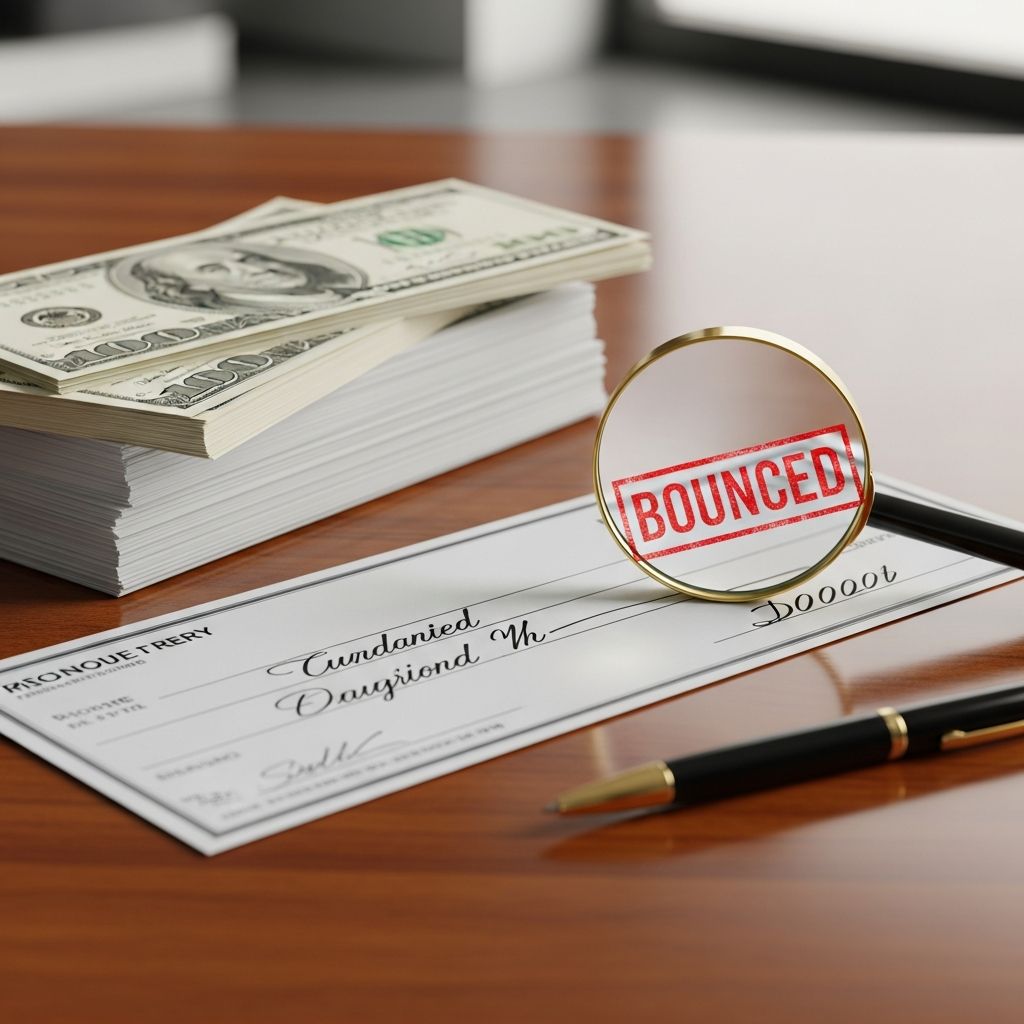
Receiving a bounced check disrupts cash flow and requires prompt action to recover owed funds. This guide outlines practical steps for businesses, from initial notifications to advanced recovery tactics, ensuring compliance with varying state laws.
Understanding Bounced Checks and Their Impact
A bounced check, often termed NSF (nonsufficient funds) check, occurs when a bank refuses payment due to inadequate account balance, closed accounts, or other issues. Businesses face immediate losses including bank fees typically ranging from $20 to $50, plus administrative costs for handling the return. In 2024, 63% of organizations encountered check fraud, highlighting the prevalence and urgency of effective recovery strategies.
These incidents not only strain finances but can signal deeper issues like intentional fraud, classified as theft in jurisdictions like Ohio. Early intervention preserves customer relationships while safeguarding revenue.
Initial Steps After Receiving a Returned Check
Upon bank notification, review the check details: amount, date, payor information, and reason for return. Contact the issuer immediately via phone using details from the check to request replacement payment. This amicable approach resolves many cases swiftly.
Consider redepositing if the issuer confirms sufficient funds, but verify with their bank to avoid repeated fees. Document all communications to build a record for potential escalation.
Establishing a Returned Check Policy
Proactive businesses implement a clear policy disclosed at point-of-sale or in terms of service. This outlines fees, consequences, and preferred payment methods post-bounce. State laws cap fees; for example, many limit to $20-$50 or a check percentage. Consistency prevents disputes and supports fee recovery claims.
- Display policy visibly on receipts or websites.
- Specify NSF fee amount within legal limits.
- Encourage electronic payments to minimize risks.
Crafting and Sending an Effective Demand Notice
A formal demand letter via certified mail with return receipt is crucial, mandatory in states like Ohio for checks under $5,000. Include: payor name/address, check number/amount/date, NSF fee, total due, payment deadline (often 10-30 days), and circumstances of the bounce.
Sample structure:
| Element | Description |
|---|---|
| Header | Your business details, date, payor address |
| Body | Check details, bank notice explanation, total owed |
| Demand | Payment method, deadline, consequences of non-payment |
| Footer | Signature, contact info |
Ohio mandates five specific notices under R.C. 2307.61(C), such as rights to civil action and potential criminal liability; non-compliance forfeits recovery costs. Customize per state regulations for validity.
Charging Returned Check Fees Legally
Recipients can recover bank fees plus handling costs, subject to state caps. Policies must pre-inform customers to enforce. Failure to pay fees alongside principal may lead to service suspension or further action. Track fees meticulously for invoicing.
Escalation Options When Payment Fails
Follow-Up Communications
If the deadline passes, send a firmer notice referencing the first letter and threatening escalation. Phone follow-ups reinforce urgency.
Collections Agencies
For smaller amounts, agencies handle pursuit for a commission, ideal when litigation costs outweigh recovery. They employ skip tracing and verification tools. Ensure FDCPA compliance to avoid abusive practices.
Criminal Prosecution
Intentional bad checks constitute theft offenses in many states, eligible for triple damages. Submit to district attorney units post-notice; viable for larger sums or patterns.
Civil Lawsuits and Judgments
Sue in small claims for expediency. Post-judgment, enforce via wage/bank garnishment requiring court orders. Statutes of limitations vary; track diligently.
State-Specific Regulations Overview
Laws differ significantly:
- Ohio: Certified demand mandatory; criminal theft offense.
- General U.S.: Notice before suit common; FDCPA governs collectors.
- Statutes of limitations: 1-6 years for contracts.
Consult local codes or attorneys for precision.
Technology and Prevention Strategies
Automate verification pre-deposit using tools flagging risks. Shift to ACH, cards, or digital wallets reducing exposure. AI chatbots streamline collections.
- Implement check scanning apps.
- Monitor accounts for patterns.
- Train staff on policies.
Legal Risks and Compliance Essentials
Avoid FDCPA violations like harassment; collectors must cease post-attorney notice. Debtors can dispute within 30 days, halting collection until verification. Garnishment needs court orders.
Frequently Asked Questions
Can I charge a fee for a bounced check?
Yes, within state limits ($20-$50 typical), if policy disclosed.
Is writing a bad check a crime?
Possibly, if intentional; treated as theft in states like Ohio.
How long to sue over a bounced check?
Track statutes of limitations, often 3-6 years.
Should I use a collections agency?
Yes for small amounts to minimize effort.
What if they dispute the debt?
Send validation request within 30 days; collection pauses.
Best Practices for Long-Term Success
Combine policies, tech, and swift action to minimize losses. Regular audits identify fraud patterns. Educate customers on alternatives. With structured workflows, recovery rates improve significantly.
References
- How to Get Paid from a Bounced Check: An Attorney Answers Your Questions — Gertsburg Licata. Accessed 2026. https://www.gertsburglicata.com/blog/how-to-get-paid-from-a-bounced-check-an-attorney-answers-your-questions/
- How To Recover And Collect Money From Bad Checks? — Tratta. 2024. https://www.tratta.io/blog/how-to-collect-on-bad-checks
- Collection Basics: Sending a Returned Check Notice — LegalZoom. Accessed 2026. https://www.legalzoom.com/articles/collection-basics-sending-a-returned-check-notice
- What To Do About a Returned Check — Credit Karma. Accessed 2026. https://www.creditkarma.com/money/i/what-is-a-returned-check
- Returned Check: Understanding Its Legal Definition — US Legal Forms. Accessed 2026. https://legal-resources.uslegalforms.com/r/returned-check
- Debt Collection FAQs — Federal Trade Commission. Accessed 2026. https://consumer.ftc.gov/articles/debt-collection-faqs
Similar Articles








Read full bio of Sneha Tete


