
Handheld Chemical Detectors: Privacy Risks And Legal Limits.
How new police chemical scanners threaten Fourth Amendment privacy rights.
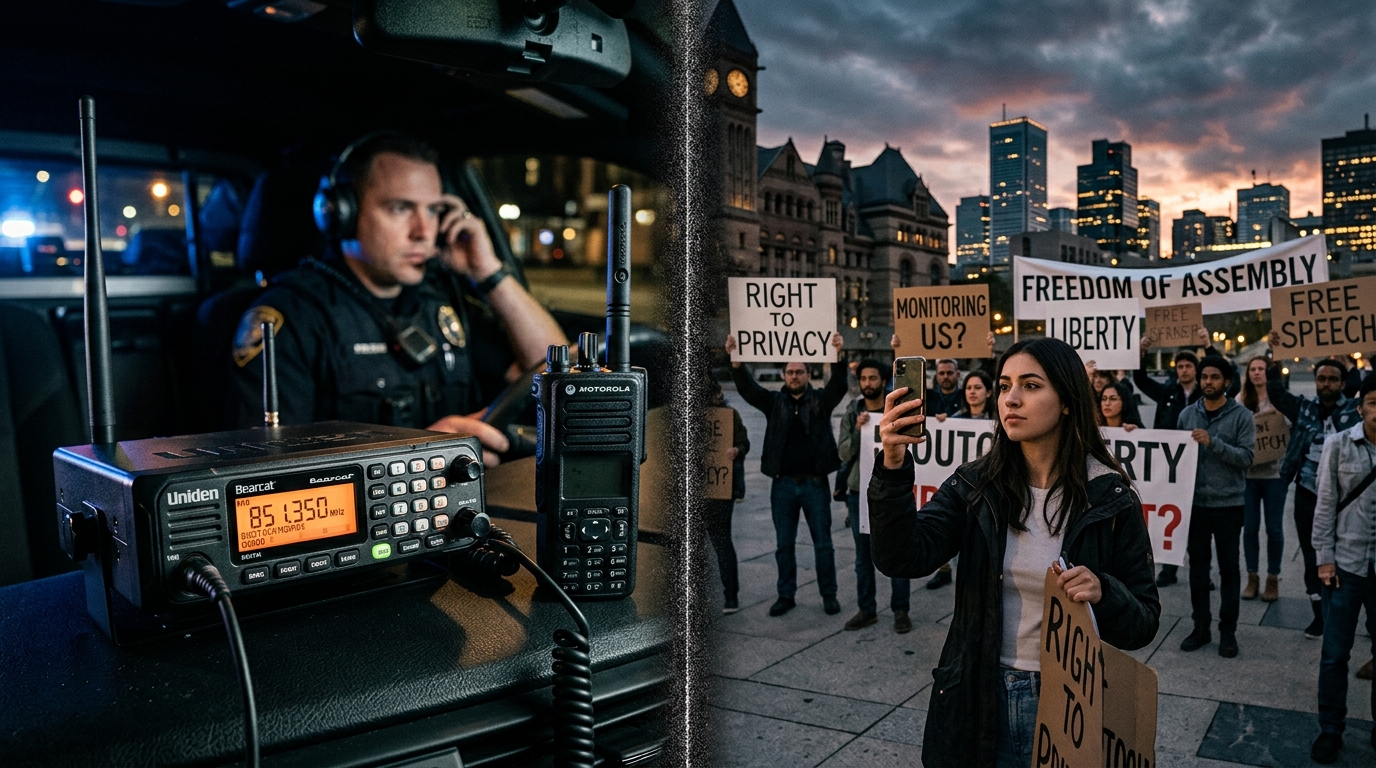
The modern policing landscape is increasingly defined by the rapid integration of cutting-edge technology. From facial recognition software and automated license plate readers to predictive policing algorithms, law enforcement agencies have access to an unprecedented array of tools designed to streamline investigations and enhance public safety. Among the latest additions to this high-tech investigative arsenal are “point-and-shoot” handheld chemical detectors. These devices, which utilize advanced laser technology to identify the molecular composition of unknown substances from a physical distance, represent a monumental leap forward in on-the-ground forensic science. However, they also cast a long, concerning shadow over established constitutional rights in the United States.
As these remote chemical scanners become more prevalent in police cruisers, at transit hubs, and along border checkpoints, they bring forth a profound legal dilemma. When law enforcement officers can determine the exact chemical makeup of an item concealed inside a plastic bag or behind a car window without ever physically touching it, the traditional boundaries of what constitutes a “search” become dangerously blurred. The newfound ability to peer invisibly into the elemental structure of private property raises urgent questions about the Fourth Amendment, the right to personal privacy, and the expanding scope of unchecked government surveillance.
The Science of Remote Substance Identification
To fully grasp the civil rights implications at play, it is necessary to first understand the underlying mechanics of this technology. Most handheld chemical detectors utilized by state and federal law enforcement rely on an advanced analytical technique known as Raman spectroscopy. According to technology evaluations conducted by the National Institute of Justice (NIJ), Raman spectrometers operate by shining a laser on a substance and measuring how the light scatters when it interacts with the material’s molecular bonds. Every chemical compound scatters light in a slightly different way, producing a unique spectral “fingerprint.”
Historically, this type of sophisticated chemical analysis was strictly confined to sterile, controlled, and highly expensive laboratory environments. Evidence had to be bagged, tagged, and transported to a crime lab for testing. Today, immense technological miniaturization has placed this capability directly into the palms of patrol officers. The National Institute of Standards and Technology (NIST) notes that these handheld detectors have become a crucial standard for first responders tasked with rapidly assessing potential explosives or hazardous toxic chemicals.
The defining, and most controversial, feature of these newer Raman spectroscopy devices is their non-destructive and remote nature. An officer does not need to open a container, unscrew a lid, or physically manipulate a substance to test it. The device’s laser can effortlessly penetrate translucent barriers—such as glass car windows, clear plastic baggies, or certain thin synthetic fabrics—and bounce back a chemical identification. The device’s internal software then instantly cross-references this spectral fingerprint against an extensive digital library of known compounds, delivering a verdict on the substance’s identity in seconds.
Navigating the Intersection of Safety and Privacy
The swift adoption of handheld chemical identifiers across various jurisdictions is primarily driven by highly legitimate public and occupational safety concerns. Law enforcement officers and emergency medical responders routinely encounter unknown, potentially lethal substances in the field. The rapid rise of synthetic opioids in recent years, particularly fentanyl and its various potent analogs, has fundamentally altered the risk calculus of routine drug seizures. Because a microscopic amount of certain synthetic compounds can be incredibly dangerous if accidentally inhaled or absorbed through the skin, the ability to test a substance remotely is understandably framed as a vital, life-saving innovation.
By utilizing a point-and-shoot laser spectrometer, an officer can definitively confirm the presence of a hazardous chemical without ever breaching its packaging or exposing the surrounding air to a lethal powder. This safety-first narrative is highly compelling and underscores the undeniable utility of the technology in specific emergency or hazardous material (HAZMAT) scenarios.
However, the transition of this technology from a specialized HAZMAT safety tool to an everyday investigative instrument for routine police patrols is exactly where the constitutional friction occurs. The core issue lies in the invisible, highly intrusive nature of the optical scan. When an officer aims a laser through a citizen’s car window to analyze a sealed container resting on the passenger seat, they are bypassing the traditional physical barriers that have historically triggered Fourth Amendment protections. The conflict, therefore, is not about whether the technology is inherently useful, but whether its unregulated deployment fundamentally undermines the American public’s reasonable expectation of privacy.
The Fourth Amendment Under the Microscope
The Fourth Amendment of the United States Constitution explicitly protects citizens against “unreasonable searches and seizures,” mandating that legal warrants be issued only upon a demonstration of “probable cause.” For centuries, judicial interpretations of what constituted a “search” were heavily tethered to the concept of physical trespass. If the government physically intruded upon your person, your house, your papers, or your personal effects to obtain information, a search had officially occurred.
Modern surveillance technology, however, has effectively decoupled the act of invasive surveillance from the strict requirement of physical intrusion. Handheld chemical detectors force modern courts to ask a remarkably difficult question: Does aiming an invisible laser beam at an item to decode its chemical makeup constitute a search?
Civil liberties advocates argue forcefully that it absolutely does. A chemical scanner reveals intimate, specific, and otherwise hidden details about private property that are completely imperceptible to the naked human eye. If a police officer physically opens a citizen’s prescription pill bottle or unzips a plastic tote bag to chemically test the contents, that action is universally recognized by the courts as a search requiring probable cause and, generally, a warrant. Using a sophisticated laser to achieve the exact same informational outcome—identifying the unseen contents of a private container—should logically be subject to the exact same constitutional constraints. Permitting law enforcement to use advanced spectroscopy to bypass the warrant requirement simply because they did not physically “touch” the item creates a massive, easily exploitable loophole in constitutional jurisprudence.
Technological Precedent: Lessons from Kyllo v. United States
The overarching legal framework for addressing non-invasive, high-tech searches was fundamentally shaped by the landmark 2001 Supreme Court case, Kyllo v. United States. In this pivotal case, federal agents suspected an individual, Danny Kyllo, of growing marijuana inside his Oregon home. To gather evidence without obtaining a warrant, agents used a sophisticated thermal imaging device from across the public street to detect unusually high amounts of heat radiating from Kyllo’s garage roof—heat that was consistent with the high-intensity grow lamps typically used in indoor drug cultivation.
The federal government argued that the thermal imager did not constitute a search because it merely passively recorded heat escaping from the exterior of the house; there was no physical trespass onto the property. The Supreme Court, however, outright rejected this argument. Delivering the opinion of the Court, Justice Antonin Scalia established a critical constitutional standard for technological surveillance: “Where, as here, the Government uses a device that is not in general public use, to explore details of the home that would previously have been unknowable without physical intrusion, the surveillance is a ‘search’ and is presumptively unreasonable without a warrant”.
The judicial parallels between the thermal imaging in Kyllo and modern handheld chemical detectors are incredibly striking. First, military-grade Raman spectroscopy devices are undoubtedly “not in general public use.” Second, they are explicitly designed to explore unseen details about private property—namely, the molecular composition of hidden substances—that would “previously have been unknowable without physical intrusion.” While Kyllo pertained specifically to the home, which holds the absolute highest level of Fourth Amendment protection, the underlying logic remains highly applicable to chemical detectors used on personal vehicles, luggage, and everyday effects. If advanced technology is used to seamlessly substitute a physical search, it must be legally treated as a physical search.
The Danger of “Function Creep” and Mass Surveillance
Beyond the immediate constitutional questions lies the pervasive threat of “function creep”—a well-documented phenomenon where surveillance technology implemented for one specific, extreme purpose gradually expands into routine, widespread administrative use. Handheld chemical scanners are often justified to the voting public and municipal funding bodies as necessary, highly specialized tools for combating severe terrorism threats or protecting officers from lethal fentanyl doses.
When a new piece of technology is introduced, its deployment is usually ring-fenced by restrictive, highly specific operational guidelines. However, as the novelty wears off and the equipment becomes cheaper to produce and easier to operate, administrative boundaries inevitably blur. We have witnessed this exact trajectory with Automated License Plate Readers (ALPRs) and cellular site simulators (often known as Stingrays). What began as a highly specialized method for tracking high-profile fugitives or terrorists quickly trickled down to local municipal police departments utilizing them for standard traffic citations and low-level drug sweeps.
Handheld chemical scanners are teetering on this exact same trajectory. Without strict legislative guardrails, a patrol officer could theoretically use a point-and-shoot spectrometer to routinely scan the pockets, backpacks, or vehicles of citizens during everyday traffic stops or public pedestrian interactions, searching endlessly for trace amounts of illicit substances. This unchecked expansion turns a targeted safety device into a generalized instrument of mass surveillance. If officers are broadly permitted to conduct invisible, warrantless chemical scans on a whim, marginalized communities—who already disproportionately experience aggressive policing, frequent pedestrian stops, and intense scrutiny—will inevitably bear the brunt of this technological overreach.
Establishing Legislative and Judicial Guardrails
To prevent the steady erosion of privacy rights in the face of rapid chemical detection advancements, proactive legislative and judicial guardrails are imperative. Society cannot simply un-invent Raman spectroscopy, nor should it ignore the valid, life-saving benefits it genuinely offers to first responders. Instead, the focus must be squarely placed on regulating exactly how and when law enforcement agencies can deploy these devices.
First and foremost, state courts and federal legislatures must affirmatively classify the use of a remote chemical detector to analyze the contents of private property as a “search” under the Fourth Amendment. By firmly doing so, they would mandate that officers establish reasonable probable cause and secure a judge-issued warrant before deploying the laser technology against a suspect’s belongings, absent established exigent emergency circumstances.
Additionally, any evidence obtained through an unauthorized, warrantless chemical scan must be subject to the exclusionary rule. If an officer uses a Raman spectrometer without a warrant to discover illegal substances inside a closed container, courts must suppress that evidence to deter future constitutional violations. Finally, data retention and digital library matching must be strictly controlled. Handheld spectrometers should be programmed specifically for their intended purpose. If a device is justified by a city council solely for officer safety to detect fentanyl or explosive residues, its internal software library should be technically restricted to those specific hazards. The device should not function as a universal scanner capable of identifying legally prescribed medications, legal agricultural products, or other innocuous chemical compounds that are none of the government’s business.
Conclusion: Balancing Innovation with Civil Liberties
The advent of point-and-shoot chemical detectors perfectly encapsulates the modern struggle between technological innovation and the steadfast preservation of civil liberties. While Raman spectroscopy offers incredible, unprecedented benefits for forensic science and emergency responder safety, it simultaneously possesses the power to invisibly strip away the privacy that citizens are constitutionally guaranteed in a free society.
As sophisticated technology continues its relentless march forward, creating novel ways to peer through walls, trace human movements, and analyze microscopic environmental data, the fundamental, enduring principles of the Fourth Amendment must remain our anchor. Embracing the future of public safety does not require sacrificing the fundamental right to privacy; it simply requires the vigilance to ensure that our legal frameworks evolve just as rapidly and thoughtfully as the tools designed to enforce them.
Frequently Asked Questions (FAQs)
- What is Raman spectroscopy used for in law enforcement?
Raman spectroscopy is an advanced, laser-based analytical technique used to determine the chemical composition of a substance. In modern law enforcement, handheld Raman spectrometers are utilized by police officers, border patrol agents, and HAZMAT teams to remotely identify unknown solids, liquids, and powders without risking direct physical contact with hazardous materials like synthetic opioids or chemical explosives.
- How does the Kyllo v. United States case relate to modern police technology?
Kyllo v. United States (2001) is a landmark Supreme Court case which ruled that using advanced thermal imaging technology to detect heat inside a private home constituted a Fourth Amendment search. The ruling established the critical legal precedent that if police use advanced technology not available to the general public to discover details that would otherwise require a physical intrusion, they generally need to obtain a warrant first.
- Do police currently need a warrant to use a chemical detector on my belongings?
Currently, the statutory law surrounding remote chemical detection is playing a game of catch-up. Civil liberties advocates heavily argue that using a chemical scanner to analyze the unseen contents of a bag or car is a definitive search under the Fourth Amendment and should require a warrant. However, clear, universally applied judicial rulings specifically governing handheld chemical scanners are still actively evolving in the lower courts.
- Can remote chemical scanners see directly through walls?
No. Most handheld Raman spectrometers used in the field today cannot penetrate opaque physical barriers like brick walls, drywall, or heavy metal. They can, however, penetrate translucent or transparent barriers such as glass windows, clear plastic bags, and thin synthetic layers, allowing them to effectively scan substances hidden securely inside these common containers.
References
- Evaluation of the Smiths Detection RespondeR™ RCI Raman Spectrometer — National Institute of Justice (NIJ). 2010-09-01. https://nij.ojp.gov/library/publications/evaluation-smiths-detection-respondertm-rci-raman-spectrometer-technology
- New Spectrometry Standard for Handheld Chemical Detectors Aids First Responders — National Institute of Standards and Technology (NIST). 2013-10-24. https://www.nist.gov/news-events/news/2013/10/new-spectrometry-standard-handheld-chemical-detectors-aids-first-responders
- Kyllo v. United States, 533 U.S. 27 (2001) — Supreme Court of the United States. 2001-06-11. https://supreme.justia.com/cases/federal/us/533/27/
Similar Articles








Read full bio of medha deb




