
Hand Fishing Laws Across America: State Rules, Permits, Safety
Unlock the rules of hand fishing: Where it's legal, what permits you need, and safety tips for bare-handed angling adventures nationwide.
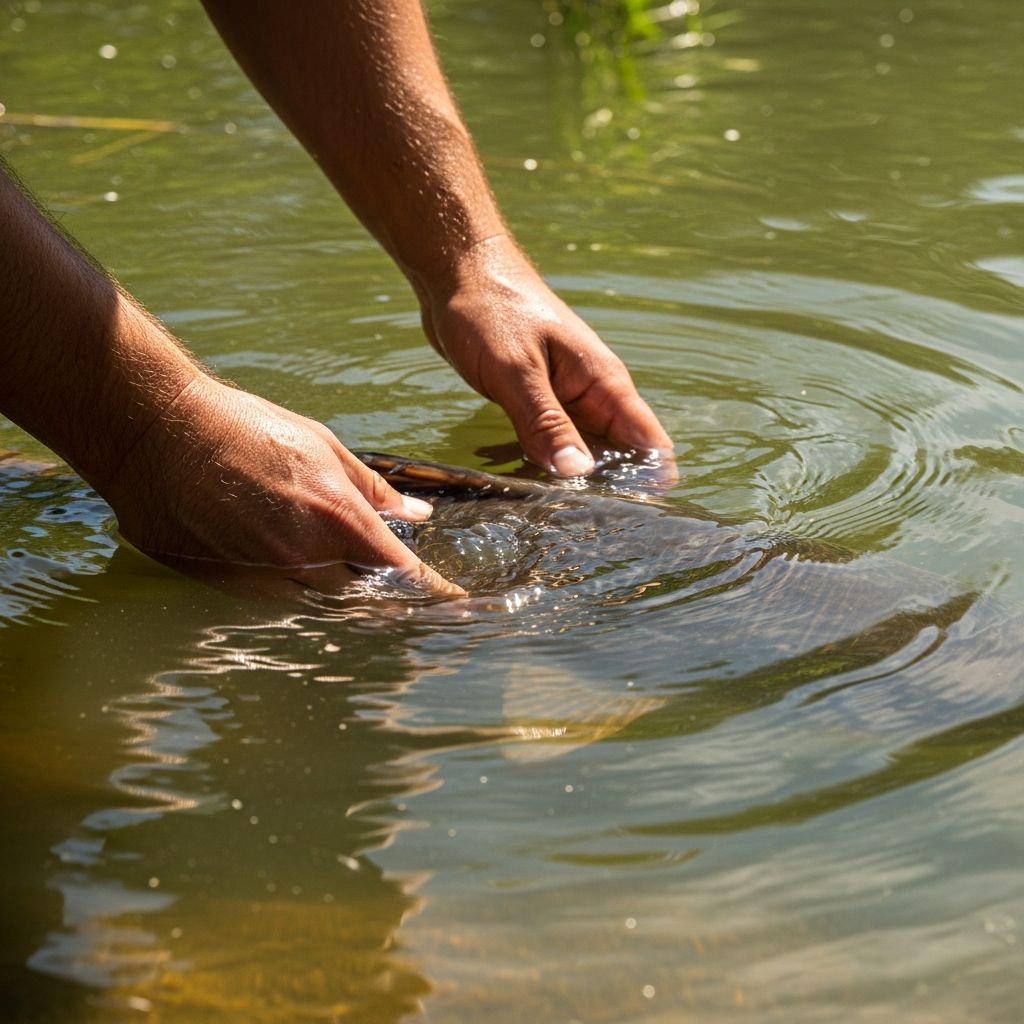
Hand fishing, often called noodling or grabbling, involves catching fish using only your hands without rods, lines, or hooks. This primal technique has deep roots in American angling traditions, particularly for targeting large catfish in murky waters. While thrilling, it demands strict adherence to state laws to avoid fines or penalties. Regulations vary widely by location, species, season, and equipment, reflecting efforts to balance recreation with conservation.
The Allure and Origins of Bare-Handed Angling
Hand fishing traces back to indigenous practices and early settlers who lacked modern tackle. Today, enthusiasts seek the adrenaline rush of wrestling massive flathead or blue catfish from underwater dens. Participants wade into rivers or lakes, probe crevices, and grapple fish emerging to defend nests. Success hinges on timing—typically spawning seasons when catfish guard eggs—and physical prowess.
Proponents highlight its low-impact nature, using no bait or lures that harm ecosystems. However, critics worry about safety risks from venomous snakes, alligators, or injuries from sharp teeth. Legally, most states permit it under controlled conditions to prevent overharvest.
Key Legal Frameworks by Region
U.S. hand fishing rules stem from state wildlife agencies, with federal oversight in national waters. Primary restrictions cover target species (usually non-game fish like catfish), time windows, locations, and gear. Permits often supplement standard fishing licenses, ensuring compliance.
Midwest and Plains States: Catfish Hotspots
In Kansas, hand fishing targets flathead catfish exclusively from sunrise to sunset between June 15 and August 31. Approved sites include the full Arkansas River, federal reservoirs beyond 150 yards from dams, and the Kansas River to its Missouri confluence. A $27.50 special permit is mandatory alongside a fishing license for all ages. Prohibitions include hooks, snorkeling, scuba, or man-made devices; only stringers are allowed post-catch at water surface. No attractants like barrels permitted.
Mississippi opens hand-grabbing for non-game fish, especially catfish, from May 1 to July 15. Anglers use hands or rope (no hooks) in designated waters, emphasizing sustainable harvest of invasive or abundant species.
Southern Traditions and Restrictions
Southern states popularized noodling, but rules tightened for safety and ecology. Common limits confine it to certain rivers during summer months, barring night fishing or artificial aids. Blue catfish and flathead dominate targets due to size and fight.
Coastal and Western Variations
California bans most hand fishing for finfish, allowing angling with one rod/line or hand line (max three hooks). Snagging—impaling outside the mouth—is illegal; fish must voluntarily take bait inside the mouth. For ocean invertebrates like octopus or clams, hands or hook-and-line suffice, with hand tools (shovels, rakes) for clams during daylight. Scuba bans apply to some shellfish dives.
Permit and Licensing Essentials
Most states require a base fishing license plus a hand fishing endorsement. Costs range $20–$50 annually. Applications occur via wildlife department portals or vendors. Minors often need adult supervision or waivers.
| State | Permit Cost | Additional Requirements | Season |
|---|---|---|---|
| Kansas | $27.50 | Fishing license; flathead only | June 15–Aug 31 |
| Mississippi | Varies | Non-game fish focus | May 1–July 15 |
| California (Ocean) | Standard license | Hands for mollusks | Year-round (some closed) |
This table summarizes core needs; always verify current rules as they evolve.
Gear Prohibitions and Allowed Tools
- No hooks, gaffs, or spears: Pure hand contact required in most jurisdictions.
- Banned aids: Snorkels, scuba, lights (night fishing often illegal), power devices.
- Permitted post-catch: Stringers only after fish surfaces; no underwater securing.
- Attractant bans: Boxes, barrels, or tubs to lure fish prohibited.
Federal Northeast permits (Handgear A/B) for commercial groundfish mandate hand-hauling rods/reels or tub trawls (max 250 circle hooks 12/0+), no electric reels or hydraulics. Trip reports due within 48 hours.
Seasonal and Location-Specific Limits
Spawning drives open seasons (late spring–summer), aligning with catfish nest-guarding. Daytime-only rules dominate to deter hazards. Rivers and reservoirs host most action; lakes may restrict to coves.
- Daily bag limits: Often 1–5 fish, length minimums (e.g., 30+ inches).
- Protected zones: Near dams, spillways, or marinas off-limits.
- Federal lands: National Park Service promotes catch-and-release, checking park rules.
Safety Protocols for Hand Fishers
Bare-hand battles pose dangers: catfish barbs, submerged snags, wildlife encounters. Essentials include:
- Partner system: Never solo; spotters call emergencies.
- Life jackets: Mandatory in deep/flowing water.
- Probe tools: Wooden sticks to check holes safely.
- First aid: Treat cuts promptly to avoid infection.
- Weather checks: Avoid high flows or storms.
Training courses from state agencies teach techniques, reducing risks by 70% per angler reports.
Conservation Impacts and Best Practices
Hand fishing aids population control for predatory catfish but risks nest disturbance. Release oversize breeders; report invasives. Log catches for agency data, supporting sustainable quotas.
California enforces mouth-bite rules to minimize harm. Northeast eVTRs track groundfish health.
State-by-State Hand Fishing Comparison
| State | Target Species | Season | Key Restrictions | Source |
|---|---|---|---|---|
| Kansas | Flathead catfish | June–Aug | No gear except stringer; permit req. | |
| Mississippi | Non-game fish | May–July | Hands or rope only | |
| California | Mollusks, octopus | Year-round | Hand tools; no scuba for some | |
| Northeast (Fed) | Groundfish | Varies | Handgear A/B; no power |
Frequently Asked Questions (FAQs)
Is hand fishing legal nationwide?
No, it’s banned or heavily restricted in many states like California for finfish. Check local wildlife agencies.
What permit do I need for noodling in Kansas?
A $27.50 hand fishing permit plus fishing license, valid June 15–August 31 for flatheads.
Can I use scuba gear while hand fishing?
Generally no; most states prohibit it to prevent overharvest and ensure fairness.
Are there bag limits for hand-caught catfish?
Yes, typically 1–5 per day with size minimums; varies by state.
Is night noodling allowed?
Rarely; daytime rules prevail for safety.
How do federal handgear permits differ?
Handgear A/B for Northeast groundfish require manual hauling, eVTR reports, and spawning closures.
This guide equips anglers for legal, safe hand fishing. Regulations update frequently—consult official sources before heading out.
References
- Hand Fishing / Fishing Regulations / Fishing / KDWP — Kansas Department of Wildlife and Parks. 2026 (current regs). https://ksoutdoors.gov/Fishing/Fishing-Regulations/Hand-Fishing
- Handgear B Permit Information — NOAA Fisheries. 2026 (current). https://www.fisheries.noaa.gov/new-england-mid-atlantic/commercial-fishing/handgear-b-permit-information
- Handgear A Permit Information — NOAA Fisheries. 2026 (current). https://www.fisheries.noaa.gov/new-england-mid-atlantic/commercial-fishing/handgear-permit-information
- Cal. Code Regs. Tit. 14, § 2.00 – Fishing Methods-General — California Code of Regulations. 2026 (active). https://www.law.cornell.edu/regulations/california/14-CCR-2.00
- California Recreational Ocean Fishing Regulations – Invertebrate-Fishing-Regs — California Department of Fish and Wildlife. 2026-04-01 (updated). https://wildlife.ca.gov/Fishing/Ocean/Regulations/Sport-Fishing/Invertebrate-Fishing-Regs
- Hand-Grabbing Season — Mississippi Department of Wildlife, Fisheries, and Parks. 2026 (current). https://www.mdwfp.com/hand-grabbing-season
- Catch and Release Fishing — National Park Service. 2026 (ongoing). https://www.nps.gov/subjects/fishing/catch-and-release-fishing.htm
Similar Articles








Read full bio of Sneha Tete


