
Understanding Major U.S. Labor Unions and Worker Representation
Explore the role, structure, and key sectors of U.S. labor unions, and learn how unions support workers’ wages, benefits, and workplace rights.
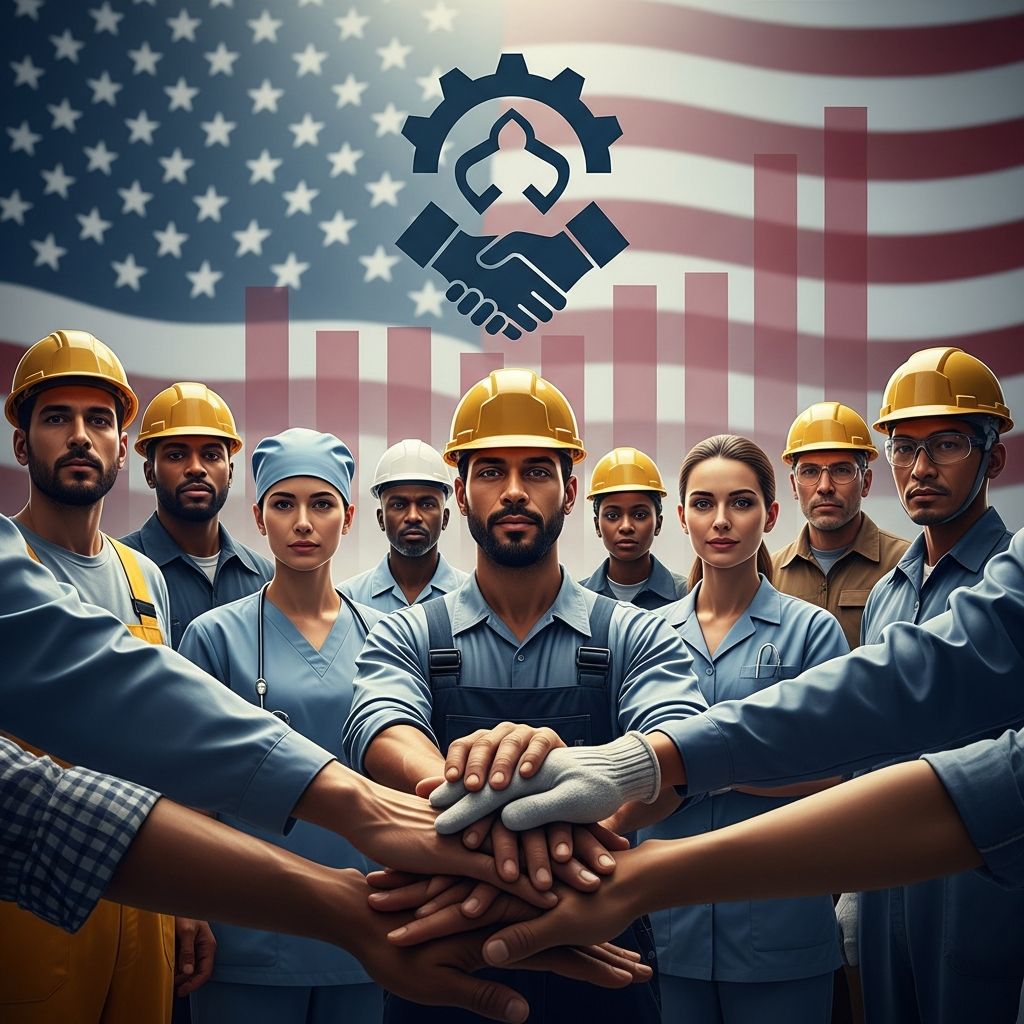
Labor unions remain an important part of the American workplace, especially for employees who want a collective voice in negotiations over pay, hours, benefits, and job security. This guide explains how major U.S. labor unions are organized, what industries they represent, and how they support workers under federal labor law.
Why Labor Unions Matter in the Modern Workplace
In the United States, a labor union is an organization formed by workers to bargain collectively with employers over wages, benefits, and working conditions. The legal framework for most private-sector union activity is the National Labor Relations Act (NLRA), which protects employees’ right to organize and bargain collectively.
- Collective bargaining power: Unions negotiate contracts that set minimum pay, benefit levels, and workplace protections for an entire group of employees.
- Workplace voice: Unions give workers structured channels to raise safety concerns, discrimination issues, or unfair discipline.
- Enforcement of rights: Many unions assist members in filing grievances, pursuing arbitration, or working with government agencies such as the National Labor Relations Board (NLRB) and the U.S. Department of Labor (DOL).
- Policy influence: National labor federations and large unions frequently participate in debates over minimum wage laws, overtime rules, and workplace safety standards.
How U.S. Labor Unions Are Structured
Most labor unions in the United States follow a tiered structure that connects local shop-floor representation to larger national organizations.
Local Unions
Local unions are the most direct point of contact for individual workers. A local may represent a single workplace, a group of nearby facilities, or all union members in a specific trade within a region.
- Members elect their own officers, such as president, treasurer, and shop stewards.
- Locals negotiate collective bargaining agreements (CBAs) with specific employers.
- They administer day-to-day contract enforcement and handle grievances and arbitration.
National and International Unions
Above the local level, national or international unions coordinate bargaining strategies, legal support, research, and training across many locals.
- They may negotiate national or pattern agreements in industries like auto manufacturing, trucking, or building trades.
- They provide legal departments, research units, and health and safety experts to support locals.
- Some unions are called “international” because they operate in both the United States and Canada or beyond.
Labor Federations and Coalitions
Many unions belong to larger federations that coordinate political activity, public campaigns, and cross-union solidarity.
- AFL–CIO: The American Federation of Labor and Congress of Industrial Organizations is the largest U.S. labor federation and represents millions of union members across many industries.
- Other coalitions and networks unite unions around specific goals, such as public-sector bargaining, service-sector organizing, or immigrant worker protections.
Major Sectors Represented by U.S. Labor Unions
Labor unions are organized largely by type of work or industry. Below is an overview of key sectors where unions play a major role.
Manufacturing and Industrial Workers
Industrial unions represent workers who produce goods, operate heavy equipment, or work in mass production settings such as auto plants, steel mills, and factories.
- Unions in this sector historically have negotiated wages, health insurance, pensions, and job security provisions such as seniority and layoff protections.
- They often address safety hazards associated with machinery, chemicals, and physically demanding labor.
Construction and the Building Trades
Building trades unions focus on skilled crafts used in construction and infrastructure projects, including electricians, carpenters, plumbers, ironworkers, operating engineers, and laborers.
- These unions typically maintain apprenticeship programs that combine classroom instruction with paid on-the-job training.
- They negotiate project labor agreements and contracts that set wage scales by skill level and protect safety on job sites.
- Federal laws such as the Davis–Bacon Act require payment of prevailing wages on many public construction projects, which often align with union pay scales.
Transportation and Logistics
Transportation unions represent workers in freight, passenger travel, and logistics, including:
- Railroad and transit workers
- Truck drivers and warehouse workers
- Airline pilots, flight attendants, and ground crews
Rail and airline labor relations are largely governed by the Railway Labor Act, which establishes procedures for resolving labor disputes and protecting continuity of transportation services.
Public-Sector and Government Employees
Many federal, state, and local government workers are represented by unions, including teachers, police officers, firefighters, and clerical employees.
- Public-sector bargaining rights are determined primarily by state law and executive orders rather than the NLRA.
- Issues often focus on class sizes, public safety staffing, pension funding, and due process protections in discipline and discharge.
Education, Health Care, and Public Services
Educators, nurses, social workers, and other service professionals organize for workloads, staffing levels, and professional standards that affect both employees and the public.
- Teachers’ unions negotiate contracts that cover salaries, class sizes, and evaluation systems.
- Health-care unions advocate for safe staffing ratios, protective equipment, and training, particularly in hospitals and long-term care facilities.
Service, Retail, Hospitality, and Food Work
Unions increasingly represent workers in supermarkets, hotels, restaurants, building maintenance, and security services.
- These unions frequently focus on base pay, predictable schedules, access to full-time work, and affordable health insurance.
- They may also address issues of harassment, discrimination, and respect on the job, especially in customer-facing roles.
Examples of Union Representation by Type of Work
The table below illustrates how unions often align with particular occupations or industries. Specific union names are omitted here to keep the focus on categories of representation.
| Type of Work | Typical Workplaces | Common Bargaining Issues |
|---|---|---|
| Skilled construction trades | Commercial and residential building sites; infrastructure projects | Wage scales by skill, safety standards, apprenticeship rules |
| Industrial and manufacturing | Auto plants, steel mills, equipment factories, food processing | Base pay, job security, health coverage, shift scheduling |
| Transportation and logistics | Rail yards, trucking terminals, airports, delivery hubs | Hours of service, overtime, safety rules, pension plans |
| Public education | Public schools, community colleges, universities | Salaries, class size, prep time, evaluation and tenure |
| Health care | Hospitals, clinics, long-term care facilities | Staffing ratios, pay differentials, protective equipment |
| Retail and hospitality | Grocery stores, hotels, casinos, restaurants | Starting wages, scheduling, tips and service charges, benefits eligibility |
Key Rights and Protections Related to Unions
Several major U.S. laws define how unions operate and what rights workers have when considering union representation.
- National Labor Relations Act (1935): Guarantees most private-sector employees the right to form and join unions, bargain collectively, and act together for mutual aid and protection.
- National Labor Relations Board (NLRB): Enforces the NLRA, oversees union elections, and investigates unfair labor practice charges.
- Railway Labor Act (1926): Covers railroad and airline employees, setting procedures for bargaining and dispute resolution.
- Fair Labor Standards Act (FLSA): Establishes federal minimum wage, overtime pay, and child labor restrictions; union contracts often build on these minimums to negotiate higher standards.
- Other protective laws: The Occupational Safety and Health Act, Equal Pay Act, and various civil rights statutes set baseline protections that unions can help enforce through contract language and grievance procedures.
Benefits and Tradeoffs of Union Membership
Whether to seek union representation is a personal and workplace-specific decision. Understanding the typical advantages and tradeoffs can help workers make informed choices.
Potential Advantages
- Stronger bargaining position: Unions enable workers to negotiate as a group rather than individually, which research has associated with higher average wages and better benefits compared with similar nonunion workers.
- Clear contract rights: Collective bargaining agreements can spell out rules for discipline, layoffs, overtime, and promotions.
- Representation in disputes: Union representatives assist members in grievances, mediations, and arbitrations when conflicts arise.
- Improved safety and health: Unions commonly prioritize enforcement of safety laws and negotiate additional protections tailored to hazardous work environments.
Potential Tradeoffs
- Dues and fees: Members usually pay regular dues to fund union operations, bargaining, and legal support.
- Contract constraints: Work rules negotiated in contracts may limit individual flexibility in scheduling, job assignments, or performance-based pay.
- Collective decisions: Contract priorities and strike decisions are made democratically, which may not always match the preferences of every individual worker.
How Workers Typically Form or Join a Union
The process for forming a new union or joining an existing one in the private sector follows steps overseen by the NLRB.
- Initial interest: Workers talk with one another about workplace issues and may contact a union that represents similar occupations.
- Authorization cards or petitions: Employees sign cards indicating they want union representation.
- Election request: If enough interest exists, a petition is filed with the NLRB requesting a secret-ballot election.
- Campaign period: Both workers and management may share views; certain employer behaviors—such as threats or retaliation—are prohibited by law.
- Election and certification: If a majority of voting employees choose union representation, the NLRB certifies the union as the bargaining representative.
- Bargaining a first contract: The newly certified union and employer negotiate a collective bargaining agreement, which members typically vote to approve or reject.
Questions to Ask When Evaluating Union Representation
Workers considering unionization or joining an existing union may want to assess how well it fits their workplace needs.
- What kinds of workers and industries does the union already represent?
- How successful has it been in negotiating contracts with wages and benefits comparable to or better than local market standards?
- What grievance procedures, legal support, or training opportunities does the union provide?
- How democratic and transparent are leadership elections, financial reports, and major decisions?
- How does the union engage with broader community or policy issues that may affect your industry?
Frequently Asked Questions (FAQs)
Q: Are all workers in the United States allowed to join a labor union?
A: Most private-sector employees have the right to form and join a union under the National Labor Relations Act, but certain groups—such as supervisors, some agricultural workers, and public-sector employees in specific states—may be covered by different rules or have limited bargaining rights.
Q: Does joining a union guarantee higher pay?
A: No union can guarantee particular wage levels, but collective bargaining tends to raise average wages and benefits compared to similar nonunion jobs. Actual outcomes depend on the strength of the bargaining unit, the employer’s finances, and broader economic conditions.
Q: Can an employer fire workers for supporting a union?
A: Under federal law, employers may not legally fire, discipline, or otherwise retaliate against employees for engaging in protected union activity, such as organizing or supporting a union campaign. Workers can file unfair labor practice charges with the NLRB if they believe retaliation has occurred.
Q: What happens if union members reject a proposed contract?
A: If members vote against a tentative agreement, the union and employer typically return to the bargaining table. In some situations, members may also vote on whether to authorize a strike or pursue other forms of concerted action, subject to legal requirements and union bylaws.
Q: How can I find out which union might represent my job?
A: Workers can look at existing union contracts at their workplace, ask co-workers, or research unions that cover their industry or occupation nationally. Many unions and state labor federations provide contact information online so workers can inquire confidentially.
References
- National Labor Relations Act — National Labor Relations Board. 1935 (as amended). https://www.nlrb.gov/guidance/key-reference-materials/national-labor-relations-act
- Labor Unions — EBSCO Research Starters. 2023. https://www.ebsco.com/research-starters/social-sciences-and-humanities/labor-unions
- A Brief History of Unions — Union Plus. 2022. https://www.unionplus.org/page/brief-history-unions
- The History of the Union Movement — New York State AFL-CIO. 2021. https://nysaflcio.org/history-union-movement
- Basic Guide to the National Labor Relations Act — National Labor Relations Board. 2017. https://www.nlrb.gov/guidance/key-reference-materials/basic-guide-to-the-nlra
- Fair Labor Standards Act (FLSA) — U.S. Department of Labor, Wage and Hour Division. 2023. https://www.dol.gov/agencies/whd/flsa
Similar Articles








Read full bio of Sneha Tete


