
Your Complete Guide to Navigating Voting Rights at the Polls
Empower yourself to protect your vote and overcome polling place obstacles.
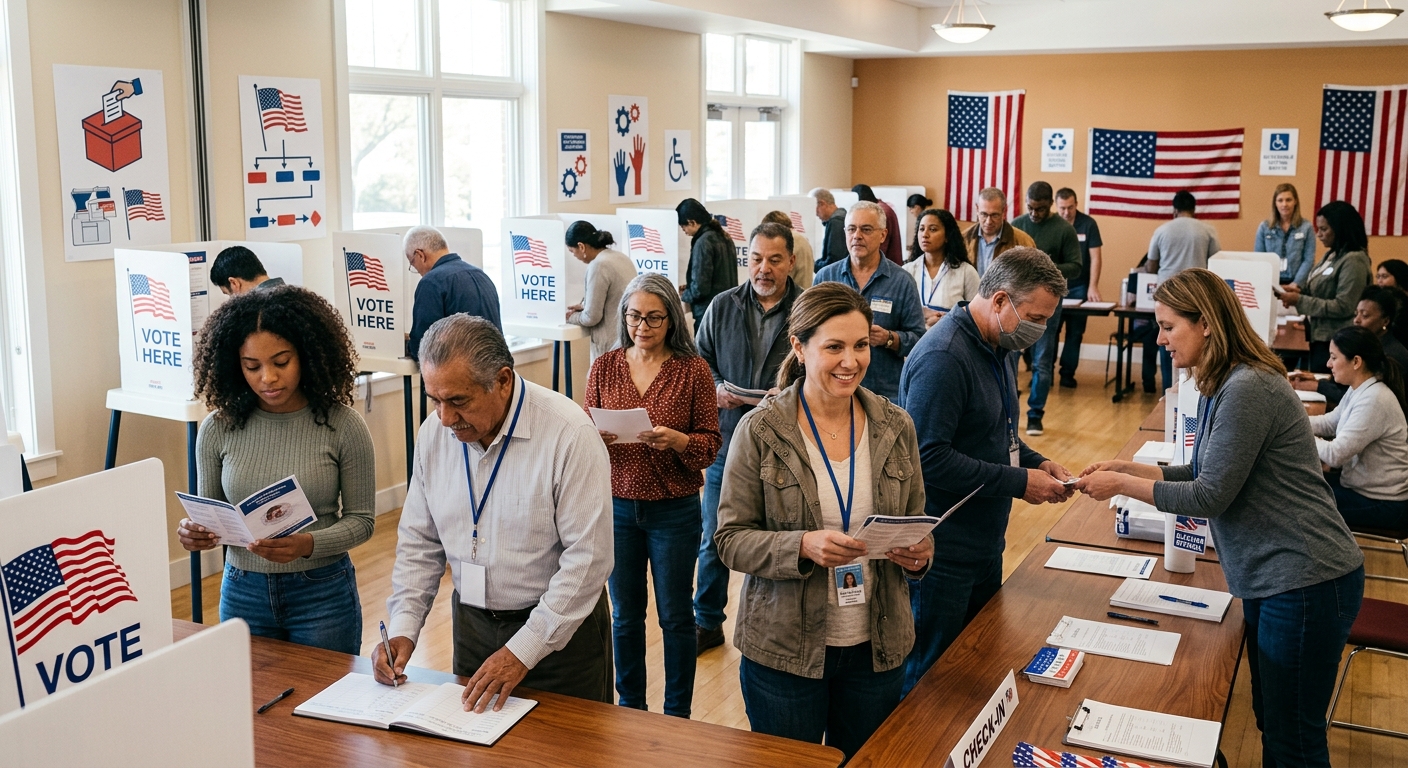
Elections are the cornerstone of any democratic society, serving as the most direct mechanism for citizens to influence their government. However, the path to the ballot box is not always straightforward. On Election Day, voters can encounter unexpected challenges, ranging from administrative errors and long lines to accessibility issues and intimidation. Understanding your legal rights before you step into a polling place is absolutely essential for ensuring that your voice is heard.
The struggle for equal voting rights has been one of the defining narratives of American history. Despite monumental victories like the Voting Rights Act of 1965, the modern voting landscape remains complex. Administrative complexities, evolving state laws, and logistical failures can still impede the fundamental right to vote. Recognizing these potential challenges is the first step toward overcoming them. Educated voters act as empowered guardians of their own civic voice.
This comprehensive guide explores the multifaceted landscape of voting rights, offering practical solutions and legal context for the most common hurdles you might face. By arming yourself with this knowledge, you can confidently navigate the voting process, advocate for yourself, and ensure that your ballot is counted. We will delve into the critical protections established by federal laws, the fail-safes designed to catch administrative mistakes, and the protocols for handling errors, long lines, and interference.
Understanding Provisional Ballots: Your Safety Net
One of the most panic-inducing moments a voter can experience is arriving at the polling place only to be told that their name does not appear on the official voter registration roster. This situation can occur for a variety of reasons: a clerical error at the election office, a recent change of address that wasn’t processed in time, or an accidental purge from the voter rolls. Fortunately, federal law provides a robust safety net for exactly this scenario: the provisional ballot.
Under the Help America Vote Act (HAVA), any individual who declares they are registered and eligible to vote in a specific jurisdiction, but whose name cannot be found on the list, is legally entitled to cast a provisional ballot . A provisional ballot functions as a standard ballot but is placed in a secure envelope rather than being fed directly into the counting machine.
The process involves filling out an affirmation of eligibility. After the election, local election authorities will research your registration status. If they verify that you were indeed legally registered, your ballot will be extracted and counted. Do not simply leave the polling place if you are not on the list. Politely request a provisional ballot and ask the poll worker for written instructions on how to follow up, as states are required to provide a free access system to check the status of your provisional vote.
The Golden Rule of Poll Closing Times: Stay in Line
Election Days are notoriously busy, and polling locations often experience massive surges in voter turnout, leading to lines that snake around the building. A critical rule that every voter must know is the protection against polling place closures while you are actively waiting to cast your vote.
If you are physically standing in line at your designated polling location before the official closing time, you have the absolute legal right to cast your ballot. For example, if your state’s polls officially close at 8:00 PM, and you join the back of the line at 7:59 PM, the poll workers are legally obligated to allow you to vote, regardless of how long it takes for you to reach the front. Typically, a designated poll worker will move to the end of the line precisely at the closing time to mark the cutoff point.
If a poll worker announces that the location is closing and everyone must leave while you are already in line, do not step out of line. Remind the officials of your right to vote if you arrived before closing. Staying in line is your most powerful tool against disenfranchisement due to logistical bottlenecks.
Accessibility at the Polling Place: Voting with a Disability
Voting is a fundamental right that must be accessible to all eligible citizens, regardless of physical, sensory, or cognitive disabilities. A robust framework of civil rights legislation, most notably the Americans with Disabilities Act (ADA) and HAVA, strictly prohibits discrimination and mandates comprehensive accessibility at the polls .
Under the ADA, state and local governments must ensure that people with disabilities have a full and equal opportunity to vote. Polling places must be structurally accessible, requiring paved pathways, wheelchair-accessible ramps, doors of adequate width, and accessible parking. If an existing building cannot be fully adapted, election officials must provide alternatives, such as curbside voting.
Furthermore, federal law requires that every polling location have at least one voting system that allows individuals with disabilities to vote privately and independently. These accessible voting machines often include features like audio balloting with headphones for voters who are blind or have low vision, tactile keypads, and adjustable screen text sizes.
If you require physical assistance reading the ballot or operating the voting machine, federal law also allows you to bring a person of your choice into the voting booth to help you. The only restriction is that this person cannot be your employer or an officer of your labor union, ensuring your vote remains free from undue influence.
Overcoming Language Barriers: Federal Protections
The United States is a linguistically diverse nation, and proficiency in English is not a prerequisite for participating in democracy. The Voting Rights Act mandates that certain jurisdictions must provide bilingual voting materials and language assistance if a significant portion of the voting-age population belongs to a single-language minority group and has limited English proficiency.
In these designated areas, all election information—from voter registration forms to the actual ballots—must be available in the minority language. Additionally, polling places in these jurisdictions are typically required to have bilingual poll workers available to assist voters.
Even if you do not live in a bilingual jurisdiction, federal law protects your right to receive language assistance. Any voter who needs help because they cannot read or write English sufficiently well is permitted to bring an interpreter of their choice into the voting booth. This can be a family member, a friend, or a community volunteer.
Fixing Errors: Handling Spoiled Ballots
The pressure of being in the voting booth can sometimes lead to simple human errors. You might accidentally fill in the bubble for the wrong candidate, vote for too many candidates in a single race, or accidentally tear your paper ballot.
If you make an error on your ballot, do not cast it. Putting an erroneous ballot into the scanner could result in your vote for that specific contest not being counted. Instead, you have the right to request a replacement, commonly referred to as a “spoiled ballot.”
The procedure is entirely normal: approach a poll worker, explain that you have made a mistake, and ask for a new ballot. The poll worker will take your spoiled ballot, mark it as void, and place it in a secure envelope to ensure it is not counted. You will then be issued a fresh ballot to complete. Most states allow a voter to spoil multiple ballots per election, providing ample opportunity to ensure your choices are accurately recorded.
It is also important to note that you should never feel rushed or embarrassed by making a mistake. Poll workers are trained to handle these exact scenarios smoothly and discreetly. The integrity of the election relies on your ballot accurately reflecting your true intent, so taking the time to correct an error is not just your right—it is a vital part of the democratic process. In some jurisdictions, the voting machines themselves will alert you if you have overvoted before you finalize your submission, giving you an immediate opportunity to request a spoiled ballot.
Recognizing and Combating Voter Intimidation
A cornerstone of free and fair elections is the guarantee that voters can cast their ballots without fear of harassment, coercion, or intimidation. It is crucial to recognize what constitutes intimidation and to understand that federal and state laws forcefully prohibit such behavior .
Voter intimidation can take many forms, both subtle and overtly aggressive. Examples include individuals aggressively questioning voters about their citizenship status outside the polling place, people displaying false signs about the consequences of voting, or individuals loitering near voting booths to spy on how people are voting. It also includes threatening language, brandishing weapons near a polling site, or intentionally blocking access to the entrance.
Under federal law, no person may intimidate, threaten, or coerce any other person for the purpose of interfering with their right to vote. If you experience or witness any behavior that makes you feel threatened or deterred from voting, report it immediately to the chief election judge at the polling place, who has the authority to maintain order. If the situation escalates, contact local law enforcement or nonpartisan election protection hotlines.
Navigating Voter Identification Laws
Many states have implemented voter identification laws, adding a layer of complexity to the voting process. These laws vary wildly from state to state. Some require a government-issued photo ID, while others accept non-photo IDs like a utility bill. Still, other states rely solely on signature matching.
It is vital to verify your state’s specific identification requirements well before Election Day. However, if you arrive at the polls and realize you forgot your ID, you usually still have options. Many states allow voters without ID to cast a regular ballot if they sign a legally binding affidavit affirming their identity. In states with the strictest laws, you are still entitled to cast a provisional ballot, though you may be required to present an acceptable ID to the local election office within a few days.
The practical reality is that you must be prepared to comply with the laws active in your specific state. To avoid last-minute stress, check your Secretary of State’s website weeks before the election to confirm exactly which forms of ID are acceptable. If your state requires a photo ID and you lack one, research state-sponsored programs that provide free voter identification cards to eligible citizens.
Common Polling Place Issues and Solutions
To help you prepare for Election Day, here is a quick reference guide to common issues and the legal solutions available to you:
| Common Issue | Your Right / The Solution |
|---|---|
| Your name is missing from the voter roll. | Demand a provisional ballot. Federal law guarantees this fail-safe option. |
| The polls close while you are still in line. | Stay in line. You have the right to vote if you arrived before closing time. |
| You make a mistake marking your ballot. | Ask a poll worker to void your ballot and issue you a new, replacement ballot. |
| You face aggressive questioning or harassment. | Report the intimidation to the head poll worker or local law enforcement immediately. |
| You forgot your required photo ID. | Ask to sign an affidavit of identity or request to cast a provisional ballot. |
Frequently Asked Questions (FAQs)
- Can I wear political clothing to the polling place?
Most states have strict laws regarding “electioneering” near the polls. This means you generally cannot wear shirts, hats, or buttons explicitly endorsing a candidate or ballot measure currently on the ballot within a certain distance of the voting booths. To avoid being asked to cover up or change, it is best to wear neutral clothing.
- What happens if a voting machine breaks down?
If electronic voting machines malfunction, election officials are legally required to have a backup plan. This usually involves transitioning to emergency paper ballots. Do not leave the polling place without casting a ballot; insist on using the backup paper method if the machines are non-operational.
- Can I take a selfie with my ballot?
The legality of “ballot selfies” depends entirely on your state’s specific election laws. Some states encourage them as a form of civic expression, while others strictly ban photography inside the polling place to protect voter privacy and prevent vote-buying schemes. Always check your local laws before taking out your phone in the voting booth.
- What if I require assistance, but I don’t have anyone to bring with me?
If you need help reading the ballot, translating the text, or physically operating the voting machine, and you do not have a trusted friend or family member available to assist you, you still have options. You can request assistance directly from the poll workers. By law, bipartisan teams of poll workers (usually one from each major political party) can accompany you into the booth to provide neutral, strictly administrative assistance to ensure your vote is cast exactly as you intend.
The right to vote is the most fundamental mechanism of civic participation. By understanding your rights regarding provisional ballots, accessibility, language assistance, and intimidation, you empower yourself to navigate the complexities of Election Day confidently. Do not let administrative hurdles or misinformation prevent you from casting your ballot. Stay informed, be prepared to advocate for yourself, and ensure that your voice is part of the democratic process.
References
- What are my rights as a voter? — U.S. Election Assistance Commission. 2025-12-23. https://www.eac.gov/voters/what-are-my-rights-voter
- The Americans with Disabilities Act and Other Federal Laws Protecting the Rights of Voters with Disabilities — U.S. Department of Justice. 2024-04-18. https://www.ada.gov/resources/protecting-voter-rights/
- Voter Intimidation Under Federal Law — U.S. Department of Justice. 2024-04-15. https://www.justice.gov/crt/voter-intimidation-under-federal-law
Similar Articles








Read full bio of medha deb


