
Your Guide to Legally Filming Police Encounters
Master the legal boundaries of recording law enforcement to protect your rights and promote accountability safely.
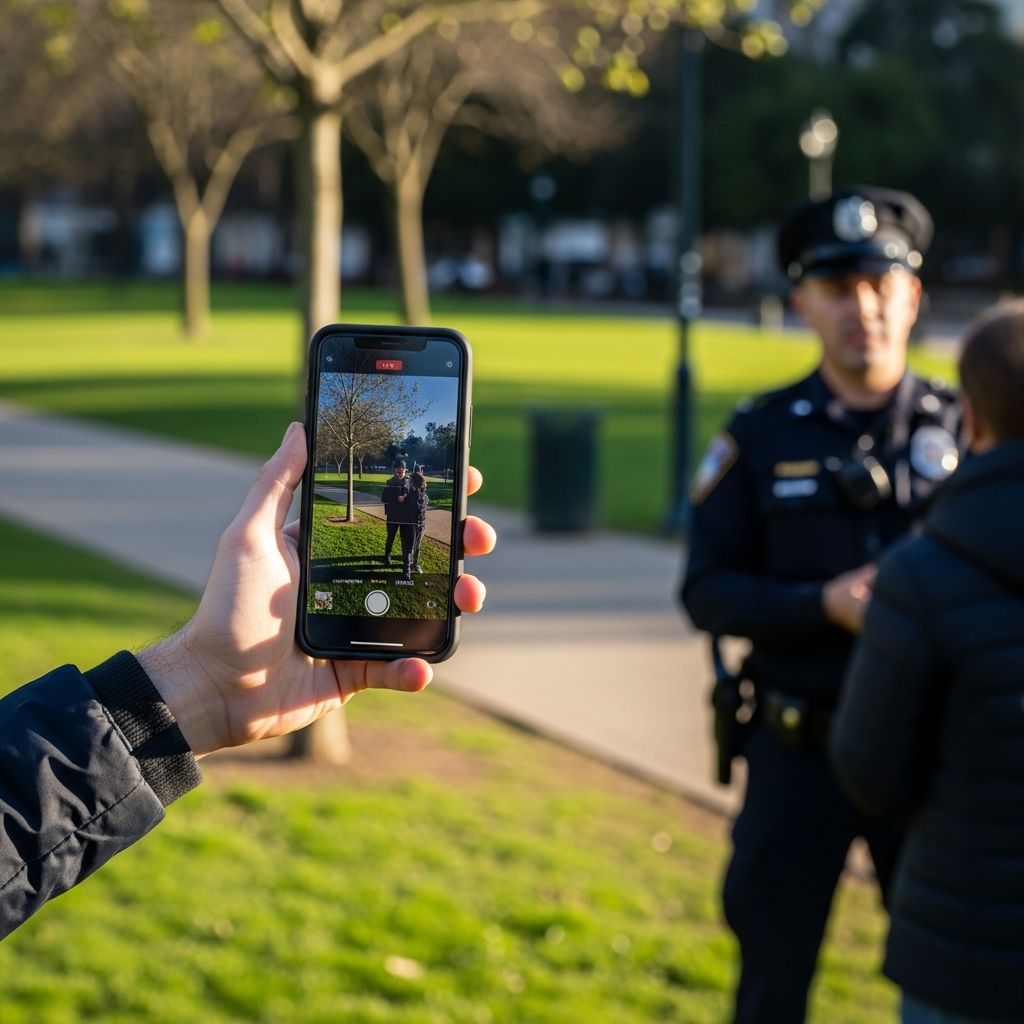
Documenting interactions with law enforcement has become a vital tool for transparency and accountability in modern society. With smartphones ubiquitous, citizens frequently capture video or audio of police activities, providing crucial evidence in cases of alleged misconduct. However, this practice is governed by specific legal boundaries rooted in the First Amendment, which safeguards the right to record public officials performing their duties. This comprehensive guide explores the foundational rights, practical strategies, potential pitfalls, and jurisdictional variations to empower you to record responsibly and effectively.
Understanding Your Constitutional Right to Record
The cornerstone of recording police is the First Amendment, which protects freedom of speech and the press. Courts have consistently affirmed that citizens, like journalists, possess the right to capture visual and auditory records of officers in public spaces where there is no reasonable expectation of privacy. This right stems from the public’s interest in monitoring government actions, ensuring officers remain accountable without fear of reprisal.
Key principles include:
- Open Visibility: Recordings must typically be overt; secret audio captures can violate wiretapping statutes in certain states.
- Public Spaces: The protection applies primarily to streets, parks, and other areas accessible to the public.
- Non-Interference: Filming cannot hinder police operations, such as blocking pathways or distracting officers during critical tasks.
Landmark federal rulings, including those from circuits across the U.S., reinforce that suppressing such recordings infringes on core democratic values. For instance, the First Circuit Court of Appeals in Glik v. Cunniffe established that ‘the right to record police is firmly rooted in the First Amendment’. This precedent has influenced nationwide jurisprudence, though application varies by locality.
Boundaries That Limit Your Recording Rights
While robust, the right to film is not absolute. Officers may intervene if recording compromises safety or duties. Common restrictions include:
- Proximity issues: Standing too close can be deemed obstructive.
- Private areas: Inside homes or non-public facilities, consent or warrants may be required.
- Audio consent laws: In ‘all-party consent’ states like Massachusetts, all involved must agree to audio recording.
| Situation | Allowed? | Reason |
|---|---|---|
| Filming arrest in public park | Yes, from safe distance | First Amendment protection |
| Secret audio in conversation | Often No | Wiretap law violations |
| Blocking officer’s path | No | Obstruction of justice |
| Recording inside police station | Generally No | Expectation of privacy/security |
Violating these can lead to charges like disorderly conduct or interfering with public servants, as outlined in statutes such as Texas Penal Code §38.15. Courts scrutinize arrests for retaliation, often suppressing evidence if pretextual.
Practical Strategies for Safe and Effective Filming
To maximize protection and utility, adopt these evidence-preserving techniques:
- Maintain Distance: Stay 10-15 feet away to avoid interference claims. Use zoom features on modern devices.
- Announce Intent: Verbally state, ‘I’m exercising my First Amendment right to record in public.’ This creates an audible record.
- Backup Footage: Enable cloud upload or share live streams to prevent deletion or confiscation.
- Document Details: Note badge numbers, vehicle plates, timestamps, and witness info alongside video.
- Remain Calm: Avoid arguments; compliance with lawful orders preserves the recording’s admissibility.
In high-tension scenarios, like witnessing potential brutality, prioritize safety. Position yourself unobtrusively and continue recording if feasible, but retreat if ordered under valid safety concerns.
State-by-State Variations in Recording Laws
Laws differ significantly across the U.S., categorized by wiretapping consent requirements:
- One-Party Consent (Majority): States like Texas, New York allow recording if you’re part of the conversation.
- All-Party Consent (12 States): California, Florida require everyone’s agreement for audio. Video without sound often remains protected.
- Hybrid Approaches: Some, like Illinois, ban public official recordings but face First Amendment challenges.
Texas exemplifies permissive rules: Open video/audio is legal absent interference, supported by ACLU guidance. Conversely, stricter states mandate visibility to sidestep eavesdropping charges. Always verify local statutes via official resources like state penal codes or ACLU know-your-rights pages.
Officer Responses: What to Expect and How to Respond
Police may challenge recordings, claiming obstruction or ordering cessation. Responses include demands to stop, device seizures, or arrests. Legally:
- Officers cannot delete footage or seize devices without warrants.
- Politely assert: ‘I am not interfering and am recording lawfully under the First Amendment.’ Do not physically resist.
- If arrested, request a lawyer and preserve the video for legal review.
Courts frequently overturn retaliatory arrests, as in cases where footage proved First Amendment violations. Body cameras on officers complement civilian recordings, but independent citizen footage remains invaluable for unbiased perspectives.
Preserving and Sharing Your Recordings
Post-encounter, secure footage promptly:
- Download to multiple devices/cloud storage.
- Submit to oversight bodies like internal affairs or civilian review boards.
- Share publicly via platforms like YouTube only after backing up, redacting sensitive info.
- Avoid handing originals to police; provide copies if requested.
For advocacy, organizations like the ACLU assist in leveraging videos for policy change or litigation. High-profile cases, from Rodney King to George Floyd, underscore recordings’ role in justice.
Frequently Asked Questions (FAQs)
Can police arrest me just for recording them?
No, if you’re in public, not interfering, and following state laws. Arrests for valid recordings are often deemed unconstitutional.
What if an officer tells me to stop filming?
Calmly remind them of your rights but comply if they cite a legitimate safety issue. Challenge later through complaints or courts.
Is audio recording different from video?
Yes, audio implicates wiretap laws. In public, video is broadly protected; audio requires consent in some states.
Can I record during my own traffic stop?
Absolutely, place your phone visibly on the dash and inform the officer.
What should I do if they try to take my phone?
Do not resist physically. State non-consent and note details for later retrieval via warrant challenges.
Empowering Accountability Through Informed Action
Recording police fosters trust and reform by creating verifiable records free from bias. As technology evolves—think live-streaming and AI-enhanced analysis—this right will grow in importance. Stay informed, act judiciously, and contribute to a more transparent justice system. Consult legal experts or ACLU resources for personalized advice, as laws evolve.
References
- Video or Audio Recording of Police Officers & Your Legal Rights — Justia. Accessed 2026. https://www.justia.com/criminal/procedure/right-to-record-police-officers/
- Recording Police Interactions and Arrests in Texas — Texas Criminal Defense Group. Accessed 2026. https://texascriminaldefensegroup.com/recording-police-interactions-and-arrests-in-texas/
- Your Right to Film Police — ACLU of Texas. Accessed 2026. https://www.aclutx.org/know-your-rights/your-right-film-police/
- LAWYER: How Police Get Around Your Right to Record Them — YouTube (Video Transcript). Accessed 2026. https://www.youtube.com/watch?v=VPixz5bOWQ4
- Filming and Photographing the Police — American Civil Liberties Union. Accessed 2026. https://www.aclu.org/issues/free-speech/photographers-rights/filming-and-photographing-police
Similar Articles








Read full bio of Sneha Tete


