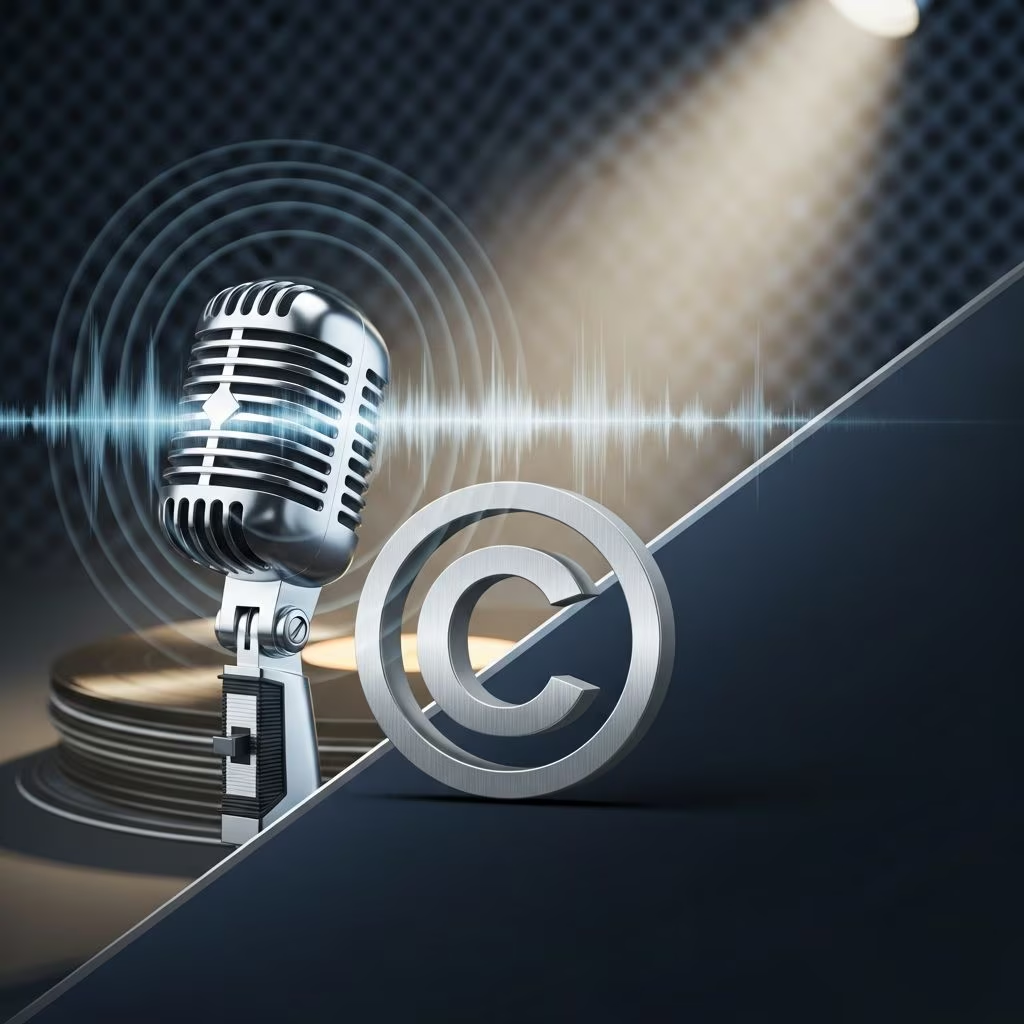
Sound recordings represent a vital form of creative expression in the music industry, encompassing everything from studio tracks to spoken word performances. Under U.S. law, these works gain automatic copyright protection upon fixation in a tangible medium, yet formal registration unlocks critical legal benefits like statutory damages and attorney fees in infringement cases. This guide explores the nuances of safeguarding audio works, offering creators a roadmap to navigate the U.S. Copyright Office processes effectively.
Understanding Sound Recordings in Copyright Law
A **sound recording** consists of fixed series of musical, spoken, or other sounds, excluding those accompanying audiovisual works like films. This definition, rooted in the Copyright Act, emphasizes the recorded performance rather than the underlying composition such as lyrics or melody. For instance, a band’s live studio take of an original song protects the specific performance nuances—vocal inflections, instrumental timbres, and production choices—not the song’s sheet music equivalent.
Creativity is key: mere mechanical reproductions lack protectable authorship, but original aural elements like novel mixes or added effects qualify. Derivative works, such as remixes incorporating preexisting tracks with new sounds, may warrant protection if they demonstrate minimal originality. This distinction ensures copyright rewards human ingenuity over rote copying.
Automatic Protection vs. Formal Registration
Copyright vests immediately when a sound recording is fixed—recorded on a digital file, tape, or disc—in a perceivable form. No formalities are required for this initial shield against unauthorized reproduction or distribution. However, to sue for infringement in federal court and pursue enhanced remedies, registration with the U.S. Copyright Office is mandatory before or within three months of publication.
Registration establishes a public record, presuming ownership validity and enabling awards up to $150,000 per willful infringement. Processing typically spans 3-6 months, but protection dates from submission. For pre-1972 recordings, state laws or special federal provisions apply, as full federal coverage began February 15, 1972.
Differentiating Sound Recordings from Musical Compositions
| Aspect | Sound Recording (SR) | Musical Composition (PA) |
|---|---|---|
| Protects | Performance, production, specific recording | Melody, harmony, lyrics |
| Form | SR on Copyright Office portal | PA (Performing Arts) |
| Example Ownership | Producer owns studio version | Songwriter retains melody rights |
| Registration | Separate if authors/owners differ | Can combine if identical |
These copyrights coexist independently: a cover version grants the new performer SR rights while the original composer holds PA rights. Use Form SR for recordings alone or combined with compositions when authorship and ownership align. Misidentifying types can invalidate claims, so assess carefully.
Step-by-Step Registration Process
Registering demands three elements: a completed application, nonrefundable fee ($45-$65 online), and deposit copy. Access the eco portal at copyright.gov, create an account, and select the Standard Application for most cases.
- Prepare Details: Gather title(s), author(s), claimant, creation/publication dates, and authorship type (e.g., “sound recording” or “compilation”).
- Complete Form: Specify limitations for derivatives, noting preexisting material. For works made for hire, list employer as author.
- Upload Deposit: Submit digital audio files—one for unpublished, two for published. Demos suffice if representative.
- Pay and Submit: Receive instant case number for tracking; certificate arrives post-review.
Accuracy prevents delays; corrections incur fees. Online filing expedites over paper.
Group Registration Options for Efficiency
Streamline multiples via special provisions.
- Unpublished Collections: Up to ten by same author/claimant, e.g., demo tracks.
- Collective Works: Albums as integrated wholes, covering selection/arrangement plus individuals if same ownership. Example: CD with ten tracks and liner notes.
Bundled releases like vinyl with artwork, single app for all elements.
All works must share authorship and claimant; sound recordings excel here due to exceptions beyond standard 10-work limits. This saves fees and time for prolific creators.
Authorship and Ownership Essentials
Authors are typically performers and producers; employers claim works made for hire under standard employment or written agreements. Co-authors register jointly. Claimants—owners at registration—may transfer rights via assignment. For groups, every work needs common authorship and uniform claimant.
Specify in applications: check “Sound Recording,” add “liner notes” under Other if applicable. Derivative claims detail new vs. old material.
Scope and Limitations of Protection
Owners control reproduction, distribution, derivatives, and digital transmission (post-1995), but not public performance except digital audio via royalties. No right to underlying composition performance. Protection endures 95 years from publication for post-1978 works or life-plus-70 for authors.
Mechanical changes like format shifts don’t create new copyrights; originality mandates fresh aural contributions.
Enforcing Your Rights Against Infringement
Monitor platforms for unauthorized uses. Document evidence: captures, links, timestamps. Assess fair use via four factors—purpose, amount, nature, market harm. Send cease-and-desist letters pre-litigation.
Post-registration, federal suit enables injunctions, actual/statutory damages ($750-$30K standard, up to $150K willful), profits, fees. Timely registration maximizes remedies. Consult attorneys for complex disputes.
Common Pitfalls and Pro Tips
- Avoid Auto-Saves as Proof: Registration trumps emails for court.
- Batch Unpublished Works: Cost-effective for portfolios.
- Separate Covers: New SR doesn’t touch original PA.
- International: Berne Convention aids abroad, but register U.S. first.
- Fees Vary: Single paper app $125; micro-entity discounts available.
Frequently Asked Questions
Can I register a remix or mashup?
Yes, if new sounds add original authorship; identify preexisting portions.
What’s the cost and timeline?
$45-$65 online, 3-6 months processing; track via case number.
Do I need to register before releasing music?
Not for protection, but yes for full enforcement; preregister singles optionally.
How many tracks per application?
Up to 10 unpublished; albums as collectives.
Does copyright cover lyrics too?
No, register composition separately unless combined.
Empower your audio legacy through proactive copyrighting. Stay vigilant, register strategically, and let your sounds resonate securely.
References
- Circular 56: Copyright Registration for Sound Recordings — U.S. Copyright Office. 2023. https://www.copyright.gov/circs/circ56.pdf
- How to Copyright a Sound Recording — LegalZoom. 2024. https://www.legalzoom.com/articles/how-to-copyright-a-sound-recording
- Author(s) of the Sound Recordings — U.S. Copyright Office. 2025. https://www.copyright.gov/eco/gram-sr/author.html
- Register Your Work: Registration Portal — U.S. Copyright Office. 2026-02-01. https://www.copyright.gov/registration/
- How Copyright Works for Sound Recordings — Library of Congress. 2024. https://ask.loc.gov/recorded-sound/faq/313179