
Smart Guide to Buying Authentic American Indian Art
Learn how to confidently buy genuine American Indian arts and crafts while respecting Native artists and avoiding fakes.
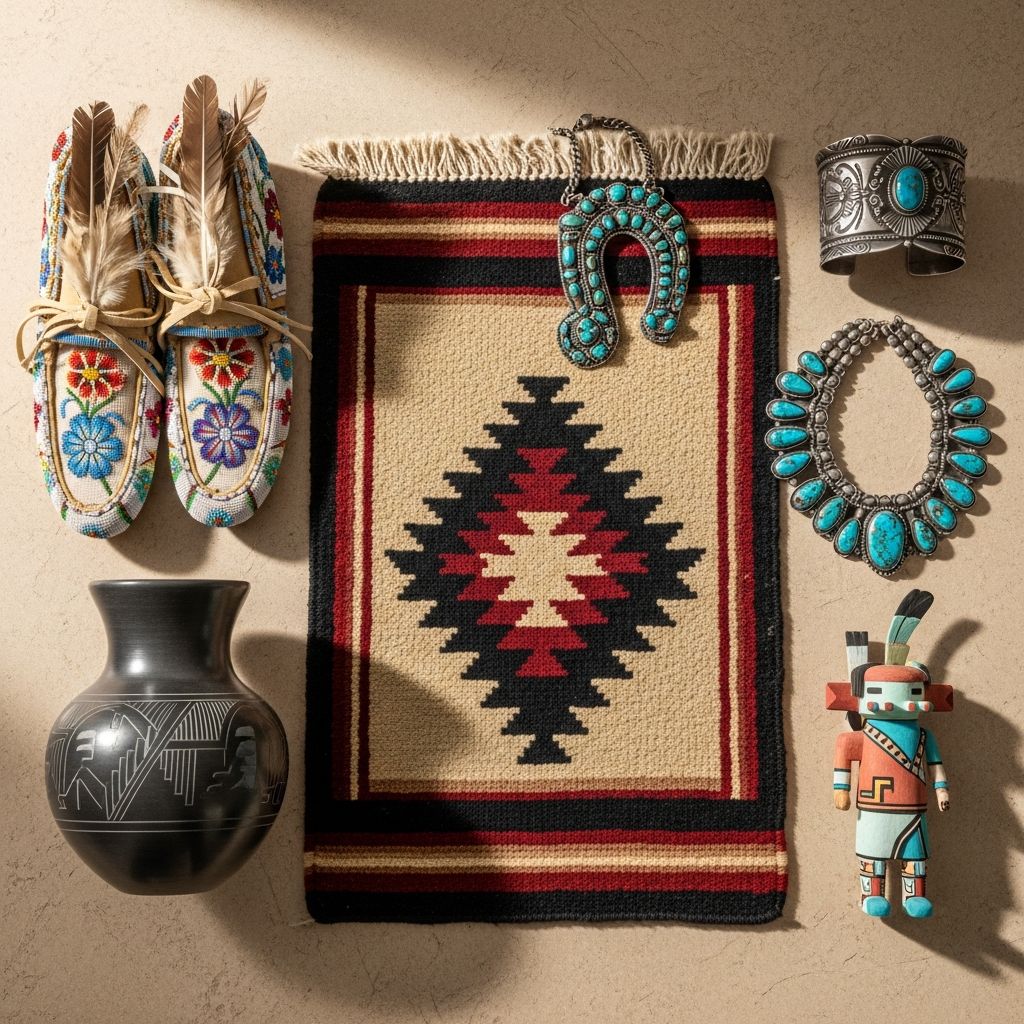
American Indian and Alaska Native arts and crafts carry deep cultural, spiritual, and historical meaning. When you buy these works, you are not just purchasing a beautiful object—you are engaging with living traditions and supporting Native communities. At the same time, misleading sales and counterfeit goods are common, which is why it is important to know how to shop wisely and lawfully.
Why Authenticity Matters for Native Arts
Authentic American Indian artwork is more than a style or design. It reflects:
- Community and tradition – Many pieces grow out of long-standing tribal practices, designs, and ceremonial knowledge.
- Individual artistry – Each artist brings personal creativity, skill, and interpretation to their work.
- Economic impact – Sales of genuine work can be a key source of income for Native artists and their families.
- Cultural respect – Buying authentic goods helps counter cultural appropriation and misrepresentation.
Misleading products—such as imported items falsely marketed as Native-made—undermine both consumer trust and Native artists’ livelihoods.
Understanding the Indian Arts and Crafts Act
The Indian Arts and Crafts Act (IACA) is a federal truth-in-advertising law designed to protect both consumers and Native artists from misrepresentation.
What the law covers
Under the IACA, it is illegal to offer or sell any good in a way that falsely suggests it is produced by an American Indian or Alaska Native individual or tribe when that is not true. This applies to:
- Jewelry
- Pottery and ceramics
- Textiles and rugs
- Baskets
- Carvings, sculptures, and dolls
- Beadwork and other decorative items
Who may market work as “Indian” or “Native”
| Category | May be advertised as American Indian / Native-made? |
|---|---|
| Member of a federally recognized tribe | Yes, work may be marketed as that tribal member’s or tribal community’s art. |
| Member of a state-recognized tribe | Yes, when consistent with the IACA definition and local law. |
| Non-member certified as an “Indian artisan” by a tribe | Yes, if formally certified by a tribe, they may be described as an Indian artisan for that tribe. |
| Person with Native ancestry but not a member and not certified | No, their work may not legally be marketed as American Indian or Native-made. |
| Non-Native person or foreign manufacturer | No, unless clearly labeled as non-Indian with no suggestion of Native origin. |
Consequences for misrepresentation
Violations of the IACA can lead to civil or criminal penalties, especially when misrepresentation is willful or involves significant monetary value. The law is enforced by the Indian Arts and Crafts Board (IACB) within the U.S. Department of the Interior, often in coordination with agencies like the Federal Trade Commission for deceptive marketing issues.
Where and How to Shop Safely
Genuine American Indian arts and crafts are sold through many channels, from roadside stands to high-end galleries. The key is not the setting but the transparency and reliability of the seller.
Trusted places to consider
- Tribal museums, cultural centers, and gift shops – These venues usually work directly with Native artists or cooperatives and clearly label tribal affiliations.
- Reputable galleries and dealers – Long-established dealers who specialize in Native arts often provide written guarantees and artist information.
- Artist cooperatives and Native-owned businesses – These organizations typically prioritize fair compensation and accurate representation.
- Direct purchases from artists – Markets, fairs, and artisan programs where you can talk with the artist are ideal for learning exactly how and by whom a piece was made.
Questions to ask any seller
Before you buy, ask clear, specific questions and listen for direct answers:
- “Is this piece made by an enrolled member of a federally or state-recognized tribe, or by a certified Indian artisan?”
- “Which tribe or community is the artist affiliated with?”
- “Can you show any documentation for the artist (bio, tribal affiliation, or artisan certification)?”
- “What materials are used and are they natural, treated, or synthetic?”
- “Is this piece handmade, hand-finished, or mass-produced? Was it made from a mold?”
- “Was this object imported, or made in the United States?”
Honest sellers should welcome these questions and be able to provide specific details about artists and production methods.
Recognizing Common Types of Native Arts and Crafts
Knowing the basics of different art forms can help you judge quality and ask better questions.
Jewelry
Native American jewelry often features silver, gold, copper, turquoise, coral, shell, and other stones.
- Materials – High-quality silver should typically be sterling (about 92.5% pure silver), often marked “sterling.”
- Stone treatment – Turquoise may be natural, stabilized with resin, or dyed. Block (plastic) materials can imitate stone but are not genuine gemstones.
- Craftsmanship – Handmade pieces may show subtle tool marks or variation, while mass-produced items usually look perfectly uniform.
Pottery
Tribes across the Southwest and beyond are known for distinctive pottery styles and techniques.
- Hand-coiled vs. molded – Traditional pottery is often hand-coiled and outdoor-fired. Mold-made (greenware) pieces can show seams or a manufactured-looking base.
- Surface – Many traditional pieces are burnished or coated with materials like piñon pitch rather than modern glazes.
- Designs – Motifs can reflect specific tribal or regional styles, but design alone does not prove authenticity.
Textiles and rugs
Woven pieces, such as Navajo rugs, may take weeks or months to complete. Quality indicators can include tight, even weaving, durable fibers, and colorfast dyes.
Baskets, carvings, and other works
- Baskets – Look for consistent weaving, secure edges, and clear labeling indicating tribal affiliation and, where possible, plant materials used.
- Carvings and dolls – For items like katsina (kachina) dolls, simplified traditional forms may reflect genuine Hopi carvings, while highly decorated, fur-laden versions are often commercial knockoffs.
- Beadwork – Quality beadwork typically has even tension, secure backing, and durable threads.
Red Flags and Warning Signs of Misrepresentation
No single sign proves a piece is fake, but the following should prompt extra questions or caution:
- Vague or misleading labels – Terms like “Indian-style,” “Native-inspired,” or “Southwestern look” may indicate the work is not made by Native artists, especially if no tribe is named.
- Missing information – Tags without an artist’s name, tribe, or place of origin leave you in the dark about authenticity.
- Unrealistically low prices – Handmade pieces that normally take many hours to create are unlikely to be sold at rock-bottom prices without some trade-off in authenticity or materials.
- Imported knockoffs – Goods made overseas but marketed as Native are a major focus of enforcement under the IACA.
- Reluctance to answer questions – If a seller avoids basic questions or refuses to put statements in writing, reconsider the purchase.
Protecting Yourself: Receipts, Guarantees, and Documentation
Good documentation protects both you and the artist. When you buy a piece represented as American Indian or Alaska Native-made, ask for:
- Written verification of authenticity – A receipt or certificate that clearly states whether the piece is Native-made, the artist’s name, and their tribal affiliation.
- Details about materials and methods – For example, whether stones are natural or stabilized, whether the work is hand-crafted or from a mold, and any special techniques used.
- Contact information – For the dealer, gallery, or artist, in case you have questions later.
If a seller made specific verbal claims that influenced your purchase—such as “This is sterling silver with natural turquoise, handmade by a Navajo artist”—ask for those claims to be written on the receipt.
What to Do If You Suspect a Violation
If you believe a business or individual has misrepresented a product as American Indian or Alaska Native-made when it is not, you can:
- Keep your documentation – Save receipts, certificates, tags, and any advertising that describes the item.
- Note the details – Record the seller’s name, location (online or physical), date of purchase, and what you were told.
- Contact the Indian Arts and Crafts Board (IACB) – The IACB receives and forwards complaints about potential IACA violations for investigation.
- Consider contacting consumer protection agencies – Depending on the conduct, the Federal Trade Commission or your state attorney general may also handle deceptive or unfair trade practices.
Building a Thoughtful Native Art Collection
Beyond avoiding fakes, many buyers aim to build meaningful collections that honor Native artists and communities.
Clarify your goals
- Do you want a small number of highly significant, investment-level pieces?
- Are you seeking everyday items to use and enjoy in your home?
- Are you focused on particular regions, tribes, or types of art, such as jewelry or textiles?
Develop your eye and knowledge
- Study museum collections and exhibits – Tribal museums and regional museums often present authoritative examples of traditional and contemporary work.
- Read about specific artists and communities – Artist biographies and tribal cultural materials provide context for styles and symbolism.
- Ask artisans about their process – Many Native artists are willing to explain how they learned their craft, what materials they use, and what their designs mean.
Support Native voices and businesses
Whenever possible, prioritize purchasing from:
- Native-owned galleries and shops
- Artist cooperatives
- Individual artists at fairs, markets, or online platforms that verify tribal affiliation
This approach helps ensure that more of your purchase price goes directly to the creators and their communities.
Frequently Asked Questions (FAQs)
Q: How can I quickly tell if a piece is genuinely American Indian-made?
There is no single quick test, but look for the artist’s name, tribal affiliation, and clear information on how and where the item was made. Ask direct questions and request written confirmation of any claims. Buying from tribal outlets, reputable dealers, and directly from artists significantly reduces your risk.
Q: Is it legal for non-Native artists to make work in a Native “style”?
Non-Native artists may legally create work using similar materials or general motifs, but under the Indian Arts and Crafts Act they cannot market it as American Indian, Native, or as the work of a specific tribe unless they are members or certified artisans. Clear labeling, such as “Native-inspired design by a non-Native artist,” is critical to avoid deception.
Q: Do all authentic Native pieces have to be traditional or ceremonial?
No. Many Native artists work in contemporary styles or blend traditional elements with modern design. Authenticity depends on who made the piece and how it is represented, not whether the design is purely traditional. Contemporary Native art is a vital part of living cultures.
Q: What should I do if a deal seems too good to be true?
If a price is far below what you would reasonably expect for handmade work and high-quality materials, ask more questions. Clarify whether the piece is handmade, where it was produced, and by whom. If the seller cannot provide convincing answers or documentation, it may be best to walk away.
Q: Do I need expert knowledge before I can start buying Native art?
You do not need to be an expert, but you should approach purchases thoughtfully. Start by buying from trustworthy venues, ask questions, and read receipts carefully. Over time, as you learn about different art forms, artists, and tribal traditions, you will gain confidence and a more discerning eye.
References
- How to Buy Genuine American Indian Arts and Crafts — Indian Arts and Crafts Board, U.S. Department of the Interior. 2015-07-01. https://www.doi.gov/sites/doi.gov/files/uploads/iacb_ftc_art_brochure.pdf
- Consumer Tips — Indian Arts and Crafts Board, U.S. Department of the Interior. 2023-04-10. https://www.doi.gov/iacb/consumer-tips
- Buying Native Art — New Mexico History Museum, Portal Artisans Program. 2020-06-01. https://portal.nmhistorymuseum.org/index.php/under-the-portal/buying-native-art/
- How to Buy American Indian Arts and Crafts — Arizona Office of Tourism (Visit Arizona). 2019-08-15. https://www.visitarizona.com/like-a-local/tips-for-buying-american-indian-arts-and-crafts
- Pro Tips for Starting Your American Indian Art Collection — Indian Pueblo Store. 2021-03-05. https://www.indianpueblostore.com/blogs/native-art-artists/pro-tips-for-starting-your-american-indian-art-collection
- Shop Wisely… Tips for Buying American Indian Arts and Crafts — American Friends Service Committee. 2014-09-01. https://afsc.org/sites/default/files/documents/Indian%20Arts%20and%20Crafts%20Brochure1%20(2).pdf
Similar Articles








Read full bio of medha deb


