
Guide to Albuquerque, New Mexico Courthouses
Understand how Albuquerque courts work, where they are, and which courthouse handles your specific type of legal matter.
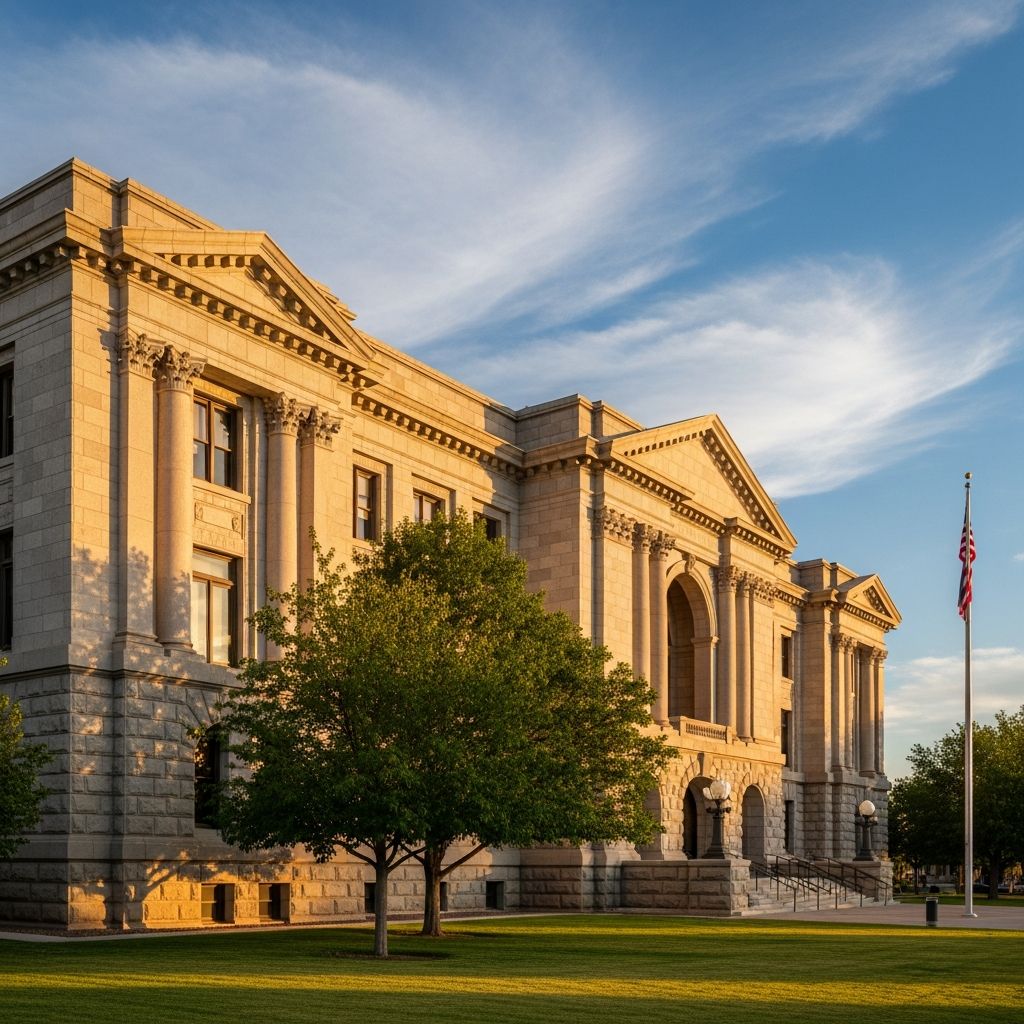
Albuquerque is home to several important courts that serve the city and the rest of Bernalillo County. Understanding which courthouse you need, what types of cases each court handles, and how the New Mexico court system is structured can save you time and confusion when a legal issue arises.
How the New Mexico Court System Is Organized
New Mexico’s judiciary is a unified system with a clear hierarchy of courts. Each level has specific powers (called jurisdiction) and handles defined categories of cases.
| Level | Court Name | General Role |
|---|---|---|
| Statewide highest court | New Mexico Supreme Court | Final review of certain serious cases and appeals; oversees all lower courts. |
| Intermediate appellate | Court of Appeals | Reviews many civil, criminal, and juvenile appeals from trial courts. |
| General trial courts | District Courts | Broad authority over major civil and criminal cases, family law, and more. |
| Limited jurisdiction trial courts | Magistrate Courts & Bernalillo County Metropolitan Court | Handle misdemeanors, traffic offenses, small civil claims, landlord–tenant disputes, and some felony preliminaries. |
| Local ordinance & minor offenses | Municipal Courts | Resolve city ordinance violations, traffic infractions, and petty misdemeanors. |
| Estate matters | Probate Courts | Process wills, estates, and related uncontested probate issues. |
Albuquerque, located in Bernalillo County, hosts facilities for several of these courts—particularly the Second Judicial District Court and the Bernalillo County Metropolitan Court, along with federal and local courts nearby.
Key Courts Serving Albuquerque Residents
Most people in Albuquerque interact with one of four main types of courthouses:
- Second Judicial District Court (state trial court of general jurisdiction)
- Bernalillo County Metropolitan Court (limited jurisdiction court covering much of what magistrate courts handle elsewhere)
- Municipal Courts in the Albuquerque area
- Bernalillo County Probate Court
Second Judicial District Court (District Court)
The Second Judicial District Court is the main state trial court in the Albuquerque area and covers Bernalillo County. District courts in New Mexico have general jurisdiction, meaning they can hear nearly all types of civil and criminal cases unless a statute assigns a category exclusively to another court.
Typical matters handled include:
- Serious criminal cases (felonies) and related criminal appeals
- Large civil disputes, including contract claims and tort (injury) suits
- Real property cases, such as boundary disputes or foreclosure actions
- Family law, including divorce, child custody, and child support
- Juvenile cases (exclusive juvenile jurisdiction)
- Probate disputes that are contested or too complex for probate court
- Appeals from some administrative agencies and from lower courts
District courts hold jury trials and have multiple divisions, such as civil, criminal, domestic relations, and children’s court. Judges are elected to terms (statewide, district judges generally serve six-year terms), and there are 13 judicial districts statewide, each with at least one district court covering the counties within that district.
Bernalillo County Metropolitan Court
Bernalillo County is unique in New Mexico because it has a dedicated Metropolitan Court instead of magistrate courts within the county. This court combines many of the functions that magistrate and municipal courts perform in other parts of the state.
According to the New Mexico Courts, the Bernalillo County Metropolitan Court is a limited-jurisdiction trial court with jury trials and hears:
- Civil cases involving torts, contracts, and landlord–tenant disputes up to a specified dollar amount (currently $0–$10,000)
- Felony first appearances (such as initial arraignments and some preliminary hearings)
- Misdemeanors, including many criminal offenses not classified as felonies
- DWI/DUI and other traffic violations
- Domestic violence cases within its jurisdiction
Because many everyday disputes and traffic-related issues fall into the Metropolitan Court’s jurisdiction, this is one of the most frequently visited courthouses in Albuquerque.
Municipal Courts
New Mexico has 81 municipal courts located in various cities and towns, each a limited-jurisdiction court focusing on local ordinance enforcement. In the Albuquerque area, municipal courts deal primarily with violations of city codes and minor offenses.
Municipal courts statewide typically hear:
- Petty misdemeanors
- DWI/DUI and traffic violations under city ordinances
- Other municipal ordinance violations (for example, some noise, zoning, or animal control matters)
Municipal courts are limited in the penalties they can impose and generally do not conduct jury trials. Their procedures are designed to handle high volumes of relatively minor matters quickly.
Bernalillo County Probate Court
Each New Mexico county has a probate court with limited jurisdiction over estates. In Bernalillo County, the probate court is often the first stop when someone needs authority to manage a deceased person’s property.
Probate courts typically handle:
- Informal probate of wills
- Appointment of personal representatives (executors or administrators)
- Uncontested estate matters
Any contested estate issues, complex disputes, or will challenges usually must be transferred to the district court, which has broader authority and full trial procedures.
Appellate Courts Located in New Mexico
Although day-to-day court visits in Albuquerque are mainly to trial courts, it helps to understand the appellate courts above them, some of which have offices in or near Albuquerque.
New Mexico Court of Appeals
The New Mexico Court of Appeals is the state’s intermediate appellate court. It has offices in both Santa Fe and Albuquerque and is staffed by 10 judges who usually sit in panels of three.
Its jurisdiction includes:
- Mandatory review of many civil cases
- Most non-capital criminal appeals
- Juvenile case appeals
- Certain administrative agency appeals
- Some interlocutory appeals (appeals taken before a final judgment)
New Mexico Supreme Court
The New Mexico Supreme Court, located in Santa Fe, is the state’s court of last resort and has supervisory authority over all lower state courts and licensed attorneys.
Under New Mexico law, the Supreme Court has both mandatory and discretionary jurisdiction. It must hear certain cases, including:
- Criminal appeals where the sentence is life imprisonment or death
- Appeals from the Public Regulation Commission
- Appeals involving habeas corpus writs
- Challenges to candidate nominations and some removal-of-officials cases
The Court also has discretion to review some Court of Appeals decisions and to handle extraordinary writs and questions certified by lower or federal courts.
Which Albuquerque Court Do You Need?
Determining the correct courthouse depends on the type of legal problem and where the events occurred. The following general guide can help you narrow it down (not legal advice):
- Serious felony charge in Bernalillo County
• Likely in Second Judicial District Court (after initial appearance in Metropolitan Court). - Misdemeanor, DWI, or traffic ticket in Albuquerque
• Commonly in Bernalillo County Metropolitan Court or a municipal court, depending on the charging authority. - Small claim or landlord–tenant dispute under about $10,000
• Typically in Bernalillo County Metropolitan Court (or magistrate court in other counties). - Divorce, child custody, or child support
• Handled in Second Judicial District Court’s domestic relations division. - Probating an uncontested will for a Bernalillo County resident
• Start with Bernalillo County Probate Court; contested matters may move to district court. - Appeal from a district court decision
• Generally to the New Mexico Court of Appeals, and in some cases further to the New Mexico Supreme Court.
Preparing for a Visit to an Albuquerque Courthouse
Although each court has its own local rules and security practices, visitors can reduce stress by planning ahead.
Before You Go
- Confirm your court date, time, and location. Check your paperwork or the official New Mexico Courts website, which lists courts by district and provides contact information.
- Know your case number. Court staff often need this to look up your file.
- Review any notices from the court or your attorney for special instructions (such as remote appearance options or required forms).
- Arrange childcare and transportation. Some courts do not allow small children in the courtroom unless they are directly involved in the case.
Security and What to Bring
Like other U.S. courts, Albuquerque-area courthouses use metal detectors and other security measures. To avoid delays:
- Arrive at least 30 minutes early to pass through security.
- Bring a government-issued photo ID, especially if you are a party, witness, or juror.
- Carry only necessary items; pocketknives, some tools, and weapons are not allowed.
- Have all court paperwork neatly organized, including copies for yourself, the court, and other parties when required.
In the Courtroom
- Dress neatly and conservatively. While formal suits are not required, avoid clothing with offensive graphics or slogans.
- Be respectful and quiet. Address the judge as “Your Honor,” silence phones, and avoid talking when court is in session.
- Follow instructions from court staff. Bailiffs, clerks, and other personnel help maintain order and can answer basic procedural questions (but not provide legal advice).
- Do not record proceedings unless the court has explicitly allowed it. Some courts restrict photography and recording devices.
Self-Representation and Access to Information
Many people appearing in Albuquerque courts do not have a lawyer. While courts cannot give you legal advice, they provide forms and basic information to help you navigate the process.
- The official New Mexico Courts website lists courts by district, explains court roles, and often links to self-help or forms pages.
- Some courts offer self-help centers or clinics for guidance on forms and procedures.
- Local legal aid organizations may provide free or low-cost legal assistance depending on income and case type.
Even if you plan to represent yourself, consulting an attorney for limited-scope advice (such as reviewing your paperwork or preparing you for a hearing) can be helpful.
Judges and Judicial Selection in New Mexico
Understanding how judges reach the bench can help explain the structure and stability of the court system.
- New Mexico Supreme Court justices are initially appointed by the governor from a list submitted by a judicial nominating commission, then must stand in a partisan election at the next general election.
- Once elected, justices serve the remainder of an eight-year term and then face yes/no retention elections, needing at least 57% affirmative votes to continue in office.
- District court judges and many other state judges are similarly selected through a mix of appointment, election, and retention, with specific rules defined in the state constitution and statutes.
This system aims to balance independence and public accountability in New Mexico’s judiciary.
Frequently Asked Questions About Albuquerque Courthouses
Q: How do I find out which Albuquerque courthouse my hearing is in?
A: Check your summons, citation, or notice of hearing, which should list the court name and address. If you are unsure, you can contact the clerk’s office for the Second Judicial District Court, Bernalillo County Metropolitan Court, or the relevant municipal or probate court. The official New Mexico Courts website lists contact details and courts by district.
Q: Can I handle a traffic ticket or minor offense without a lawyer?
A: Many people appear in Metropolitan or municipal court without an attorney for traffic and petty misdemeanor cases. However, you always have the right to consult a lawyer, and in some cases it is strongly recommended, especially if you face possible jail time, license suspension, or immigration consequences.
Q: Where do I go to probate a will for someone who lived in Albuquerque?
A: Uncontested wills and straightforward estate matters for Bernalillo County residents typically begin in the Bernalillo County Probate Court. If disputes arise, the matter may be transferred to the Second Judicial District Court, which has broader jurisdiction over contested probate cases.
Q: What if I miss my court date in Albuquerque?
A: Failing to appear can lead to a bench warrant, fines, or other penalties. Contact the court clerk or your attorney immediately to find out whether the court can reschedule and what steps you must take to address any warrant or sanction.
Q: Are Albuquerque court records available online?
A: New Mexico provides public access to many court records, subject to privacy rules and sealing orders. Availability and access methods can vary by court and case type, so check the New Mexico Courts website or contact the clerk’s office for specific instructions.
References
- About the Courts — New Mexico Judicial Branch. 2023-03-01. https://nmcourts.gov/about-the-courts/
- New Mexico State Courts — National Criminal Justice Reference Service (NCJRS), U.S. Office of Justice Programs. 1980-01-01. https://www.ojp.gov/ncjrs/virtual-library/abstracts/new-mexico-state-courts
- New Mexico — State Court Report, Brennan Center for Justice. 2022-06-01. https://statecourtreport.org/state/new-mexico
- Courts by District — New Mexico Judicial Branch. 2023-03-01. https://nmcourts.gov/courts-by-district/
- New Mexico Courts Home — New Mexico Judicial Branch. 2023-03-01. https://nmcourts.gov
Similar Articles








Read full bio of Sneha Tete


