
Guarding Against Fake FTC Agents and Badge Number Scams
Learn how fake FTC “agents” use badge numbers, threats and fear to steal money, and how to shut these scams down safely.
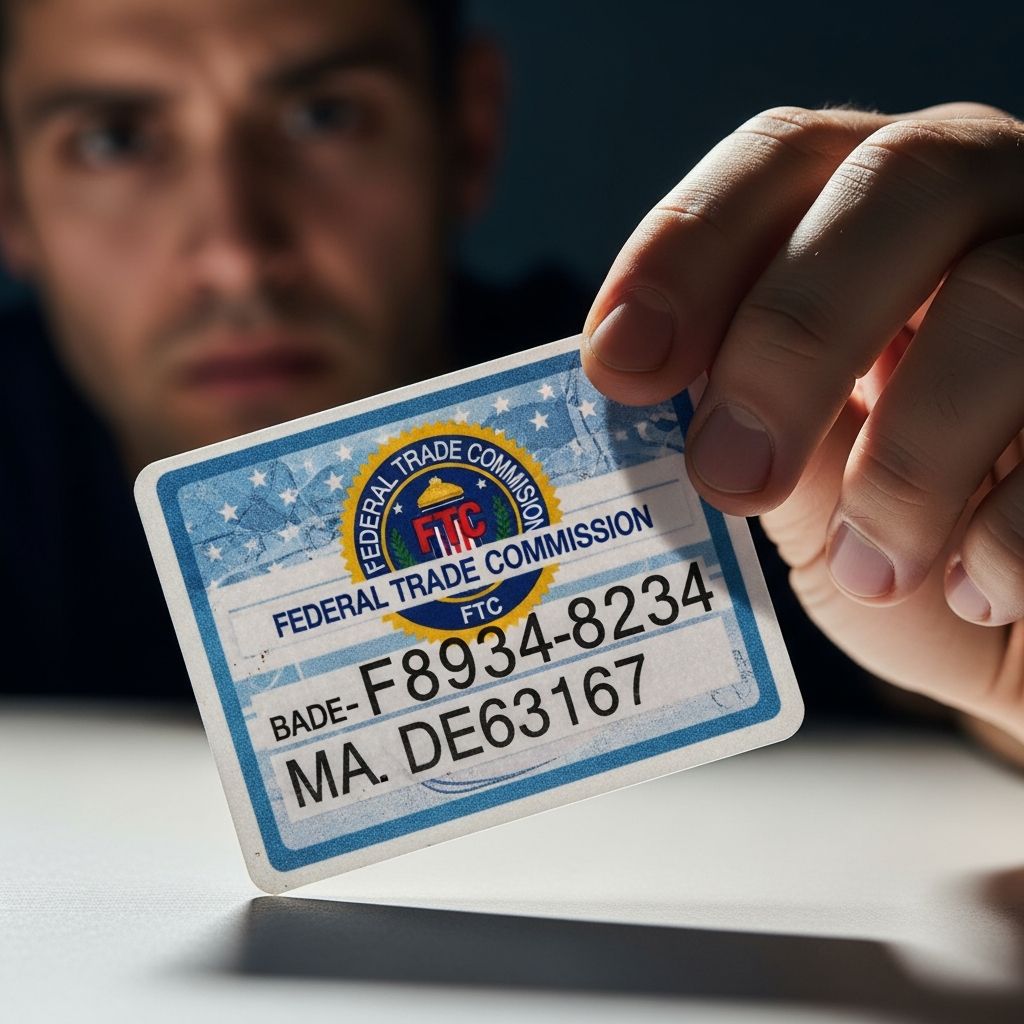
Fraudsters are increasingly pretending to be officials from the Federal Trade Commission (FTC), complete with fake names, fabricated badge numbers, and phony ID cards, all designed to pressure you into sending or “moving” money. These imposters are convincing, persistent, and highly skilled at exploiting fear and confusion.
This guide explains how these scams work, what the real FTC does and does not do, and practical steps you can take to avoid becoming a victim and to help stop the scammers.
Why Scammers Pretend to Be the FTC
Government impersonation scams are effective because they exploit people’s trust in official agencies and fear of legal or financial trouble.
- Authority and fear: Claiming to be a government official gives scammers instant credibility and leverage.
- Urgency and panic: They talk about crimes, frozen accounts, or identity theft to make you act fast.
- Money at stake: They insist your savings are at risk and must be “protected” through special transfers.
The FTC has warned that impersonation scams have cost consumers billions of dollars in recent years, with median reported losses to FTC impersonators rising from $3,000 in 2019 to $7,000 in 2024.
How the Fake Badge Number Scam Typically Unfolds
While details change, most fake FTC-agent scams follow a predictable pattern.
1. The False Emergency Hook
The first contact often does not come from someone claiming to be the FTC. Instead, it starts with another supposed company or agency:
- A pop-up on your computer claiming you have a virus and must call tech support.
- A call or text saying it is from your bank or a large company (like an online retailer) about suspicious activity.
- A message warning your identity has been stolen or that your Social Security number is linked to a crime.
The goal is to convince you that there is an urgent, serious problem that needs government involvement.
2. The “Transfer” to a So-Called FTC Agent
Next, the first caller or message routes you to someone they describe as an FTC agent or investigator.
- They might say they are “escalating” your case to a special federal unit.
- They may stay on the line and conduct a three-way call with the supposed FTC staffer.
- They often repeat details you shared earlier to sound informed and legitimate.
3. The Fake Credentials: Badge Numbers and IDs
To appear official, the scammer may:
- Provide a badge number and official-sounding job title.
- Send a photo of a fake ID or badge by text, email, or messaging app.
- Use a spoofed caller ID that appears to come from a Washington, D.C. number or an FTC office.
They might encourage you to write down their name and badge number or to “verify” them using a phone number or website they give you, which only leads back to more scammers.
4. The Real Objective: Getting Your Money
Once you’re convinced they’re legitimate, the pressure starts. Common tactics include:
- Claiming criminals are targeting your bank or investment accounts.
- Insisting your money must be moved to a “safe account” or “government wallet.”
- Pressuring you to keep everything secret and avoid speaking to anyone else.
The scammer then directs you to move money using methods that are fast, difficult to reverse, and often anonymous.
What the Real FTC Will Never Ask You to Do
The FTC and other legitimate government agencies have clear boundaries on how they interact with the public. If someone crosses these lines, it is a major red flag.
| What Scammers Say | What the Real FTC Will Never Do |
|---|---|
| “Move your money to a safe government account to protect it.” | The FTC will never tell you to transfer money or move funds to “protect” them. |
| “Go to a Bitcoin ATM or buy cryptocurrency for security reasons.” | The FTC will never send you to a Bitcoin or crypto ATM, or ask you to pay with cryptocurrency. |
| “Withdraw cash and hand it to a courier or agent.” | The FTC will never ask you to withdraw cash and give it to someone in person. |
| “Buy gift cards and read us the numbers on the back.” | No legitimate agency uses gift cards to collect payments or secure funds. |
| “You must pay now or you’ll be arrested or deported.” | The FTC will never threaten arrest, deportation, or lawsuit over the phone or demand immediate payment. |
If you experience any of these demands from someone claiming to be from the FTC or another government agency, you are dealing with a scammer.
Key Warning Signs of an FTC Impersonation Scam
You do not need to remember every detail of every scam. Focus on spotting patterns of behavior that scammers use again and again.
- Unsolicited contact about an urgent problem: They call, text, or email you out of the blue about fraud, crimes, or account issues.
- Claims of being an “agent” with a badge number: They emphasize their title, ID, or badge to make you trust them.
- Pressure to act immediately: They say you must act “right now” to avoid legal trouble or losing all your money.
- Instructions not to talk to anyone: They warn you to stay off the internet, avoid calling your bank, and not tell friends or family.
- Unusual payment methods: They push cryptocurrency, wire transfers, payment apps, gift cards, or cash deliveries.
- Requests for verification codes: They ask for one-time passcodes sent to your phone or email to take over your accounts.
How to Respond Safely in the Moment
If you suspect someone claiming to be from the FTC (or any government agency) is really a scammer, your priority is to cut off their access and independently verify what is happening.
1. Stop the Conversation
- Hang up the phone. You do not owe the caller an explanation.
- Close suspicious pop-ups and do not call the numbers they display.
- Do not click links or download attachments from unexpected messages.
2. Contact Your Financial Institutions Yourself
If the conversation involved your bank, investments, or digital wallets:
- Call the number on the back of your card or on your official statement.
- Log in using your normal app or bookmarked website, not links sent by the caller.
- Tell them what happened and ask them to check for suspicious activity and help secure your accounts.
3. Check Directly with the Real FTC or Other Agencies
If someone says they’re from the FTC, Social Security Administration, IRS, or another agency:
- Go to the agency’s official website using a search engine or a known bookmark.
- Use the contact information listed there, not what the caller gave you.
- Ask if they have tried to contact you; in most scam cases, the answer will be no.
What To Do If You Already Sent Money
People often realize it was a scam only after the money is gone. Acting quickly can sometimes limit the damage or even help recover some funds.
- Contact your bank or card issuer immediately: Explain that you were tricked by an impersonation scam and ask if transactions can be stopped or reversed.
- If you paid with a wire transfer: Call the bank or transfer company right away to request a recall or freeze.
- If you paid with a gift card: Contact the card issuer as soon as possible; sometimes unused balances can be frozen.
- If you sent cryptocurrency: Contact the platform you used and report the fraud, though crypto payments are often difficult to reverse.
- Change passwords and enable multifactor authentication: Protect email, banking, and social media accounts in case the scammer accessed your personal information.
How and Where to Report FTC Impersonation Scams
Reporting scams helps investigators track patterns, shut down fraudulent operations, and warn others. The FTC encourages reports even when people did not lose money.
- Report to the FTC: Use the official reporting site for scams and fraud. You can report in English or Spanish, and by phone in many other languages.
- Tell your bank or investment firm: Financial institutions often have dedicated fraud teams that can flag your accounts and improve protections.
- Consider local law enforcement: Especially if you handed over cash or met someone in person.
Building Your Own Anti-Scam Playbook
Scammers update their stories, but their core tactics stay remarkably similar. Creating a personal “playbook” makes it easier to respond calmly when something feels off.
Core Rules to Live By
- Never move money because of an unexpected call, email, or text. If someone says you must move or transfer funds to stay safe, it is a scam.
- Stop and talk to someone you trust. Share the story with a friend, family member, or advisor before acting; saying it aloud often reveals red flags.
- Verify using a second, trusted channel. If a caller says they are from your bank or a government agency, call back using a number you find independently.
- Guard your one-time passcodes. Never share verification codes sent to your phone or email; legitimate staff will not ask for them.
- Be skeptical of secrecy instructions. Anyone saying “Don’t talk to anyone” or “Don’t look this up online” is likely trying to isolate you for a scam.
Frequently Asked Questions (FAQs)
Q1: How can I tell if a call from the FTC is real?
A: The FTC rarely calls individual people out of the blue. It will never demand money, threaten arrest, or ask you to move your money to “protect” it. If you get such a call, hang up and contact the FTC using information from its official website, not the numbers the caller gives you.
Q2: Are badge numbers ever a reliable way to verify someone from the FTC?
A: No. Scammers can invent badge numbers or copy real names and titles from public sources. A badge number alone does not prove anything. Always verify by reaching out directly to the agency through contact information you find yourself.
Q3: What if the caller already knows my Social Security number or other personal details?
A: Scammers often use data from previous breaches or public records to sound convincing. The fact that they know personal information does not make them legitimate. Focus on what they are asking you to do, not what they already know.
Q4: I did not lose money. Should I still report the scam?
A: Yes. Reports about attempted scams help agencies see patterns, locate problem call centers, and alert the public. Your information could prevent someone else from being harmed.
Q5: Are these scams only by phone, or do they happen by text and email too?
A: Scammers use phone calls, texts, emails, and even social media messages. The FTC has reported that while phone-based imposter scams are still common, text and email are increasingly used as first contact methods. Regardless of channel, the same red flags apply: urgency, threats, secrecy, and demands to move money.
References
- Federal Trade Commission Warns of Scammers Pretending to be Agency Staff — Federal Trade Commission. 2024-03-21. https://www.ftc.gov/news-events/news/press-releases/2024/03/federal-trade-commission-warns-scammers-pretending-be-agency-staff
- No, FTC “agents” with badge numbers aren’t calling you — Federal Trade Commission Consumer Advice. 2025-05-XX. https://consumer.ftc.gov/consumer-alerts/2025/05/no-ftc-agents-badge-numbers-arent-calling-you
- The Latest Scams You Need to Be Aware of in 2025 — Experian. 2025-01-08. https://www.experian.com/blogs/ask-experian/the-latest-scams-you-need-to-be-aware-of/
- An “agent” told me to stay off the internet. Is it a scam? — Federal Trade Commission Consumer Advice. 2025-11-XX. https://consumer.ftc.gov/consumer-alerts/2025/11/agent-told-me-stay-internet-it-scam
- Stay ahead of scammers in 2025 — Federal Trade Commission Consumer Advice. 2024-12-XX. https://consumer.ftc.gov/consumer-alerts/2024/12/stay-ahead-scammers-2025
- Scams — Consumer Advice — Federal Trade Commission. 2024-XX-XX. https://consumer.ftc.gov/scams
Similar Articles








Read full bio of Sneha Tete


