
Green Card vs. U.S. Citizenship: Key Distinctions
Understand the critical differences between permanent residency and full U.S. citizenship to make informed immigration decisions.
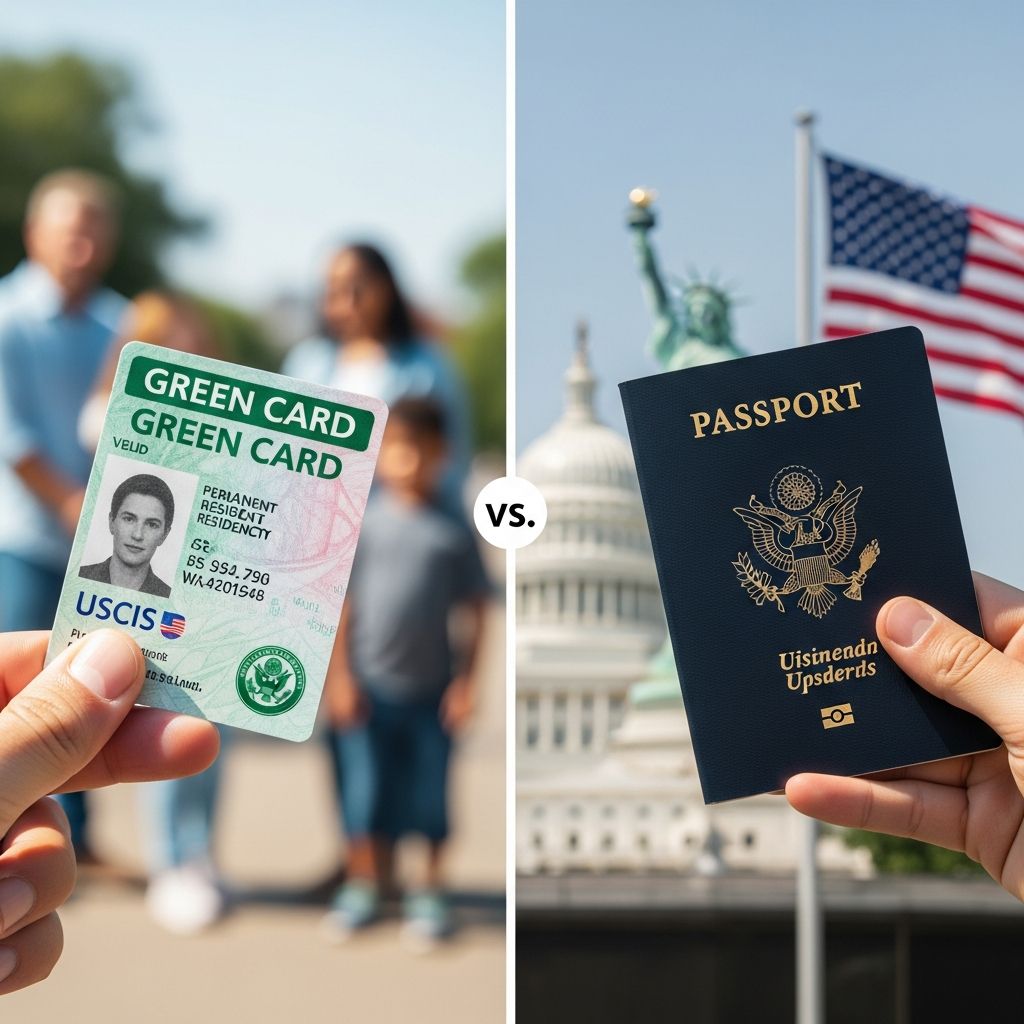
A U.S. Green Card grants lawful permanent residency, allowing indefinite living and working in the United States, while citizenship provides lifelong security, full rights, and protections unavailable to non-citizens.
Understanding Permanent Residency Through the Green Card
The Green Card, officially Form I-551, serves as proof of lawful permanent resident (LPR) status, enabling holders to reside, work, and study in the U.S. without time limits, though the physical card must be renewed every 10 years. Holders access public education, obtain Social Security numbers, open bank accounts, and qualify for certain federal benefits after meeting residency durations.
Permanent residents can petition for spouses and unmarried children under 21, and potentially older unmarried children, though wait times apply. They may serve in the military and apply for driver’s licenses. However, this status remains conditional on compliance with U.S. laws and maintenance of U.S. ties.
The Privileges and Security of U.S. Citizenship
U.S. citizenship confers unbreakable ties to the nation, immune from deportation except in rare fraud cases, and includes a U.S. passport for visa-free travel to numerous countries. Citizens vote in all elections, hold public office, and receive priority in federal jobs, grants, and full government benefits without waiting periods.
Family sponsorship expands significantly: citizens petition parents, siblings, and married children with shorter queues. Naturalized citizens pass on citizenship to overseas children automatically and enjoy consular protection abroad. Unlike residency, citizenship requires no renewals or reentry proofs.
Core Differences in Daily Life and Opportunities
Green Card holders and citizens share basics like living indefinitely and accessing many benefits, but diverge sharply in key areas. The table below summarizes primary contrasts:
| Aspect | Green Card Holder | U.S. Citizen |
|---|---|---|
| Voting Rights | No federal, state, or local voting | Full participation in elections |
| Travel Freedom | Limited to 6-12 months abroad; risk abandonment | Unlimited travel and reentry |
| Passport | Use home country passport + Green Card | U.S. passport with global access |
| Deportation Risk | Possible for crimes, fraud, long absences | Protected in nearly all cases |
| Family Petitions | Spouse, minor/unmarried children | All relatives, faster processing |
| Government Jobs/Benefits | Limited eligibility | Full access |
Travel Challenges for Permanent Residents
Green Card holders face strict reentry rules: absences over six months prompt scrutiny, and over one year often require a reentry permit or risk status loss. Extended living abroad signals abandonment, complicating returns. Citizens bypass these with passports allowing indefinite absences.
- Apply for reentry permits before trips over one year.
- Maintain U.S. home, job, or family ties.
- Avoid frequent long trips signaling non-residency.
Legal Vulnerabilities and Deportation Risks
Permanent residency can end via deportation for aggravated felonies, drug offenses, fraud, or immigration violations. Even minor crimes accumulating may trigger removal. Citizens retain status despite convictions, barring voluntary renunciation or proven fraud.
Address changes must notify USCIS within 10 days, or risk fines/deportation. Espionage, terrorism, or false citizenship claims also jeopardize LPRs.
Family Reunification: Sponsorship Powers Compared
Citizens sponsor broader family categories with preferences: immediate relatives (spouses, parents, minor children) face no quotas, while siblings and married adult children enter preference lines. LPRs limit to spouses and unmarried children, facing longer backlogs.
Only citizens transmit citizenship abroad to children; LPRs secure only Green Cards for dependents.
Access to Public Benefits and Employment
Both groups access Social Security, Medicare (after qualifying periods), and SSI, but citizens qualify sooner without five-year waits for some programs. Federal jobs often mandate citizenship; LPRs excluded from security-sensitive roles.
- LPRs: Eligible for many benefits post-residency.
- Citizens: Unrestricted access, including grants/contracts.
Pathway from Green Card to Citizenship: Naturalization Essentials
Most LPRs naturalize after five years (three if married to a citizen), requiring continuous residence, physical presence, good moral character, basic English, and civics knowledge. Military service or special cases accelerate eligibility.
Process involves Form N-400, biometrics, interview, and oath. Renew expired Green Cards before applying. Naturalization yields a Certificate of Naturalization, passport eligibility, and full rights.
- Meet residency: 5/3 years as LPR.
- Pass English/civics tests (exemptions possible).
- Demonstrate good moral character (no serious crimes).
- Take Oath of Allegiance.
Should You Pursue Naturalization? Weighing Pros and Cons
Naturalization secures against deportation, enables voting, expands travel/family options, and unlocks careers. Drawbacks include application fees (~$725), test preparation, and potential dual citizenship issues (U.S. allows but home countries may not).
Many choose citizenship for permanence; others retain LPR for simplicity if risks low.
Frequently Asked Questions
Can Green Card holders vote in U.S. elections?
No, voting is reserved for citizens; attempting it risks deportation as false citizenship claim.
How long can a Green Card holder stay outside the U.S.?
Up to six months safely; over one year risks status loss without reentry permit.
What crimes lead to Green Card revocation?
Aggravated felonies, drug trafficking, fraud, or multiple convictions can trigger deportation.
Can permanent residents sponsor parents?
No, only citizens can petition parents without quotas.
Is U.S. citizenship revocable?
Rarely, only for fraud in acquisition or voluntary renunciation.
Navigating Immigration Status Changes
Consult USCIS or attorneys for personalized advice, as rules evolve. Naturalization remains the gold standard for enduring U.S. integration.
References
- Permanent Resident vs. U.S. Citizen: The Essential Comparison — Grape Law. 2024. https://www.grapelaw.com/blog/us-immigration/permanent-resident-vs-u-s-citizen-the-essential-comparison
- US Citizenship vs Green Card: What’s the Difference? — IAS US. 2024. https://us.iasservices.org.uk/us-citizenship-vs-green-card-whats-the-difference/
- Green Card vs Citizenship: 5 Key Differences to Know About — USA Visa Counsel. 2024. https://www.usavisacounsel.com/articles/green-card-vs-citizenship-5-key-differences-to-know-about.htm
- Difference Between U.S. Green Card and U.S. Citizenship — Nolo. 2024. https://www.nolo.com/legal-encyclopedia/difference-between-us-green-card-us-citizenship.html
- What is the Difference Between U.S. Permanent Resident Status and U.S. Citizenship? — WSM Immigration. 2024. https://www.wsmimmigration.com/immigration-resources/faqs/what-is-the-difference-between-u-s-permanent-resident-status-and-u-s-citizenship/
Similar Articles








Read full bio of medha deb


