
Returning to the US as a Green Card Holder After Extended Absences
Essential strategies for lawful permanent residents facing reentry challenges due to prolonged stays abroad from travel disruptions or emergencies.
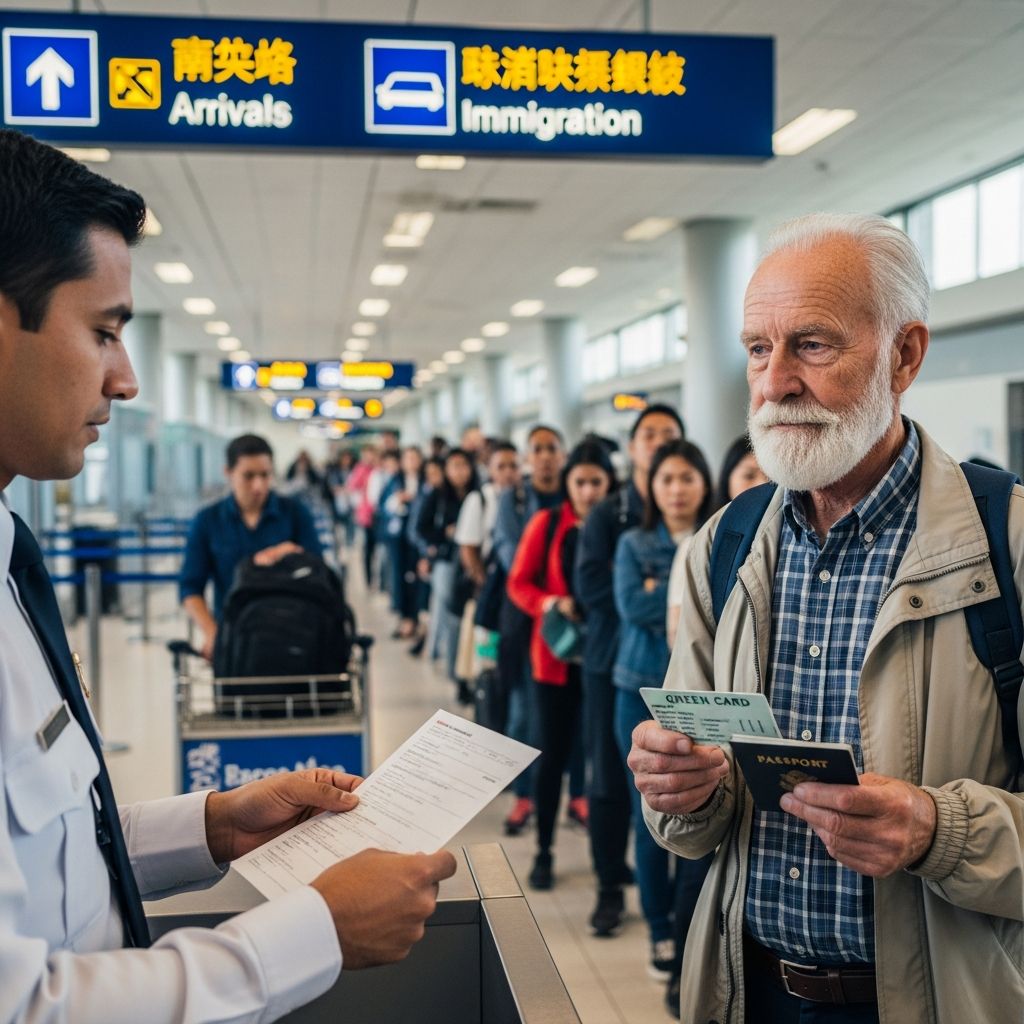
Lawful permanent residents (LPRs), commonly known as green card holders, enjoy significant benefits but face strict rules on international travel. Absences from the United States beyond certain thresholds can trigger scrutiny at ports of entry, potentially leading to denial of admission or loss of status. This comprehensive guide explores the legal frameworks, documentation strategies, and procedural options for LPRs who have been outside the U.S. for extended periods due to unforeseen circumstances like global health crises, family emergencies, or transportation failures.
Understanding LPR Travel Thresholds and Their Implications
U.S. immigration regulations under the Immigration and Nationality Act (INA) distinguish between short-term trips and prolonged absences. For LPRs, time away from the U.S. is measured precisely, with key milestones at 180 days and one year.
- Less than 180 days: Generally treated as a returning resident with minimal additional checks, though Customs and Border Protection (CBP) officers may inquire about intent to maintain U.S. residence.
- 180 days to one year: LPRs are classified as ‘applicants for admission’ under INA § 101(a)(13)(C), subjecting them to inadmissibility grounds similar to new immigrants, such as health issues or criminal history.
- Over one year: Green cards become invalid for reentry purposes, requiring proof of a ‘temporary visit abroad’ to avoid abandonment claims.
These rules ensure LPRs demonstrate ongoing ties to the U.S. as their primary home. Disruptions like the COVID-19 pandemic exacerbated challenges, stranding many LPRs abroad due to flight cancellations, quarantines, or border closures.
Maintaining Proof of U.S. Residency During Absences
To counter presumptions of abandonment, LPRs must proactively document their U.S.-based life. Officers at ports of entry look for evidence of unrelinquished domicile.
| Document Type | Purpose | Examples |
|---|---|---|
| Financial Ties | Shows economic commitment to U.S. | Recent U.S. tax returns (Form 1040), bank statements, pay stubs |
| Housing Evidence | Proves ongoing U.S. home base | Lease agreements, mortgage statements, utility bills |
| Employment Records | Demonstrates job continuity | Employment letters, W-2 forms, remote work contracts |
| Family Connections | Highlights personal roots | Birth certificates of U.S.-citizen children, spouse’s U.S. documents |
Carrying originals or certified copies, along with digital backups, is advisable. For pandemic-related delays, include airline cancellation confirmations, medical quarantine certificates, or positive COVID-19 test results to explain the extended stay.
Navigating Reentry After Six Months Abroad
Once an absence hits 180 days, LPRs shift from ‘returning resident’ to ‘seeking admission’ status. This invokes full inadmissibility checks, including public charge assessments, communicable diseases, and security concerns.
Preparation involves:
- Updating vaccinations and obtaining medical clearances if required.
- Gathering affidavits from U.S.-based employers or family attesting to your return intentions.
- Consulting an immigration attorney to review potential grounds of inadmissibility pre-travel.
Even under 180 days, discretionary denial remains possible if intent to reside abroad is suspected. Always travel with multiple proofs of U.S. ties.
Overcoming One-Year Absence Barriers: Green Card Validity Loss
Exceeding one year abroad automatically invalidates the green card (Form I-551) as a travel document. LPRs must then prove the absence was for a temporary purpose, not permanent relocation.
Common scenarios include medical treatments, family caregiving, or crisis-related strandings. Without intervention, entry denial leads to removal proceedings.
Primary Solution: Applying for an SB-1 Returning Resident Visa
The most reliable path for over-one-year absentees is the SB-1 visa, processed at U.S. consulates abroad. This requires demonstrating the absence was unintentional and temporary.
Application Process:
- Submit Form DS-117 (Application to Determine Returning Resident Status) to the nearest U.S. embassy or consulate.
- Provide extensive evidence: U.S. ties documents, explanation of absence (e.g., pandemic proofs), and intent to resume residence.
- Undergo two consular officer approvals and an interview.
- Pay fees and await visa issuance for presentation at a U.S. port of entry.
Success rates vary, but strong documentation boosts approval. Processing times can span months, so apply promptly.
Alternative: Direct Presentation at U.S. Ports of Entry
If the green card expiration date hasn’t lapsed and health permits, LPRs may attempt boarding and argue at the border. Challenges include airline refusals for over-one-year absentees.
- Contact CBP’s Regional Carrier Liaison Group (RCLG) if denied boarding.
- At entry, present proofs to CBP; expect secondary inspection.
- Complete Form I-193 (Waiver of Passport/Visa) and pay fees if directed.
For land borders, direct access simplifies this, but preparation is key. Denial may trigger immigration court referral.
Reentry Permits: Prevention for Future Trips
Reentry permits (Form I-131) preserve LPR status for planned long absences up to two years but must be applied for while physically in the U.S., including biometrics.
Post-departure applications are impossible, and expired permits cannot extend. Plan ahead for foreseeable extended travel.
COVID-19 and Other Crises: Special Considerations
Pandemics like COVID-19 created unprecedented strainings, with flight bans and quarantines extending absences unintentionally. While no blanket USCIS exceptions exist, individualized proofs (e.g., test results, cancellation notices) rebut abandonment claims.
Future crises may yield policy updates; monitor USCIS and State Department alerts.
Potential Pitfalls and Advanced Strategies
Beyond time thresholds:
- Citizenship Impact: Absences over six months presume no physical presence for naturalization; over one year breaks continuity.
- Inadmissibility Triggers: New arrests, health changes, or public charge issues during absence.
- Legal Recourse: If denied entry, request credible fear review or immigration judge hearing—with attorney representation.
Table of Common Pitfalls:
| Pitfall | Risk | Mitigation |
|---|---|---|
| No U.S. ties proof | Abandonment finding | Gather docs pre-travel |
| Airline denial | Stranded abroad | Pre-contact RCLG |
| Expired green card | Invalid document | Apply SB-1 |
Frequently Asked Questions (FAQs)
Can I apply for a reentry permit from outside the U.S.?
No, USCIS requires presence in the U.S. for filing and biometrics. Plan ahead for long trips.
What if my absence exceeds one year due to COVID-19?
Document pandemic impacts (e.g., flight proofs) and apply for SB-1 visa; sympathy alone won’t suffice.
Will CBP confiscate my green card at entry?
Possible if abandonment is found; appeal via Form I-193 or court.
Does a valid reentry permit cover over two years?
No, maximum two years; longer requires return and new application.
Should I consult a lawyer before attempting reentry?
Yes, especially for complex cases involving long absences or inadmissibility.
Final Recommendations for Smooth Reentry
Proactive documentation, timely SB-1 applications, and legal counsel minimize risks. Monitor official updates from USCIS and CBP, as policies evolve. LPRs should prioritize maintaining strong U.S. ties and avoiding unplanned long absences.
References
- Reentry Issues for Green Card Holders Stuck Outside the U.S. During COVID-19 — Nolo. 2020. https://www.nolo.com/legal-encyclopedia/reentry-issues-for-green-card-holders-stuck-outside-the-u-s-during-covid-19.html
- Green Card Holder Outside the U.S. During COVID-19 Pandemic — My Orlando Immigration Lawyer. 2021. https://myorlandoimmigrationlawyer.com/green-card-holder-outside-the-u-s-during-covid/
- Useful Information for LPRs (Green Card Holders) During COVID-19 — U.S. Embassy in Bangladesh (bd.usembassy.gov). 2020. https://bd.usembassy.gov/useful-information-for-lprs-green-card-holders-during-covid-19/
- Lawful Permanent Resident (LPR) Travel Restrictions — Immigration Visa Attorney. Accessed 2026. https://immigrationvisaattorney.com/travel-restrictions-for-lpr/
- Travel Issues for Permanent Residents in Pandemic Times — US Legal Solutions. 2021. https://us-legalsolutions.com/travel-issues-for-permanent-residents-in-pandemic-times/
Similar Articles








Read full bio of Sneha Tete


