
Grassroots Renaissance: Forging a More Equitable American South
How community organizers and demographic shifts are transforming the political landscape of the American South.
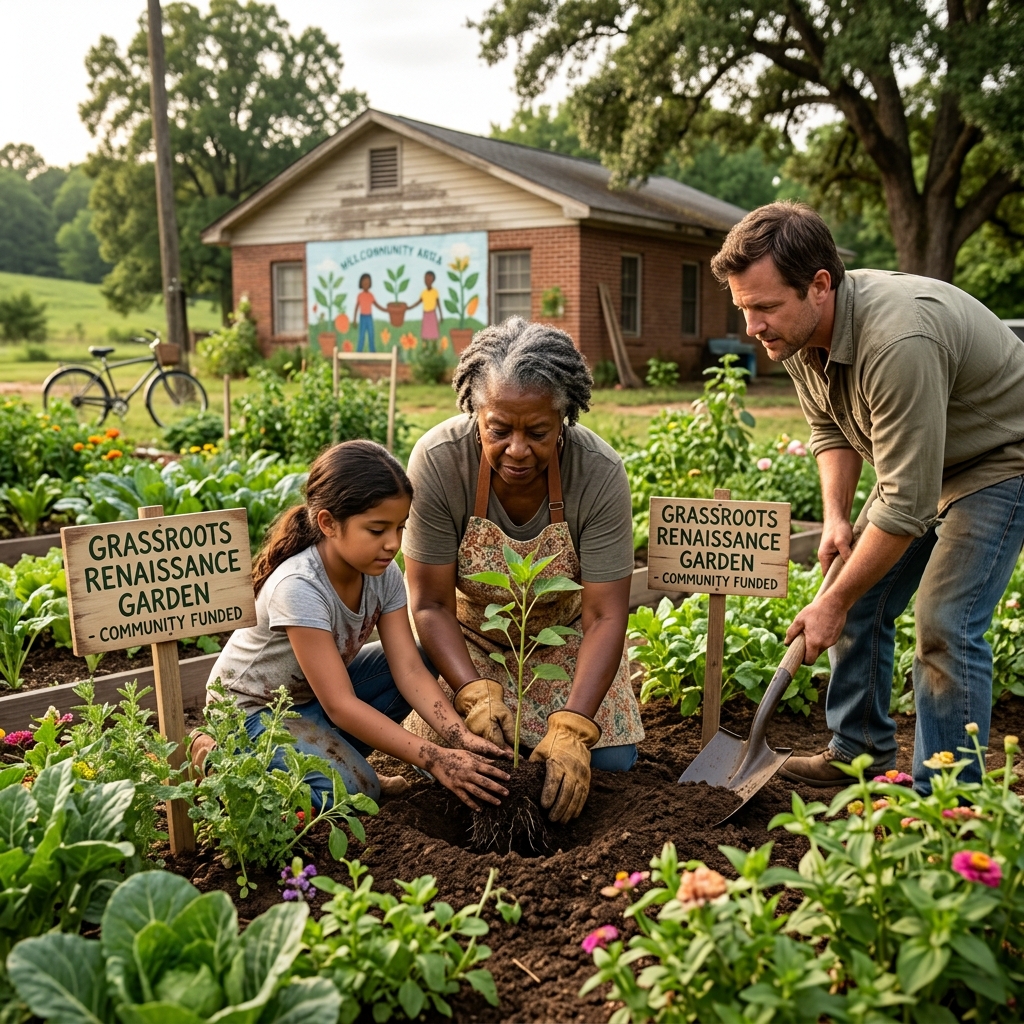
The American South has long been viewed through a monolithic lens, often defined by a rigid political conservatism and a painful history of systemic disenfranchisement. However, a profound transformation is currently underway—one that challenges outdated narratives and redefines the region’s political destiny. At the heart of this transformation is a concept frequently referred to as the “New South,” a burgeoning movement characterized by an unwavering commitment to racial justice, equitable representation, and community empowerment. This movement is not driven by traditional, top-down political machinery; rather, it is fueled by a grassroots renaissance that prioritizes the voices of marginalized communities. By dismantling systemic barriers and fostering a culture of civic engagement, organizers across the region are proving that the South is not a lost cause but a pivotal battleground for the future of American democracy. This article explores the multifaceted strategies, historical contexts, and demographic shifts that are collectively forging a more equitable American South.
The Historical Shadow and the Struggle for the Ballot
To fully grasp the magnitude of modern grassroots organizing in the South, one must first confront the region’s complex historical shadow. Following the brief period of biracial democracy during Reconstruction, the imposition of Jim Crow laws effectively disenfranchised millions of Black Americans for nearly a century. Poll taxes, literacy tests, and violent intimidation were weaponized to maintain white supremacy and suppress political dissent. The passage of the Voting Rights Act (VRA) of 1965 stood as a monumental triumph of the Civil Rights Movement, establishing federal oversight mechanisms—most notably the “preclearance” requirement for states with a documented history of discriminatory practices.
For decades, the VRA served as a vital shield against voter suppression. However, the legal landscape shifted dramatically in 2013 with the Supreme Court’s landmark decision in Shelby County v. Holder. This ruling eviscerated the preclearance formula, arguing that the conditions it sought to address were no longer relevant. In the wake of Shelby, a resurgence of restrictive voting laws swept across the South . Legal scholars and voting rights advocates note that without federal preclearance, states were quickly able to close precincts in minority neighborhoods, reinstitute stringent voter identification requirements, and engage in aggressive purging of voter rolls . This reversion has forced modern organizers to navigate an electoral environment increasingly hostile to marginalized voters, underscoring the urgent need for robust, community-led mobilization efforts.
Contemporary Barriers to Democratic Participation
The contemporary barriers to democratic participation in the South are multifaceted, operating both overtly and through bureaucratic subtleties. While the violent intimidation of the Jim Crow era has largely faded, it has been replaced by legislative maneuvers designed to dilute the political power of communities of color. These modern voter suppression tactics are often framed under the guise of “election integrity,” yet their impact disproportionately targets low-income, Black, and brown voters.
- Strict Voter ID Laws: Many southern states have enacted laws requiring specific forms of government-issued identification to cast a ballot. These requirements disproportionately affect marginalized voters who may lack the resources, transportation, or underlying documentation necessary to obtain such IDs.
- Polling Place Closures: Since the Shelby decision, thousands of polling places have been shuttered across the South, predominantly in counties with large minority populations. This leads to excessively long lines and acts as a significant deterrent for hourly workers who cannot afford to take unpaid time off to vote.
- Voter Roll Purges: Aggressive “list maintenance” practices frequently result in the removal of eligible voters from registration rolls without adequate notification. Often, voters only discover their disenfranchisement upon arriving at the polls on Election Day.
- Gerrymandering: The strategic manipulation of electoral district boundaries continues to be utilized to “pack” minority voters into single districts or “crack” their populations across multiple districts. By deliberately diluting their collective voting power, lawmakers ensure disproportionate representation for the majority, further insulating themselves from democratic accountability. These combined tactics create a formidable obstacle course for voters of color, necessitating a highly organized and resilient response.
The Architecture of a Grassroots Renaissance
Combating these entrenched barriers requires more than episodic political campaigns; it necessitates a fundamental restructuring of how civic engagement is approached. The traditional model of parachute organizing—where national political operatives descend upon a community mere weeks before an election, flood the airwaves with advertisements, and then promptly leave—has proven demonstrably ineffective in the South. In contrast, the current grassroots renaissance is built upon the foundational principle of relational organizing.
Relational organizing prioritizes long-term relationship building over short-term transactional requests. It recognizes that trust is the currency of political mobilization, particularly in communities that have been historically marginalized and repeatedly betrayed by political institutions. Studies in political science reinforce this approach, demonstrating that neighbor-to-neighbor and community-based mobilization efforts are significantly more effective at increasing voter turnout than impersonal, mass-scale outreach . When individuals are approached by trusted community members rather than out-of-state volunteers, they are far more likely to engage with the electoral process.
Modern grassroots organizations in the South operate year-round, integrating civic education into the fabric of daily life. They meet people where they are—in churches, community centers, historically Black colleges and universities (HBCUs), and local businesses. By framing voting not merely as an abstract civic duty, but as a direct mechanism for securing better funding for local schools, improving neighborhood infrastructure, and advocating for criminal justice reform, organizers are able to connect the ballot box to the tangible realities of people’s everyday lives. This sustained infrastructure ensures that when an election season finally arrives, the community is already informed, mobilized, and ready to take action at the polls.
Centering Marginalized Voices and Cultural Joy
A defining characteristic of the South’s grassroots movement is its intentional centering of marginalized voices and the incorporation of cultural joy into the work of activism. The fight against systemic oppression is inherently arduous, often exacting a heavy emotional and psychological toll on those on the front lines. To sustain momentum and prevent activist burnout, organizers are radically reimagining what political participation looks like.
Activism in this context is not solely about anger or resistance; it is deeply intertwined with a celebration of identity, resilience, and community solidarity. This manifests in vibrant “Souls to the Polls” initiatives, block parties, music festivals, and car caravans that transform the act of voting into a communal celebration. By infusing the electoral process with cultural relevance, organizers are counteracting the narrative of disenfranchisement with an empowering message of collective strength.
Joy, therefore, becomes a radical organizing tool. It reclaims the political process from being a source of stress and alienation, turning it into an arena where communities can assert their dignity and celebrate their heritage. This approach resonates particularly well with younger generations of voters, who are eager to engage in political spaces that recognize and validate their full humanity rather than treating them simply as a demographic to be courted. Moreover, integrating art, music, and spoken word into political rallies helps bridge the gap between generations. Older veterans of the Civil Rights Movement stand alongside young activists, creating a continuous thread of historical resistance. This cross-generational solidarity is vital for transmitting knowledge, sharing tactical strategies, and preserving the institutional memory of the struggle for racial equality.
Demographic Shifts Redrawing the Map
The political landscape of the South is also being rapidly transformed by profound demographic shifts. The region is experiencing unprecedented population growth, driven by a combination of internal migration and increasing diversity. One of the most significant trends is the “New Great Migration,” a phenomenon characterized by a substantial number of Black Americans relocating from northern and midwestern cities back to the South. These individuals and families are seeking better economic opportunities, a more manageable cost of living, and a deeper cultural connection to their ancestral roots.
Simultaneously, southern states are witnessing a massive surge in their Hispanic, Latino, and Asian American and Pacific Islander (AAPI) populations. Census data reveals that much of the nation’s overall population growth is concentrated in the South, reshaping suburban areas and revitalizing urban centers alike. This increasing diversity is fundamentally altering the electoral calculus of the region. States that were once considered reliable strongholds for conservative ideologies are now highly competitive battlegrounds, characterized by rapidly shifting margins.
However, shifting demographics alone do not equate to political destiny. The mere presence of diverse populations does not automatically translate into legislative power if those communities remain unregistered or unmobilized. This reality underscores the critical importance of the grassroots infrastructure being built across the region. It is the community organizers who are working diligently to translate these raw demographic shifts into tangible electoral outcomes, ensuring that the “New South” accurately reflects the diverse tapestry of its inhabitants.
The Path Forward: Sustaining Political Infrastructure
As the movement to build a more equitable South continues to gain momentum, the path forward requires a steadfast commitment to sustaining the political infrastructure that has been painstakingly developed. This demands a paradigm shift from national philanthropic and political entities. Moving away from short-term, election-cycle funding toward long-term investments in local organizations is essential. True progress requires empowering the individuals who live and work in these communities year-round, equipping them with the resources they need to effect systemic change.
Furthermore, the fight for a New South extends far beyond the ballot box. It encompasses a broader vision of comprehensive racial justice, including economic equity, environmental protection, and fundamental reform of the criminal justice system. By recognizing the deep intersectionality of these issues, grassroots movements can build broader, more resilient coalitions capable of enacting lasting legislative change. The organizing work being done in the South today serves as a powerful blueprint for the rest of the nation, proving that even in the face of profound adversity, the relentless pursuit of democracy can yield a brighter, more inclusive, and truly representative future.
Frequently Asked Questions (FAQs)
What defines the “New South” in a political context?
The “New South” refers to the evolving political and social landscape of the southern United States, characterized by growing diversity, progressive grassroots activism, and a push for equitable representation. It moves away from the region’s historical association with systemic disenfranchisement toward a future focused on racial and economic justice.
How did the Supreme Court decision in Shelby County v. Holder impact Southern voters?
The 2013 Shelby County v. Holder decision eliminated the preclearance requirement of the Voting Rights Act. This allowed many southern states to implement restrictive voting laws, such as strict voter ID requirements and polling place closures, without prior federal approval, disproportionately impacting minority voters.
Why is relational organizing preferred over traditional campaigning?
Relational organizing is more effective because it relies on existing community networks and trust. Instead of outsiders dropping in right before an election, relational organizing involves local leaders engaging with their neighbors year-round, which has been scientifically proven to yield higher and more sustainable voter turnout.
How are demographic changes influencing Southern politics?
The South is experiencing a population boom driven by the “New Great Migration” of Black Americans returning to the region, as well as rapid growth in Latino and AAPI communities. This influx is transforming suburban and urban voting patterns, making historically conservative states increasingly competitive on a national scale.
What role do HBCUs play in Southern grassroots organizing?
Historically Black Colleges and Universities (HBCUs) are vital hubs for civic engagement and political mobilization in the South. They provide fertile ground for registering young voters, cultivating the next generation of political leaders, and organizing massive get-out-the-vote drives that significantly impact local and state elections.
References
- Restore the Voting Rights Act — Brennan Center for Justice. 2016-02-04. https://www.brennancenter.org/our-work/policy-solutions/restore-voting-rights-act
- Voting Rights in a Politically Polarized Era . . . and Beyond — Washington and Lee Law Review. 2024-10-17. https://scholarlycommons.law.wlu.edu/wlulr/
- The Effectiveness of a Neighbor-to-Neighbor Get-Out-the-Vote Program: Evidence from the 2017 Virginia State Elections — Journal of Experimental Political Science. 2020-11-16. https://doi.org/10.1017/XPS.2020.11
Similar Articles








Read full bio of Sneha Tete


