
Global Sports Governance and the Policing of Black Women
How athletic regulations disproportionately impact Black female athletes.
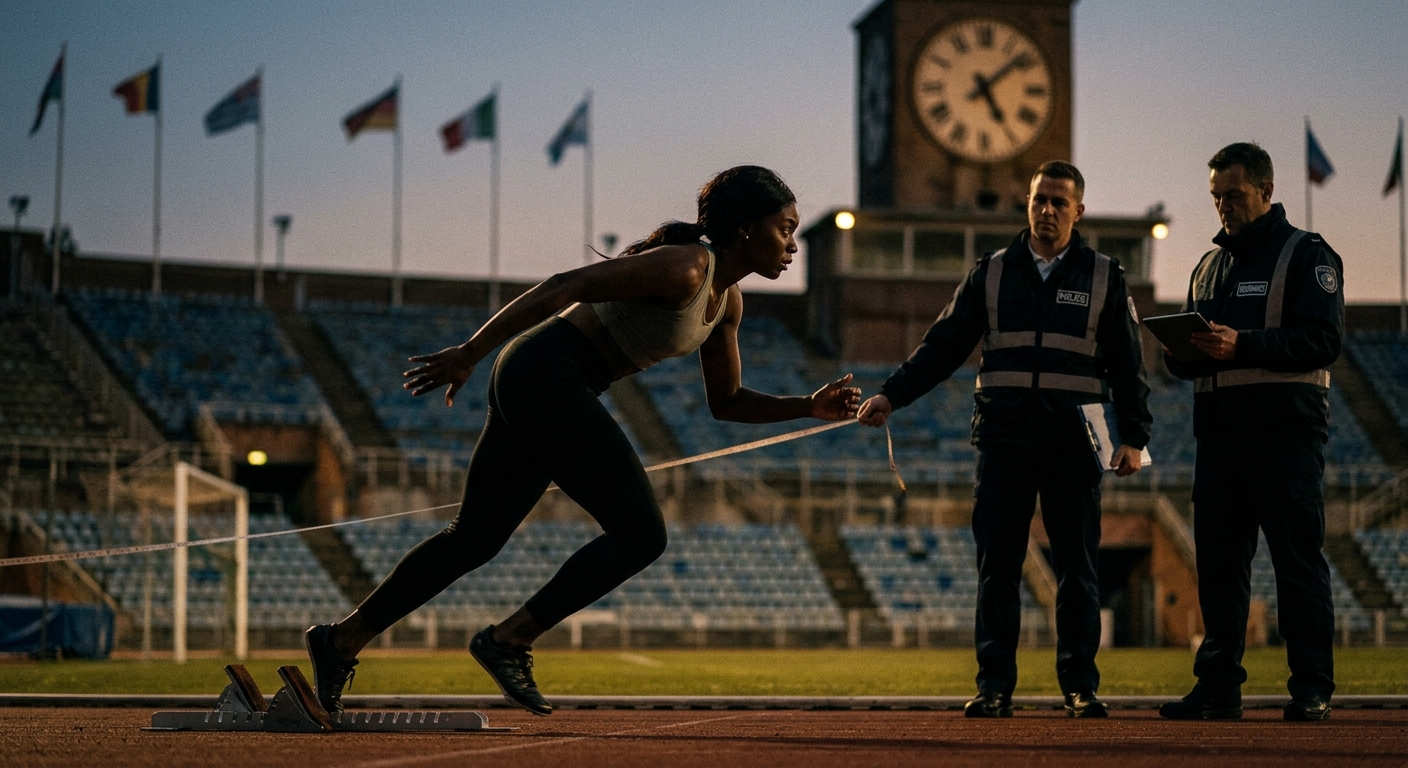
The arena of international sports is frequently celebrated as the ultimate meritocracy, a place where talent, dedication, and resilience are the sole metrics of success. Governing bodies like the International Olympic Committee (IOC) and their affiliated international federations present themselves as neutral arbiters of fairness. However, a deeper examination of the rules and regulations enforced by the global sports ecosystem reveals a disturbing reality: systemic biases frequently penalize athletes who do not conform to strictly Eurocentric biological and cultural standards. At the intersection of race and gender, Black female athletes often find their bodies, their coping mechanisms, and even their natural physical traits subjected to intense, exclusionary scrutiny.
While sports organizations claim that their rulebooks are designed to protect the integrity of competition, the practical application of these policies tells a different story. From the regulation of naturally occurring hormones to strict liability clauses regarding recreational substances, and even down to the approval of aquatic equipment, the current architecture of global sports governance frequently acts as a barrier rather than a facilitator for Black women. Understanding this dynamic requires a critical look at how biology, culture, and institutional power intersect on the world stage.
The Weaponization of Biology and DSD Regulations
Perhaps the most glaring example of institutional overreach into the bodies of Black women is found within the realm of track and field. World Athletics, the international governing body for the sport, has spent years refining its policies on athletes with Differences of Sex Development (DSD). These regulations ostensibly aim to maintain a level playing field by limiting the amount of naturally occurring endogenous testosterone a female athlete can possess while competing in specific events.
However, the application of these rules has overwhelmingly targeted Black women from the Global South. High-profile athletes, particularly those from African nations, have found their natural physiology criminalized by the sport they dominate. In a significant policy update announced in March 2023, World Athletics tightened these restrictions even further. Under the new framework, athletes categorized under DSD regulations must medically suppress their natural testosterone levels to below 2.5 nmol/L for a minimum of 24 months to remain eligible for female classification in international competition .
This demand places athletes in an unconscionable bind: either subject themselves to unnecessary, performance-altering, and potentially harmful medical interventions, or forfeit their careers entirely. The inherent assumption within these regulations is that a specific, Eurocentric physiological baseline is the only acceptable standard for womanhood. When Black women naturally deviate from this narrow biological window, they are not celebrated for their genetic gifts—as athletes in other contexts often are—but are instead labeled as anomalous and unfair. This intense biological policing strips them of their bodily autonomy and reinforces a historical legacy of scrutinizing and pathologizing Black female bodies.
Anti-Doping Frameworks and Cultural Blind Spots
The policing of athletes extends beyond naturally occurring hormones to include strict frameworks governing exogenous substances. The World Anti-Doping Agency (WADA) dictates the prohibited list for the IOC and global sports federations. While the necessity of banning performance-enhancing drugs (PEDs) is widely accepted, the inclusion of recreational substances like cannabis highlights a profound cultural disconnect and a rigid punitive system that often lacks empathy.
The suspension of a prominent American sprinter ahead of the Tokyo Olympics brought intense global scrutiny to WADA’s stance on marijuana. The athlete tested positive for THC after using the substance in a jurisdiction where it was legal, explicitly citing the profound grief of losing her biological mother as the catalyst. Instead of recognizing the nuance of mental health struggles and trauma, the governing bodies relied on strict liability, resulting in a suspension that cost her an Olympic appearance.
Following public outcry, WADA initiated a scientific review of cannabis in 2022. Despite shifting global legal landscapes and medical consensus emphasizing that THC does not enhance athletic performance, WADA announced in September 2022 that it would retain THC on its 2023 Prohibited List . The agency cited neurological health risks and the highly subjective “spirit of sport” criterion as its primary justifications. The “spirit of sport” is an inherently nebulous concept, defined by those in power. When institutions refuse to contextualize an athlete’s trauma and heavily penalize non-performance-enhancing coping mechanisms, it disproportionately harms athletes of color. These individuals often navigate immense systemic barriers and trauma without the protective shield of easily acquired therapeutic use exemptions (TUEs) afforded to their wealthier, often white, counterparts.
Equipment Standards and the Policing of Black Hair
The marginalization of Black women in sports is not limited to their internal biology; it extends to their outward appearance and the equipment required to compete. The world of elite swimming, historically lacking in racial diversity, provides a stark example of how supposedly neutral equipment regulations can inadvertently—or deliberately—act as gatekeepers.
Leading up to the delayed 2020 Tokyo Games, a controversy erupted over the approval of swimming caps. FINA (now World Aquatics), the global governing body for aquatic sports, rejected an application for the “Soul Cap” to be used in elite competition. The Soul Cap is an oversized swimming cap specifically engineered to accommodate thick, curly, braided, and natural Black hair—styles that do not easily fit into traditional, smaller silicone caps.
FINA’s initial rationale for the rejection stated that athletes at the international level did not require caps of such configuration and that the caps did not follow the “natural form of the head.” This terminology was widely criticized for defining “natural” exclusively through a Caucasian lens, effectively alienating Black athletes and signaling that their physical traits were incompatible with elite swimming. After immense public pressure and a concerted advocacy campaign by diversity organizations, FINA reversed its decision, officially approving the Soul Cap for elite competition in September 2022 . While the reversal was a victory for inclusion, the initial ban laid bare a profound institutional blind spot. It demonstrated how default equipment standards are built around white physiology, forcing Black athletes to continuously fight for basic accommodations that others take for granted.
The Complicity of the International Olympic Committee
It is crucial to understand the hierarchy of global sports governance to assign accountability. The IOC acts as the overarching authority of the Olympic Games, setting the vision and the overarching charter. However, the granular regulations—the exact testosterone limits, the approved equipment lists, the precise anti-doping protocols—are established and enforced by individual international sports federations and agencies like WADA.
This decentralized structure often allows the IOC to distance itself from controversial, exclusionary policies, pointing to the autonomy of the federations. However, the IOC cannot be completely absolved. By formally endorsing these federations, relying on WADA’s prohibited list, and upholding these standards on the world’s largest athletic stage, the IOC remains deeply complicit in a systemic structure that routinely disadvantages Black female athletes. The intersection of anti-Black racism and misogyny—often termed misogynoir—is embedded in the very fabric of these seemingly neutral rules. Until the IOC demands human rights-centric policy overhauls from its partner federations, it remains a silent sponsor of biological and cultural discrimination.
Forging a Path to True Equity in Athletics
Addressing these deeply ingrained issues requires more than reactive apologies or isolated rule reversals; it demands a proactive, systemic overhaul of how sports governance operates. What does a truly inclusive global sports ecosystem look like? It begins with structural reform across all levels of athletic administration.
- Diverse Representation in Leadership: The scientific committees, legal councils, and executive boards of the IOC, WADA, and international federations must reflect the global diversity of the athletes they govern. Without Black women and individuals from the Global South in decision-making rooms, policies will inevitably continue to favor Eurocentric baselines.
- Redefining Fairness and the Spirit of Sport: Governing bodies must abandon the reliance on rigid, Western medical paradigms to define womanhood. The natural physiological diversity of the human body should be accommodated, not penalized. Furthermore, subjective metrics like the “spirit of sport” must be critically evaluated to ensure they are not used to police cultural differences or trauma responses.
- Prioritizing Human Rights: Sports organizations must align their rulebooks with international human rights standards. Policies that force athletes into unwanted medical procedures to compete are clear violations of bodily autonomy and must be abolished entirely.
- Inclusive Equipment Standards from the Outset: Federations must proactively collaborate with diverse manufacturers to ensure that uniform and equipment regulations accommodate all body types, hair textures, and cultural requirements without forcing athletes to petition for basic humanity.
Conclusion
The global sports community loves to champion the narrative of unity and equality. Yet, the lived realities of many Black female athletes directly contradict this ideal. From World Athletics’ aggressive policing of natural testosterone levels through DSD regulations, to WADA’s punitive stance on recreational substances used for trauma, and World Aquatics’ historical blindness to the realities of natural Black hair, the evidence of systemic disadvantage is overwhelming.
Athletes should never be forced to sacrifice their health, identity, or dignity for the right to compete on the world stage. It is incumbent upon the International Olympic Committee and its affiliate federations to critically examine their internal biases and dismantle the legacy rules that perpetuate misogynoir. Only through intentional, structural reform can the sporting world hope to achieve the true meritocracy it so proudly advertises.
Frequently Asked Questions
What are DSD regulations in international track and field?
DSD (Differences of Sex Development) regulations are rules enforced by World Athletics that target female athletes who naturally produce higher levels of endogenous testosterone. In March 2023, the rules were tightened, requiring affected athletes to artificially lower their testosterone below 2.5 nmol/L for at least 24 months to compete in international female categories. These rules have predominantly impacted Black women from the Global South.
Why did WADA keep cannabis on its banned substances list?
Despite shifting global attitudes and a 2022 scientific review, the World Anti-Doping Agency (WADA) decided to keep THC on the 2023 Prohibited List. WADA argued that cannabis use violates the subjective “spirit of sport” and poses potential neurological health risks. Critics argue this disproportionately impacts athletes of color who may use it for mental health or trauma coping mechanisms rather than performance enhancement.
What is the Soul Cap and why was it originally banned?
The Soul Cap is a specialized swimming cap designed to accommodate thick, curly, braided, and natural Black hair. It was initially banned by FINA (now World Aquatics) before the Tokyo Olympics because the federation claimed it did not follow the “natural form of the head.” The decision was widely condemned as culturally biased and exclusionary, leading to a reversal and official approval of the cap in September 2022.
How does “misogynoir” relate to global sports regulations?
Misogynoir refers to the specific prejudice directed towards Black women, where racism and sexism intersect. In global sports, this manifests through policies that disproportionately police Black women’s bodies, penalize their natural physiology, scrutinize their appearance, and disregard their mental health struggles, enforcing a standard of “fairness” based largely on white, Eurocentric norms.
References
- ELIGIBILITY REGULATIONS FOR THE FEMALE CLASSIFICATION — World Athletics. 2023-03-23. https://worldathletics.org/news/press-release/eligibility-regulations-for-female-classification
- WADA Executive Committee approves 2023 Prohibited List — World Anti-Doping Agency (WADA). 2022-09-23. https://www.wada-ama.org/en/news/wada-executive-committee-approves-2023-prohibited-list
- Swimming caps designed for natural black hair finally permitted by Fina — The Guardian. 2022-09-02. https://www.theguardian.com/sport/2022/sep/02/swimming-caps-designed-for-natural-black-hair-finally-permitted-by-fina
Similar Articles








Read full bio of medha deb




