
The Global Lens on US Policing: Confronting Systemic Racism
An in-depth analysis of the UN's historic mission to investigate structural racism and police accountability in the United States.
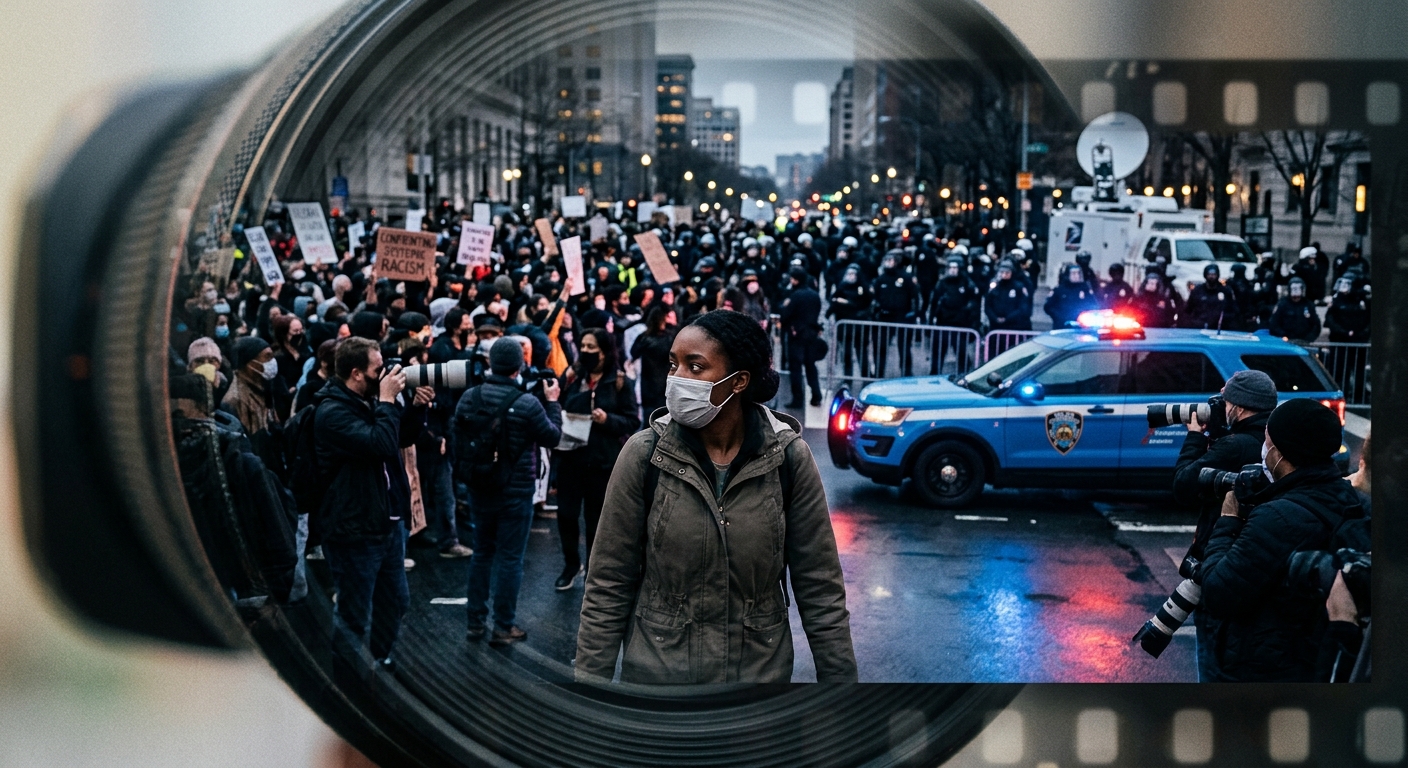
Introduction: The Intersection of Domestic Enforcement and Global Human Rights
The intersection of human rights and domestic law enforcement has increasingly become a focal point on the global stage. For decades, grassroots advocates within the United States have campaigned against systemic inequalities and institutional bias, but recently, this scrutiny has transcended national borders. Following the widespread international demonstrations sparked by the tragic murder of George Floyd in May 2020, the United Nations took an unprecedented step to formally examine law enforcement practices affecting people of African descent. This global outcry culminated in the creation of a specialized, independent delegation tasked with investigating police brutality, mass incarceration, and structural biases operating within American borders.
The subsequent arrival of the United Nations International Independent Expert Mechanism to Advance Racial Justice and Equality in Law Enforcement (EMLER) marked a watershed moment in the pursuit of civil liberties. It effectively transformed what was traditionally viewed as a strictly domestic policy issue into a critical matter of international human rights law. By launching a formal fact-finding mission on American soil, the international community sent a clear message: the struggle for racial equality, equitable justice, and the sanctity of life is recognized, monitored, and evaluated by the highest echelons of global governance.
The Mandate of the UN Expert Mechanism
Established by the United Nations Human Rights Council in 2021, EMLER was not formed merely to observe, but to critically analyze systems and recommend actionable, transformative reforms worldwide. The mechanism consists of independent human rights experts whose overarching mandate is to combat systemic racism, eradicate impunity for the excessive use of force, and fiercely protect the fundamental rights of Africans and people of African descent. In the spring of 2023, this specialized delegation embarked on an extensive, multi-city fact-finding mission across the United States.
Their itinerary intentionally included major metropolitan areas such as Washington D.C., Atlanta, Los Angeles, Chicago, Minneapolis, and New York City—cities that have historically served as both flashpoints for civil rights struggles and modern hubs for police accountability movements. During this mission, the experts bypassed sanitized official narratives to engage directly with a diverse array of stakeholders. They conducted critical interviews with federal, state, and local officials; consulted deeply with civil society organizations; and, most crucially, listened to the poignant testimonies of directly impacted individuals and grieving families who had lost loved ones to police violence. This comprehensive methodology provided the delegation with an unfiltered look at the lived realities of marginalized communities, allowing them to assess the stark contrast between the nation’s stated commitments to human liberties and the realities of its enforcement systems.
Unpacking the Crisis of Lethal Force
A primary focus of the international inquiry has been the alarming and disproportionate rate of lethal force deployed by law enforcement officers in the United States. Statistical data consistently reveals an acute crisis: police kill approximately 1,000 individuals annually across the country, a figure that dramatically eclipses the rates observed in other wealthy, democratic nations. Furthermore, the burden of this state-sanctioned violence is not distributed equally across demographic lines.
Data compiled by independent researchers and highlighted in international human rights submissions demonstrates that Black Americans are killed at nearly three times the rate of their white counterparts. The United Nations experts contextualized these fatalities not as isolated incidents involving a few anomalous actors, but as glaring symptoms of a deeply ingrained structural crisis. Their subsequent reporting drew a direct, unbroken historical line from the transatlantic slave trade and the era of legalized apartheid—commonly known as Jim Crow laws—to modern-day racial profiling and police violence.
This historical continuity manifests in routine, daily encounters. Minor infractions, such as routine traffic stops, frequently escalate at an alarming pace into deadly confrontations for people of color. Furthermore, the delegation noted a pervasive culture of legal and functional impunity. Despite high-profile convictions in a handful of internationally publicized cases, the vast majority of officers involved in fatal shootings are rarely criminally charged, let alone convicted. Legal doctrines such as qualified immunity serve to shield law enforcement personnel from civil liability, creating an environment where true accountability remains elusive, effectively denying grieving families the justice they seek.
Mass Incarceration and the Criminal Justice Pipeline
Beyond the acute crisis of lethal police encounters, the international observers scrutinized the broader, sprawling landscape of the American criminal justice system. The United States currently maintains the highest incarceration rate in the world, a phenomenon that disproportionately devastates Black, Indigenous, and Brown communities. The UN delegation explicitly condemned what they termed the “appalling overrepresentation” of people of African descent within the penal system.
This stark disparity is fueled by a confluence of systemic, deeply entrenched factors. Punitive drug policies rooted in the ‘War on Drugs’, the application of mandatory minimum sentences, and wealth-based detention systems like cash bail have systematically funneled millions of marginalized individuals into detention facilities. This system strips communities of economic stability, fractures family units, and perpetuates cycles of intergenerational trauma.
During their visits to detention centers, the experts expressed profound concern over severe penal practices that directly contravene established international human rights standards. Among the most alarming findings were instances of pregnant individuals being physically shackled during childbirth, the extensive and psychologically damaging use of prolonged solitary confinement, and the sentencing of juveniles to life imprisonment without the possibility of parole. Such practices, the experts argued, systematically erode human dignity and serve to perpetually marginalize affected populations—even after release—by stripping them of their political voice through mechanisms like felony disenfranchisement and subjecting them to forced labor within correctional facilities.
Beyond the Badge: Surveillance and Structural Bias
The scope of systemic racism extends well beyond physical encounters with armed officers; it is increasingly embedded within the administrative, logistical, and technological frameworks of modern law enforcement. The UN delegation paid particular attention to the rapid expansion of surveillance technologies, such as facial recognition software, predictive policing algorithms, and gang databases. Numerous independent studies have demonstrated that these technological tools possess inherent racial biases, often misidentifying people of color at significantly higher rates than white individuals.
By relying on historical crime data that is inherently skewed by decades of over-policing in minority neighborhoods, predictive algorithms create a self-fulfilling prophecy. They justify continuous, aggressive surveillance and harassment of these communities under the guise of objective, data-driven policing. Furthermore, the delegation scrutinized the ongoing militarization of local police departments. The transfer of military-grade surplus equipment to local precincts has transformed domestic police forces into entities that often resemble occupying armies, utilizing SWAT teams for routine search warrants—a tactic that frequently results in unnecessary collateral damage and civilian casualties.
Moreover, the experts highlighted the problematic societal reliance on law enforcement to address complex public health and social issues. For decades, municipalities have systematically divested from public health infrastructure, mental health care, education, and social services, opting instead to funnel immense resources into armed police responses. Consequently, police officers are routinely deployed as the default responders to mental health crises, homelessness, and school disciplinary matters—situations they are fundamentally ill-equipped to handle without resorting to punitive control or physical force.
International Law and Domestic Accountability
The intense scrutiny applied by the United Nations serves as a potent reminder to the United States of its binding obligations under international treaties. As a signatory to the International Convention on the Elimination of All Forms of Racial Discrimination (ICERD), the U.S. government is legally obligated to prohibit, combat, and entirely eliminate racial discrimination in all its forms, particularly within the administration of justice. For years, human rights organizations such as Amnesty International and domestic civil liberties groups have submitted detailed, data-rich reports to UN bodies, documenting widespread violations and demanding that international pressure be applied to compel domestic reforms.
The involvement of the global community fundamentally alters the political calculus of domestic reform. While the United Nations does not possess unilateral enforcement mechanisms to directly rewrite domestic legislation, its authoritative findings carry immense diplomatic, legal, and moral weight. The public, international documentation of these human rights abuses challenges the nation’s standing as a global champion of democratic liberties. Crucially, it provides domestic advocates with powerful, internationally validated tools to leverage in legislative battles, public awareness campaigns, and courtrooms, proving that the localized injustices they fight against constitute severe human rights violations recognized by the highest international authorities.
A Roadmap for Transformative Change
The primary objective of the UN mechanism is not solely to diagnose the systemic failures, but to prescribe comprehensive, actionable solutions. In their preliminary findings and subsequent reports, the international experts urged a fundamental reimagining of the role of law enforcement in American society. This paradigm shift requires significantly reducing the footprint of armed officers in the daily, non-criminal lives of citizens.
Key recommendations include divesting from armed police responses in routine traffic enforcement, removing law enforcement presence from school environments, and creating alternative, specialized response teams for mental health interventions comprising unarmed, specially trained healthcare professionals. Furthermore, the delegation called for robust federal interventions to establish strict national standards for the use of force, emphasizing the international standard that lethal force must only be deployed as an absolute, unavoidable last resort to protect human life.
They also urged legislative bodies at all levels to dismantle legal barriers to accountability, specifically targeting the qualified immunity doctrine that acts as a shield for misconduct. Enhanced federal data collection on police encounters, the establishment of independent civilian oversight boards with subpoena power, and the immediate demilitarization of local police departments were highlighted as essential, non-negotiable steps toward establishing a justice system that prioritizes human life, equity, and restorative justice over punitive control and racial subjugation.
Disparities in U.S. Law Enforcement Metrics
The following table provides a summarized overview of the systemic disparities identified by human rights monitors regarding law enforcement and the criminal justice system in the United States.
| Metric Category | Context / Description | Estimated Disparity / Impact |
|---|---|---|
| Lethal Force Deployment | The comparative risk of being killed during a police encounter. | Black individuals are approximately 3 times more likely to be killed by police than white individuals. |
| Incarceration Rates | Representation of demographics within the state and federal penal systems. | Black Americans are incarcerated at nearly 5 times the rate of white Americans nationwide. |
| Accountability & Impunity | Rate of criminal charges brought against officers involved in civilian fatalities. | Less than 1% of fatal police shootings result in criminal charges for the involved officers. |
| Solitary Confinement | The use of prolonged isolation in detention centers and maximum-security prisons. | Highly disproportionate placement of people of African descent, with some individuals isolated for over a decade. |
Frequently Asked Questions (FAQs)
What is the UN Expert Mechanism on Racial Justice in Law Enforcement?
The International Independent Expert Mechanism to Advance Racial Justice and Equality in Law Enforcement (EMLER) is a specialized body created by the United Nations Human Rights Council in 2021. Its primary goal is to examine systemic racism globally, advocate for the protection of Africans and people of African descent, and ensure accountability for human rights violations committed by law enforcement agencies.
Why did the UN delegation visit the United States?
The delegation visited the United States in April and May of 2023 to conduct a direct, fact-finding mission regarding systemic racism, police brutality, and the criminal justice system. Triggered by global outrage following the murder of George Floyd and continuous advocacy from civil rights groups, the visit aimed to evaluate U.S. compliance with international human rights standards firsthand.
Can the United Nations legally enforce changes in US policing?
No, the United Nations cannot unilaterally rewrite or enforce domestic laws within the United States. However, its findings and official reports exert substantial diplomatic and moral pressure. They formally document human rights abuses on the international stage, which domestic civil rights organizations and legislators can use as leverage to push for structural reforms and policy changes at the federal, state, and local levels.
What are the main recommendations to fix systemic racism in policing?
International experts recommend a holistic reimagining of public safety. Key proposals include removing armed police from routine traffic stops and school environments, utilizing trained medical professionals for mental health crises, abolishing doctrines like qualified immunity to ensure officer accountability, ending mandatory minimum sentencing, and heavily investing in community-based social services rather than punitive infrastructure.
References
- Systemic racism pervades US police and justice systems, UN Mechanism on Racial Justice in Law Enforcement says in new report urging reform — Office of the High Commissioner for Human Rights (OHCHR). 2023-09-28. https://www.ohchr.org/en/press-releases/2023/09/systemic-racism-pervades-us-police-and-justice-systems-un-mechanism-racial
- UN rights experts slam ‘systemic racism’ in US police and courts — UN News. 2023-09-28. https://news.un.org/en/story/2023/09/1141652
- UN human rights experts begin US tour focusing on racial justice and policing — The Guardian. 2023-04-24. https://www.theguardian.com/world/2023/apr/24/un-human-rights-experts-us-tour-racial-justice-policing
- United States of America: Submission to the UN International Independent Expert Mechanism to Advance Racial Justice and Equality in Law Enforcement ahead of its country visit — Amnesty International. 2023-02-28. https://www.amnesty.org/en/documents/ior40/6489/2023/en/
Similar Articles








Read full bio of medha deb




