
Ghostwriting Pleadings: Ethical Tightrope for Lawyers
Navigating the fine line between access to justice and ethical pitfalls in ghostwriting for pro se litigants.
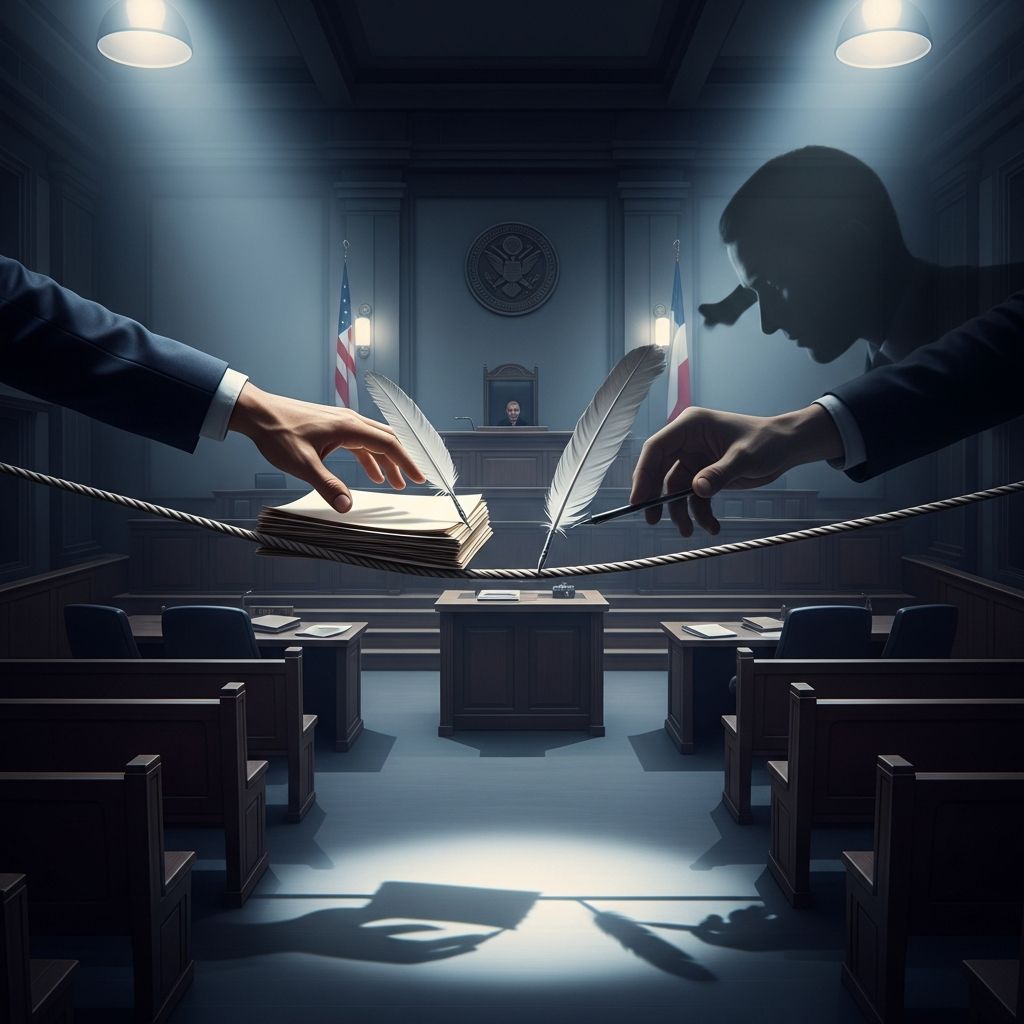
Lawyers occasionally draft legal documents for clients representing themselves in court, a practice known as ghostwriting. This approach aims to support access to justice but sparks intense ethical debates about transparency and fairness.
Understanding Ghostwriting in Modern Litigation
Ghostwriting involves an attorney preparing pleadings, motions, or other filings for a pro se litigant—someone handling their case without formally appearing counsel—without the lawyer’s name or role being disclosed to the court. This form of limited-scope representation allows clients to receive targeted help affordably, preserving their pro se status for other aspects of the case.
Pro se litigation is common due to rising legal costs and limited access to full-service attorneys. Ghostwriting emerged as a solution, enabling lawyers to provide value without committing to entire cases. However, its invisibility raises questions: Does it empower the underserved or undermine judicial processes?
- Core Appeal: Cost-effective aid for low-income individuals.
- Key Challenge: Balancing client autonomy with professional responsibilities.
Historical Evolution and Court Perspectives
Federal courts initially viewed ghostwriting skeptically. Early rulings highlighted how undisclosed attorney assistance lets pro se parties enjoy lenient pleading standards while possessing professionally crafted documents, creating imbalance. For instance, judges argued this skews proceedings, granting undue latitude in hearings and trials.
Over time, perspectives shifted. Some courts recognized ghostwriting’s role in access to justice, especially where full representation is unaffordable. Yet, opposition persists, with decisions labeling it a breach of candor duties or even fraud.
| Era | Dominant View | Key Concern |
|---|---|---|
| Pre-2000s | Strongly Opposed | Unfair advantage, candor violation |
| 2000s-Present | Mixed | Access vs. transparency |
Ethical Frameworks Governing the Practice
The ABA Model Rules of Professional Conduct do not explicitly ban ghostwriting. ABA Formal Opinion 07-446 permits drafting pleadings for pro se clients without disclosure, provided it avoids misrepresentation or unfair advantage. Lawyers must ensure filings are legally sound, as judges can spot professional quality.
Rule 1.2(c) allows limiting representation scope with client consent, supporting unbundled services. However, critics invoke Rule 3.3 (candor to tribunal) and Rule 8.4 (misconduct), arguing undisclosed help misleads courts into applying pro se leniency inappropriately.
Rule 11 of the Federal Rules of Civil Procedure requires certifications of merit for signed documents. Ghostwriters, by not signing, may evade this, prompting accusations of circumventing responsibilities.
Jurisdictional Variations in Acceptance
Rules differ widely. The ABA takes a permissive stance, but states diverge:
- Arizona, Maine, and New Hampshire allow undisclosed ghostwriting.
- Nevada mandates disclosure of assistance, though not always the attorney’s name.
- Some federal courts, like in South Carolina bankruptcy, deem it a rules violation.
New York permits limited roles with consent, emphasizing no promotion of frivolous claims. Attorneys must research local ethics opinions and court preferences to avoid sanctions.
Arguments in Favor: Championing Access to Justice
Proponents highlight ghostwriting’s role in expanding legal aid, especially pro bono. It lets attorneys assist without full entry of appearance, ideal for ancillary matters like habeas petitions.
Clients retain control, avoiding full lawyer takeover. High-quality pleadings give pro se parties a ‘fighting chance’ without guaranteeing victory, which depends on merits. In state courts permitting it, plaintiffs advance further than in restrictive federal venues, promoting equity.
ABA Opinion 07-446: Lawyers can draft without disclosure if no unfair advantage results, as competent judges discern professional work.
Arguments Against: Risks of Deception and Inequity
Detractors contend ghostwriting deceives courts and opponents. Pro se leniency—liberal construction of pleadings—becomes unjust when documents are attorney-drafted, holding represented parties to stricter standards.
It interferes with judicial oversight and may lead to problems if clients cannot explain filings. Undisclosed help risks Rule 11 evasion, as ghostwriters avoid certifying merit. Some view it as unauthorized practice if crossing state lines.
Practical Risks and Mitigation Strategies
Engaging in ghostwriting exposes lawyers to sanctions, disclosure orders, or bar complaints. Courts may compel identity revelation if harm is shown via preponderance standard.
To mitigate:
- Document Everything: Use clear engagement letters specifying limited scope and no court appearance.
- Assess Jurisdiction: Review local rules and judge tendencies.
- Ensure Competence: Advise clients only on agreed tasks; prepare them to handle filings.
- Consider Disclosure: Some pleadings note ‘prepared with counsel assistance’ to balance ethics.
Pro bono contexts amplify benefits but demand caution against frivolous claims.
Case Studies Illustrating Real-World Impacts
In re Mungo (Bankr. D.S.C. 2003), a court condemned ghostwriting as evasion of obligations under rules and conduct standards. Conversely, permissive jurisdictions report fewer frivolous filings due to lawyer involvement.
Federal vs. state disparities create forum-shopping incentives, where state pro se plaintiffs with ghost help outperform federal counterparts.
Future Directions and Proposed Reforms
Debate continues toward standardization. Suggestions include:
- Preponderance burden for challengers proving ghostwriting harm.
- Uniform disclosure rules noting assistance without naming attorneys.
- Expanded unbundled services training for lawyers.
As access-to-justice gaps widen, ghostwriting’s evolution could redefine pro bono impact.
Frequently Asked Questions
What is ghostwriting for pro se litigants?
An attorney drafts court documents for a self-represented party without disclosing involvement, enabling limited help.
Is ghostwriting ethical under ABA rules?
Yes, per Opinion 07-446, if no misrepresentation occurs and scope is limited with consent.
Do all courts prohibit it?
No; views vary by jurisdiction, with some requiring disclosure and others allowing anonymity.
Can ghostwriting lead to sanctions?
Possibly, if deemed deceptive or Rule 11-violating; research local rules essential.
How does it promote access to justice?
Provides affordable aid, boosting pro se success without full representation costs.
References
- The Courts’ Views on Ghostwriting Ethics — Judicature, Duke University. 2016. https://judicature.duke.edu/articles/the-courts-views-on-ghostwriting-ethics/
- Ghostwriting for Pro Se Litigants: Legal Lifeline or Ethical Landmine? — Louisiana Legal Ethics. N/A. https://lalegalethics.org/ghostwriting-for-pro-se-litigants-legal-lifeline-or-ethical-landmine/
- The Ethics of Ghostwriting Pleadings for Pro Se Litigants — Bush Ross. N/A. https://www.bushross.com/assets/htmldocuments/Parsley%20-%20The%20Ethics%20of%20Ghostwriting%20Pleadings%20Pro%20Se%20Litigants.pdf
- NYCLA Committee on Professional Ethics Opinion 742 — New York County Lawyers Association. N/A. https://www.nycla.org/resource/ethics-opinion/nycla-committee-on-professional-ethics-opinion-742/
- GHOSTWRITING AND PRO BONO Ethics rules in many jurisdictions — CPBO. 2023-07. http://www.cpbo.org/wp-content/uploads/2023/07/FINAL-Ghostwriting-Guide-2023.pdf
- The Ethical Implications of Legal Ghostwriting — Goldberg Segalla. N/A. https://www.goldbergsegalla.com/blog/professional-liability-matters/legal-malpractice/the-ethical-implications-of-legal-ghostwriting/
- Ghostwriting Can Increase Pro Bono and Expand Access to Justice — Pro Bono Institute. 2022-08-11. https://www.probonoinst.org/2022/08/11/ghostwriting-can-increase-pro-bono-and-expand-access-to-justice/
Similar Articles








Read full bio of medha deb


