
Georgia Service Dogs and ESAs: Legal Guide
Comprehensive overview of Georgia's regulations for service dogs, assistance animals, and emotional support companions in public and housing.
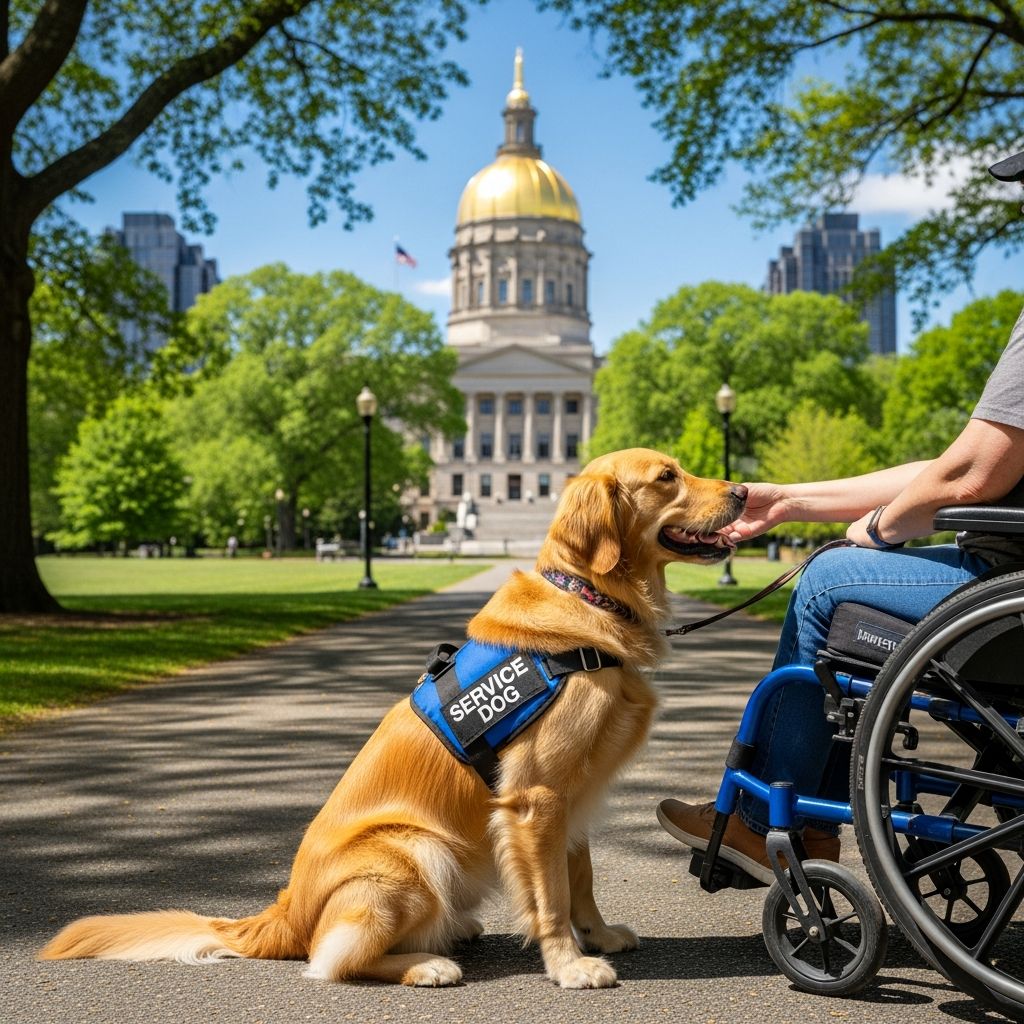
Georgia residents with disabilities rely on specially trained dogs to enhance independence and daily functioning. State statutes and federal laws like the Americans with Disabilities Act (ADA) provide clear protections for these animals in public spaces and residences. This guide details eligibility, access rules, housing provisions, and enforcement mechanisms to empower individuals and inform property owners and businesses.
Defining Eligible Assistance Animals Under Georgia Statutes
Georgia law restricts the definition of assistance animals to dogs only, excluding other species like miniature horses recognized federally under ADA in limited cases. An assistance dog must undergo specialized training from accredited schools for guide, hearing, or service purposes to qualify for state protections.
Physical impairments qualifying individuals include mobility limitations that hinder walking, standing, lifting, or self-care without aid. Visual or hearing impairments also grant access rights. Notably, state code omits mental or intellectual disabilities from its physical disability definition, potentially limiting coverage for psychiatric service dogs under purely state law, though federal ADA applies more broadly.
- Dogs for the blind: Guide dogs trained to navigate obstacles and signals.
- Hearing dogs: Alert to sounds like alarms or names.
- Mobility service dogs: Assist with balance, retrieving items, or opening doors.
Trainers from licensed organizations must certify the dog’s capabilities. Dogs in training receive similar public access if handled by credentialed individuals with leash control.
Public Access Protections for Trained Dogs
Qualified assistance dogs accompany handlers into all public accommodations without extra fees. This spans restaurants, retail stores, hotels, educational institutions, transportation hubs, and recreational facilities. Businesses cannot demand proof of training, registration, or documentation beyond two ADA-permitted inquiries: whether the dog is required due to disability and what tasks it performs.
Control requirements mandate leashes, harnesses, or tethers unless they interfere with tasks. Vest or tags are optional. Exclusion occurs only if the dog poses a direct safety threat, is out of control, or lacks housebreaking—assessed case-by-case, not breed-based.
| Allowed Venues | Prohibited Actions by Staff |
|---|---|
| Restaurants, stores, gyms | Asking for certification or demos |
| Hotels, museums, schools | Charging pet fees |
| Public transit, airlines | Denying based on appearance |
State agencies reinforce these rules; for instance, no surcharges apply to service animals in state facilities.
Housing Rights for Service Dogs and Emotional Support Animals
The federal Fair Housing Act (FHA) supersedes local pet bans, mandating reasonable accommodations for service dogs and emotional support animals (ESAs) in rentals and condos. Landlords must allow them regardless of no-pet policies, without deposits or breed restrictions, provided the animal does not pose undue burdens.
Service dogs perform disability-mitigating tasks. ESAs provide emotional comfort via prescribed letters from licensed mental health professionals, alleviating symptoms of psychiatric conditions. Verification for ESAs requires documentation confirming disability and need; service dogs rely on self-identification.
Tenants remain responsible for damages or injuries caused by their animals, equivalent to any resident’s liability. Housing providers can evict for repeated violations like uncontrolled aggression.
- Request process: Written accommodation request with ESA letter if applicable.
- No modifications needed for dogs (e.g., no ramps unless requested).
- Common denials invalid: Pet fees, size limits, certain breeds.
Differences Between Service Dogs, ESAs, and Pets
| Category | Public Access | Housing Rights | Training Required | Federal Law |
|---|---|---|---|---|
| Service Dog | Yes (ADA/GA law) | Yes (FHA) | Task-specific | ADA, FHA |
| Emotional Support Animal | No | Yes (FHA) | No | FHA |
| Therapy Dog | No | No | Basic obedience | None |
| Pet | No | Subject to rules | No | None |
ESAs lack public access; misrepresenting pets as service dogs invites penalties.
Training Standards and Registration Nuances
No statewide service dog registry exists, though some counties require general dog licensing. Online or in-person registration applies universally, not distinguishing service status. Training must come from accredited programs ensuring reliability in diverse environments.
Handlers maintain control; aggressive or disruptive behavior forfeits rights. Puppies raised for service receive provisional access under trainer supervision.
Protections Against Interference and Penalties
Georgia criminalizes harassing assistance dogs, defined as impeding duties or endangering handlers. First offenses carry 90-day minimum jail or $500 fines; repeats escalate to high/aggravated misdemeanors. Allowing one’s dog to harm service dogs incurs similar punishments, with severe injury treated gravely.
Denying access constitutes a high/aggravated misdemeanor, fined up to $2,000 or 30 days imprisonment. Businesses face civil suits under ADA for discrimination. Recent legislative efforts, like HB668, strengthen penalties for negligence causing dog harm.
Workplace and Educational Accommodations
Under ADA Title I, employers provide service dog access as reasonable accommodations, barring undue hardship. Educational institutions, including colleges like Middle Georgia State, permit service animals in classes and services. ESAs may qualify in dorms via FHA-like campus policies.
Frequently Asked Questions
Can my miniature horse qualify as a service animal in Georgia?
State law limits to dogs; ADA allows mini horses in some public spots if trained, controlled, and housebroken, but businesses assess individually.
Do I need a doctor’s note for my service dog in stores?
No; only task and need questions allowed. Documentation is private.
Can landlords charge for ESA damages?
Yes, standard liability applies; no extra pet fees.
What if my service dog is aggressive?
Exclusion justified if uncontrollable or threatening.
Are service dogs allowed in Georgia state parks?
Yes, as public accommodations, under control.
How do I report access denial?
Contact business management, then ADA hotline or Georgia Attorney General.
Maintaining Compliance and Best Practices
Handlers ensure vaccinations, grooming, and behavior training. Businesses train staff on rights inquiries. Mediation resolves disputes before litigation. Resources from disability rights groups aid navigation.
(Word count: 1678)
References
- Georgia Laws on Service Dogs and Emotional Support Animals — Nolo. 2023. https://www.nolo.com/legal-encyclopedia/georgia-laws-on-service-dogs-and-emotional-support-animals.html
- Georgia Service Dog Rules and Laws — Critter Sitters. 2024. https://critter-sitters.com/georgia-service-dog-rules-and-laws/
- Georgia Service Dog Laws — American Disability Rights Inc / Official Code of Georgia Annotated Title 30 Chapter 4. 2023-10-01. https://americandisabilityrights.org/states/georgia/service-dog-official-code
- Non-discrimination in Provision of Services – Service Animals — Georgia Administrative Code 391-1-9. 2024. https://rules.sos.ga.gov/GAC/391-1-9
- Service Animals and Emotional Support Animals — Middle Georgia State University. 2025. https://www.mga.edu/accessibility-services/accommodation-services/service-animal-esa.php
Similar Articles








Read full bio of Sneha Tete


