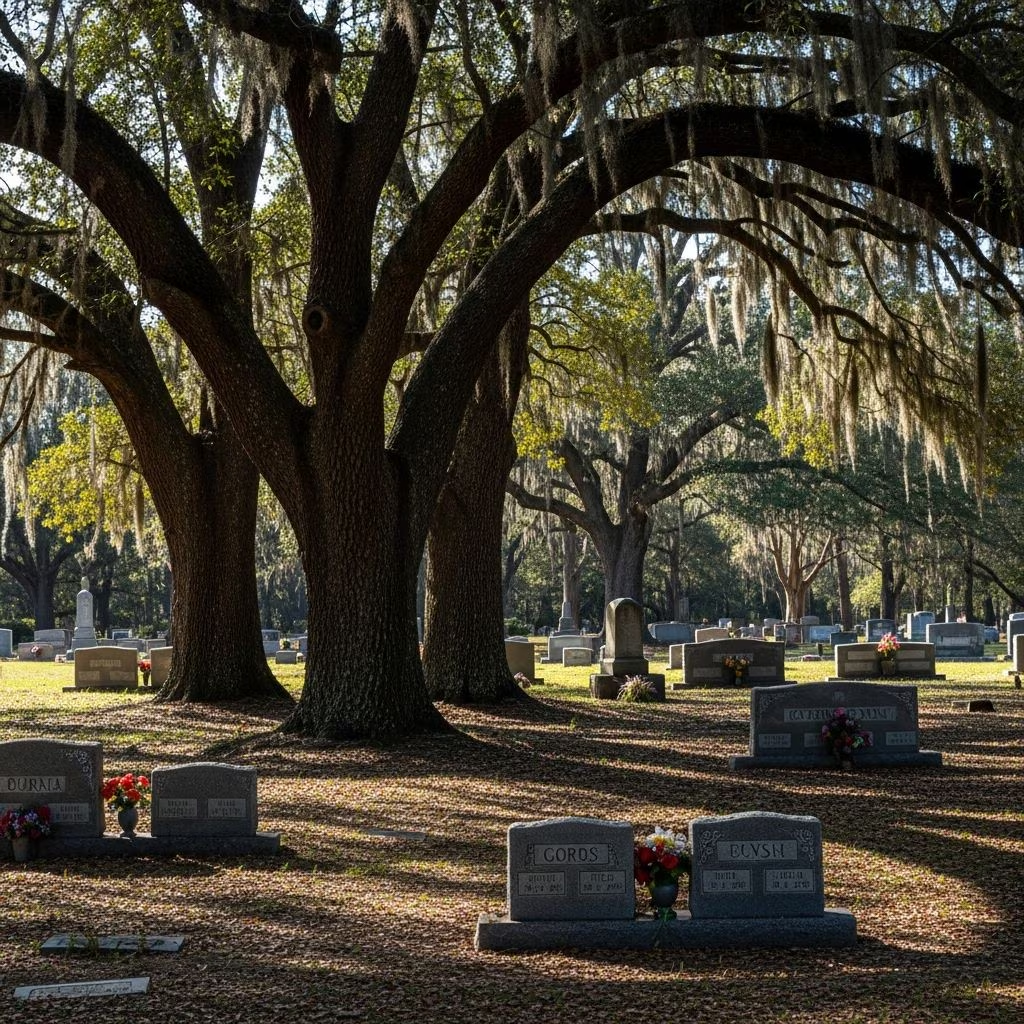
Georgia maintains specific statutes to oversee the respectful handling of human remains after death, balancing public health needs with family preferences. These rules cover everything from obtaining official documents to final disposition methods like burial or cremation.
Key Legal Requirements for Handling Remains
State laws prioritize safety and dignity in post-death processes. Facilities involved must hold valid licenses, and all steps require proper documentation to proceed legally.
- Death must be certified by a qualified medical professional before any disposition.
- Remains identification uses durable tags with details like name, date of death, and Social Security number.
- Transportation out of state or for cremation demands a special permit from the funeral director.
Filing Death Certificates and Timelines
A death certificate is mandatory and must reach the local health department within 72 hours of death. Funeral homes or responsible parties typically manage this filing. If the cause remains unclear after 48 hours, the physician or coroner notifies the funeral director, delaying final steps until cleared.
This process ensures accurate records for legal, medical, and administrative uses. Physicians sign off on natural causes, while coroners handle suspicious cases.
Options for Burial Practices
Georgia does not mandate caskets for burial, though individual cemeteries may impose their own standards on container types. Burial vaults or liners are optional under state law, leaving choices to families and sites.
Embalming holds no legal requirement for direct burials, with refrigeration serving as an effective alternative to preserve remains temporarily. Depth and container standards fall under Secretary of State rules for interment.
| Burial Element | State Requirement | Notes |
|---|---|---|
| Casket | Not required | Cemetery rules may apply |
| Embalming | Not required | Refrigeration alternative |
| Vault/Liner | Not required | Site-specific options |
Cremation Procedures and Facility Standards
Cremations occur only in state-licensed facilities meeting construction and safety criteria set by health authorities. Providers must offer alternative containers like cardboard or fiberboard instead of caskets, and inform families of this choice.
Prior to cremation, written consent from authorized kin or agents is essential, alongside the filed death certificate. Records of each cremation, including deceased details and authorizer, stay on file for compliance and audits.
Prostheses removal requires serial number logging on identification tags. Cremated remains must be claimed within 60 days, or they go to the coroner for burial.
Handling and Disposing of Cremated Remains
Families enjoy flexibility with ashes: storage in urns at home, placement in crypts, niches, or graves, or scattering in suitable spots. Avoid public areas to respect others, guided by common sense.
Scattering Ashes on Land
Land scattering faces few state restrictions, but local ordinances vary—always verify municipal rules before proceeding.
Scattering Ashes at Sea or Inland Waters
Sea scattering demands completion within 50 days of cremation, followed by a health department filing noting the deceased’s name and event details. Federal Clean Water Act mandates at least three nautical miles offshore, ashes removed from containers, with EPA notification within 30 days.
Inland waters like rivers or lakes may need permits from managing agencies.
Determining Authority Over Disposition
Georgia Code § 31-21-7 sets a clear hierarchy for who directs final arrangements, preventing disputes.
- Healthcare agent from an Advance Directive.
- Person named in a pre-need affidavit.
- Surviving spouse.
- Adult children or parents, in order.
- Executor only ranks lower, typically ninth.
Payment for services or executor status does not elevate priority. Disputes may require court orders or written agreements before providers proceed. Individuals can specify wishes via wills or legal documents.
Consumer Rights and Provider Obligations
Funeral providers must supply detailed price lists for caskets, outer containers, direct cremations, and transfers. They cannot refuse third-party caskets or urns, nor charge handling fees for them.
Solicitors face bans on pressuring the dying to alter prepaid plans. Federal Funeral Rule mandates itemized pricing transparency.
- Separate lists for caskets and burial containers if not in general price list.
- Price ranges for direct cremation and immediate burial.
- No embalming mandates except in specific transport cases.
Pre-Planning and Legal Tools
Advance planning via directives or affidavits ensures personal wishes guide disposition. Georgia supports appointing agents to manage remains post-death, overriding default kin order.
Prepaid arrangements protect against sales pressure, with laws safeguarding existing contracts.
Common Challenges and Resolutions
Family disagreements trigger provider holds until court intervention or consensus. Unclaimed cremains after 60 days lead to public burial. Delays in cause-of-death determination pause processes.
Frequently Asked Questions
Is embalming required in Georgia for burial or cremation?
No, state law does not require embalming; refrigeration suffices for preservation needs.
Can I use my own casket or urn with a Georgia funeral provider?
Yes, providers must accept them without refusal or added fees.
Who decides on cremation if there’s no will?
Priority follows Georgia Code § 31-21-7: healthcare agent first, then pre-need designee, spouse, and so on.
Are there restrictions on scattering ashes in Georgia?
Minimal state rules, but check local laws; sea scattering has federal and timing requirements.
How soon must a death certificate be filed?
Within 72 hours to the local health department.
Is a casket needed for cremation?
No, alternative containers are permitted and must be offered.
Facility Licensing and Oversight
The Secretary of State oversees standards for crematories, including retort maintenance—repairs due within 30 days or risk suspension. Public health departments supervise permits and records.
Consumers can file complaints with the Federal Trade Commission or Georgia Attorney General for violations.
References
- Cremation Laws in Georgia — Yatskia Urns. 2024. https://www.yatskiaurns.com/blogs/news/cremation-laws-in-georgia
- Funerals and Cemeteries — Georgia Attorney General’s Consumer Protection Division. 2024. https://consumer.georgia.gov/funerals-and-cemeteries
- Burial and Cremation Laws in Georgia — Nolo. 2024. https://www.nolo.com/legal-encyclopedia/burial-cremation-laws-georgia.html
- Who Has the Authority to Direct the Method of Burial or Cremation — Pat Gibbs Law. 2024. https://www.patgibbs.com/who-has-the-authority-to-direct-the-method-of-burial-or-cremation
- Guide to Funeral Homes, Crematories and Cemeteries — Georgia Department of Human Services, Division of Aging Services. 2024. https://aging.georgia.gov/document/document/guide-funeral-homes-crematories-and-cemeteries/download
- GAC – Chapter 250-6 Establishment/Crematory Licensure — Georgia Secretary of State Rules. 2024. https://rules.sos.ga.gov/gac/250-6
- Next of Kin – Georgia Law — Georgia Funeral Directors Association. 2024. https://www.gfda.org/resources/who-is-the-next-of-kin-georgia-law