
George Washington Carver: Agricultural Pioneer and Scientific Innovator
Discover how Carver transformed Southern agriculture through innovation, crop diversification, and scientific research.
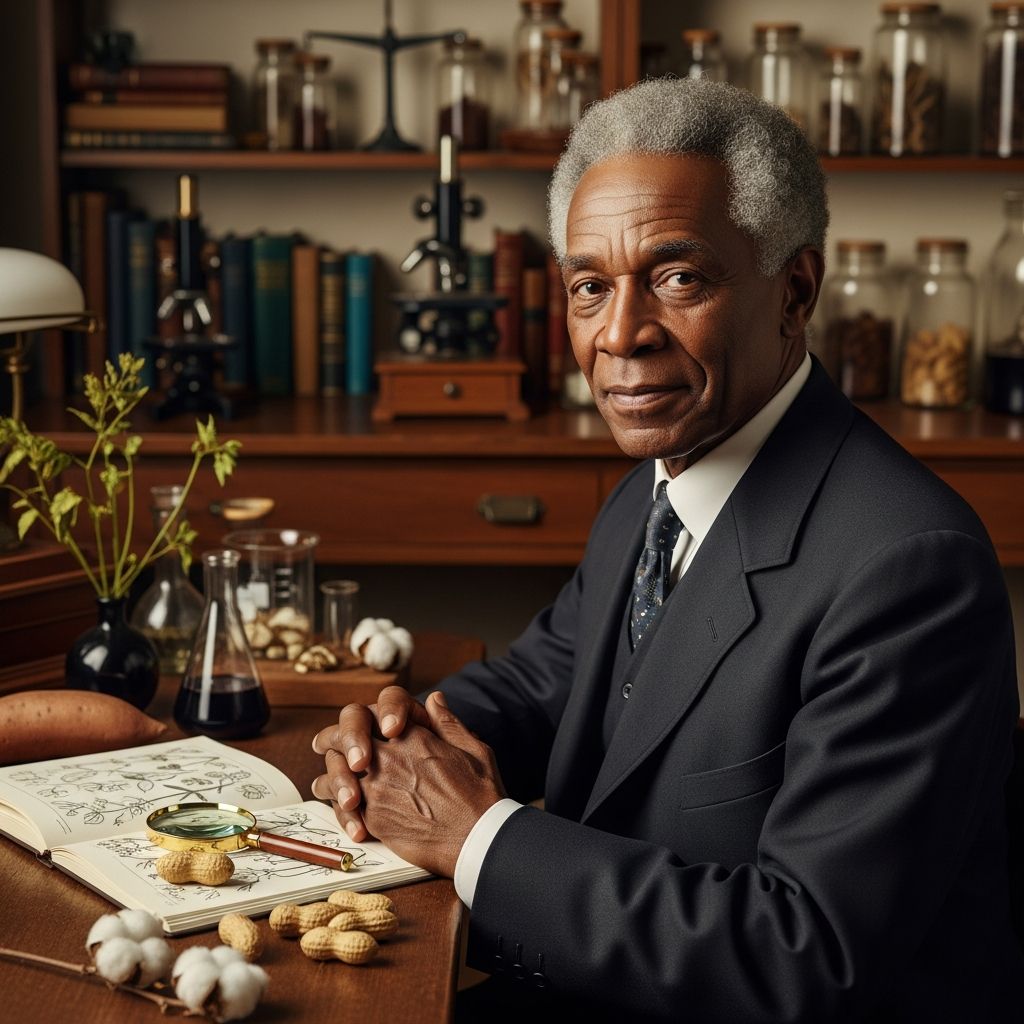
The Agricultural Revolution Led by a Scientific Visionary
George Washington Carver stands as one of the most transformative figures in American agricultural history. As a scientist, educator, and inventor, he fundamentally reshaped farming practices across the Southern United States during a period when agriculture represented the nation’s largest occupation. His work extended far beyond laboratory experiments; it touched the lives of countless farmers, particularly Black sharecroppers seeking economic independence and food security. Through systematic research and dedicated teaching, Carver demonstrated that scientific principles could provide practical solutions to the agrarian challenges facing rural communities.
Carver’s influence transcended his era, establishing principles of sustainable farming and crop diversification that remain relevant today. His legacy encompasses not only the hundreds of products he developed but also the educational framework he built to ensure knowledge reached those who needed it most. Unlike many scientists of his time, Carver remained deeply committed to serving populations that had limited access to advanced agricultural information.
Addressing the Crisis of Soil Depletion in the South
When Carver arrived at Tuskegee Institute in 1896, Southern agriculture faced a severe environmental crisis. Decades of continuous cotton cultivation had stripped millions of acres of essential nutrients, rendering previously productive farmland exhausted and nearly worthless. The relentless focus on a single crop had created both ecological and economic vulnerabilities that threatened the survival of farming communities. Erosion compounded these problems, leaving vast regions incapable of sustaining any viable plant growth.
The widespread adoption of cotton monoculture had created a dangerous dependency that left farmers powerless when market prices fluctuated or crop diseases emerged. The boll weevil, an agricultural pest that devastated cotton crops, further highlighted the fragility of this system. Carver recognized that salvation lay not in doubling efforts to restore cotton production, but in fundamentally reimagining how Southern farmers approached land management and crop selection.
Carver’s solution involved implementing systematic crop rotation practices that would simultaneously restore soil fertility and diversify farmer income. By introducing nitrogen-fixing crops such as peanuts, soybeans, and cowpeas, he provided farmers with a dual benefit: their fields would recover natural fertility while they cultivated plants that offered nutritional and commercial value. This approach represented a paradigm shift in agricultural thinking, moving from exploitative practices toward sustainable stewardship of the land.
The Transformation of Peanuts into an Agricultural Powerhouse
Perhaps no crop better exemplifies Carver’s genius than the peanut. When he began his work, peanuts held virtually no commercial significance in American agriculture and were not even officially recognized as a viable crop. This humble legume existed primarily at the margins of farming consciousness, if it existed there at all. Carver’s transformation of the peanut from agricultural obscurity to economic prominence represents one of his most remarkable achievements.
Between 1915 and 1923, Carver devoted extraordinary effort to discovering the multitude of products that could be derived from peanuts. Through rigorous laboratory experimentation and systematic research, he identified over 300 distinct applications for this single crop. His discoveries ranged from everyday food products to industrial materials:
- Food products including milk, flour, cereals, and various culinary preparations
- Industrial applications such as paints, wood stains, dyes, and synthetic rubber
- Household items including soap, cosmetics, and linoleum
- Specialized products like medicinal oils, plastics, and even nitroglycerin
To demonstrate the versatility of his discoveries, Carver famously prepared an entire nine-course meal composed entirely of peanut-based dishes for Alabama businessmen, showcasing both the culinary and nutritional possibilities of this crop. His work transformed market conditions almost immediately. By 1940, merely four decades after Carver began his research, peanuts had risen to become the second-leading cash crop in the South, surpassed only by cotton. By 1942, the U.S. government allocated over 5 million acres to peanut cultivation, a stunning reversal from their previous insignificance.
Sweet Potatoes, Pecans, and Additional Crop Innovation
While peanuts commanded much of Carver’s attention, his inventive approach extended to numerous other Southern crops. He developed over 120 products from sweet potatoes, creating applications that included flour, vinegar, molasses, ink, synthetic rubber, and postage stamp glue. These discoveries provided farmers with additional alternatives to cotton and created new market opportunities that had never previously existed.
Carver’s work with pecans and other regional crops including soybeans, wild plums, and cowpeas further demonstrated the breadth of his agricultural vision. In total, he created more than 70 products from pecans and other alternative crops, establishing a comprehensive portfolio of options for Southern farmers seeking to diversify their operations. This diversification strategy provided multiple pathways toward economic stability rather than relying on the success or failure of a single commodity.
Building the Educational Infrastructure for Agricultural Advancement
Carver understood that scientific discoveries held limited value if knowledge remained confined to laboratories and academic publications. To ensure his research benefited the farmers who needed it most, he established a comprehensive educational program designed to reach even the most disadvantaged rural communities. As director of agricultural research at Tuskegee Institute, where he taught for 47 years, Carver created an agricultural extension program modeled after successful initiatives at Iowa State University.
This program produced practical bulletins that translated complex agricultural science into accessible guidance. Carver and his colleagues published over 40 bulletins offering farmers concrete advice on soil management, crop production, preservation techniques, and nutrition. Notably, one of his most popular publications contained 105 recipes that incorporated peanuts into everyday meals, making nutritional improvement both practical and appealing to working families with limited resources.
Recognizing that rural farmers often lacked access to educational resources, Carver pioneered what he considered one of his most important contributions: the mobile educational wagon equipped to bring agricultural training directly to farming communities. This innovation ensured that knowledge reached populations who might otherwise remain isolated from advances in farming methodology. He also organized numerous conferences and institutes at Tuskegee and worked to develop a network of Black agricultural extension agents capable of disseminating improved farming techniques throughout the region.
Recognition and Honors Throughout His Lifetime
Carver’s accomplishments earned recognition from figures of national and international prominence. President Theodore Roosevelt frequently consulted with Carver on matters of national agricultural policy, acknowledging his expertise and insights. Mahatma Gandhi, the leader of India’s independence movement, briefly engaged Carver to serve as a nutritional advisor during his early years of leadership, recognizing the global relevance of his work in sustainable food production.
The scientific and civic communities formally acknowledged Carver’s contributions through multiple prestigious awards. He received the Spingarn Medal from the NAACP in 1923, recognizing his outstanding achievements and contributions to African American advancement. He also received honors from the Theodore Roosevelt Memorial Association and the International Federation of Architects, Engineers, Chemists, and Technicians.
Most significantly, Carver became the first African American and the first non-president to receive the honor of a national monument when the George Washington Carver National Monument was established. This unprecedented recognition reflected the extraordinary impact his work had achieved across racial and regional boundaries. In 1941, Time magazine aptly described him as a “Black Leonardo,” acknowledging the breadth and depth of his intellectual contributions and creative achievements.
The Lasting Legacy of Scientific Innovation and Social Impact
Carver’s contributions fundamentally altered the trajectory of Southern agriculture and the economic circumstances of countless farming families. By liberating the South from its destructive dependence on cotton monoculture, he eliminated a system that had impoverished both land and people. His crop rotation methods and alternative crop development provided a pathway toward soil restoration, improved nutrition, and financial security that persists today.
The peanut industry that Carver helped establish remains vital to global agriculture, with modern farming continuing to benefit from his foundational work. Contemporary developments in peanut cultivation, including the creation of high-yield and drought-resistant varieties, build directly upon the economic and agricultural framework that Carver established. His principles of crop diversification and sustainable land management have proven universally applicable, influencing farming practices far beyond the American South.
Beyond specific agricultural achievements, Carver demonstrated that scientific expertise could serve as a tool for social justice and economic empowerment. He showed that rigorous research conducted with dedication to improving the lives of marginalized populations could yield results of tremendous practical and commercial significance. His work challenged prevailing assumptions about who could conduct important scientific research and who should benefit from scientific advancement.
Frequently Asked Questions
Q: How many products did George Washington Carver develop from peanuts?
A: Carver developed over 300 distinct products from peanuts, including food items, industrial materials, cosmetics, and household goods. Some sources cite figures ranging from 300 to 325 products, reflecting the extensive scope of his research into peanut applications.
Q: What was Carver’s main goal in promoting crop rotation?
A: Carver aimed to restore nitrogen to depleted Southern soils while simultaneously providing farmers with alternative income sources and improving nutrition in rural communities. Crop rotation allowed farmers to recover from the devastating effects of cotton monoculture while gaining access to more diverse economic opportunities.
Q: How long did Carver teach at Tuskegee Institute?
A: Carver taught at Tuskegee Institute for 47 years, beginning in 1896 when Booker T. Washington invited him to head the Agriculture Department. During this extended tenure, he transformed the department into a renowned research center and educated generations of Black students in sustainable farming techniques.
Q: What was the mobile educational wagon Carver developed?
A: Working with philanthropist Morris Jessup, Carver created an equipped wagon that traveled to rural communities to bring agricultural education directly to disadvantaged Black farmers. Carver considered this innovation one of his most important contributions to agricultural education because it ensured knowledge reached populations with limited access to formal educational institutions.
Q: Why was the peanut crop so significant to Carver’s work?
A: The peanut represented an ideal crop for Carver’s goals: it restored nitrogen to depleted soils, provided high-quality protein for human nutrition, and could be processed into hundreds of marketable products. When Carver began his work, peanuts had no commercial significance, but by 1940 they had become the second-leading cash crop in the South, demonstrating the transformative impact of his research.
References
- George Washington Carver – Science History Institute — Science History Institute. Accessed 2026. https://www.sciencehistory.org/education/scientific-biographies/george-washington-carver/
- George Washington Carver — Wikipedia. Accessed 2026. https://en.wikipedia.org/wiki/George_Washington_Carver
- George Washington Carver | Biography, Education, Early Life — Britannica. Accessed 2026. https://www.britannica.com/biography/George-Washington-Carver
- Dr. George Washington Carver – The Alabama Business Hall of Fame — University of Alabama Culverhouse School of Business. Accessed 2026. https://abhof.culverhouse.ua.edu/member/george-washington-carver/
- The Inventions & Achievements of George Washington Carver — Peanut Institute. Accessed 2026. https://peanut-institute.com/the-incredible-accomplishments-inventions-of-george-washington-carver/
Similar Articles








Read full bio of Sneha Tete


