
The Future of DEI Policies in American Politics
Analyzing how evolving federal policies reshape diversity initiatives.
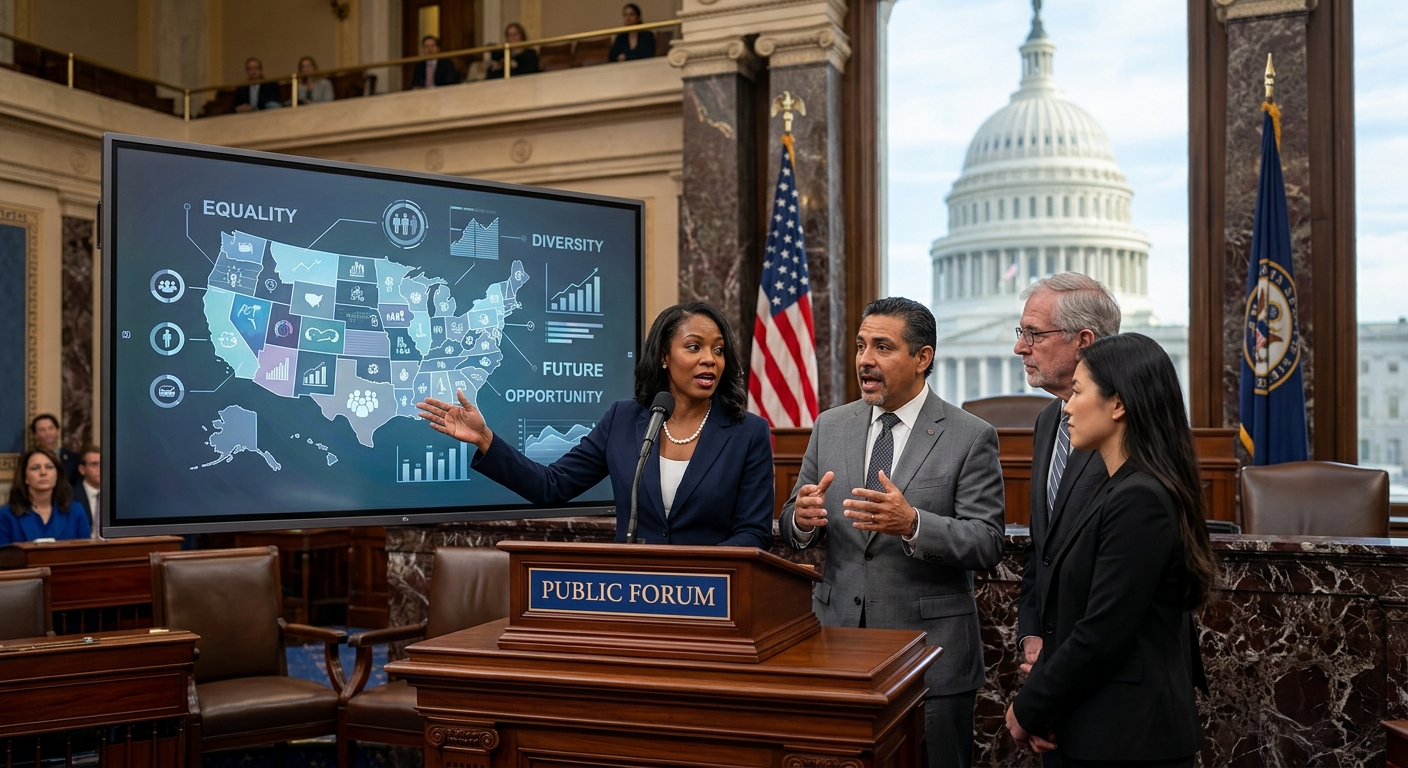
In recent years, the political discourse surrounding Diversity, Equity, and Inclusion (DEI) has transformed from a primarily corporate and academic administrative focus into a central battlefield in American federal politics. As presidential administrations transition, the regulatory and legislative frameworks governing civil rights and workplace equality face profound shifts. These political maneuvers reveal an expansive agenda aimed at dismantling DEI frameworks, arguing that such programs run counter to meritocratic principles and violate long-standing civil rights laws. Understanding this trajectory is crucial for institutions navigating the complex intersection of policy, law, and workforce management.
The Evolution of the DEI Backlash
For decades, organizations across the United States implemented various frameworks aimed at ensuring equal opportunity and correcting historical imbalances in representation. These efforts evolved from the civil rights era’s affirmative action policies into the modern DEI frameworks utilized today. However, the contemporary backlash against DEI policies frames these initiatives not as necessary remedies for systemic discrimination, but as a new, reverse form of prejudice.
Critics argue that identity-conscious policies elevate group identity over individual capability, fundamentally violating the American ideal of equal protection. This ideological pivot has fueled widespread legislative pushes at both the state and federal levels to curtail diversity statements, demographic hiring targets, and specialized training programs. The emerging conservative argument posits that policies designed to promote equity have instead fostered division, sparking a highly organized movement to return to strictly “colorblind” institutional practices. This shift is not merely rhetorical; it is actively being codified into law and administrative policy.
Executive Actions: The Legacy of EO 13950 and Beyond
The federal effort to restrict DEI initiatives gained significant and actionable momentum with the issuance of Executive Order 13950, titled “Combating Race and Sex Stereotyping,” in September 2020. This sweeping directive specifically targeted federal agencies, military branches, and government contractors. It prohibited these entities from utilizing workplace trainings that promoted “divisive concepts,” which the order characterized as teachings that assign inherent guilt, bias, or superiority based solely on race or sex.
While subsequent political shifts temporarily altered the immediate trajectory of EO 13950, the precedent it set laid the permanent groundwork for an expanded regulatory agenda. Executive directives drafted in early 2025 explicitly seek to eliminate what proponents label as “illegal discrimination” under the guise of DEI. These updated directives position DEI policies as a fundamental threat to merit-based opportunity and national unity. Such actions mandate that federal institutions and elements of the Armed Forces operate entirely free from race- or sex-based preferences, fundamentally redefining how the federal government evaluates workforce readiness and unit cohesion.
How Sweeping Federal Policies Could Reshape American Institutions
The drive to dismantle DEI frameworks extends far beyond rhetorical posturing; it involves a systematic restructuring of administrative law and federal funding mechanisms. If broadly implemented, an anti-DEI federal agenda would dramatically reshape the operational realities of several core American sectors.
The Federal Workforce and Government Contracting
As the nation’s largest employer, the federal government sets the benchmark for workplace policies nationwide. Initiatives aimed at rooting out DEI offices and related training protocols directly impact millions of civil servants, defense personnel, and administrative staff. Under stringent anti-DEI directives, federal agencies are instructed to transition strictly to colorblind and sex-neutral hiring processes, effectively banning programs aimed at increasing minority representation in specific government sectors.
Furthermore, government contractors—a massive segment of the private sector economy—face strict compliance mandates. They are required to abandon demographic-based recruitment targets or specialized equity programs, lest they risk losing lucrative federal contracts. The Office of Federal Contract Compliance Programs (OFCCP) plays a pivotal role in this enforcement dynamic. Instead of promoting affirmative action, the agency’s focus shifts to enforcing directives that prohibit what the administration defines as race and sex stereotyping in private-sector corporate training and hiring protocols.
Higher Education’s Ongoing Legislative Battles
Perhaps nowhere is the battle over DEI more visible and contentious than in higher education. Universities have historically served as incubators for progressive diversity programs, but they are now at the center of intense legislative scrutiny. State governments have aggressively pursued laws banning the funding of DEI offices, the use of mandatory diversity statements in faculty hiring, and identity-conscious admissions processes. Federal agendas look to amplify these state-level restrictions by leveraging massive pools of federal educational funding as a blunt compliance tool.
To illustrate the breadth and strategic nature of these efforts, consider the varied approaches taken to regulate DEI in academic institutions:
| Policy Strategy | State-Level Legislative Actions | Potential Federal Regulatory Actions |
|---|---|---|
| Funding Restrictions | Prohibiting the use of state tax dollars to fund university DEI offices or compensate dedicated DEI staff. | Tying the eligibility for federal research grants and student loan programs to the total elimination of institutional DEI initiatives. |
| Hiring and Admissions Practices | Banning mandatory “diversity statements” for faculty applicants and rolling back affirmative action in admissions. | Investigating academic institutions for Title VI or Title VII violations related to any identity-conscious hiring or fellowship selection. |
| Curriculum and Institutional Training | Restricting mandatory student orientations or faculty courses that cover concepts of systemic racism or implicit bias. | Withholding federal funding from institutions that mandate what regulators classify as ideological diversity training. |
Corporate America, Title VII, and the Civil Rights Framework
The implications of the political war on DEI extend deeply into the private sector, intersecting directly with federal civil rights legislation. Title VII of the Civil Rights Act of 1964 strictly prohibits employment discrimination based on race, color, religion, sex, and national origin. For years, corporate human resources departments operated under the assumption that DEI programs were complementary to Title VII’s core goals of ensuring equal opportunity and preventing workplace hostility.
However, recent federal scrutiny fundamentally flips this legal paradigm. Regulatory bodies and lawmakers increasingly argue that certain DEI initiatives—such as demographic hiring quotas, diversity-linked executive compensation bonuses, or exclusive minority fellowship programs—constitute unlawful disparate treatment under Title VII. The Equal Employment Opportunity Commission (EEOC) has been thrust into the spotlight, with conservative lawmakers and executive branch officials demanding rigorous investigations into corporations that allegedly violate the Civil Rights Act by prioritizing demographic diversity goals over meritocratic candidate selection.
This shifting legal interpretation places corporate boards, executives, and general counsels in a highly precarious position. They are forced to navigate the fine, continuously moving line between promoting inclusive workplaces to satisfy public and shareholder expectations, and facing severe federal discrimination investigations for reverse discrimination.
Debating the Impact: Meritocracy versus Remediation
The profound ideological divide over DEI represents fundamentally different visions of fairness and justice in American society. Opponents of DEI argue that true equality is achieved only through strict, unwavering adherence to meritocracy. From this perspective, any policy that considers demographic factors in hiring, promotion, academic admissions, or contracting is inherently discriminatory and detrimental to institutional excellence. They argue that identifying and rewarding individuals primarily by their membership in marginalized groups fosters societal resentment, compromises the quality of services, and erodes the fundamental American ethos of individualism.
Conversely, proponents of DEI frameworks maintain that systemic inequalities cannot be resolved through passive, colorblind policies alone. They argue that historical discrimination—spanning redlining, segregated education, and employment biases—has created deeply entrenched institutional barriers that continue to disproportionately impact minority groups today. From this viewpoint, DEI initiatives are necessary, active remedial tools that dismantle these invisible barriers, ensuring that meritocracy operates fairly across all demographics rather than favoring those with historical advantages. Removing these programs, civil rights advocates warn, risks rolling back decades of hard-won progress in workplace equality, ultimately resulting in institutions that fail to reflect the diverse makeup of the American populace.
The Future Trajectory of Civil Rights Enforcement
As the political landscape continues to evolve, the administrative state’s approach to civil rights enforcement remains a critical area to monitor. The redefinition of actionable discrimination to include robust anti-DEI enforcement fundamentally changes the mandate of federal agencies like the Department of Justice (DOJ) and the EEOC. If executive power is continuously leveraged to aggressively penalize institutions that maintain traditional diversity programs, the nation is likely to witness a protracted era of high-stakes litigation.
Civil rights organizations, massive corporate entities, and state attorneys general will inevitably clash in federal courts to determine the ultimate constitutional limits and statutory legality of broad DEI bans. Ultimately, the political attacks on DEI reveal a broader, highly coordinated agenda to redefine the American social contract. Whether these policies will succeed in fostering a purely merit-based society, or whether they will instead deepen systemic inequities and racial divides, remains one of the most consequential legal, cultural, and political questions of the modern era.
Frequently Asked Questions (FAQs)
- What is the core argument against DEI programs in federal policy?
Critics of DEI programs argue that these initiatives promote identity-based discrimination, directly violating the principles of a strict meritocracy. They contend that hiring, promotions, and contracting should be based solely on individual skills and qualifications, and that DEI programs often run afoul of the equal protection principles enshrined in federal civil rights laws by prioritizing demographics over capability. - How did Executive Order 13950 impact workplace diversity training?
Issued in September 2020, Executive Order 13950 prohibited federal agencies, military branches, and federal contractors from conducting workplace training that included what it defined as “divisive concepts.” It specifically targeted instructional materials that suggested any race or sex is inherently superior, or that individuals bear inherent, collective guilt due to their race or sex. - Why is Title VII of the Civil Rights Act central to the modern DEI debate?
Title VII of the Civil Rights Act prohibits employment discrimination on the basis of race, color, religion, sex, and national origin. Recent political and legal arguments assert that certain aggressive DEI practices—such as strict hiring quotas, minority-exclusive internship programs, or race-weighted promotion metrics—violate Title VII by favoring certain demographic groups over others, essentially constituting reverse discrimination. - How are academic institutions responding to new legislative bans on DEI?
Many universities located in states with active DEI bans have responded by completely dissolving their dedicated DEI offices. To comply with the law while still attempting to support student retention and welfare, they have reassigned former DEI staff to broader “student success” or “general compliance” roles, and have eliminated mandatory diversity statements in all faculty hiring procedures. - Can the federal government entirely ban DEI initiatives in private companies?
The federal government cannot unilaterally outlaw DEI in all private companies, but it exercises immense influence through federal contracting requirements and the enforcement of civil rights laws. Companies holding government contracts must comply with executive directives regarding diversity training, and all companies with 15 or more employees are subject to Title VII of the Civil Rights Act. Regulatory bodies can leverage these laws to heavily scrutinize and penalize aggressive DEI quotas or exclusionary corporate fellowships.
References
- Combating Race and Sex Stereotyping (Executive Order 13950) — Federal Register. 2020-09-28. https://www.federalregister.gov/documents/2020/09/28/2020-21534/combating-race-and-sex-stereotyping
- Ending Illegal Discrimination And Restoring Merit-Based Opportunity — The White House. 2025-01-21. https://www.whitehouse.gov/presidential-actions/2025/01/ending-illegal-discrimination-and-restoring-merit-based-opportunity/
- Restoring America’s Fighting Force — The White House. 2025-01-27. https://www.whitehouse.gov/presidential-actions/2025/01/restoring-americas-fighting-force/
- U.S. Department of Labor Publishes Request for Information To Combat Race and Sex Stereotyping — U.S. Department of Labor. 2020-10-21. https://www.dol.gov/newsroom/releases/ofccp/ofccp20201021
- DEI Legislation Tracker — The Chronicle of Higher Education. 2025-10-15. https://www.chronicle.com/article/here-are-the-states-where-lawmakers-are-seeking-to-ban-colleges-dei-efforts
- Title VII of the Civil Rights Act of 1964 — U.S. Equal Employment Opportunity Commission. https://www.eeoc.gov/statutes/title-vii-civil-rights-act-1964
- What You Should Know About DEI-Related Discrimination at Work — U.S. Equal Employment Opportunity Commission. https://www.eeoc.gov/laws/guidance/what-you-should-know-about-dei-related-discrimination-work
- Reminder of Title VII Obligations Related to DEI Initiatives — U.S. Equal Employment Opportunity Commission. 2026-02-26. https://www.eeoc.gov/reminder-title-vii-obligations-related-dei-initiatives
Similar Articles








Read full bio of medha deb


