
Fruit Tree Ownership: Understanding Your Legal Rights
Navigate property law and fruit harvesting: Know your rights and boundaries.
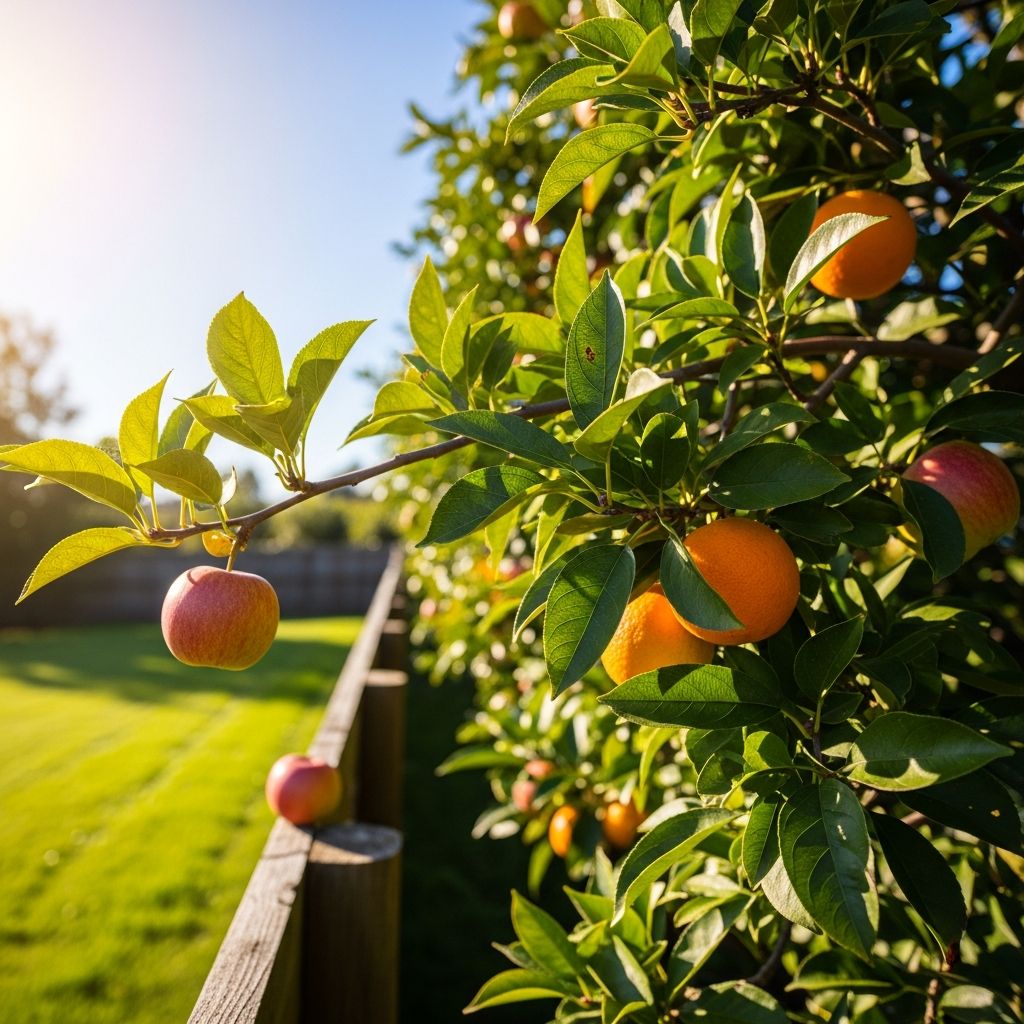
Understanding Fruit Tree Ownership and Property Boundaries
The question of who owns fruit from a tree that straddles property lines is far more complex than most homeowners realize. When branches from a neighbor’s tree extend over your yard, or when fruit falls onto your property, the answer depends significantly on where you live and how your state’s property laws have evolved. This seemingly simple matter touches on centuries-old legal principles and continues to generate disputes between neighbors today.
Property ownership represents one of the most fundamental concepts in real estate law. Traditional legal doctrine held that whoever owns land owns it completely—from the heavens above to the depths below. However, modern property law has moved away from this absolute principle in many jurisdictions, creating a patchwork of regulations that affect how neighbors interact regarding fruit trees and boundary vegetation.
The Historical Foundation: Blackstone’s Principle
Understanding contemporary fruit tree laws requires examining their historical roots. English jurist William Blackstone articulated a foundational principle of property law through the Latin phrase “Cuius est solum, eius est usque ad coelum et ad inferos.” This translates to a concept that whoever owns land owns it completely—stretching infinitely upward to the heavens and downward to the depths of the earth.
This principle formed the basis for early American property law and remains influential today. Under Blackstone’s approach, a neighbor who has branches extending over their property line technically trespasses on adjoining land. This foundational idea created the first major legal framework for determining fruit ownership, though not all states have maintained this strict interpretation.
The Ad Coelum Rule: California’s Approach
California exemplifies states that have retained Blackstone’s traditional rule, often called the “ad coelum rule.” Under this framework, neighbors possess legal rights to overhanging branches on their property.
Within California’s legal structure, a neighbor facing overhanging branches has two primary remedies:
- They may cut off the branches that extend beyond the property line
- They may pursue a legal claim for trespass against the tree’s owner
Most significantly, California law grants more than just the right to prune branches. When a neighbor owns the overhanging branches within their boundary lines, they also acquire ownership rights to the fruit produced by those branches. This means Janet, in our earlier example, could legally pick apples hanging over her property without permission from Sue, the tree’s original owner.
California’s approach reflects a practical philosophy: those whose land is being occupied by vegetation should have control over that vegetation and its products. Any state with significant commercial orchards tends to develop similar protective frameworks for fruit producers, though these typically focus more on protecting commercial operations than backyard trees.
The Trunk Rule: Connecticut and Vermont’s Alternative Framework
Not all states follow California’s model. Connecticut and Vermont represent a distinct approach, known as the “trunk rule,” which bases tree ownership entirely on the location of the trunk.
Under the trunk rule, whoever’s property the trunk occupies owns the entire tree, including all overhanging branches, roots extending underground, and all fruit the tree produces—regardless of where branches or roots extend. This creates a dramatically different outcome compared to the ad coelum rule.
This approach generates unusual consequences. A neighbor cannot pick fruit hanging directly above their property, even when branches clearly trespass on their land. However, the trunk rule does provide some compensation: the neighbor may cut down any overhanging branches or dig up roots that cross their boundary line. Paradoxically, this means a neighbor can destroy the branches but cannot harvest their fruit—a legal outcome many find counterintuitive.
Additionally, under the trunk rule, the tree’s owner can enter a neighbor’s property to collect their fruit from overhanging branches, though this right exists in a legal gray area that courts have not definitively resolved.
State Variations and Inconsistent Approaches
Beyond the two primary frameworks, numerous states maintain their own interpretations of fruit tree ownership. These variations create a complex landscape for homeowners and their neighbors:
| Legal Framework | States That Follow | Key Rules |
|---|---|---|
| Ad Coelum Rule | California, Massachusetts, and others | Neighbor owns overhanging branches and fruit; can cut branches or sue for trespass |
| Trunk Rule | Connecticut, Vermont | Tree owner owns everything; neighbor can cut branches but not pick fruit |
| Mixed/Uncertain | Various states | Rules vary by jurisdiction; practical negotiation often preferable |
Boundary Trees: Special Circumstances
A unique situation arises when a tree trunk straddles the property line between two neighbors. Such “boundary trees” are typically owned jointly by both property owners. In these circumstances, each neighbor owns the fruit growing on branches that extend over their respective side of the boundary.
The more complex question involves whether neighbors can access fruit on the other side of the boundary line. Legal scholars suggest this exists in a gray area, and practical resolution through neighborly discussion typically proves more satisfactory than legal enforcement.
Public Trees and Gleaning Opportunities
An important exception to private property fruit ownership involves trees on public land. Fruit from trees growing in public parks, on public streets, or in other civic spaces is generally available for gleaning. This principle has inspired organized gleaning movements in urban areas.
Organizations like the Baltimore Orchard Project exemplify this approach, working to distribute uneaten and unwanted fruit from public and private sources to community members in need. Some nonprofits maintain maps showing locations of publicly accessible fruit trees, creating resources for urban foragers interested in sustainable food sources.
Fallen Fruit: Property Ownership After Harvest
An interesting twist on fruit ownership involves fruit that has fallen from a neighbor’s tree onto your property. Intuition suggests that fruit lying on your ground belongs to you, but law frequently contradicts this expectation.
In some states, fallen fruit retains ownership by the original tree owner, meaning you cannot legally pick up and use it without permission. Conversely, the original owner cannot legally enter your property to retrieve fallen fruit. This creates an absurd outcome: neither party can legally use fruit simply lying on the ground, though practical reality often differs from legal theory.
Practical Considerations and Neighborhood Relations
Despite varied legal frameworks across jurisdictions, empirical observation reveals that most neighbors handle fruit trees informally. Many property owners allow neighbors to pick or gather fruit on the neighbor’s side of the property line, regardless of what state law technically permits.
This practical approach reflects several realities. First, legal disputes over fruit represent poor investments of time and money. Second, maintaining good neighbor relations provides greater long-term value than strict legal enforcement. Third, informal agreements often prove more flexible and mutually beneficial than rigid legal rules.
For homeowners concerned about protecting their fruit harvest, several practical strategies exist:
- Prune trees to keep most branches on your own property side
- Train trees into shapes like trellises or fan formations that reduce trespass
- Install fencing that clearly marks property boundaries
- Establish clear agreements with neighbors about acceptable harvesting
- Accept that some loss of fruit may be inevitable in certain situations
Children and Fruit Trees: Special Legal Considerations
A particular concern involves children picking fruit from neighbor’s trees. Parents should understand that children cannot legally trespass on neighbor’s property to pick fruit, even from branches overhanging their own yard—except in states following the ad coelum rule, where they own the fruit on their side of the line. Teaching children the legal boundaries helps prevent disputes and models respect for property rights.
Frequently Asked Questions About Fruit Tree Ownership
Q: Can I pick fruit from a neighbor’s tree if branches hang over my property?
A: It depends on your state’s legal framework. California and states following the ad coelum rule allow you to pick fruit from overhanging branches on your property. Connecticut, Vermont, and states using the trunk rule do not. Regardless of law, most neighbors appreciate being asked first.
Q: What happens if apples fall from my neighbor’s tree into my yard?
A: The answer varies by state and is often unclear in law. While you might assume fallen fruit becomes yours, some states maintain that the original tree owner retains ownership. Check your state’s specific regulations or discuss informally with your neighbor.
Q: Can my neighbor cut off branches from my tree?
A: In most states, neighbors can cut branches that extend beyond the property line, at least back to your boundary. However, local regulations vary, and some jurisdictions restrict how much of the tree can be removed. Always consult local ordinances before taking action.
Q: What’s the best way to handle fruit tree disputes with neighbors?
A: Direct conversation proves more effective than legal action in most cases. Discuss expectations clearly, perhaps offering to share your harvest or establishing guidelines about access. A friendly agreement typically produces better outcomes than enforcing legal rights.
Q: Can I legally pick fruit from trees in public parks?
A: Yes, fruit from publicly-owned trees is generally available for gleaning and harvesting. Some cities maintain organized programs connecting people with available public fruit.
Conclusion: Navigating Your Local Legal Landscape
Property ownership regarding fruit trees remains surprisingly complex, varying dramatically based on geographic location and historical legal precedent. While some states maintain strict interpretations of property rights through the ad coelum rule, others prefer the simpler trunk rule approach. Most jurisdictions somewhere occupy the middle ground.
Understanding your specific state’s framework provides useful knowledge, but practical reality frequently diverges from legal theory. The most successful approach combines knowledge of local law with genuine neighborly communication, creating agreements that serve both parties’ interests better than rigid legal enforcement ever could.
References
- Urban Fruit Gleaning & Trespass — Community Law Center. Accessed 2026. https://communitylaw.org/urbanagriculturelawproject/urbanagriculturelawproject-urban-fruit-gleaningtrespass/
- Neighbors and Fruit Trees — Nolo Legal Encyclopedia. Accessed 2026. https://www.nolo.com/legal-encyclopedia/neighbors-fruit-trees.html
Similar Articles








Read full bio of medha deb


