
Frontlines of Disability Rights Litigation
Unpacking the courtroom battles shaping disability rights.
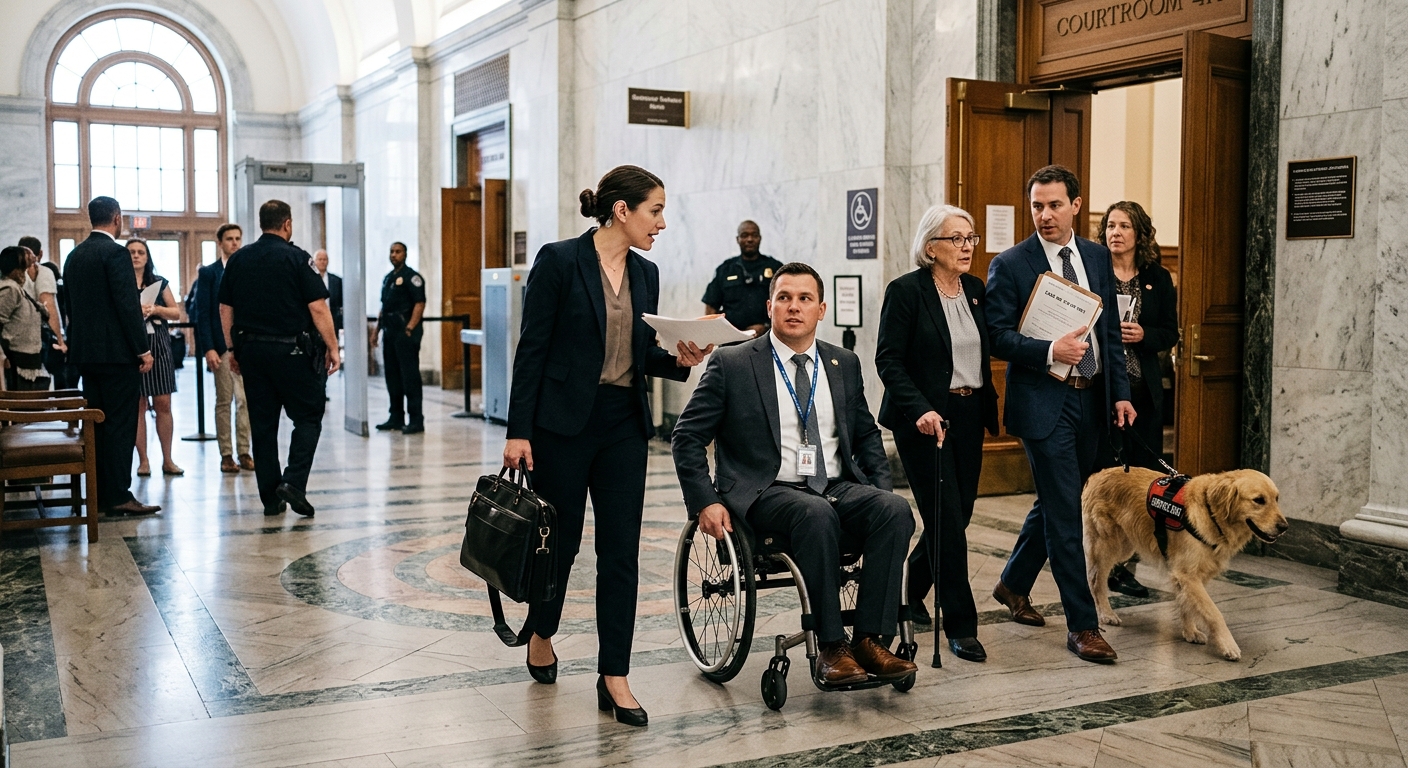
Legal Battlegrounds: The Frontlines of Disability Rights Litigation in the U.S.
When the Americans with Disabilities Act (ADA) was signed into law in 1990, it heralded a new era of civil rights, promising sweeping equality, integration, and accessibility for millions of Americans. However, statutory language on paper does not automatically translate to systemic equity in practice. Over three decades later, the realization of those guaranteed rights requires constant vigilance, grassroots advocacy, and, critically, rigorous legal intervention. The fight for accessibility, personal autonomy, and systemic equity is not relegated merely to legislative debates; it is an ongoing, daily battle fought in courtrooms across the nation.
Legal advocates and civil rights attorneys utilize the justice system as both a shield to protect vulnerable individuals from discrimination and a sword to dismantle deeply entrenched structural inequities. By launching strategic lawsuits, advocates compel governmental bodies, private corporations, and institutions to adhere to the true spirit of the ADA and other federal protections. Today, this complex legal crusade largely concentrates on three pivotal battlegrounds: guaranteeing electoral access, demanding equity within the criminal justice system, and defending personal autonomy against forced institutionalization. Without these courtroom battles, the promises of federal civil rights laws would remain unfulfilled, leaving marginalized communities to navigate a society built without them in mind.
Pillar I: Dismantling Barriers to the Ballot Box
Voting is the foundational bedrock of civic participation in any democratic society. Yet, for millions of voters with disabilities, casting a ballot remains an obstacle course laden with physical, technological, and bureaucratic hurdles. Ensuring electoral access is a premier focus of disability rights litigation today. According to a comprehensive post-election survey analyzed by the U.S. Election Assistance Commission (EAC), an estimated 15.8 million citizens with disabilities participated in the 2022 midterm elections. However, approximately 14 percent of these voters reported experiencing some type of difficulty at the polls, a stark contrast to the mere 4 percent of non-disabled voters who faced similar issues. These alarming statistics underscore the urgent need for judicial oversight.
Litigators are aggressively challenging state laws and municipal practices that systematically disenfranchise disabled voters. One primary area of contention involves polling place accessibility. Lawsuits frequently target election boards that fail to provide wheelchair ramps, accessible voting machines—such as Ballot Marking Devices (BMDs)—or adequately trained poll workers who understand how to assist voters with visual or cognitive impairments. Furthermore, recent legislative shifts in several states have heavily restricted mail-in and absentee voting. These restrictions disproportionately harm voters whose disabilities make traveling to a physical polling location exhausting, dangerous, or physically impossible.
By utilizing the courts to strike down discriminatory voter ID laws, absentee ballot limitations, and assistance bans, advocates ensure that the voices of the disabled community are not silenced in the democratic process. Below are some of the most common barriers targeted by civil rights litigation.
| Barrier to Access | Impact on Disabled Voters | Common Legal/Litigation Remedy |
|---|---|---|
| Inaccessible Polling Places | Prevents wheelchair users or those with mobility impairments from entering. | Lawsuits mandating ADA-compliant ramps, doors, and alternative voting locations. |
| Ban on Ballot Assistance | Criminalizes caregivers who help disabled individuals fill out or drop off ballots. | Injunctions citing the Voting Rights Act to allow chosen assisters to help voters. |
| Inaccessible Paper Ballots | Prevents blind or low-vision voters from voting privately and independently. | Court orders requiring electronic ballot delivery systems with screen-reader compatibility. |
Pillar II: Reforming the Criminal Justice System
The intersection of disability and the American penal system is fraught with profound injustice. The justice system is disproportionately populated by individuals with disabilities, many of whom are criminalized simply for lacking access to adequate healthcare and social support. Data from the Bureau of Justice Statistics underscores this crisis, revealing that nearly 38 percent of state and federal prisoners report having at least one disability. Cognitive disabilities, mental health conditions, and mobility impairments are vastly overrepresented behind bars. In courtrooms, civil rights attorneys are fighting to mandate reasonable accommodations and humane treatment for incarcerated individuals. Countless lawsuits have exposed the horrific realities faced by disabled people in prisons and jails.
For instance, individuals who are deaf or hard of hearing are frequently denied American Sign Language (ASL) interpreters during disciplinary hearings, medical appointments, and educational classes. This egregious lack of accommodation violates the ADA and effectively places deaf inmates in solitary confinement within the general population. When deaf individuals are excluded from anger management, substance abuse counseling, or vocational training due to a lack of interpreters, they are unjustly denied the opportunity to earn sentence reductions for early release. Litigators continually secure consent decrees that force correctional departments to install modern telecommunications devices for the deaf, provide qualified interpreters, and rigorously train staff on disability civil rights, slowly chipping away at these systemic inequities.
Beyond physical accommodations, a massive legal push aims to decriminalize mental health crises. All too often, law enforcement officers are the first responders to individuals experiencing a psychiatric emergency. Without proper training, police encounters can quickly escalate, leading to unjust arrests, excessive force, or tragic fatalities. Civil rights organizations are taking municipalities to court to demand the implementation of specialized, non-police mobile crisis teams. By arguing that a law enforcement response to a healthcare crisis constitutes discrimination under the ADA, advocates are reshaping how cities manage public safety. Furthermore, litigation tackles the cruel and unusual punishment of inmates who are denied necessary medical devices, such as wheelchairs, CPAP machines, or prosthetics. By leveraging both the Eighth Amendment—which protects against cruel and unusual punishment—and federal disability laws, legal advocates are slowly dismantling the systemic abuse deeply embedded in the carceral system.
Pillar III: Championing Autonomy and Deinstitutionalization
For over a century, the default societal solution for individuals with significant intellectual, developmental, or psychiatric disabilities was institutionalization. Stripped of their autonomy, thousands were hidden away in state-run hospitals, nursing homes, and psychiatric wards. Today, the courtroom serves as the ultimate arena to enforce the fundamental right to community integration and self-determination. The cornerstone of this legal battle is the U.S. Supreme Court’s landmark 1999 decision in Olmstead v. L.C. The Court ruled that the unjustified segregation of persons with disabilities constitutes unlawful discrimination under the ADA. This ruling established the most integrated setting mandate, affirming that individuals have the right to receive state-funded healthcare and support services in their own homes and communities rather than in restrictive institutions.
Despite the Olmstead ruling, many states continue to funnel Medicaid funding disproportionately into nursing facilities rather than Home and Community-Based Services (HCBS). Legal advocates routinely file class-action lawsuits to force state health departments to clear HCBS waiver waitlists and transition institutionalized individuals back into the community. These lawsuits are critical lifelines for people who simply need personal care attendants, accessible transportation, or supported housing to live independently, maintain employment, and thrive among their peers. The U.S. Department of Health and Human Services (HHS) Office for Civil Rights plays a pivotal role alongside private litigators in enforcing this mandate, ensuring states cannot use budgetary constraints as an excuse for human rights violations.
Simultaneously, a new frontier of disability litigation involves fighting coercive guardianship and conservatorship systems. Across the country, archaic legal frameworks allow judges to strip disabled adults of their right to make basic life decisions—such as where to live, how to spend their money, and what medical care to receive—handing total control over to a court-appointed guardian. Disability rights attorneys are aggressively petitioning courts to terminate abusive conservatorships and replace them with Supported Decision-Making (SDM) arrangements. Under SDM, individuals retain their legal rights while choosing a network of trusted friends, family members, or professionals to help them understand choices and make informed decisions. This legal shift represents a profound reclamation of personhood.
The Road Ahead: Why Courtrooms Still Matter
While legislation provides the architectural blueprint for equality, litigation is the engine that drives its enforcement. The courtroom remains an indispensable battlefield because systemic ableism is stubborn; it evolves and mutates, embedding itself into new voting regulations, law enforcement protocols, and healthcare policies. Every successful lawsuit, consent decree, and court injunction sets a precedent that ripples across the nation. By fighting for accessible ballots, humane criminal justice practices, and the fundamental right to live freely in the community, legal advocates are doing more than just winning cases—they are affirming the inherent dignity of disabled Americans. The journey toward absolute equity is long, but as long as civil rights are threatened, the courtroom will remain a vital sanctuary for justice, accountability, and transformative change.
Frequently Asked Questions (FAQs)
What is the Americans with Disabilities Act (ADA)?
The Americans with Disabilities Act (ADA) is a comprehensive federal civil rights law enacted in 1990. It prohibits discrimination against individuals with disabilities in all areas of public life, including employment, education, transportation, and all public and private places that are open to the general public. The ADA ensures equal opportunity and serves as the legal backbone for most disability litigation.
How does the Olmstead decision impact disability rights?
The 1999 U.S. Supreme Court decision in Olmstead v. L.C. ruled that the unjustified institutionalization of people with disabilities is a violation of the ADA. It mandates that public entities must provide community-based services to persons with disabilities when such services are appropriate, the affected persons do not oppose community-based treatment, and the services can be reasonably accommodated.
Why do disability advocates file lawsuits over state voting laws?
Advocates file lawsuits because many state voting laws—such as strict absentee ballot limits, bans on ballot assistance, and a lack of accessible voting machines—disproportionately disenfranchise disabled voters. Litigation is used to ensure compliance with the ADA and the Voting Rights Act, guaranteeing that everyone has an equal opportunity to cast their ballot privately and independently.
How are disabilities represented in the criminal justice system?
Individuals with disabilities are vastly overrepresented in the criminal justice system. According to the Bureau of Justice Statistics, nearly 38 percent of inmates in state and federal prisons report having at least one disability. Cognitive, psychological, and physical disabilities are incredibly common among incarcerated populations, highlighting systemic failures in providing adequate community-based mental health and social support services prior to incarceration.
References
- Disabilities Reported by Prisoners: Survey of Prison Inmates, 2016 — Bureau of Justice Statistics. 2021-03-30. https://bjs.ojp.gov/library/publications/disabilities-reported-prisoners-survey-prison-inmates-2016
- Disability and Voter Turnout in the 2022 Elections — U.S. Election Assistance Commission (EAC). 2023-07-01. https://www.eac.gov/research-and-data/studies-and-reports
- Community Living and Olmstead — U.S. Department of Health and Human Services (HHS). 2026-05-26. https://www.hhs.gov/civil-rights/for-individuals/special-topics/community-living-and-olmstead/index.html
- Olmstead: Community Integration for Everyone — Civil Rights Division, U.S. Department of Justice (ADA.gov). 2023-10-01. https://www.ada.gov/olmstead/
Similar Articles








Read full bio of medha deb


