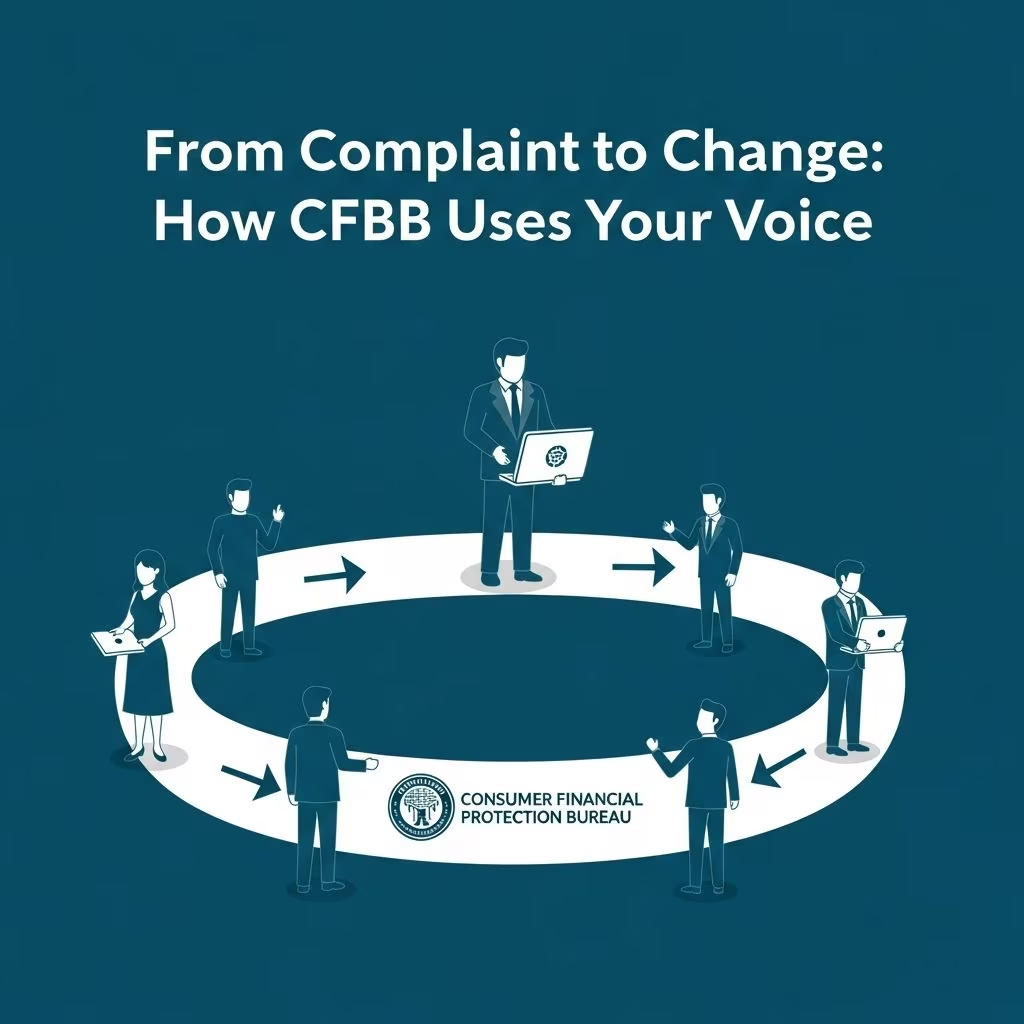
Many people only think about filing a complaint when something has already gone wrong with a financial product or service. But a complaint sent to the Consumer Financial Protection Bureau (CFPB) is more than a request for help—it is also a data point that can push companies to fix problems, reveal harmful trends, and drive stronger consumer protections across the marketplace.
This guide explains, in plain language, how a complaint moves through the CFPB system, how it can help you personally, and how it contributes to broader oversight and enforcement in the financial marketplace.
Why the CFPB Collects Consumer Complaints
The CFPB is a U.S. government agency created after the financial crisis to make sure banks, lenders, and other financial companies treat consumers fairly. One of its core duties under federal law is to collect, investigate, and respond to consumer complaints about financial products and services.
Complaints matter because they:
- Highlight real-world problems that consumers are facing right now.
- Help the CFPB spot patterns of risk and potential law violations.
- Push companies to resolve issues quickly and improve their internal controls.
- Feed into supervision, enforcement, and rulemaking work that can benefit millions of people, not just the original complainant.
Overview: The Life of a CFPB Complaint
Every complaint submitted to the CFPB follows a structured path. While details can vary with each case, the core steps are consistent and transparent.
| Stage | What Happens | What You Can Do |
|---|---|---|
| 1. Submission | You provide details about your issue, the company, and what you want to happen. | Prepare facts, key dates, amounts, and any documents that support your story. |
| 2. Routing | CFPB sends the complaint to the company or another appropriate regulator. | Watch for updates from CFPB or the company and keep your contact information current. |
| 3. Company response | The company responds through a secure portal, usually within 15 days, and may have up to 60 days for a final response in complex situations. | Review communications from the company and keep notes of any additional interactions. |
| 4. Publication | Non-identifying information about your complaint and the company’s response category is published in the public Consumer Complaint Database. | Decide whether to allow your narrative (with personal details removed) to be shared publicly. |
| 5. Feedback | You can rate how the company handled your issue and provide feedback within about 60 days of their response. | Tell the CFPB whether the response was timely, clear, and resolved your problem. |
Step 1: Submitting a Strong, Clear Complaint
The first and most important step is explaining your problem clearly. A well-prepared complaint gives both the company and the CFPB what they need to understand what happened and what outcome you are seeking.
What Information to Include
When you submit a complaint, you will be asked to provide:
- Contact information so the CFPB and the company can reach you.
- Type of financial product or service involved (for example, credit card, mortgage, credit reporting, bank account, auto loan, debt collection, or other financial service).
- Company name and any relevant account or reference numbers (avoiding full Social Security numbers or other sensitive identifiers in narrative text).
- A narrative describing what happened, including events, dates, and the impact on you.
- Your desired resolution—what you believe would fix the problem (such as a correction, explanation, fee refund, or account adjustment).
Tips for Writing an Effective Narrative
The narrative is your opportunity to clearly tell your side of the story. To make it as useful as possible:
- Stick to facts and timelines—who said what, and when.
- Use plain language rather than technical terms or legal arguments.
- Explain any steps you already took with the company and how they responded.
- Note any financial harm, such as charges, lost access to funds, damage to your credit, or other consequences.
- Avoid including sensitive personal details in your written description; the CFPB has specific processes to protect your personal information.
Supporting Documents
You can upload documents to support your claim, such as:
- Account statements or billing notices.
- Letters, emails, or chat transcripts from the company.
- Copies of dispute letters you already sent.
- Credit reports or other records that show the problem.
Providing documentation can help the company verify the issue and helps the CFPB assess whether there might be larger compliance concerns behind your experience.
Step 2: How the CFPB Routes Your Complaint
After you submit, the CFPB reviews your complaint and decides who is best positioned to address it. In many cases, the complaint goes directly to the financial company named in your submission.
Possible Routing Paths
- Direct to the company through a secure electronic portal, when the company participates in the CFPB complaint program.
- Referral to another regulator if a different federal or state authority is better suited to handle the issue—for example, when the company is not under CFPB supervision.
- Internal review if the complaint raises questions about possible legal violations or broader patterns of harm, which can influence supervision or enforcement priorities.
Regardless of where your complaint is routed, the CFPB keeps track of it in its internal systems and uses the data to monitor risks in the financial marketplace.
Step 3: Company Response and Timeframes
Once a complaint is sent to a participating company, it must log into the CFPB’s secure Company Portal, review the details, and submit a response within set timeframes.
Response Deadlines
- Initial response: Generally due within 15 calendar days of the complaint being sent to the company.
- Final response: If the issue cannot be fully resolved quickly, the company may mark the complaint “in progress” and provide a final response within 60 days.
What the Company’s Response Contains
Companies must respond accurately and completely to each concern raised in your complaint.
The response typically includes:
- A summary of how the company investigated your issue.
- An explanation of what happened and why, from the company’s perspective.
- Any corrective actions, such as refunds, credits, corrections, or policy changes.
- A response category chosen from options like “closed with explanation,” “closed with monetary relief,” or “closed with non-monetary relief.”
The CFPB expects responses that are tailored to your complaint—not generic boilerplate—and that address every major point you raised.
Step 4: Public Data and the Complaint Database
After the company responds, the CFPB publishes certain information about the complaint in its public Consumer Complaint Database. This database is a tool for researchers, journalists, advocates, and the public to see trends in consumer issues.
What Becomes Public
To protect your privacy, the CFPB removes direct identifiers before making complaint data public. The published record can include:
- The type of product or service involved.
- The issue category (for example, billing dispute or incorrect information).
- The company name.
- The date the complaint was received.
- The company’s response category (such as “closed with explanation” or “closed with relief”).
If you consent, your written description of what happened may also be published, but only after steps are taken to remove personal information.
Why Public Complaint Data Matters
Public complaint data helps:
- Consumers compare how companies respond to complaints and identify potential problems before choosing a product.
- Regulators and policymakers spot systemic issues, emerging risks, and patterns of harm in specific markets or among specific firms.
- Companies benchmark their performance and identify weaknesses in their compliance programs.
Step 5: Your Feedback on the Company’s Response
After the company submits its response, the CFPB notifies you and gives you the opportunity to say whether the company addressed your concerns. You typically have about 60 days to provide this feedback.
How Feedback Is Used
Your feedback helps the CFPB:
- See whether companies’ actions are actually solving consumers’ problems.
- Identify companies that may be providing incomplete or unsatisfactory responses.
- Evaluate the strength of a company’s compliance management system and customer service practices.
Even if you feel your individual outcome is not ideal, your feedback still adds to the evidence the CFPB uses when deciding where to focus supervision, examinations, or enforcement resources.
How Complaints Feed Supervision and Enforcement
While every individual complaint is important, their greatest power comes from what they show in the aggregate. Across thousands or millions of entries, complaint data can indicate where companies or markets are falling short of legal and regulatory expectations.
Using Complaints to Spot Risk
CFPB staff and other regulators review complaint data to identify:
- Products with unusually high complaint volumes.
- Sudden spikes in specific types of issues (for example, credit reporting errors or payment processing failures).
- Companies that repeatedly fail to provide timely or complete responses.
- Signs of potential unfair, deceptive, or abusive acts or practices (UDAAP).
These patterns help guide decisions about which companies to examine more closely and where to direct enforcement resources.
Complaints and Compliance Management
For supervised institutions, the CFPB evaluates how management monitors and resolves consumer complaints as part of its examination process.
Effective companies typically:
- Have clear written procedures for handling and escalating complaints.
- Track complaint trends to spot and fix root causes of problems.
- Use complaints to improve employee training, policies, and systems.
- Provide retrospective relief (such as refunds or corrections) when they discover that a practice has harmed many consumers, not just a single complainant.
Weak complaint management can signal deeper compliance issues and may prompt closer supervisory attention.
Practical Benefits of Filing a CFPB Complaint
Beyond contributing to better oversight and stronger rules, filing a complaint can have direct benefits for you as an individual.
Potential Outcomes for Consumers
When companies review complaints sent through the CFPB, outcomes can include:
- Corrections to account statements or credit reports.
- Refunds or credits for improper fees or charges.
- Clarified explanations of policies, terms, or decisions.
- Adjusted payment plans or other accommodations.
- Ceasing certain collection activities when errors are confirmed.
Even when you do not receive financial relief, the process can force a clearer written explanation and create a formal record that might be useful later if you choose to pursue legal or other remedies.
Best Practices Before and After You Complain
To make the most of the process, consider a few steps before and after you file a complaint.
Before You Submit
- Try contacting the company’s customer service or dispute department first and keep a record of those efforts.
- Gather all relevant documents, such as statements and prior correspondence.
- Write a short timeline of key events to help structure your complaint narrative.
After You Submit
- Monitor email or mail for messages from the CFPB and the company.
- Respond promptly if additional information is requested.
- Review the company’s response carefully and check for accuracy.
- Use the feedback opportunity to explain whether the response resolved your problem and why.
Frequently Asked Questions (FAQs)
Q1: Does filing a CFPB complaint cost anything?
No. Submitting a complaint to the CFPB is free. The agency is funded through federal law and does not charge consumers for using the complaint process.
Q2: Will the CFPB act as my personal attorney?
The CFPB does not represent you as an individual attorney and cannot provide personal legal advice. Instead, it forwards complaints to companies or other regulators, monitors responses, and uses complaint data to inform its supervision and enforcement work across the marketplace.
Q3: Can I submit a complaint on behalf of someone else?
Yes, but companies often require written authorization from their customer before they will discuss account-specific information with a third party. If you are filing for someone else and have written authorization, you may be able to attach it along with your complaint.
Q4: What if the company ignores my issue or gives an answer I disagree with?
You can use the feedback step to tell the CFPB that you are not satisfied with the company’s response. Your feedback will not automatically force the company to change its decision, but it becomes part of the record the CFPB uses to assess that company’s complaint handling and compliance. You may also wish to explore other avenues, such as legal advice, state regulators, or nonprofit counseling, depending on your situation.
Q5: Will my personal information be visible in the public database?
The CFPB removes information that directly identifies you before publishing complaint data. If you choose to make your narrative public, it is scrubbed to remove personal details such as names, contact information, or account numbers.
Q6: How long does the whole complaint process usually take?
Timelines vary, but companies generally respond within about 15 days and, if more time is needed, provide a final response within 60 days. You then have about 60 days to provide your feedback on the company’s response.
References
- The CFPB Effectively Monitors Consumer Complaints but Can Strengthen Certain Controls — Office of Inspector General, Board of Governors of the Federal Reserve System. 2024-06-27. https://oig.federalreserve.gov/reports/cfpb-consumer-complaints-jun2024.pdf
- Learn how the complaint process works — Consumer Financial Protection Bureau. 2024-01-19 (last modified). https://www.consumerfinance.gov/complaint/process/
- Consumer Complaint Program — Consumer Financial Protection Bureau. 2023-08-21 (last modified). https://www.consumerfinance.gov/compliance/consumer-complaint-program/
- Submit a complaint — Consumer Financial Protection Bureau. 2024-02-07 (last modified). https://www.consumerfinance.gov/complaint/
- CFPB Supervision and Examination Manual: Compliance Management Review – Examination Procedures — Consumer Financial Protection Bureau. 2017-08-22. https://files.consumerfinance.gov/f/documents/201708_cfpb_compliance-management-review_supervision-and-examination-manual.pdf
- Your Money, Your Goals: Submitting a complaint — Consumer Financial Protection Bureau. 2020-03-01. https://files.consumerfinance.gov/f/documents/cfpb_your-money-your-goals_submit-a-complaint_handout_2020-03.pdf