
Going Solo: A Practical Guide for Freelance California Paralegals
Learn how California paralegals can build a sustainable, compliant, and profitable freelance practice serving law firms and legal departments.
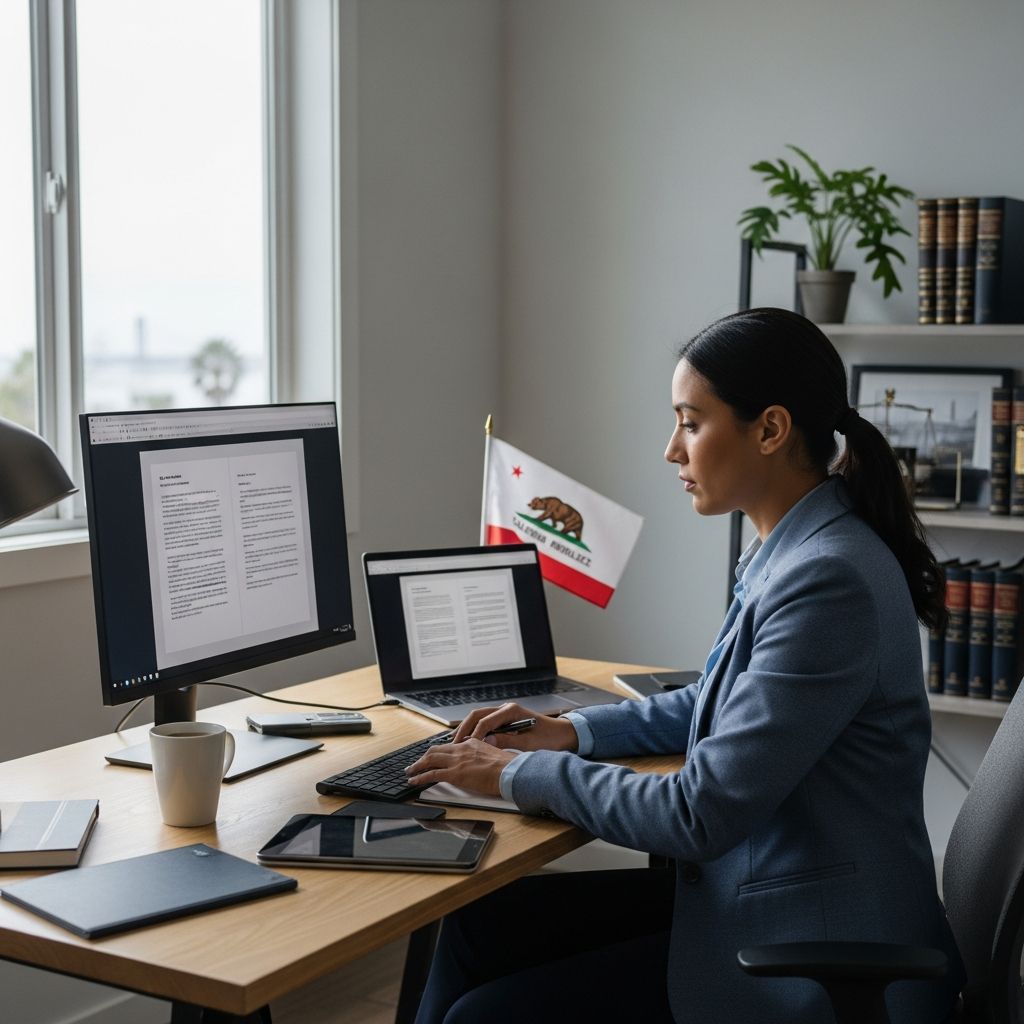
Freelancing as a paralegal in California can offer flexibility, higher earning potential, and control over your workload. At the same time, the state’s strict rules around unauthorized practice of law, independent contractor classification, and new protections for freelance workers mean you must plan carefully before you go solo. To succeed, you need both a business mindset and a strong understanding of your legal and ethical boundaries as a paralegal.
Understanding the Freelance Paralegal Role
Freelance paralegals are typically independent contractors who provide legal support services to licensed attorneys, law firms, or in some cases corporate legal departments. They do not represent clients, appear in court, or give legal advice directly to the public.
In California, the line between paralegal work and the practice of law is crucial. Only active members of the State Bar of California may practice law, and nonlawyers who cross that line can face serious penalties.
| Permitted for Freelance Paralegals (Under Attorney Supervision) | Prohibited (Unauthorized Practice of Law) |
|---|---|
| Drafting pleadings, discovery, and correspondence at an attorney’s direction | Giving legal advice directly to a consumer or deciding legal strategy |
| Organizing and summarizing evidence, medical records, or transcripts | Signing pleadings on behalf of a client or appearing as counsel in court |
| Conducting legal research and drafting memos for attorney review | Setting legal fees, entering fee agreements, or holding client funds |
| Preparing standard legal forms for an attorney or law firm client | Representing that you are a lawyer or providing services without attorney oversight |
Many California freelance paralegals choose a niche where they already have experience, such as:
- Civil litigation support
- Family law and dissolution matters
- Bankruptcy and creditor communications
- Estate planning and probate administration
- Immigration form preparation for attorneys
Legal and Regulatory Framework in California
Before offering your services, you must understand the legal landscape that governs independent legal support work in California. Several bodies of law are relevant:
- State Bar of California rules on unauthorized practice of law and attorney supervision.
- Paralegal regulation under California Business & Professions Code (including education and continuing education requirements).
- Independent contractor classification rules, which rely heavily on the so-called ABC test in many contexts.
- Freelance Worker Protection Act (FWPA), effective January 1, 2025, which sets contract and payment standards for many freelancers.
The FWPA, enacted via SB 988, is especially relevant for freelance paralegals because it defines a protected “freelance worker” as a single individual or one-person entity providing professional services valued at $250 or more. If your engagements meet that threshold, hiring entities must provide:
- A written contract covering key terms such as services, rate, and payment timeline.
- Timely payment by the agreed date, or within 30 days after you complete the work if no due date is specified.
- Retention of the contract by the hiring party for at least four years.
- Protection from retaliation if you assert your rights under the statute.
California’s general employment laws also continue to evolve, and the state has been expanding protections for independent workers through both state statutes and local ordinances, such as the Los Angeles freelance protections ordinance. Staying current with these developments is part of running a compliant freelance practice.
Are You Ready to Go Freelance?
Not every paralegal will thrive as an independent contractor. Consider the following dimensions before leaving a traditional job:
Skills and Experience Checklist
- At least several years of substantive paralegal experience in one or two practice areas.
- Comfort working with limited supervision and taking initiative to solve problems.
- Ability to manage your own deadlines, prioritize competing tasks, and track billable time.
- Strong writing skills for drafting, research memos, and professional email communication.
- Technical competence with court e-filing platforms, practice management tools, and secure document sharing.
Personality and Lifestyle Fit
- Willingness to handle business tasks such as invoicing, marketing, and recordkeeping.
- Tolerance for income fluctuations and gaps between projects.
- Discipline to work independently without a traditional office environment.
- Comfort setting boundaries with clients and saying no to unrealistic deadlines.
Structuring Your Freelance Paralegal Business
Once you decide to move forward, treat your freelance work as a true business. That mindset will help with professionalism, risk management, and long-term growth.
Choosing a Business Form
Common choices for solo freelance paralegals include:
- Sole proprietorship: Simple, but your personal assets are legally indistinguishable from the business.
- Single-member LLC: Adds a layer of liability protection and can be compatible with FWPA’s one-person organization definition.
Consulting a business attorney or tax professional can help you decide the best structure for your circumstances, particularly in light of California’s franchise tax rules and your expected revenue.
Licenses, Insurance, and Core Policies
Freelance paralegals are not licensed like attorneys, but you may still need to:
- Obtain a local business license depending on your city or county.
- Register a fictitious business name (DBA) if you operate under a trade name.
- Carry professional liability (errors and omissions) insurance to mitigate risk if a mistake in your work causes damages.
Develop simple internal policies for:
- Data security: Encrypt devices, use strong passwords, and follow firm directions on cloud storage.
- Confidentiality: Maintain strict attorney–client privilege protocols when handling client files.
- Conflict checks: Ask hiring attorneys to conduct conflict checks before you accept work on sensitive matters.
Working Within Legal and Ethical Boundaries
California’s enforcement environment makes it risky for nonlawyers to operate close to the line of legal practice. Several reminders can help keep you compliant:
- Always present your services as support to licensed attorneys, not direct legal services to the public.
- Avoid language that implies you offer representation, legal advice, or guarantees of legal outcomes.
- Clarify that the hiring attorney retains responsibility for all legal decisions and final review of your work.
- Decline any engagement where a consumer wants to hire you directly to handle their case without an attorney.
On the employment law side, make sure your relationship with law firms truly reflects independent contractor status. Regulators examine how much control the hiring party exercises over your hours, methods, and tools, alongside other economic realities factors. If you are treated like a regular employee but paid as a contractor, misclassification risks arise for the firm and potentially for you.
Contracts, Pricing, and Payment Protections
Thoughtful contracts and pricing will protect your time and reinforce your value. The FWPA establishes minimum contract elements when the engagement value reaches the $250 threshold, but you can (and should) go further.
Essential Clauses in Your Freelance Agreement
- Scope of work: Clearly define what tasks are included and what requires a new agreement.
- Compensation: Hourly rate, flat fee, or project-based pricing, with any overtime or rush surcharges noted.
- Deadlines: Target completion dates and expectations for turnaround on routine tasks.
- Communication: Preferred channels (email, secure portal) and typical response times.
- Confidentiality and data security obligations.
- Ownership of work product: Typically assigned to the hiring attorney or firm.
- Payment terms: Due dates, late fees, and consequences for nonpayment.
Under the FWPA, if no specific due date is stated, payment must be made within 30 days after you complete services. The law also allows freelancers to bring a civil action for violations and to recover attorney’s fees and other remedies in some circumstances, which can be a powerful deterrent against chronically late payers.
Common Pricing Models
- Hourly billing: Still common for litigation support or research projects.
- Flat fees: Useful for standardized, repeatable tasks such as form preparation or document review of a defined size.
- Retainer arrangements: A set number of hours per month reserved for a firm in exchange for predictable income.
When calculating rates, consider not only your former salary, but also taxes, insurance, non-billable time, and the cost of technology and office equipment.
Finding and Retaining Attorney Clients
A sustainable freelance practice requires a steady stream of attorney clients who trust your work. Building that client base is often the biggest challenge in the first year.
Marketing Strategies That Work for Paralegals
- Professional networking: Join local bar associations, legal professional associations, and practice-area groups.
- Referrals from former colleagues: Let supervising attorneys, co-workers, and court personnel know you are available for contract work.
- Online presence: Create a clear, professional website or profile describing your services and experience. Avoid language that implies you are a law firm.
- Speaking and writing: Offer short presentations to small firms on topics like e-discovery organization or document management to demonstrate expertise.
Once you secure engagements, focus on making yourself indispensable:
- Deliver work product that is clean, error-checked, and ready for attorney review.
- Meet or beat deadlines, and communicate early if a delay is unavoidable.
- Track your time transparently and send clear, itemized invoices.
- Ask for feedback and adjust your approach to match each firm’s preferences.
Technology and Remote Work Considerations
Modern freelance paralegals often work primarily or entirely remotely. This increases your potential client base but also raises technical and security requirements.
- Use a dedicated business email and consider secure messaging tools approved by the hiring firm.
- Rely on cloud-based practice management or secure file-sharing systems authorized by your attorney clients.
- Implement regular backups, device encryption, and two-factor authentication to prevent data loss or breaches.
- Develop a clear system for version control on documents so your work meshes with firm workflows.
Risk Management and Long-Term Sustainability
A freelance practice must be both legally compliant and financially sustainable. To maintain momentum beyond the first year:
- Create a simple annual budget to track income, taxes, and major expenses.
- Set aside funds for estimated quarterly taxes and self-employment obligations.
- Invest regularly in continuing legal education (CLE-adjacent programs and paralegal education) to keep your skills current.
- Review your contracts and rates at least once a year and adjust as your value and experience increase.
Keep in mind that California employment and freelancer laws evolve quickly. Periodically consult reliable legal updates from law firms or bar associations so your practices stay aligned with new statutes or case law.
Frequently Asked Questions (FAQs)
Q: Can a California freelance paralegal work directly for members of the public?
A: No. Freelance paralegals in California should provide services only to licensed attorneys or law firms. Working directly for consumers in a way that involves legal advice, strategy, or representation risks being treated as the unauthorized practice of law.
Q: Does the Freelance Worker Protection Act apply to freelance paralegals?
A: Yes, if you meet the law’s definition of a freelance worker—typically a single individual or one-person entity providing professional services worth at least $250 to a hiring party—then the FWPA’s written contract and timely payment requirements apply.
Q: How can I reduce misclassification risk when contracting with law firms?
A: Make sure your relationship reflects genuine independent contractor status: control your own schedule where possible, provide your own tools, serve multiple clients, and clearly define project-based engagements. California and federal regulators look at the degree of control and economic dependence when assessing classification.
Q: Should I carry professional liability insurance as a freelance paralegal?
A: While not legally mandated, many independent legal professionals carry errors and omissions coverage to protect themselves if a mistake in their work leads to financial loss. Some law firms may require contractors to carry this insurance as a condition of engagement.
Q: How do I stay current on California laws that affect freelancers?
A: Follow updates from reputable employment law firms, the State Bar of California, and major legal news outlets. Many law firms publish annual employment law updates that summarize changes to freelancer protections, wage and hour rules, and classification standards.[10]
References
- New California Law Expands Protections for Freelance Workers: What Employers Must Know + 5 Steps You Can Take to Comply — Fisher & Phillips LLP. 2024-09-30. https://www.fisherphillips.com/en/news-insights/new-california-law-expands-protections-freelance-workers-what-employers-must-know-5-steps-to-comply.html
- New California Freelancer Law Takes Effect on January 1, 2025 — American Association of Advertising Agencies (4A’s). 2024-10-07. https://www.aaaa.org/blog/new-california-freelancer-law-takes-effect-on-january-1-2025/
- The Freelance Worker Protection Act — Buchalter. 2024-10-02. https://www.buchalter.com/insights/the-freelance-worker-protection-act/
- 2025 Employment Law Highlights: What You Need to Know — Madison Law APC. 2024-12-02. https://madisonlawapc.com/2025-employment-law-highlights-what-you-need-to-know/
- 2025 Employment Law Update — Solomon Ward Seidenwurm & Smith, LLP. 2025-01-09. https://swsslaw.com/2025/01/09/2025-employment-law-update/
- Los Angeles Updates Freelance Worker Protections Ordinance — Littler Mendelson, P.C. 2025-01-13. https://www.littler.com/news-analysis/asap/los-angeles-updates-freelance-worker-protections-ordinance
Similar Articles








Read full bio of medha deb


