
Free Speech and Transparency at Public Events
Balancing peaceful assembly and public safety at major events.
Introduction to Civic Spectacles and Dissent
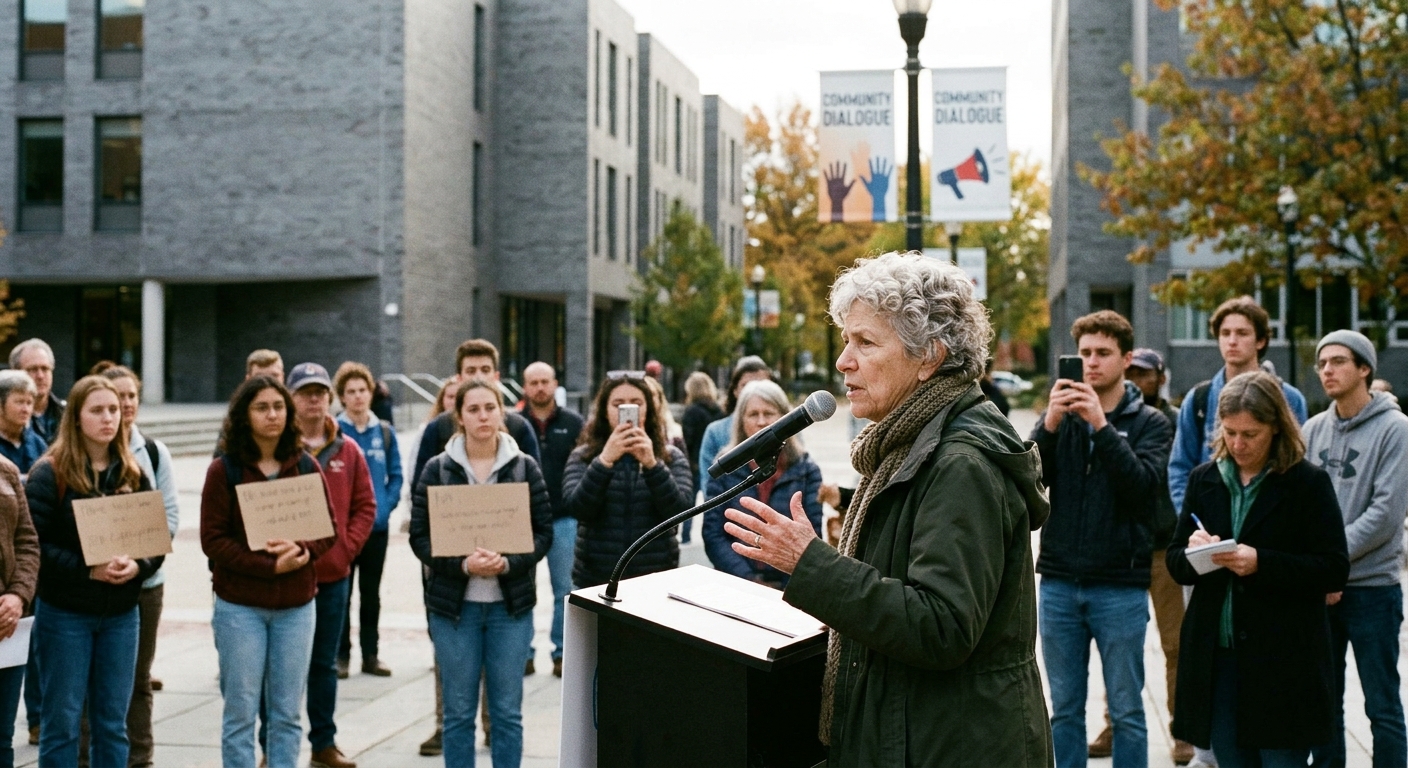
Whenever a municipality prepares to host a momentous public event—be it a global sporting competition, an international political summit, or a highly publicized national parade—the local gears of bureaucratic preparation shift into overdrive. City streets are repaved, colorful banners are hung from lampposts, and local economies brace for an influx of tourism and revenue. However, these major civic spectacles bring significantly more than just celebratory crowds and economic boosts; they act as powerful, undeniable magnets for passionate political discourse. Community organizers, grassroots activists, and everyday citizens naturally view these highly publicized moments as unparalleled opportunities to amplify their voices on a global stage, drawing attention to urgent social, economic, or environmental grievances.
The inevitable friction arises when the government’s legitimate mandate to maintain public safety collides directly with the public’s constitutional right to peacefully assemble. Often, the arrival of a high-profile event is accompanied by an equally massive law enforcement footprint. Unveiling the exact details of these security measures becomes a contentious legal and political battleground long before the event even begins. When the world comes to town, ensuring that the constitutional guarantee of free expression is not compromised requires uncompromising governmental transparency and a fierce defense of the public square. Balancing the protection of visiting dignitaries with the fundamental rights of local residents is arguably one of the most complex challenges facing modern municipal leaders.
The Constitutional Foundation: Assembly in the Public Square
The bedrock of American civil liberties is heavily anchored in the First Amendment of the U.S. Constitution, which explicitly forbids the government from abridging the freedom of speech or the right of the people to peaceably assemble. Historically, the judicial system has recognized certain physical spaces—most notably public parks, streets, town squares, and sidewalks—as “traditional public forums.” These are areas that, by long tradition or by government fiat, have been devoted to public assembly, protest, and debate. When citizens choose to express their political or social grievances in these traditional public forums, their rights are at their absolute zenith, enjoying the highest level of judicial protection against government interference.
However, the right to protest is not absolute in its logistical execution. Legal precedent dictates that local, state, and federal authorities may impose what are known as “time, place, and manner” restrictions on public speech. For these governmental restrictions to be considered constitutionally valid, they must pass a stringent legal test. First, they must be entirely content-neutral, meaning the rules apply equally to all groups regardless of their political viewpoint. Second, they must be narrowly tailored to serve a significant governmental interest, such as maintaining the flow of emergency traffic or preventing immediate, imminent violence. Crucially, they must also leave open “ample alternative channels for communication of the information.”
It is this final clause—the requirement for ample alternative channels—that frequently becomes the primary focal point of intense legal skirmishes during major events. If an alternative channel removes the speaker so far from their intended audience that their core message is effectively muted, the restriction transitions from a mere logistical rule into an unconstitutional suppression of protected speech. The fundamental essence of a public protest is to be seen and heard by the people participating in, or observing, the target event. If a demonstration is pushed miles away from a motorcade, a highly anticipated torch relay, or a convention center, the communicative value of the assembly is entirely eviscerated. Therefore, understanding the exact parameters of how a city plans to regulate the time, place, and manner of speech is not just a logistical necessity for community organizers; it is a fundamental constitutional imperative that must be protected.
The “Security Blanket”: When Safety Protocols Suppress Expression
In the modern era, the preparation for any large-scale gathering is inexorably tied to heightened, often unprecedented security measures. Law enforcement agencies, often supported by specialized federal guidelines, engage in extensive operational planning to mitigate complex threats ranging from severe crowd crushes to coordinated violent attacks. While protecting the physical safety of event participants, dignitaries, and innocent bystanders is an undeniably legitimate and compelling governmental interest, the broad invocation of “national security” can sometimes serve as a highly convenient blanket justification for overly broad restrictions on essential civil liberties.
One of the most legally controversial manifestations of this security-first approach is the establishment of so-called “free speech zones.” These are specific, heavily designated areas cordoned off by law enforcement intended to contain all demonstrators safely away from the main event’s epicenter. While municipal proponents fiercely argue that such constrained zones prevent violent clashes between opposing political factions and maintain orderly transit, civil rights advocates point out a glaring, fundamental flaw: in a free society, the entire public domain is ostensibly a free speech zone. Corralling peaceful protesters behind imposing chain-link fences in remote parking lots or obscure, unpopulated side streets fundamentally undermines the visibility and impact that makes public assembly an effective tool for democratic change.
Furthermore, the aggressive deployment of militarized security apparatuses, the use of heavily redacted tactical presentations during public briefings, and the issuance of vague threats regarding mass arrests can create a profound, society-wide chilling effect on public participation. When the potential for hostile police confrontation seems overwhelmingly high, many well-meaning citizens who would otherwise peacefully participate in a civic demonstration may simply choose to stay home out of fear for their safety or legal standing. This dynamic disproportionately silences marginalized communities and dissenting voices who already face massive systemic hurdles to having their critical perspectives acknowledged by those in power. True, lasting public security should not require the pre-emptive suffocation of vibrant democratic expression.
Sunlight as a Shield: The Crucial Role of Public Records
Because the dividing line between legitimate, necessary crowd control and unconstitutional speech suppression is remarkably thin, robust transparency is the only viable mechanism for holding authorities accountable. Civil liberties organizations, non-profit legal watchdogs, and investigative journalists rely heavily on public records laws—such as the landmark federal Freedom of Information Act (FOIA) and various robust state-level sunshine equivalents—to systematically peel back the curtain on opaque municipal planning processes.
Long before a highly anticipated event begins, dedicated advocates file formal legal requests to uncover the specific, finalized routes of parades or relays, the exact geographic locations of planned physical barricades, the internal rules of engagement for specialized riot police, and the official operational directives regarding crowd management. Obtaining this information is absolutely vital because it allows independent legal experts to thoroughly evaluate whether a city’s planned time, place, and manner restrictions genuinely comply with rigorous constitutional standards before any citizen’s rights are actually violated on the street. If a city’s operational master plan reveals a deliberate intent to unconstitutionally restrict public access, preemptive legal action can be initiated in federal court to alter the security perimeter and firmly protect the public’s rights.
Unfortunately, defensive governments often fiercely resist these democratic transparency efforts. It is distressingly common for municipalities to respond to valid public records requests with frustrating boilerplate denials, broadly claiming that revealing the exact parade route or the locations of designated protest zones would inherently compromise tactical security. They may reluctantly provide documents that are so heavily redacted with black ink they are functionally useless, completely obscuring the very policies that dictate how citizens will be treated on the public streets. This relentless bureaucratic stonewalling, whether entirely intentional or merely a byproduct of excessive administrative caution, forces organizers to operate entirely in the dark, effectively hindering their ability to plan safe, peaceful, and lawful assemblies.
Analyzing Speech Restrictions: Unconstitutional vs. Permissible
Understanding the difference between a lawful restriction and a violation of rights is critical for event organizers and participants alike. The table below outlines common scenarios.
| Restriction Type | Example of Permissible Action | Example of Unconstitutional Action |
|---|---|---|
| Location | Keeping protesters off an active, high-speed interstate highway to prevent severe traffic accidents and injuries. | Forcing all peaceful protesters into a remote “free speech zone” located miles away from the event and their target audience. |
| Noise Level | Banning the use of industrial megaphones in a strictly residential neighborhood at 2:00 AM. | Banning all chanting, singing, or speaking during a midday political rally in a traditional public park. |
| Permitting | Requiring a formal advance permit for a massive parade that will physically block three major downtown intersections. | Arresting a small, spontaneous group of five people holding signs on a public sidewalk simply for “lacking a permit.” |
The Logistics of Dissent: Why Advance Notice Matters
The practical, day-to-day reality of grassroots community organizing is heavily dependent on logistical foresight and rigorous planning. Executing a successful, entirely peaceful, and highly impactful public demonstration requires significant, exhaustive preparation that goes far beyond simply showing up at a designated time with a cardboard placard. Organizers must diligently apply for and secure the necessary parade or public assembly permits, which frequently involve navigating incredibly complex, fragmented municipal bureaucracies. For instance, organizing demonstrations within specific federal spaces requires explicit demonstration permits designed to ensure basic resources are properly allocated and broader safety is maintained without infringing on core rights.
When local authorities stubbornly refuse to disclose the structural and geographical details of an upcoming major event, they actively sabotage the logistical foundation of peaceful protest. Event organizers desperately need to know where major foot traffic will be routed so they can establish clear, safe meeting points for their participants. They need to identify accessible, flat areas for disabled demonstrators, set up secure staging areas for volunteer medical personnel in case of unexpected heat exhaustion or emergencies, and coordinate the strategic deployment of trained legal observers to closely monitor law enforcement interactions.
If the host city completely conceals the finalized security perimeter or the officially designated demonstration routes until the absolute 11th hour, organizers are left helplessly scrambling. This deliberate lack of predictability drastically increases the likelihood of mass confusion, accidental civilian trespass into highly restricted secure areas, and entirely unintentional, volatile confrontations with armed law enforcement. Providing advance notice is not a generous luxury granted to activists; it is an absolute operational prerequisite for ensuring that mass mobilizations remain orderly, incredibly safe, and sharply focused on their central message rather than rapidly devolving into chaotic logistical nightmares.
Finding the Balance: Best Practices for Municipalities
Reconciling the undeniable demand for robust public security with the unyielding constitutional mandate of the First Amendment is a complex but entirely achievable objective for dedicated municipal leaders. It requires a fundamental, structural paradigm shift within city halls and police precincts: rather than automatically viewing public demonstrators as inherent security threats to be aggressively managed and minimized, cities must deliberately recognize them as vital, necessary participants in a healthy civic ecosystem.
The absolute most successful event management strategies are deeply rooted in proactive, transparent, and respectful collaboration. High-ranking law enforcement officials and city event planners should eagerly engage in open, constructive dialogues with community organizers, activist coalitions, and civil rights attorneys well in advance of the event’s opening day. By actively bringing these diverse stakeholders to the planning table, municipalities can collaboratively design security perimeters that stringently protect the event’s core integrity while simultaneously guaranteeing that any designated protest areas remain well within sight and sound of the intended audience.
Furthermore, cities must genuinely commit to the philosophical principles of open government by enthusiastically fulfilling public records requests promptly, accurately, and with only the most strictly necessary minimal redactions. Security protocols can easily be designed to protect truly sensitive tactical assets without keeping the general public entirely blind to the basic rules of engagement. Clear, publicly available guidelines regarding what specific behavior is permitted—and what the exact legal consequences are for specific violations—foster an invaluable climate of mutual respect and predictability. When the ground rules are widely known, inherently fair, and constitutionally sound, the likelihood of spontaneous, dangerous escalation diminishes significantly.
Conclusion
When a highly anticipated, high-profile event brings the intense glare of the international media spotlight to a city’s bustling streets, the ultimate true test of a functional democracy is not necessarily how smoothly the vehicular traffic flows, but rather how fiercely it protects the rights of its most vocal, dissenting voices. Maintaining security and upholding free speech are absolutely not mutually exclusive concepts; they are paramount dual responsibilities that must be managed with equal dedication and nuance. By firmly rejecting opaque, closed-door planning processes, actively dismantling unconstitutional and remote “free speech zones,” and fully embracing the transparency afforded by robust public records laws, local governments can ensure that the First Amendment remains a vibrant, living reality. Ultimately, the fundamental ability to stand bravely in the public square and loudly voice opposition is the very defining hallmark of a free society—a sacred right that must never be suspended, sidelined, or silenced in the name of administrative convenience or global spectacle.
Frequently Asked Questions (FAQs)
Do I need a permit to protest?
Generally speaking, you do not need a permit to protest peacefully on standard public sidewalks or in traditional public parks, provided you are not blocking vehicular traffic, obstructing pedestrian pathways, or utilizing heavy amplified sound equipment. However, if your planned demonstration involves a massively scaled march that inherently requires major street closures, or if you plan to use a specific park exclusively for a large gathering, local ordinances typically require organizers to apply for a formal assembly permit well in advance.
What exactly is a “Free Speech Zone”?
A “Free Speech Zone” is a specifically designated geographic area chosen by law enforcement or event organizers where protesters are permitted to gather during a high-profile event. While originally pitched by officials as a necessary safety measure to prevent clashes, civil liberties advocates frequently challenge them in federal court, effectively arguing that deliberately confining peaceful protesters to remote, often invisible locations directly violates the First Amendment right to be seen and heard by the event attendees.
Can the government restrict what I say at a protest?
The First Amendment strongly protects the core content of your speech, even if that speech is deeply offensive, unpopular, or highly critical of the government itself. Authorities absolutely cannot restrict your speech based purely on your political viewpoint. However, it is crucial to note that the First Amendment does not protect speech that is designed to incite immediate, lawless violence, nor does it protect genuine, credible threats of physical harm against specific individuals.
Why are Freedom of Information requests important for protests?
Public records requests allow everyday citizens and non-profit watchdog groups to legally obtain essential government documents, including advance security plans and the specific rules of engagement for law enforcement. This vital transparency ensures that a city’s planned crowd control tactics do not illegally suppress constitutional rights before an event even begins.
References
- forums — Wex / LII / Legal Information Institute. n.d. https://www.law.cornell.edu/wex/forums
- Recommendations for First Amendment-Protected Events for State and Local Law Enforcement Agencies — Bureau of Justice Assistance. 2011-12. https://bja.ojp.gov/
- Freedom of Information Act Statute — FOIA.gov. 2016. https://www.foia.gov/foia-statute.html
- First Amendment Demonstration Permits — National Mall and Memorial Parks (U.S. National Park Service). n.d. https://www.nps.gov/nama/planyourvisit/first-amendment-permits.htm
Similar Articles








Read full bio of medha deb


