
Free Speech on Sidewalks: Protecting the Right to Solicit
Analyzing constitutional battles over laws that restrict public solicitation.
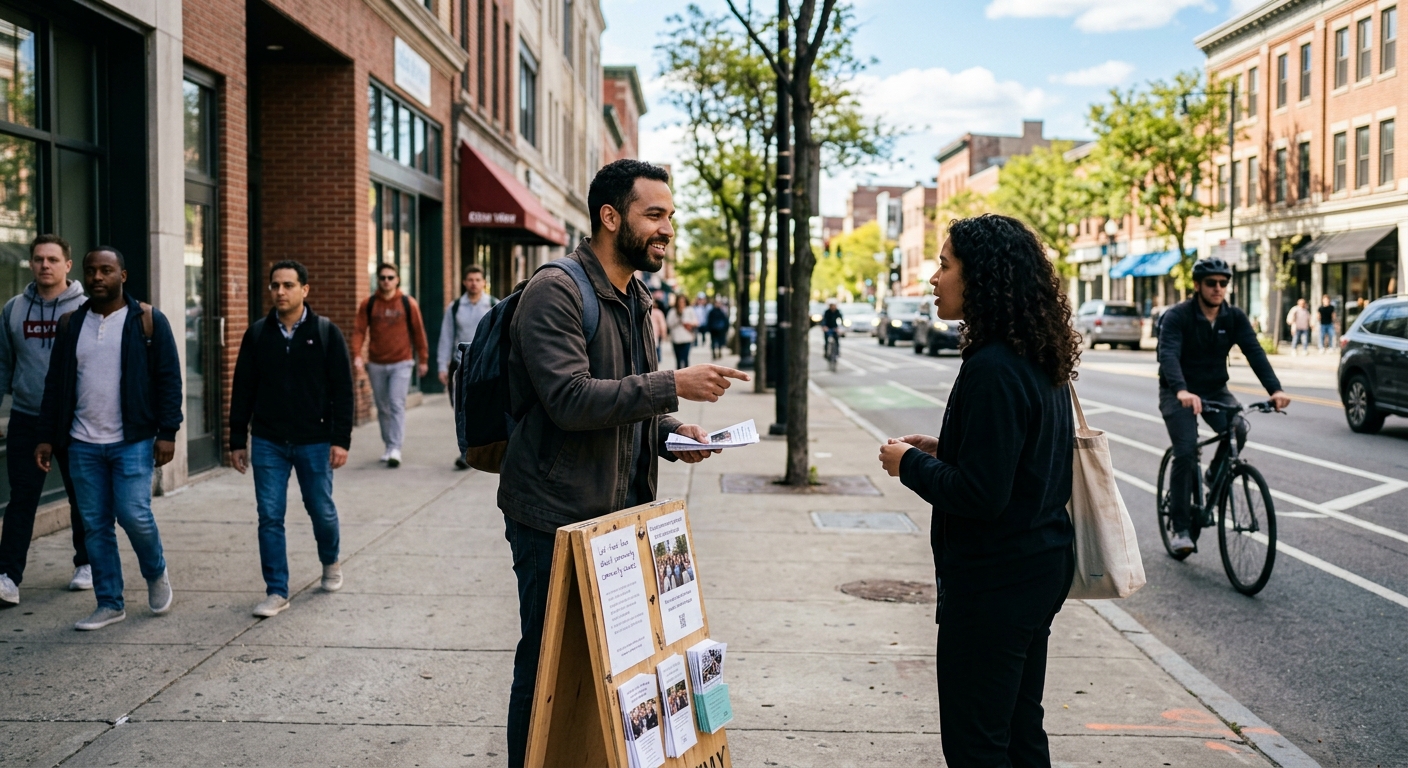
On street corners, municipal sidewalks, and public squares across the United States, an ongoing constitutional battle is playing out between local government administrators and economically marginalized individuals. The sight of day laborers waiting for temporary employment, or individuals soliciting charitable donations, is a historically common feature of urban environments. However, in an effort to regulate public spaces, reduce pedestrian congestion, or address localized community complaints, numerous municipalities have enacted aggressive anti-solicitation ordinances. These laws often target individuals standing near roadways or on sidewalks, effectively criminalizing the act of asking for work or seeking alms.
Beneath the surface of urban beautification initiatives and municipal traffic management policies lies a profound constitutional question: Does the First Amendment protect the right to ask for a job or a donation in a public space? Overwhelmingly, federal courts have answered in the affirmative. The judiciary recognizes that public streets and sidewalks are historic venues for free expression, and local governments cannot arbitrarily strip away these protections simply because the speech involves a request for money or ad-hoc employment. Navigating this legal landscape requires a deep understanding of constitutional standards, the architecture of public discourse, and the delicate balance between civil liberties and public safety.
The Architecture of Public Discourse: Defining the Public Forum
To understand why local anti-solicitation ordinances frequently face insurmountable legal challenges, one must first examine the legal concept of the “traditional public forum.” Since the United States Supreme Court began formalizing public forum doctrine in the early twentieth century, the judiciary has recognized that certain government-owned properties have immemorially been held in trust for the use of the public. These spaces are deeply embedded in the nation’s history as central venues for assembly, the communication of thoughts between citizens, and the open discussion of public issues.
When an individual steps onto a public sidewalk to ask for work, distribute leaflets, or hold a political sign, they are standing squarely within a traditional public forum. The government’s ability to restrict speech in these zones is highly constrained by the First Amendment. While municipalities maintain the authority to impose content-neutral “time, place, and manner” restrictions—such as limiting the use of loud megaphones in quiet residential neighborhoods during midnight hours—they cannot unilaterally ban certain types of speech simply because they find the content undesirable, politically unpopular, or economically uncomfortable.
Understanding First Amendment Forum Categories
Courts generally categorize government property into distinct classifications, each carrying a different level of First Amendment protection for individuals attempting to express themselves:
- Traditional Public Forums: Includes streets, sidewalks, and parks. Speech here receives the highest level of constitutional protection. Any regulation based on the content of the speech must survive the incredibly high bar of strict scrutiny.
- Designated Public Forums: Government spaces intentionally opened for public expression, such as a municipal theater or the public comment period of a city council meeting. Once opened, the government cannot discriminate based on viewpoint.
- Non-Public Forums: Government properties not intended for general public communication, such as military bases, the internal working areas of a post office, or restricted government office corridors. Restrictions here only need to be reasonable and viewpoint-neutral.
The Legal Standard: Solicitation as Constitutionally Protected Expression
A frequent and pervasive misconception among local lawmakers is the belief that asking for money or soliciting temporary employment is a purely commercial transaction, entirely devoid of the expressive elements protected by the Constitution. However, decades of federal jurisprudence thoroughly contradict this narrow view. The act of asking for a donation or seeking labor inherently involves the communication of vital information, the propagation of personal realities, and the advocacy of causes regarding poverty and survival.
In the landmark legal precedents established during the 1980s and 1990s, the Supreme Court cemented the doctrine that charitable solicitation is inextricably intertwined with fully protected speech. A prohibition on solicitation operates as a direct prohibition on the dissemination of ideas. This constitutional shield extends far beyond organized, registered charities with formal lobbying arms; it applies with equal force to everyday individuals soliciting on their own behalf.
Panhandling and day labor solicitation are firmly recognized as expressive activities. When a day laborer stands on a sidewalk holding a cardboard sign or gesturing to passing contractors, they are communicating a stark economic reality and transmitting an offer of physical labor. Federal courts have consistently held that the First Amendment does not distinguish between a polished political operative asking for campaign contributions and an impoverished individual asking for employment; both forms of communication demand robust and equal constitutional shielding.
The “Strict Scrutiny” Hurdle for Local Governments
When a city drafts an ordinance that prohibits people from soliciting employment or donations, but simultaneously allows other forms of speech in the exact same location (such as holding up a campaign sign for a local politician or waving a promotional banner for a nearby business), it creates what the courts call a “content-based” restriction. The government is essentially regulating speech based on the message it conveys. Under established First Amendment law, content-based restrictions are automatically subject to “strict scrutiny,” the most rigorous and demanding standard of judicial review.
To survive a strict scrutiny analysis, a municipality must successfully prove two distinct elements: first, that the ordinance serves a “compelling state interest,” and second, that the law is “narrowly tailored” to achieve that specific interest using the absolute least restrictive means available. In almost every major legal challenge involving municipal anti-solicitation laws, local governments fail the narrow tailoring requirement. Courts often find that sweeping bans restrict far more speech than is actually necessary to achieve the city’s stated goals. Banning all vocal or written requests for employment on a sidewalk is a blunt instrument that overwhelmingly violates free expression.
Day Laborers, Marginalization, and Backdoor Enforcement
The drafting and enforcement of anti-solicitation ordinances rarely occur in a political vacuum. Civil rights advocacy groups and legal organizations have frequently pointed out that these laws disproportionately impact structurally marginalized communities, particularly immigrant populations and individuals experiencing severe housing insecurity. For many immigrant day laborers, the public sidewalk is not merely a walkway; it is the only accessible marketplace to secure the daily income strictly necessary for their family’s survival.
In many documented instances, local anti-solicitation laws have functioned as backdoor mechanisms for localized immigration enforcement or the systemic criminalization of poverty. By penalizing the visible presence of day laborers, municipalities often attempt to economically sanitize their commercial streetscapes, sweeping visible economic disparity out of the public view. Consequently, legal challenges to these ordinances are not just about defending the abstract, philosophical principles of free speech; they are about fiercely defending the economic lifelines of highly vulnerable populations.
Organizations litigating these civil rights cases emphasize a core constitutional reality: the law does not permit local authorities to zone away poverty or suppress the voices of low-income workers simply because their visible presence makes certain constituents or commercial business owners uncomfortable. The Constitution requires tolerance of peaceful expression, even when the message—such as the stark reality of unemployment—is difficult to observe.
Traffic Safety vs. Constitutional Liberties: Finding the Balance
The universal, primary defense offered by municipal attorneys when defending anti-solicitation ordinances in federal court is the preservation of public safety. City officials frequently argue that individuals soliciting employment or donations systematically distract drivers, disrupt the smooth flow of vehicular traffic, and create inherently dangerous conditions for both pedestrians and passing motorists. While courts universally acknowledge that traffic safety and pedestrian management are undeniably legitimate and substantial government interests, they have repeatedly ruled that cities cannot use a meat cleaver to solve a problem when a scalpel is legally required.
If a day laborer aggressively steps into a busy, active intersection and physically impedes a moving vehicle, they are violating existing, entirely content-neutral traffic laws. Municipalities across the country already possess extensive, well-established penal codes prohibiting basic jaywalking, physically obstructing a public roadway, and engaging in aggressive, threatening harassment. Enforcing these existing, conduct-based laws directly addresses the actual safety hazard without unconstitutionally infringing upon free expression.
Banning the speech itself—the physical act of holding a sign, nodding, or asking for work from the physical safety of a standard sidewalk—is widely viewed as an unconstitutional overreach. As numerous federal judges have emphatically noted in their rulings, a city cannot ban constitutionally protected communication simply because it is administratively easier or cheaper for local law enforcement to issue a blanket prohibition than it is to carefully police actual, specific traffic violations.
Alternative Solutions for Municipalities
Rather than relying on constitutionally flawed ordinances that inevitably lead to costly litigation and civil rights violations, many forward-thinking municipalities are adopting constructive alternatives. Recognizing the economic realities that drive street-level solicitation, some cities have invested in the development of official, safe day labor centers. These designated locations provide workers with essential amenities, safe gathering spaces, and a centralized hub for contractors seeking temporary labor, naturally reducing sidewalk congestion without utilizing punitive legal measures.
Similarly, regarding charitable solicitation, cities are increasingly partnering with social service agencies to deploy mobile outreach teams. These professionals connect individuals experiencing homelessness directly with housing resources, mental health services, and food assistance. By addressing the root socio-economic causes of panhandling and street labor, local governments can dramatically improve public safety and community well-being while steadfastly respecting the First Amendment rights of all their residents.
Conclusion: Safeguarding the Foundation of Free Expression
The ongoing, nationwide legal battles surrounding anti-solicitation ordinances serve as a vital, highly visible reminder of the First Amendment’s fundamental purpose: to explicitly ensure that our shared public spaces remain entirely open to all voices, strictly regardless of a speaker’s social standing, political power, or economic desperation. When federal courts rightfully strike down local laws that broadly criminalize asking for work or seeking charity, they reaffirm the enduring constitutional principle that the right to free expression cannot be casually sacrificed at the altar of municipal administrative convenience.
Protecting the speech rights of immigrant day laborers and individuals experiencing severe poverty is not merely a procedural legal technicality; it is a critical, ongoing defense of the American democratic ideal that our public squares and municipal sidewalks belong equally to everyone. The ability to publicly voice one’s needs and seek socio-economic opportunity remains one of the most essential freedoms guaranteed by the Constitution.
Frequently Asked Questions (FAQs)
Q: What makes a sidewalk a “traditional public forum”?
A: In First Amendment jurisprudence, traditional public forums are government-owned properties that have historically been open to the general public for assembly, debate, and speech. Sidewalks, civic parks, and public squares fundamentally fall into this specific category. The government’s ability to restrict speech in these areas is heavily limited, meaning authorities cannot ban peaceful expression without meeting the absolute highest judicial standards.
Q: Is panhandling or asking for work legally protected speech?
A: Yes. The United States Supreme Court has repeatedly and clearly held that charitable solicitation and seeking temporary employment are forms of protected expression. Asking for money or a job involves directly communicating information about one’s immediate socioeconomic status and physical needs, which is fundamentally protected under the First Amendment just like organized political or religious speech.
Q: Why do municipalities continue to pass anti-solicitation ordinances?
A: Local governments typically pass these ordinances in direct response to citizen complaints about visual urban blight, perceived aggressive panhandling, or alleged traffic congestion near commercial centers. Lawmakers often frame these regulations strictly as public safety or traffic management measures, arguing that individuals standing near active roadways distract drivers and create dangerous conditions.
Q: What is “strict scrutiny” in the context of free speech?
A: Strict scrutiny is the most rigorous form of judicial review utilized by federal courts. When a law restricts speech based specifically on its content (such as banning only signs asking for work, while freely allowing political campaign signs), the government must affirmatively prove that the law serves a “compelling state interest” and is “narrowly tailored” to achieve that exact goal using the least restrictive means possible.
Q: Can cities enforce any rules on public sidewalks?
A: Yes, but regulations must generally be content-neutral “time, place, and manner” restrictions. For example, a city can lawfully ban all individuals from physically blocking pedestrian walkways or stepping into moving vehicular traffic, strictly regardless of what those individuals are saying. These conduct-based laws focus entirely on maintaining baseline public safety without discriminating against specific messages or marginalized speakers.
References
- Village of Schaumburg v. Citizens for a Better Environment, 444 U.S. 620 — U.S. Supreme Court / Legal Information Institute. 1980-02-20. https://www.law.cornell.edu/supremecourt/text/444/620
- United States v. Kokinda, 497 U.S. 720 — U.S. Supreme Court / Legal Information Institute. 1990-06-27. https://www.law.cornell.edu/supremecourt/text/497/720
- A Constitutional Dilemma for Cities Seeking to Regulate Day Labor Solicitation — UC Law SF Scholarship Repository. 2012-01-01. https://repository.uclawsf.edu/hastings_constitutional_law_quaterly/vol39/iss3/5/
- Responding to First Amendment Audits: What is a “Forum” and Why Does it Matter? — Coates’ Canons, The University of North Carolina at Chapel Hill. 2022-11-15. https://canons.sog.unc.edu/2022/11/responding-to-first-amendment-audits-what-is-a-forum-and-why-does-it-matter/
Similar Articles








Read full bio of medha deb


