
Free Speech Rights For Women: A Practical Guide
Exploring women's constitutional protections under the First Amendment and key legal precedents shaping gender equality in expression.
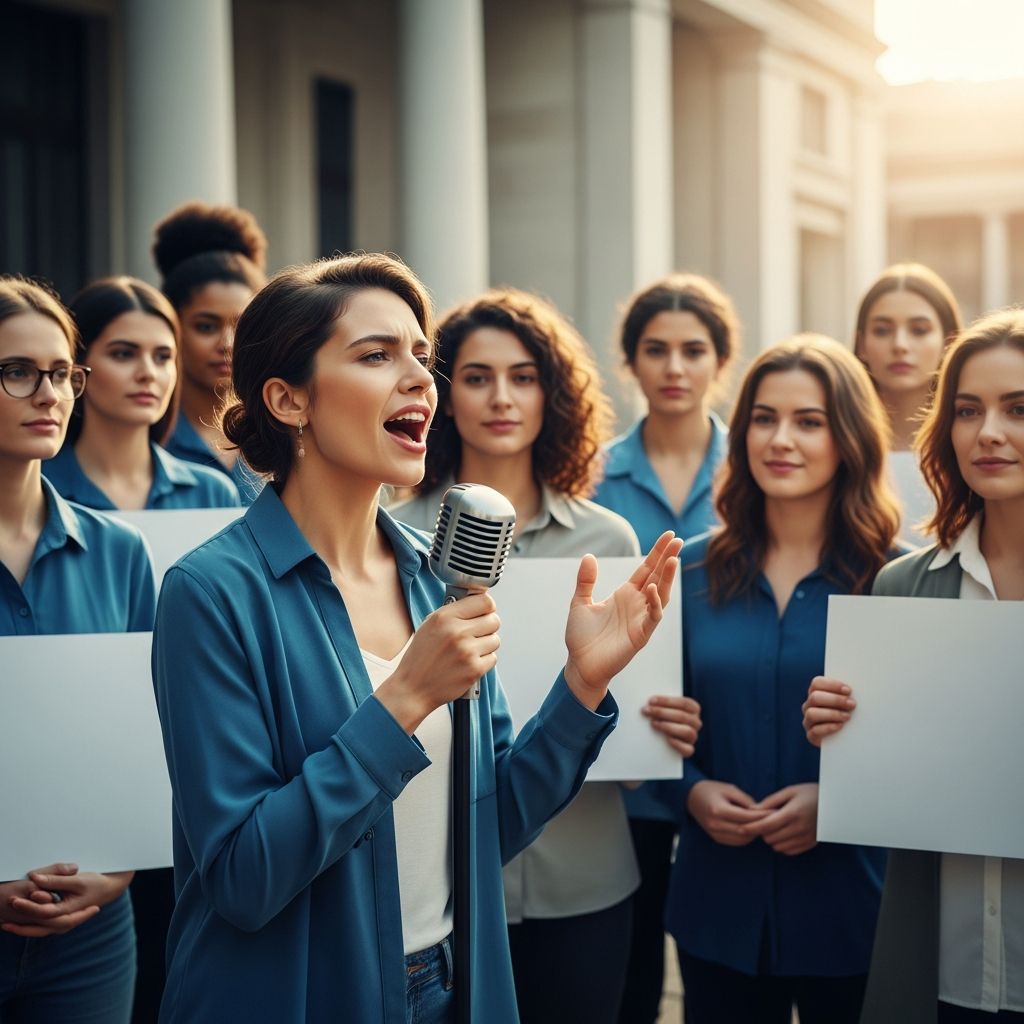
Women in the United States enjoy the same fundamental protections under the First Amendment as all citizens, guaranteeing freedom of speech without gender-based restrictions. This right, enshrined in the Constitution, has been tested through landmark cases that affirm equal expression regardless of sex.
Foundational Principles of First Amendment Protections
The First Amendment states, “Congress shall make no law… abridging the freedom of speech,” applying equally to men and women via the Fourteenth Amendment’s Equal Protection Clause. Courts have consistently ruled that gender cannot limit expressive rights, establishing precedents that safeguard women’s voices in public discourse.
Historically, women faced barriers to public speech, but constitutional interpretations evolved to dismantle these. Today, women can protest, publish opinions, and criticize authority without fear of reprisal based on sex, bolstered by clear judicial standards.
Landmark Supreme Court Decisions Shaping Women’s Expression
Several pivotal rulings have reinforced women’s free speech. In cases involving public demonstrations and political advocacy, the Court emphasized viewpoint neutrality, protecting content irrespective of the speaker’s gender.
- Early 20th-century decisions addressed women’s suffrage rallies, affirming assembly rights.
- Mid-century cases clarified protections for controversial opinions voiced by female activists.
- Modern precedents tackle online expression and workplace speech.
These decisions underscore that while time, place, and manner restrictions apply universally, no special curbs target women.
Key Case Studies: Women and Public Protest Rights
One seminal case involved women challenging anti-protest ordinances during advocacy events. The Court struck down vague laws that disproportionately silenced female demonstrators, prioritizing clear regulations over broad suppression.
Another focused on symbolic speech, where women used attire and signs to convey messages. Justices ruled such actions fully protected, rejecting claims of indecency tied to gender.
| Case Focus | Ruling Outcome | Impact on Women |
|---|---|---|
| Public Gatherings | Laws must be content-neutral | Enabled rallies without sex-based limits |
| Symbolic Expression | Protected non-verbal speech | Broadened advocacy tools |
| Political Criticism | No prior restraint allowed | Safeguarded dissent |
Workplace Speech and Gender Dynamics
In professional settings, women’s speech faces unique scrutiny, yet First Amendment principles extend via employer policies. Private workplaces enjoy leeway, but public sector employees retain robust protections. Courts balance institutional needs with individual rights, ensuring women aren’t silenced for gender-related views.
Challenges arise in harassment claims, where speech intersects with conduct. Precedents demand evidence of disruption before limits, protecting legitimate expression.
Digital Era Challenges for Female Voices
Online platforms amplify women’s speech but introduce moderation issues. Section 230 shields sites from liability, yet algorithmic biases and harassment target female users. Legal responses emphasize equal access without endorsing censorship.
- Platforms must avoid viewpoint discrimination.
- Women report higher doxxing rates, prompting calls for better enforcement.
- Courts uphold anonymous posting rights.
Intersections with Other Rights: Speech and Equality
Free speech intersects with Title VII and equal protection, prohibiting retaliation for gender equity discussions. Women advocating pay parity or against bias enjoy safeguards, provided speech doesn’t cross into unprotected territory like true threats.
Academic freedom further bolsters women’s campus expression, with rulings striking down codes stifling debate on women’s issues.
Limitations and Unprotected Categories
Not all speech qualifies for protection. Categories like obscenity, defamation, and incitement apply equally, with no gender exemptions. Women must navigate these, as courts apply strict scrutiny to content-based restrictions.
Fighting words or imminent lawless action doctrines rarely invoked against women, but awareness prevents legal pitfalls.
Practical Advice for Exercising Rights Safely
To assert free speech effectively:
- Document interactions and obtain permits for events.
- Consult counsel for high-stakes expression.
- Use clear, non-threatening language.
- Leverage organizations like the ACLU for support.
Awareness of local ordinances ensures compliance without self-censorship.
Global Comparisons and U.S. Advantages
Unlike some nations restricting women’s public roles, U.S. law prioritizes equality. International critiques highlight American strengths in protecting dissident voices, including feminist critiques.
Future Directions and Advocacy Needs
Ongoing threats like campus speech codes and social media regulations demand vigilance. Advocacy groups push for gender-neutral policies, ensuring women’s voices remain prominent.
Legislative efforts aim to codify protections, countering potential erosions.
Frequently Asked Questions
Does the First Amendment protect women’s speech differently from men’s?
No, protections are identical; gender plays no role in First Amendment analysis.
Can women be arrested for protesting in public?
Only if violating neutral time/place/manner rules, not for message content.
What if speech offends based on gender topics?
Offensiveness alone doesn’t strip protection; hostility must meet unprotected criteria.
Are there special rules for women’s online speech?
No special rules; standard First Amendment applies, with platforms’ discretion under Section 230.
How has the Supreme Court advanced women’s speech rights?
Through rulings invalidating discriminatory laws and affirming equal access to forums.
References
- Plain Language Guide Series — Digital.gov. 2011-01-01. https://digital.gov/guides/plain-language
- Writing Legal Content — Mailchimp Content Style Guide. 2023-01-01. https://styleguide.mailchimp.com/writing-legal-content/
- Legal Content Writing: Proven Strategies and Tips — SeoProfy. 2024-01-01. https://seoprofy.com/blog/legal-content-writing/
- Legal Content Writing: 8 Tips for Winning Your Clients — cmlabs. 2024-01-01. https://cmlabs.co/en-us/references/writing/legal-content-writing
- Content Writing Guide for Law Firms — PaperStreet Web Design. 2023-01-01. https://www.paperstreet.com/content/guide-to-writing-better-legal-content/
Similar Articles








Read full bio of medha deb


