
Forming A Corporation In North Carolina: Step-By-Step Blueprint
Complete guide to establishing a corporation in North Carolina, from naming to ongoing compliance and tax obligations.
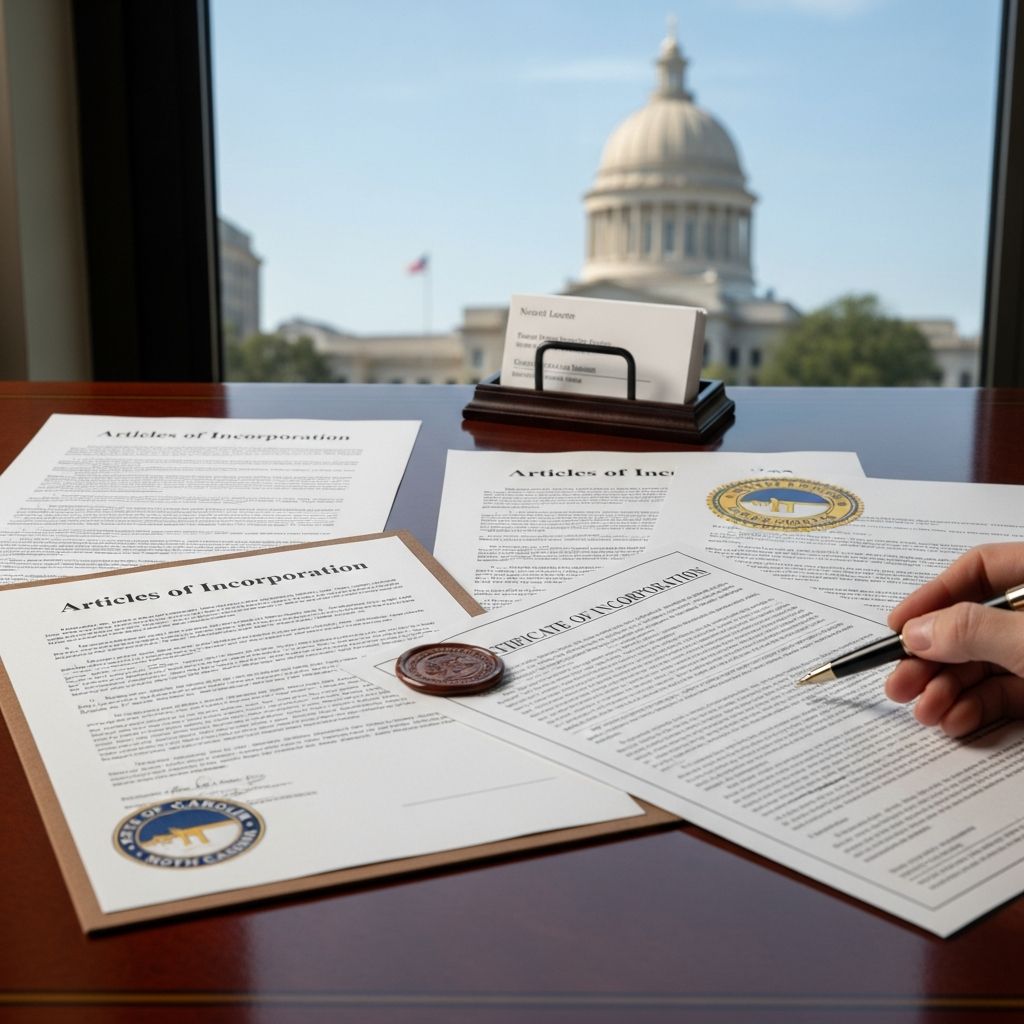
Establishing a corporation in North Carolina transforms your business idea into a distinct legal entity, offering liability protection, perpetual existence, and opportunities for investment. This process involves precise state filings, internal organization, and adherence to tax rules, ensuring your company operates smoothly under North Carolina law.
Understanding Corporate Structures Available in North Carolina
North Carolina supports several corporate forms, each tailored to different needs. A C corporation provides unlimited shareholders and stock classes, ideal for ventures seeking venture capital, though it faces double taxation on profits. In contrast, an S corporation allows pass-through taxation to avoid this, limited to 100 shareholders who must be U.S. citizens or residents. Nonprofits serve charitable missions with tax exemptions, while professional corporations cater to licensed fields like engineering or medicine, requiring majority ownership by qualified professionals.
Selecting the right structure hinges on your goals: growth potential, tax strategy, and ownership plans. Corporations generally shield personal assets from business debts, unlike sole proprietorships, but demand formal governance like boards and annual reports.
Selecting and Securing Your Business Name
The foundation of your corporation begins with a unique name that complies with state guidelines. North Carolina mandates that corporate names include designators such as ‘Corporation,’ ‘Corp.,’ ‘Incorporated,’ ‘Inc.,’ ‘Company,’ ‘Co.,’ ‘Limited,’ or ‘Ltd.’ The name must be distinguishable from existing entities in the state’s registry to prevent confusion.
To verify availability, utilize the North Carolina Secretary of State’s (SOS) online business entity search tool. Restricted terms like ‘Bank’ or ‘Engineer’ need approval from regulatory bodies. If your preferred name is available, reserve it for 120 days via the Application to Reserve a Business Entity Name, incurring a $30 fee as of 2025.
- Search existing names on the SOS website to ensure distinguishability.
- Include required suffix for clear corporate identification.
- Reserve promptly if finalizing details to hold your spot.
Appointing a Reliable Registered Agent
Every North Carolina corporation requires a registered agent—a person or entity authorized to receive legal documents, notices, and service of process. This agent must maintain a physical street address in the state (no P.O. boxes) and be available during business hours.
You can serve as your own agent if you meet these criteria, or hire a professional service for privacy and reliability, especially for out-of-state owners. The agent’s role is crucial for maintaining good standing and avoiding default judgments in lawsuits.
Structuring Shares and Preparing Formation Documents
Define your corporation’s capital structure by specifying authorized shares in the formation documents. North Carolina permits one or more classes of stock, with details on voting rights, dividends, and preferences if applicable. There’s no minimum capital requirement, offering flexibility for startups.
The primary filing document is the Articles of Incorporation (Form B-01 for standard corps, PC-05 for professionals). Key inclusions are:
| Element | Description |
|---|---|
| Corporate Name | Full legal name with required designator |
| Shares Authorized | Total number and classes of stock |
| Registered Agent | Name and North Carolina address |
| Incorporator Details | Name(s) and address(es) of filer(s) |
| Principal Office | Optional business address |
Submit online, by mail, or in person to the SOS in Raleigh. The filing fee is $125, unchanged regardless of share volume.
Conducting the Initial Organizational Meeting
Post-filing, convening an organizational meeting is essential. Attendees—incorporators or initial directors—address foundational matters:
- Elect the board of directors if not pre-named.
- Appoint officers (e.g., president, secretary, treasurer).
- Adopt bylaws outlining operations.
- Authorize stock issuance.
- Approve S corp election if pursuing pass-through status.
Document all decisions in meeting minutes, forming the core of your corporate records book. These internal documents aren’t filed publicly but prove proper governance.
Crafting Comprehensive Corporate Bylaws
Bylaws serve as your corporation’s internal constitution, detailing management, meetings, officer duties, and shareholder rights. North Carolina law requires their adoption, typically at the organizational meeting, though they’re not submitted to the state.
Essential bylaw provisions include:
- Director and officer qualifications and terms.
- Meeting protocols (quorum, voting, notices).
- Stock issuance and transfer rules.
- Amendment procedures.
Customize bylaws to your needs while complying with N.C. Gen. Stat. § 55-2-06. Retain them securely with other records.
Issuing Stock and Obtaining an EIN
Issue stock certificates to initial shareholders per board authorization, recording transactions in your stock ledger. This formalizes ownership.
Next, secure a federal Employer Identification Number (EIN) gratis via the IRS website. This unique identifier is vital for banking, taxes, hiring, and contracts.
Navigating Tax Elections and Obligations
Default status is C corporation taxation. For S corp benefits—avoiding double taxation—file IRS Form 2553 within 2 months and 15 days of your tax year’s start, ensuring eligibility (e.g., ≤100 U.S. shareholders).
North Carolina imposes a corporate income tax of 2.25% on taxable income as of 2025, phasing to zero by 2030, plus franchise taxes. Register with the NCDOR for filings, payable online. Comply with federal, state, and local taxes; obtain licenses as needed.
Ensuring Ongoing Compliance and Reporting
Maintain good standing through annual reports to the SOS by April 15, detailing officers, directors, agent, and fiscal info. File online or by paper; late fees apply.
Additional duties:
- Hold annual shareholder and board meetings with minutes.
- Update agent or address changes promptly ($25 fee).
- Renew business licenses.
- File tax returns timely.
Foreign corporations doing business in NC must register via Application for Certificate of Authority ($250 fee) with a home-state good standing certificate.
Special Considerations for Professional Corporations
Professionals in fields like engineering form via Form PC-05 ($125 fee), attaching licensing board registration. At least two-thirds ownership by licensees, with one per profession as officer/director/shareholder.
Frequently Asked Questions
What is the cost to incorporate in North Carolina?
The Articles of Incorporation filing fee is $125. Additional costs may include name reservation ($30), agent services, and EIN (free).
Can I be my own registered agent?
Yes, provided you have a physical NC address and are available during business hours.
Are bylaws filed with the state?
No, bylaws are internal documents kept with corporate records.
How do I elect S corporation status?
File IRS Form 2553 timely; confirm eligibility requirements.
What taxes does a NC corporation pay?
State corporate income tax (2.25% in 2025), franchise tax, plus federal obligations.
Professional Tips for Successful Incorporation
Consult attorneys or CPAs for tailored advice, especially on tax elections. Use services for filings if unfamiliar. Maintain meticulous records to support liability protection and attract investors. With proper setup, your North Carolina corporation positions for enduring success.
This guide equips you with actionable insights drawn from official requirements. Stay updated via SOS and NCDOR sites, as rules evolve.
References
- North Carolina corporation filing guide — Wolters Kluwer. 2025. https://www.wolterskluwer.com/en/solutions/bizfilings/state-guides/north-carolina-incorporation-requirements
- How to Form a Corporation in North Carolina — Nolo. 2025. https://www.nolo.com/legal-encyclopedia/how-form-corporation-north-carolina.html
- How to Incorporate in North Carolina — Stripe. 2025. https://stripe.com/resources/more/how-to-incorporate-in-north-carolina
- Professional Corporation Licensure — NCBELS. 2025. https://www.ncbels.org/application/professional-corporate-licensure/
- Filing Requirements – Corporate Income and Franchise Tax — NCDOR. 2025. https://www.ncdor.gov/taxes-forms/corporate-income-franchise-tax/filing-requirements
Similar Articles








Read full bio of Sneha Tete


