Forming An LLC: 7 Essential Steps For Entrepreneurs
Master the essential steps to launch your limited liability company with confidence and compliance across all states.
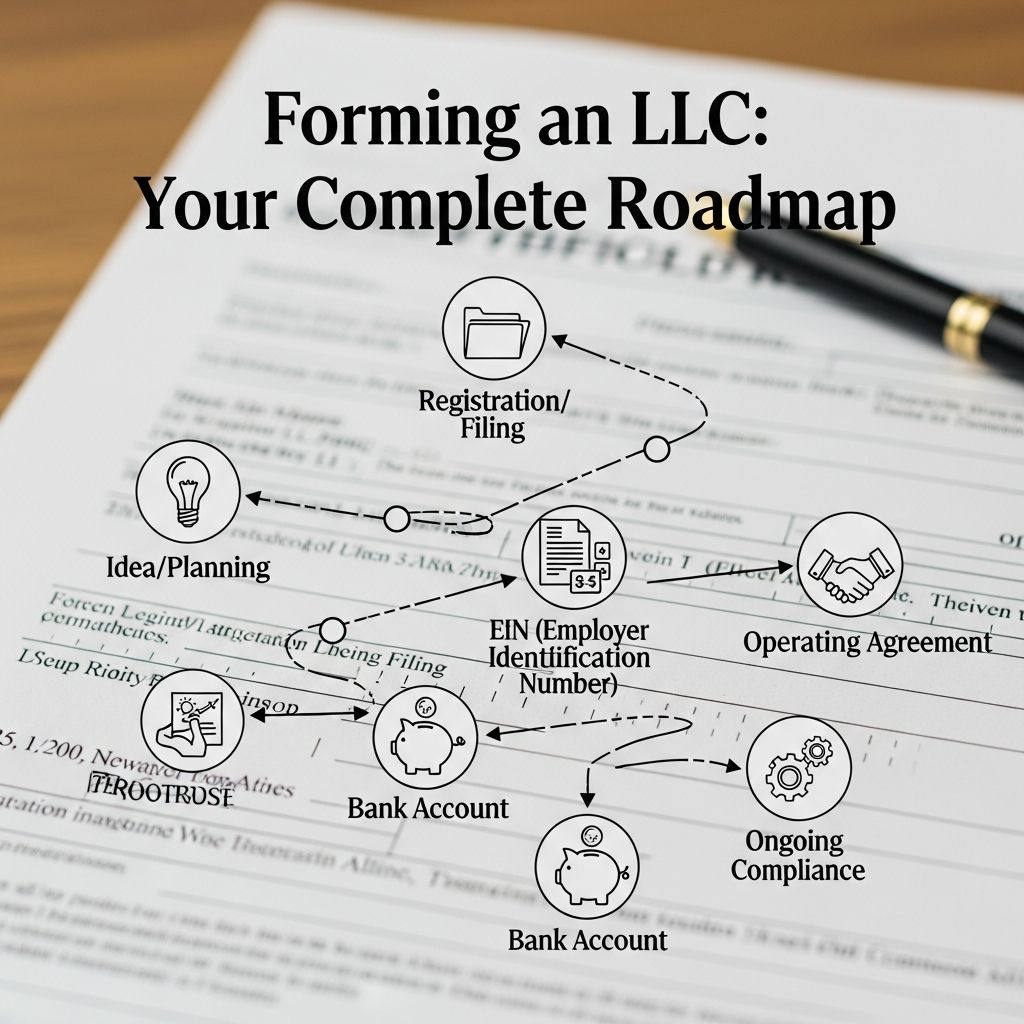
Launching a limited liability company (LLC) offers entrepreneurs a flexible structure that combines personal liability protection with pass-through taxation benefits. Unlike sole proprietorships, an LLC shields owners’ personal assets from business debts and lawsuits, making it a popular choice for small businesses, freelancers, and startups.
Why Choose an LLC Structure?
LLCs provide key advantages over other entities. Owners, known as members, enjoy limited liability, meaning they are not personally responsible for company obligations unless personal guarantees are signed. Taxation defaults to pass-through, where profits and losses flow to members’ personal tax returns, avoiding double taxation common in corporations. Flexibility in management—either member-managed or manager-managed—allows customization to business needs.
Consider these benefits in a comparison:
| Entity Type | Liability Protection | Taxation | Management Flexibility |
|---|---|---|---|
| LLC | High | Pass-through (default) | High |
| Sole Proprietorship | None | Pass-through | Low |
| C Corporation | High | Double taxation | Moderate |
Data from IRS guidelines confirms LLCs’ versatility for multi-member or single-member setups.
Step 1: Selecting a Distinctive Business Name
The foundation of LLC formation begins with a unique name compliant with state rules. Every state mandates inclusion of designators like ‘LLC,’ ‘L.L.C.,’ or ‘Limited Liability Company.’ Avoid restricted terms such as ‘bank’ or ‘insurance’ without proper licensing.
- Search your state’s business database, typically via the Secretary of State website, to confirm availability.
- Check the U.S. Patent and Trademark Office (USPTO) for federal trademarks to prevent conflicts.
- Reserve the name if allowed, often for a small fee and 30-120 days.
For example, if operating in multiple states, ensure the name works nationally while meeting each jurisdiction’s standards.



The Future of AI: Preventing a Big Tech Monopoly >

Step 2: Designating a Reliable Registered Agent
A registered agent is crucial for receiving legal documents, tax notices, and service of process. This must be an individual or entity with a physical street address in the formation state, available during business hours.
- Self-appointment is possible if you meet residency and availability criteria.
- Hire a professional service for privacy and reliability, especially for multi-state operations.
- In states like Illinois, the agent must be a resident or authorized to do business there.
Failing to maintain a valid agent can lead to administrative dissolution, so choose wisely.
Step 3: Defining Management and Ownership Framework
Decide on member-managed (all owners handle operations) or manager-managed (designated managers run daily affairs). This choice influences voting rights, profit shares, and decision-making.
Draft an operating agreement early, even if not required by your state. This internal document outlines:
- Member contributions and ownership percentages.
- Profit/loss allocation and distribution rules.
- Voting procedures and dispute resolution.
- Buy-sell provisions for member exits.
Without it, state default laws apply, potentially clashing with your vision.
Step 4: Preparing and Filing Formation Documents
The core filing is the Articles of Organization (or equivalent, like Certificate of Formation). Submit to your state’s Secretary of State or business division.
Required details typically include:
- LLC name and principal address.
- Registered agent information.
- Management structure and purpose statement.
- Organizer’s signature.
Filing fees range from $50-$500, with online submission fastest in most states. Processing takes days to weeks; expedited options cost extra. Some states, like Arizona or Nebraska, require public notice publication post-filing.
Step 5: Obtaining Your Federal Employer Identification Number
Secure an EIN from the IRS, akin to a business Social Security number. Essential for banking, taxes, and hiring.
- Apply free via IRS Form SS-4 online, instantly in most cases.
- Required for multi-member LLCs, employee payroll, or electing corporate taxation.
- Single-member LLCs without employees may use the owner’s SSN, but an EIN enhances separation.
This step solidifies your LLC’s distinct legal identity.
Step 6: Handling Tax Elections and Registrations
LLCs default to partnership or disregarded entity taxation but can elect S-corp or C-corp status via IRS Form 8832 or 2553 for potential savings.
- Register for state taxes (sales, payroll) if applicable.
- Understand annual report requirements and fees in your state.
Consult a tax professional to optimize based on revenue projections.
Step 7: Securing Licenses, Permits, and Insurance
Compliance extends beyond formation. Obtain industry-specific licenses, zoning permits, and business licenses from local, state, and federal agencies.
- Check via SBA’s license finder tool.
- Get general liability insurance to complement LLC protection.
- Open a dedicated business bank account and fund with capital contributions, documenting via agreements.
Navigating Multi-State and Foreign LLC Operations
Expanding beyond your home state requires foreign qualification: file as a foreign LLC in each additional state, appointing agents there. This avoids penalties for unauthorized business.
Costs and paperwork multiply, so plan strategically—often, home state registration suffices initially if sales are minimal elsewhere.
Common Pitfalls and Compliance Essentials
Avoid mistakes like inadequate record-keeping, commingling funds, or missing annual filings, which pierce the liability veil.
- Maintain separate finances and minutes.
- File annual reports (fees $50-$300).
- Update agent or address changes promptly.
Frequently Asked Questions
What is the cost to form an LLC?
Expect $50-$500 in state fees, plus optional costs for agents ($100+/year), agreements, and services. Total startup: $200-$1,000.
Do all states require an operating agreement?
Not for filing, but recommended everywhere. States like California mandate it for multi-member LLCs.
How long does LLC approval take?
Online filings: 1-2 business days to weeks. Expedited: same-day in many states.
Can a single person form an LLC?
Yes, single-member LLCs are standard, taxed as disregarded entities by default.
What if my name is taken?
Modify slightly or reserve alternatives. Check trademarks to avoid infringement suits.
Advanced Strategies for LLC Longevity
Beyond basics, consider series LLCs (available in 20+ states) for asset segregation or professional LLCs for licensed fields like law or medicine. Regularly review your agreement as the business evolves.
For funding, document capital contributions meticulously—cash, property, or services—in exchange for membership interests. This prevents disputes.
Scaling up? Elect S-corp status if eligible to reduce self-employment taxes on profits above salary.
References
- How to Start an LLC in 7 Steps (2026 Guide) — LegalZoom. 2026. https://www.legalzoom.com/articles/how-to-start-an-llc-in-7-steps
- Complete LLC Formation Guide — Northwest Registered Agent. 2026. https://www.northwestregisteredagent.com/llc
- How to Start an LLC — U.S. Chamber of Commerce. 2026. https://www.uschamber.com/co/start/strategy/how-to-start-llc
- Limited liability company (LLC) — Internal Revenue Service. 2026-02-09. https://www.irs.gov/businesses/small-businesses-self-employed/limited-liability-company-llc
- How to Form an LLC: Complete Guide — Wolters Kluwer. 2026. https://www.wolterskluwer.com/en/expert-insights/how-to-form-an-llc-what-is-an-llc-advantages-disadvantages-and-more
Similar Articles








Read full bio of Sneha Tete