As cannabis laws continue to evolve across U.S. states, many travelers assume they can take their marijuana products with them on a flight just like any other medicine or personal item. That assumption can lead to serious legal trouble. Airports, airplanes, and federal airspace are governed by federal law, and under federal law most cannabis products remain illegal to possess or transport, even when they are lawful under state law.
This guide explains how federal rules, Transportation Security Administration (TSA) policies, and varying state laws interact when you fly with cannabis or hemp-derived products. It also explores practical alternatives and answers common questions travelers ask before heading to the airport.
1. Why Flying With Cannabis Is Legally Risky
The starting point for understanding cannabis and air travel is the divide between state legalization and federal prohibition. Many states have legalized cannabis for medical or recreational use, but marijuana remains a Schedule I controlled substance under the federal Controlled Substances Act. That classification makes it illegal to possess or transport marijuana under federal law, regardless of what state legislation allows.
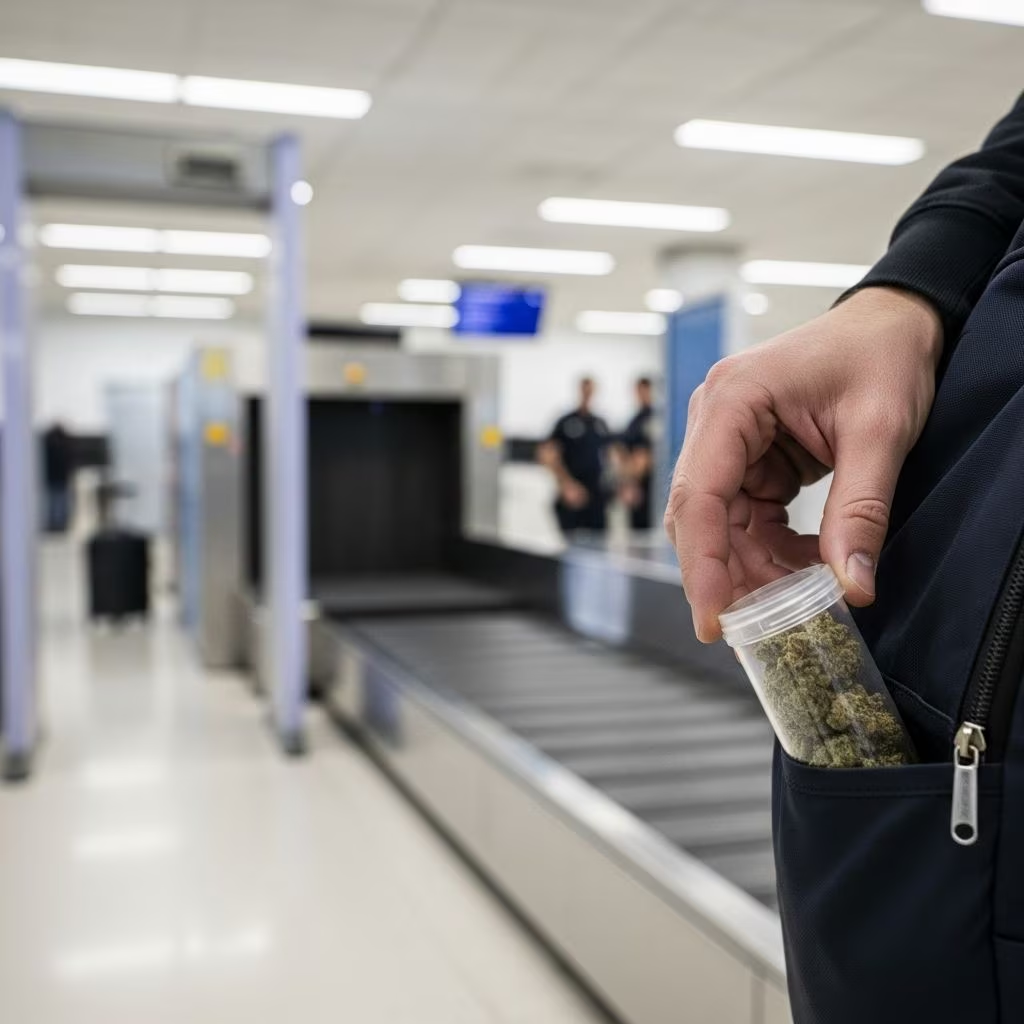
Airports and the national airspace system are regulated at the federal level by agencies such as the Federal Aviation Administration (FAA) and TSA. Federal law applies once you move into secure areas of an airport and when you are on an aircraft in U.S. airspace. As a result, cannabis that is completely lawful on a city sidewalk can instantly become contraband at the TSA checkpoint.
Key legal conflicts
- State vs. federal law: States may allow possession and sale of cannabis, but federal law still criminalizes marijuana nationwide.
- Federal control of aviation: The FAA considers using an aircraft to transport marijuana a violation of federal regulations, even for intrastate flights in a legal state.
- Airport property: The FAA has clarified that cultivation, storage, or distribution of marijuana on federally obligated airport property is prohibited regardless of state legalization.
Because of these conflicts, what is safe on the ground in a legal state is often unsafe once you step into an airport or board a plane.
2. How TSA Handles Cannabis at Security Checkpoints
The TSA screens passengers and baggage for security threats such as weapons or explosives, not primarily for drugs. Nonetheless, the agency operates under federal law and must respond when it encounters substances that appear to be illegal, including marijuana.
According to TSA’s public guidance, “marijuana and certain cannabis-infused products, including some Cannabidiol (CBD) oil, remain illegal under federal law except for products that contain no more than 0.3 percent THC on a dry weight basis or are approved by the FDA.” TSA officers are instructed to refer suspected violations of law to local, state, or federal authorities when they discover them.
TSA’s practical approach
- Primary focus: TSA security officers concentrate on security threats, not actively searching for cannabis during routine screening.
- Incidental discovery: If officers see or detect a substance that appears to be marijuana or THC products, they must notify law enforcement for evaluation.
- No on-site testing: TSA officers are not chemists; they do not test the THC content of products at the checkpoint. If an item looks like an illegal drug, it is treated as such until authorities decide otherwise.
This means that a product labeled as hemp-derived CBD may still lead to delays or referrals if officers cannot quickly confirm that it complies with federal THC limits.
3. Federal Rules on Cannabis and Hemp Products
Federal law treats marijuana and hemp differently. Marijuana remains a Schedule I drug, while hemp and certain hemp-derived products are legal under specific conditions after the 2018 Farm Bill.
| Product Type | Federal Status | Travel Implications (U.S. Air Travel) |
|---|---|---|
| Marijuana (flower, edibles, vapes >0.3% THC) | Schedule I controlled substance | Illegal under federal law; not allowed in airports or on flights. |
| Hemp-derived CBD (≤0.3% THC) | Generally legal if compliant with federal THC limit | Permitted by TSA policy, but subject to inspection and confusion at screening. |
| FDA-approved cannabis-based drugs (e.g., certain epilepsy medications) | Lawful prescription medications approved by FDA | Generally treated like other prescription drugs; carry documentation. |
The 0.3% THC threshold
Federal guidance and TSA policy rely on the 0.3% THC threshold to distinguish hemp from marijuana. Products with more than 0.3% delta-9 THC on a dry weight basis are considered marijuana and are illegal to carry through federal checkpoints or across state lines.
However, travelers face two practical challenges:
- Labeling may be incomplete or inaccurate, making it difficult for officers to determine compliance on the spot.
- TSA officers are not required to trust labels and may involve law enforcement if an item resembles an illegal cannabis product.
4. Domestic Flights: State Legalization vs. Federal Control
Many travelers assume that flying from one legal state to another with a small amount of cannabis is harmless. From a federal perspective, it is not. Federal prohibition applies at the airport gate whether you are flying from California to Colorado or from one prohibition state to another.
Travel within a single legal state
Some states allow limited intrastate air travel with medical cannabis, such as carrying a patient’s supply on flights that begin and end within the same state. However, even in these circumstances, federal law still considers marijuana a controlled substance, and TSA operates under federal authority.
What happens in practice can vary:
- Local police in legal states sometimes focus on verifying that a traveler has a valid medical authorization rather than pursuing charges.
- In states where cannabis remains illegal, discovery of marijuana at the airport can lead to confiscation or criminal proceedings.
Crossing state lines
Transporting cannabis across state borders, including by air, is prohibited under federal law, even if both states have legalized recreational use. This restriction applies to:
- Loose flower or pre-rolls
- Edibles, capsules, tinctures, or concentrates
- Vape cartridges and oils containing THC
Because air travel almost always involves crossing state or federal jurisdictional lines, taking cannabis on a plane is legally risky even for small personal-use amounts.
5. International Flights and Customs Risks
International travel with cannabis is even more hazardous than domestic flights. Customs and border authorities in the United States and abroad typically treat cannabis as a controlled substance and enforce strict import and export rules.
Key international concerns
- Import/export bans: Many countries ban bringing cannabis into or out of their territory entirely, even for medical patients.
- Severe penalties: Some jurisdictions impose significant fines, detention, or prison sentences for drug importation offenses, and they may not distinguish between small personal quantities and larger amounts.
- No medical exception: A valid medical cannabis card or prescription from one country usually has no legal effect in another country’s criminal justice system.
Because of these risks, major advocacy organizations caution that international travel with marijuana is never safe or advisable, regardless of whether the departure or arrival country has legalized cannabis domestically.
6. Medical Marijuana Patients and Air Travel
Medical cannabis patients often depend on marijuana products to manage chronic pain, epilepsy, anxiety, or other serious health conditions. Unfortunately, federal law does not recognize state-issued medical cannabis cards as a defense to marijuana possession at airports or on airplanes.
What medical patients should consider
- Carry documentation: If you choose to travel with medical cannabis within a legal state, carry your medical card and original dispensary packaging to show lawful purchase under state law.
- Expect local enforcement: TSA may refer any cannabis discovery to local police, who will decide whether to take action based on state and local laws.
- Explore alternatives: Talk with your health care provider about lawful, non-cannabis alternatives that can be used during travel, such as FDA-approved medications or hemp-derived CBD products that meet federal requirements.
Medical patients should plan ahead, especially for international trips or flights involving prohibition states, to avoid disruptions in their treatment or legal problems en route.
7. Flying With Hemp-Derived CBD Products
Hemp-derived CBD products, such as oils, capsules, or lotions, occupy a different legal category from marijuana, provided they contain no more than 0.3% THC. TSA policy allows passengers to bring these products in carry-on or checked baggage if they comply with federal law and standard rules on liquids.
Best practices for CBD on flights
- Verify THC content: Choose products from reputable manufacturers that provide lab reports or certificates of analysis showing THC levels below 0.3%.
- Keep original packaging: Bring products in their labeled containers so officers can quickly see that they are hemp-derived and compliant.
- Follow liquid rules: Pack CBD oils or tinctures in containers that meet the TSA liquid limit if carrying them in hand luggage.
- Check destination rules: Some states and foreign countries still restrict or regulate hemp-derived products; research your destination’s law before you travel.
Even with these precautions, there is no guarantee that your product will not be inspected or questioned. Travelers who wish to avoid scrutiny may prefer to purchase compliant CBD products after arrival where lawful.
8. Practical Alternatives to Carrying Cannabis on a Plane
Given the legal and practical risks of flying with cannabis, many travelers opt for alternative strategies that allow them to comply with federal law while still meeting their health or recreational needs.
Safer options for travelers
- Buy at your destination: In states or countries where cannabis is legal, adults may be able to purchase products from licensed retailers after arrival rather than transporting marijuana by air.
- Rely on lawful medications: Discuss with your physician whether prescription drugs or over-the-counter treatments can temporarily substitute for cannabis during travel.
- Use compliant hemp products: Consider hemp-derived CBD products that meet federal requirements and are lawful in both your departure and destination jurisdictions.
- Adjust travel mode: If you must carry state-legal cannabis and the law permits, some travelers consider ground transportation within a single state rather than flying, although driving across state lines with marijuana remains illegal under federal law.
9. Quick Tips Before You Head to the Airport
To minimize legal exposure and travel disruptions, run through this checklist before packing:
- Confirm that no marijuana products are in your carry-on or checked baggage.
- If carrying CBD, verify that it is hemp-derived and under 0.3% THC, with clear labeling.
- Keep prescriptions and medical documentation accessible if you rely on FDA-approved cannabis-based medication.
- Review the cannabis and hemp regulations for both your departure and destination locations.
- Plan where to obtain lawful products after arrival if you will be in a jurisdiction with legal sales.
Frequently Asked Questions (FAQs)
Q1: Is it ever legal to fly with marijuana within the United States?
Under federal law, marijuana remains illegal to possess or transport in airports and on airplanes, even when flying between two states that have legalized cannabis. While some local authorities in legal states may exercise discretion for minor possession, federal law still prohibits bringing marijuana through TSA screening.
Q2: What happens if TSA finds cannabis in my bag?
If a TSA officer discovers a substance that appears to be marijuana or THC products, the officer will typically contact law enforcement for evaluation. In legal states, police may check whether the amount is within state limits or whether you are a medical patient; in prohibition states, you may face confiscation or charges. Outcomes vary by jurisdiction, but TSA itself does not issue criminal penalties.
Q3: Can I fly internationally with medical marijuana if I have a doctor’s recommendation?
International travel with marijuana is strongly discouraged. Customs and border agencies generally treat cannabis as a controlled substance, and most countries do not recognize foreign medical marijuana authorizations. Attempting to carry cannabis across borders can lead to detention, fines, or criminal prosecution, even for small medical quantities.
Q4: Are THC edibles or gummies treated differently from cannabis flower on a plane?
No. Under federal law, edibles and infused products containing more than 0.3% THC are considered marijuana and are illegal to bring through airport security or onto an aircraft, just like cannabis flower. Their discreet appearance does not change their legal status.
Q5: Is it safe to rely on product labels claiming “0.3% THC or less” when I fly with CBD?
Labels are important but not decisive. TSA officers do not test products and are not required to accept labeling at face value. Choosing well-documented, reputable products and carrying packaging and lab reports can help, but there is still a chance that an item will be inspected or referred to law enforcement if it resembles an illegal cannabis product.
References
- What You Need to Know About Traveling with Marijuana — Marijuana Policy Project. 2025-02-01. https://www.mpp.org/policy/federal/can-i-travel-on-an-airplane-with-marijuana/
- Legal Impacts to Airports from State Legalization of Cannabis — National Academies of Sciences, Engineering, and Medicine. 2025-04-01. https://www.nationalacademies.org/read/29135/chapter/3
- Can I drive, fly with cannabis from California to other states? — The Desert Sun / USA Today Network. 2025-12-04. https://www.desertsun.com/story/news/nation/california/2025/12/04/can-you-drive-fly-with-weed-california/87557396007/
- Can I travel on an airplane with marijuana? — Marijuana Policy Project. 2023-09-15. https://www.mpp.org/policy/federal/can-i-travel-on-an-airplane-with-marijuana/
- Travel Laws: Flying with Medical Cannabis — Get Canna Card. 2024-06-10. https://www.getcannacard.com/travel-laws-flying-with-medical-cannabis/
- First-Time Flyer’s Guide: What to Know About Cannabis and Air Travel — MedMen. 2025-01-20. https://medmen.com/blog/first-time-flyers-guide-what-to-know-about-cannabis-and-air-travel/
- 10 Smart Rules for Traveling with Cannabis in 2025 — CED Clinic. 2025-03-05. https://cedclinic.com/traveling-with-cannabis/