
Florida’s Ongoing Voter Disenfranchisement Crisis
Exploring the systemic barriers and legislative hurdles to voting in Florida.
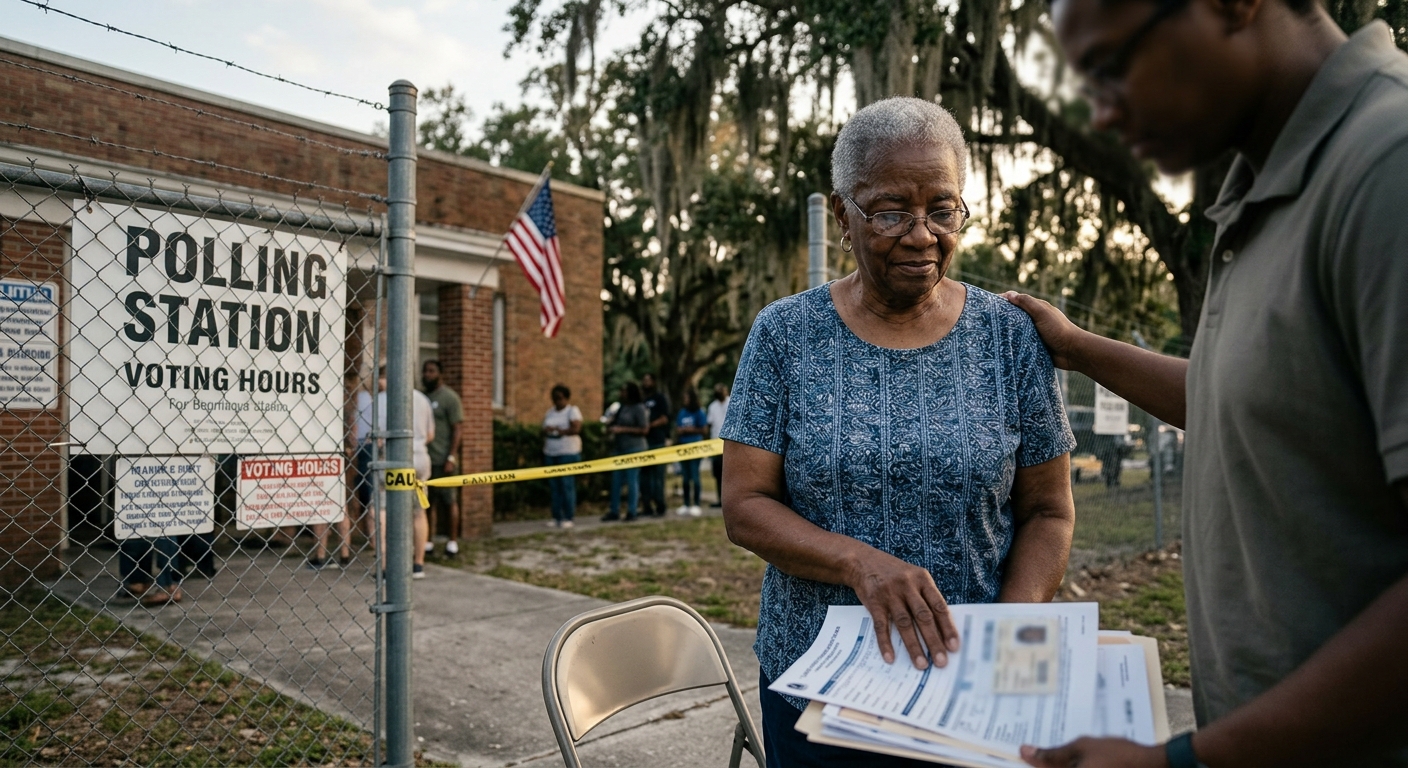
The Erosion of Democratic Participation in the Sunshine State
The fundamental right to participate in the democratic process is the bedrock of any functioning republic. However, for hundreds of thousands of residents in the state of Florida, the path to the ballot box is fraught with systemic barriers, bureaucratic labyrinths, and punitive legislative hurdles. Over the past decade, the landscape of electoral participation in the Sunshine State has evolved from presenting mere administrative challenges to erecting deliberate, sweeping roadblocks that disproportionately affect marginalized communities. The ongoing struggle for fair ballot access serves as a stark reminder that the fight for universal suffrage did not end in the civil rights era. Instead, it has morphed into a complex legal and financial battleground where state legislators continuously devise new mechanisms to limit voter turnout.
By scrutinizing the mechanisms of felony disenfranchisement, the implementation of financial hurdles for returning citizens, and the recent crackdowns on community-based voter registration organizations, a troubling pattern emerges. This pattern suggests a concerted effort to silence specific demographics, ultimately undermining the principle of equitable representation that is supposed to define American democracy. The systemic disenfranchisement present in Florida is not an accident of bureaucracy, but rather the result of deeply entrenched policies designed to meticulously control the shape and scope of the active electorate.
The Architecture of Felony Disenfranchisement
Among the most severe mechanisms of voter suppression in the state is the practice of felony disenfranchisement. This policy legally strips individuals of their voting rights upon conviction of a felony offense, a penalty that, in Florida, extends far beyond the completion of a prison sentence. The state has historically maintained some of the strictest disenfranchisement laws in the nation. According to comprehensive analyses by criminal justice researchers, Florida leads the United States in the number of citizens who are excluded from the democratic process due to past convictions. Nationwide, an estimated four million Americans are denied voting rights due to a felony conviction , and Florida accounts for a massive portion of this demographic. As of recent estimates, over 960,000 Floridians remain barred from voting because of a felony record .
To understand the sheer scale of this exclusion, one must look at the human toll. Individuals who have served their time, reintegrated into their communities, secured employment, and actively contributed to local economies are still branded with a permanent civic exile. They pay taxes and obey the laws, yet they are denied a voice in selecting the officials who write those laws. Historically, the executive clemency process—the only traditional avenue for rights restoration prior to recent constitutional amendments—was notoriously slow, subjective, and heavily backlogged. Governors and clemency boards held absolute discretionary power, frequently instituting mandatory waiting periods of several years before an individual could even apply for a hearing. This arbitrary system meant that regaining one’s constitutional rights was treated not as a fundamental entitlement of a rehabilitated citizen, but as a rare privilege bestowed at the whim of political figures. The sheer difficulty of navigating this opaque process deterred countless eligible individuals from ever attempting to reclaim their place in the electorate.
Amendment 4 and the Mirage of Progress
In a historic rebuke of this entrenched system, Florida voters took matters into their own hands during the 2018 midterm elections. A citizen-led ballot initiative known as Amendment 4 sought to automatically restore voting rights to individuals with felony convictions (excluding those convicted of murder or felony sexual offenses) upon the completion of all terms of their sentence. The amendment passed with overwhelming bipartisan support, capturing nearly 65 percent of the vote and signaling a massive public mandate for second chances. It was heralded as one of the most significant expansions of voting rights in the United States since the Voting Rights Act of 1965.
However, this democratic triumph was short-lived. Almost immediately following the passage of Amendment 4, the Florida Legislature intervened, passing a law that strictly defined the "completion of all terms of sentence." The new legislation mandated that returning citizens must pay all court-ordered fines, fees, and restitution before their voting rights could be officially restored. This legislative maneuver effectively neutralized the progressive intent of Amendment 4, transforming a civil rights victory into a debt-collection mechanism. The requirement to pay legal financial obligations before voting has been widely criticized as a modern-day poll tax, linking the fundamental right to vote directly to an individual’s personal wealth and continuing the cycle of disenfranchisement under a different guise.
The Financial Toll: Modern Cash-Register Justice
The intersection of the criminal justice system and the electoral process in Florida exemplifies a phenomenon often described as "cash-register justice." The state relies heavily on fines and fees levied against criminal defendants to fund its court systems and basic government functions. Consequently, individuals frequently emerge from the criminal justice system saddled with insurmountable debt. The requirement to pay these arbitrary, often exorbitant fees creates an impenetrable barrier for low-income citizens.
In September 2020, a federal appellate court upheld the constitutionality of this wealth-based requirement, ruling that Florida can legally require felons to pay all fines and fees before regaining their voting rights . This decision was a devastating blow to civil rights advocates, cementing a system where wealthy individuals with felony convictions can quickly buy back their constitutional rights, while poor citizens remain permanently disenfranchised. Furthermore, the U.S. Supreme Court declined to intervene in the matter, allowing the appellate court’s ruling to stand and solidifying this severe setback for returning citizens .
The administrative chaos surrounding this requirement is equally staggering. Florida lacks a centralized, easily accessible database where individuals can definitively determine exactly how much they owe in court fees. As a result, returning citizens are forced to navigate a fragmented, county-by-county system of disparate court records, often receiving conflicting or incomplete information. If an individual registers to vote believing their debts are cleared, they face the terrifying risk of being criminally prosecuted for voter fraud if the state later uncovers an unpaid, decades-old administrative fee. This environment of fear and uncertainty successfully suppresses the vote even among those who might legally be eligible.
Systemic Racial Inequities in Ballot Access
The burdens of felony disenfranchisement and wealth-based voting requirements do not fall equally across the population. They disproportionately silence communities of color, reflecting and amplifying the systemic racial disparities deeply embedded within the broader criminal justice system. Black Floridians are disproportionately targeted by aggressive policing tactics, face harsher sentencing guidelines, and are incarcerated at significantly higher rates than their white counterparts. Consequently, the collateral consequences of a felony conviction—including the loss of voting rights—are heavily concentrated within Black and marginalized neighborhoods.
Data indicates that a staggering percentage of the state’s disenfranchised population is African American. According to comprehensive research on voter exclusion, roughly one in eight Black Floridians of voting age cannot cast a ballot, a disenfranchisement rate that is roughly twice that of non-Black Floridians . This targeted suppression dilutes the political power of entire communities, artificially skewing electoral outcomes and ensuring that the specific needs and concerns of minority populations remain consistently underrepresented in the halls of power.
When a significant portion of a demographic is systemically removed from the voter rolls, the resulting legislative policies inevitably fail to reflect the true diversity and needs of the state. It creates a feedback loop of marginalization: communities without political power are subjected to harsher laws, leading to higher conviction rates, which in turn strips away even more of their political power.
Expanding the Target: Suppressing Civic Organizations
In recent years, the legislative assault on voting rights has expanded beyond individuals with past convictions to actively target the very organizations that facilitate democratic participation. Nonpartisan, community-based third-party voter registration organizations (3PVROs) play a critically vital role in registering eligible voters, particularly among young people, minorities, and those who face language barriers. However, new state laws, such as Florida’s controversial Senate Bill 7050, have imposed draconian restrictions and exorbitant fines on these grassroots groups.
This aggressive legislation drastically increases financial penalties for minor administrative errors, such as turning in registration forms slightly past newly shortened, arbitrary deadlines. Moreover, the law controversially prohibited noncitizens—including lawful permanent residents who are legally authorized to live and work in the United States—from handling or collecting voter registration forms on behalf of these organizations. By threatening community organizations with fines of up to $50,000 for utilizing noncitizen volunteers, the state severely crippled the outreach capabilities of immigrant rights groups and Latino civic organizations.
Although federal courts have occasionally intervened to block some of the most overtly discriminatory provisions of these laws, the chilling effect remains potent. Organizations are forced to divert precious funding and human resources away from community voter engagement and into complex legal battles just to defend their constitutional right to exist and operate. By intentionally crippling the infrastructure that supports voter registration, the state effectively suppresses turnout before citizens even make it to the polls.
A Statistical Overview of Florida’s Voter Exclusion
To better illustrate the vast scope of this democratic crisis, the following table breaks down the impact of felony disenfranchisement across various demographics within the state. These figures highlight the scale at which citizens are sidelined from the electoral process.
| Demographic / Category | Estimated Impact in Florida |
|---|---|
| Total Disenfranchised Floridians | Over 960,000 individuals |
| African American Disenfranchisement Rate | Approximately 1 in 8 voting-age adults |
| National Ranking in Disenfranchisement | 1st highest in the United States |
| Primary Barrier Post-Amendment 4 | Unpaid legal fines and court fees |
The Broader Impact on Democratic Health
The continuous layering of voting restrictions in Florida serves as a grim case study in the fragility of democratic institutions. When a state actively, meticulously works to shrink its electorate, the legitimacy of its governance is inherently compromised. The combination of historical disenfranchisement frameworks, modern financial hurdles masquerading as justice, and the aggressive targeting of civic organizations creates an environment where voting is no longer viewed as a guaranteed fundamental right, but rather as a closely guarded privilege available only to those with the time, wealth, and legal acumen to navigate the barriers.
Despite these immense, seemingly insurmountable challenges, civil rights advocates, legal experts, and resilient community leaders continue to fight relentlessly in courtrooms and neighborhoods across the state. They are challenging unconstitutional legislative provisions, raising funds to pay off the exorbitant court fines for returning citizens, and organizing massive civic education campaigns. However, until comprehensive federal protections are enacted to decisively safeguard ballot access, the voting landscape in Florida will undoubtedly remain a hostile and exclusionary terrain for its most vulnerable residents.
Frequently Asked Questions (FAQs)
- What is felony disenfranchisement?
Felony disenfranchisement refers to state laws that deprive individuals of their right to vote if they have been convicted of a felony offense. In many states, including Florida, this loss of rights extends long after the person has completed their prison sentence and returned to society. - How did Amendment 4 attempt to change Florida’s voting laws?
Passed by voters in 2018, Amendment 4 was a ballot initiative designed to automatically restore voting rights to most individuals with past felony convictions once they completed the terms of their sentence, bypassing the heavily politicized executive clemency process. - Why are financial obligations considered a barrier to voting?
Following Amendment 4, the Florida legislature mandated that returning citizens must pay all court fees, fines, and restitution before regaining their voting rights. Because many individuals cannot afford these costs, it acts as a wealth-based barrier, often compared to an unconstitutional poll tax. - What are third-party voter registration organizations (3PVROs)?
These are community-based, often nonpartisan groups that work to register eligible citizens to vote. They are instrumental in reaching marginalized communities, low-income citizens, and minority voters who might otherwise be overlooked by traditional political campaigns.
References
- Judges: Florida felons can’t vote until they pay fines, fees — AP News. 2020-09-11. https://apnews.com/article/94af7d781b0a703d152c161ab72ea175
- Florida Bans Voting Rights of Over One Million Citizens — The Sentencing Project. 2023-01-15. https://www.sentencingproject.org/fact-sheet/florida-bans-voting-rights-of-over-one-million-citizens/
- US High Court deals setback to Florida felon voting rights — AP News. 2020-07-16. https://apnews.com/article/807aa3c748286a1df277da2018873728
- Locked Out 2024: Four Million Denied Voting Rights Due to a Felony Conviction — The Sentencing Project. 2024-10-10. https://www.sentencingproject.org/reports/locked-out-2024-estimates-of-people-denied-voting-rights/
Similar Articles








Read full bio of Sneha Tete


