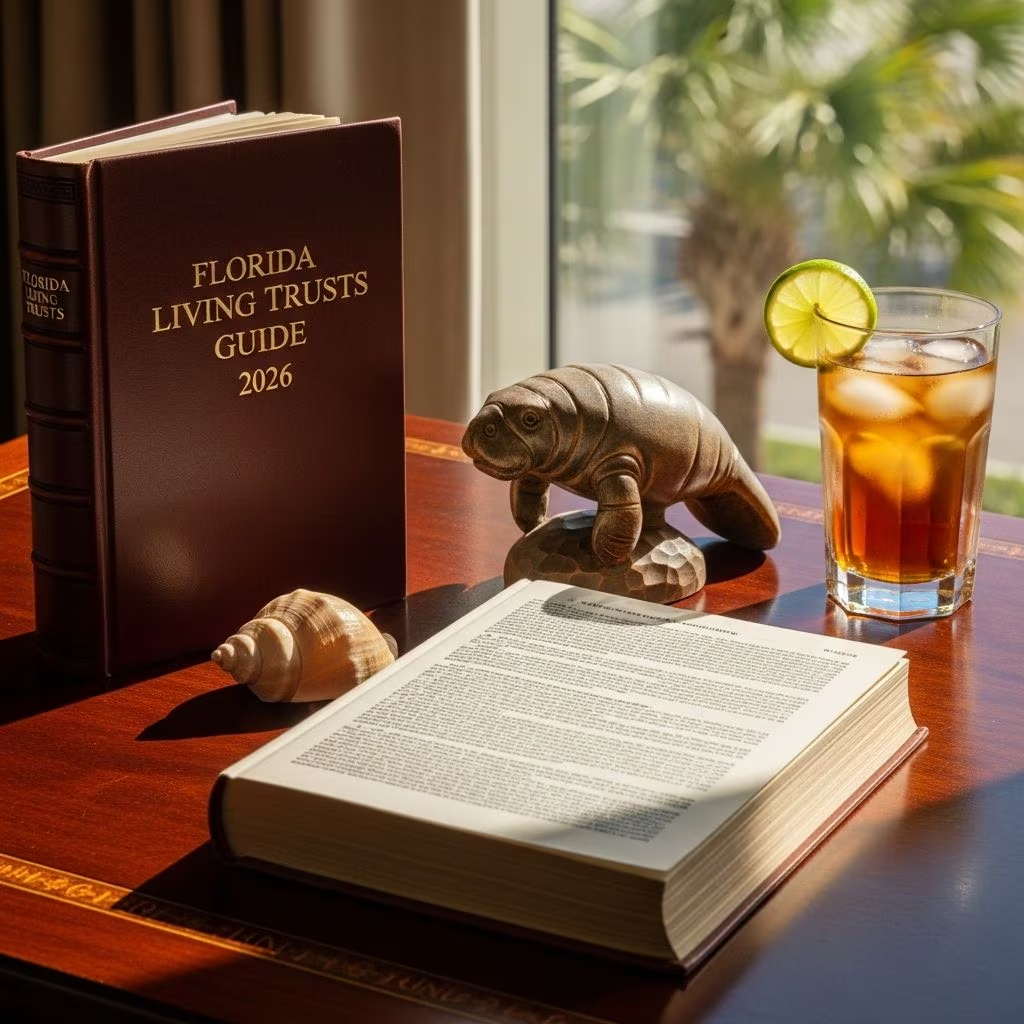
Establishing a living trust in Florida offers a powerful method to manage assets during your lifetime and distribute them efficiently after death, bypassing the often lengthy probate process. This approach maintains privacy and control, making it increasingly popular among residents in 2026.
Understanding Living Trusts and Their Core Benefits
A living trust, also known as a revocable trust, is a legal arrangement where you transfer ownership of your property to the trust, naming yourself as trustee to retain full control. Upon incapacity or death, a successor trustee steps in seamlessly. Unlike wills, these trusts do not require court validation, preserving confidentiality since details remain private rather than public record.
Key advantages include:
- Probate Avoidance: Florida probate can take 6-18 months and incur costs up to 5-7% of estate value; trusts distribute assets directly.
- Privacy Protection: No public filing needed, unlike probate which exposes assets and beneficiaries.
- Incapacity Management: Allows uninterrupted asset handling if you become unable to manage affairs.
- Flexibility: Revocable trusts permit amendments or revocation anytime while competent.
Recent trends show more Florida families opting for revocable living trusts over standalone wills, especially with young children or complex assets, to streamline inheritance.
Types of Living Trusts Available in Florida
Florida recognizes two primary living trust categories: revocable and irrevocable, each serving distinct purposes in 2026 estate strategies.
Revocable Living Trusts
The most common choice, revocable trusts let the creator (grantor) alter terms, add/remove assets, or dissolve the trust entirely. Assets retain homestead protections if titled properly, and revocable trusts qualify for spousal elective shares under Florida law.
Ideal for individuals seeking probate avoidance without relinquishing control, they use the grantor’s Social Security number, simplifying taxes.
Irrevocable Living Trusts
Once established, these cannot be changed, providing robust creditor protection and potential estate tax reductions. In 2026, with federal exemptions at $15 million per person, irrevocable options like Spousal Lifetime Access Trusts (SLATs) gain traction for locking in high exemptions and shielding growth from taxes.
SLATs allow one spouse to benefit the other while removing assets from the taxable estate, offering access without ownership.
| Feature | Revocable Trust | Irrevocable Trust |
|---|---|---|
| Amendability | Yes, fully flexible | No, permanent |
| Probate Avoidance | Yes | Yes |
| Asset Protection | Limited | Strong from creditors/taxes |
| Tax ID Needed | No (uses grantor’s SSN) | Yes (separate EIN) |
| Homestead Eligible | Yes | No |
Legal Requirements for Valid Florida Trusts
Florida Statute Chapter 736 mandates specific elements for enforceability. Trusts must be written documents—no oral agreements suffice—signed by the grantor of sound mind, in front of two witnesses who also sign. Notarization, though optional, bolsters validity.
Essential components include:
- Clear identification of grantor, trustee(s), and beneficiaries.
- Detailed asset management and distribution instructions.
- Successor trustee designation for continuity.
No state registration or filing is required, enhancing privacy, but real estate transfers demand county-recorded deeds.
Step-by-Step Creation Process
Building a living trust involves deliberate steps to ensure compliance and effectiveness.
- Assess Your Estate: Inventory assets like homes, bank accounts, investments, and vehicles. Determine goals: probate avoidance, incapacity planning, or tax minimization.
- Select Trustee and Successors: Often the grantor initially, with spouses or trusted adults as backups. Name alternates to avoid court intervention.
- Define Beneficiaries: Specify individuals, charities, or pets, including distribution timing (e.g., age-based or milestone-triggered).
- Draft the Document: Engage an attorney for customization, incorporating Florida-specific provisions like homestead handling.
- Sign and Witness: Execute with two disinterested witnesses; notarize for safety.
- Fund the Trust: Retitle assets (e.g., deeds, account names) to ‘Your Name, Trustee of the Your Name Revocable Trust’. Unfunded trusts offer no benefits.
- Maintain and Update: Review every 3-5 years or after life events like births, deaths, or moves.
Funding Your Trust: Critical Assets to Transfer
Funding is pivotal—merely signing the trust without transferring assets leaves it ineffective. Common items include real estate (via quitclaim deed), financial accounts, stocks, and personal property via assignment schedules.
Homestead property in revocable trusts retains protections and exemptions if properly titled. Community property trusts between spouses avoid tax reassessments on transfers.
Tip: Avoid funding irrevocable life insurance trusts (ILITs) with homestead to preserve benefits.
Trustee Responsibilities Under Florida Law
Trustees hold fiduciary duties, acting prudently and loyally. Florida law requires:
- Adhering strictly to trust terms.
- Managing investments prudently.
- Maintaining detailed records and providing accountings.
- Communicating transparently with beneficiaries.
2025 updates via Senate Bill 262 expanded ‘authorized trustees” powers, allowing decanting (transferring assets to new trusts) for better alignment, retroactively applicable. Limited-power trustees must preserve beneficiary interests.
Navigating 2025-2026 Florida Trust Law Updates
Effective June 20, 2025, Senate Bill 262 modernized trust administration:
- Decanting Flexibility: Authorized trustees can modify terms, create supplemental needs trusts, without becoming settlors.
- Claims Limitations: Successor trustees cannot pursue former trustees’ claims if beneficiaries are barred.
- Gift Satisfactions: Lifetime gifts offset trust inheritances if documented properly, valued at gift date or death.
- Homestead Transfers: Spousal community property trusts exempt from reassessment.
Portability remains key: Surviving spouses must file estate tax returns to claim unused exemptions, potentially doubling to $30 million.
Trusts vs. Wills: Strategic Comparison
While wills are simpler for small estates, trusts excel in privacy and speed. Pour-over wills complement trusts by capturing forgotten assets via probate.
| Aspect | Will | Living Trust |
|---|---|---|
| Probate | Required | Avoided |
| Privacy | Public | Private |
| Cost | High (fees, delays) | Upfront setup |
| Incapacity | Court guardianship | Successor trustee |
Common Pitfalls and Prevention Strategies
Avoid these errors:
- Unfunded Trusts: Regularly audit titling.
- Outdated Documents: Update post-2025 laws.
- Improper Witnesses: Use non-beneficiaries.
- Ignoring Taxes: Consult for irrevocable options amid exemption sunsets.
Frequently Asked Questions
Does Florida require trust registration?
No, trusts need no government filing, ensuring privacy, though deeds for property must be recorded.
Can I be trustee of my own living trust?
Yes, most grantors serve as initial trustees for control.
What happens to homestead in a trust?
Revocable trusts preserve protections; irrevocable do not.
Are notarizations mandatory?
No, but two witnesses are; notarization aids proof.
How do 2025 changes affect existing trusts?
Decanting powers apply retroactively for authorized trustees.
Next Steps for Your Florida Estate Plan
Consult a Florida-barred attorney to tailor a trust integrating wills, powers of attorney, and designations. In 2026, proactive planning amid tax shifts secures legacies.
References
- Registering a Trust in Florida: Requirements and Process 2026 — CHP White Law. 2026. https://chpwhitelaw.com/blog/trust-registering/
- What You Need to Know About Florida’s New Trust Rules — Henderson, Franklin, Starnes & Holt, P.A. 2025-06-20. https://www.henlaw.com/news-insights/what-you-need-to-know-about-floridas-new-trust-rules/
- New Year, New Peace of Mind: Florida Estate Planning in 2026 — Diamond Law. 2026. https://diamondlawflorida.com/florida-estate-planning-2026/
- The Complete Guide to Florida Probate – 2026 — Florida Probate Law Group. 2026. https://www.floridaprobatelawgroup.com/blog/the-complete-guide-to-florida-probate/
- 2026 Florida Estate Planning: Strategic Tips for Families — Sevilla Law. 2026. https://www.inaesq.com/blog-sevilla-law/florida-trust-estate-plans-for-2026
- The Revocable Trust in Florida — The Florida Bar. Accessed 2026. https://www.floridabar.org/public/consumer/pamphlet028/