
Florida Home Funerals: Legal Guide And Practical Steps
Navigate Florida's regulations for home funerals, death certificates, body transport, burial, and cremation options.
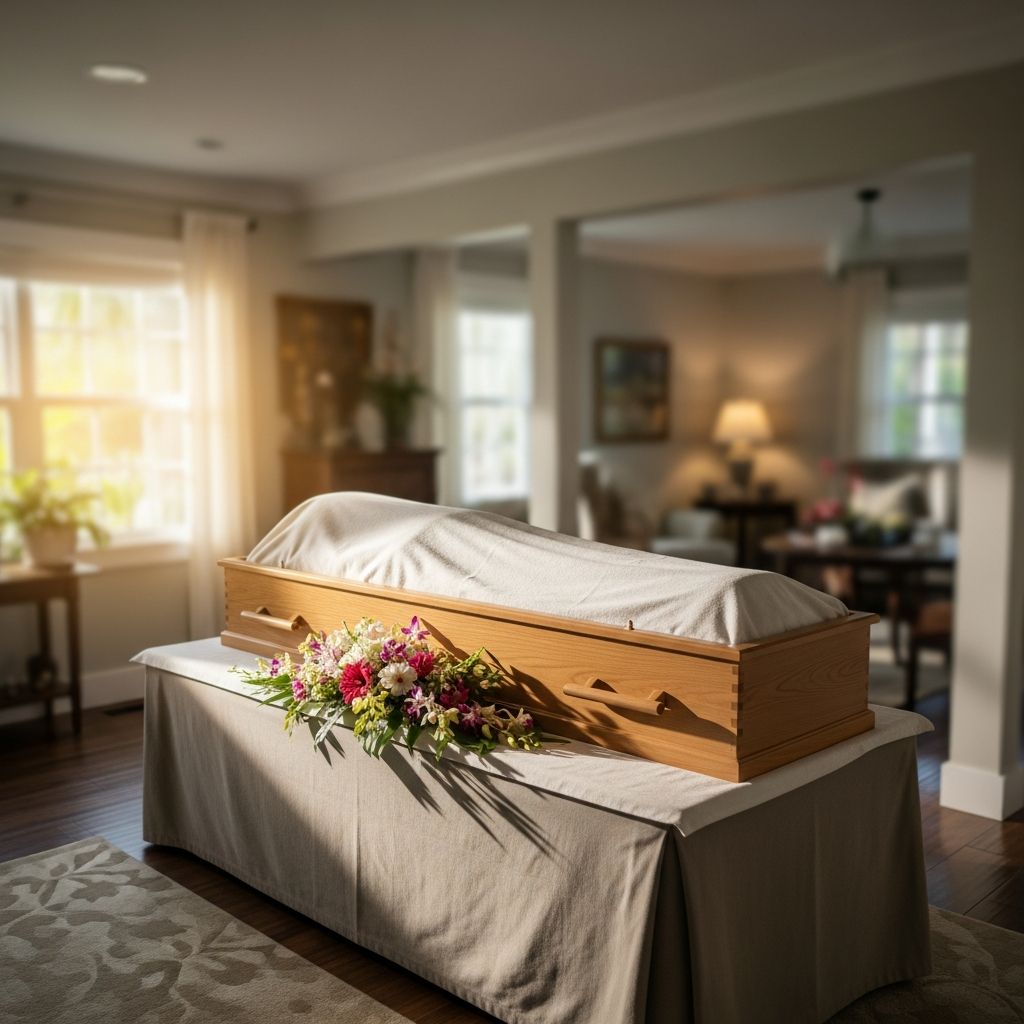
Conducting a home funeral in Florida allows families to honor their loved ones personally without mandatory funeral home involvement. State statutes permit keeping the body at home and managing arrangements directly, provided all legal steps are followed precisely.
Legal Foundations for Family-Led Arrangements
Florida statutes affirm the right to retain a deceased loved one’s body at home post-death across all states, including Florida. No law mandates hiring a licensed funeral director for final disposition planning or execution. Instead, responsible individuals can oversee the process.
The hierarchy of authority designates who qualifies as the legally authorized person for decisions on body disposition. This order prioritizes: surviving spouse, adult children, parents, siblings, or other kin, ensuring clear decision-making chains.
Families can preempt disputes by documenting preferences in advance. A designation of health care surrogate form explicitly grants post-death authority for final arrangements when stated clearly, streamlining transitions from medical to disposition decisions.
Handling Vital Records and Certifications
Central to home funerals is promptly securing and filing the death certificate. Florida requires submission to the local registrar within five days of death and prior to any final disposition, such as burial or cremation.
Without a funeral director, the person present at or after death assumes filing responsibility. The deceased’s physician or medical examiner must certify details like time, date, and cause of death within 72 hours, enabling timely completion.
Florida employs an electronic death registration system, though paper forms remain available via local vital statistics offices. Families need multiple certified copies for tasks like asset transfers or disposition authorizations, often obtainable same-day for a nominal fee.
- Key Steps: Obtain blank form, secure medical certification, complete demographics, file electronically or in-person.
- Timeline: Within 5 days; certified copies essential for permits.
- Contagious Cases: Consult physicians for additional protocols.
Securing Transit and Disposition Permits
Post-certification, the county chief deputy registrar issues a burial-transit permit, mandatory within five days and before disposition. This authorizes body movement for burial or cremation.
Transportation demands a leak-proof, odor-preventing container to comply with health standards during transit.
| Permit Type | Requirement | Timeline |
|---|---|---|
| Burial-Transit Permit | Issued after death certificate filing | Within 5 days, pre-disposition |
| Death Certificate | Medical certification + filing | 5 days max |
| Cremation Permit | Medical examiner review | Post-48 hour wait |
Preservation and Storage Guidelines
Florida imposes a 24-hour limit on holding or transporting a body without proper preservation, excluding refrigeration or embalming scenarios pending disposition.
Home storage requires respectful care, often using ice packs or cooling methods to maintain dignity during vigils, aligning with recent regulatory emphases on body handling.
Options for Home Burials on Private Property
No statewide prohibitions exist against home burials in Florida. Families may inter bodies on private land or create small family cemeteries under 2 acres without commercial sales of spaces or goods.
Local zoning ordinances supersede; verify county rules on setbacks, groundwater protection, and land use before proceeding. This preserves family lands as sacred sites across generations.
- Size Limit: Under 2 acres for non-commercial cemeteries.
- Zoning Check: Contact local planning departments.
- No Sales: Prohibits merchandise or space vending.
Cremation Processes Without Funeral Directors
Cremation remains viable sans funeral homes if crematories accept direct family deliveries. However, select facilities may insist on professional intermediaries; confirm policies upfront.
A medical examiner verifies cause of death pre-cremation. State law mandates a minimum 48-hour waiting period post-death before proceeding.[10]
Practical timelines extend to 7-10 days for full permitting, including cremation-specific authorizations from next-of-kin and officials.
Recent legislative proposals, like HB 1231 (2026), refine direct disposition rules, phasing out new licenses while grandfathering existing ones, and shortening cremated remains disposition waits.
Recent Regulatory Changes Impacting Home Funerals
Florida bolstered oversight post-2024 scandals. New laws effective July 1, 2024, criminalize remains mishandling as felonies and grant investigators emergency access to facilities.
Licensure now mandates degrees or experience for directors, embalmers, and cremationists. Proposed 2026 bills target solicitations, endorsements, and cemetery land rules.
These evolutions prioritize consumer protection while preserving family-led options.
Pre-Planning to Ensure Compliance
Advance directives clarify wishes, appointing surrogates and detailing disposition preferences. Preneed contracts fall outside certain insurance mandates per evolving statutes.
Document cremation or burial choices, avoiding future conflicts. Consult vital statistics offices for forms.
Frequently Asked Questions
Can I keep my loved one’s body at home in Florida?
Yes, Florida law permits retaining the body at home without time limits beyond standard preservation rules.
Do I need a funeral director for a home funeral?
No, families can manage all arrangements independently.
What is the waiting period for cremation?
Minimum 48 hours, often 7-10 days for permits.[10]
Is home burial legal?
Yes, on private property under 2 acres, subject to zoning.
How do I file a death certificate?
Secure medical certification, complete, and file within 5 days.
What container is required for transport?
Leak-proof and odor-preventing.
Practical Tips for Smooth Home Funerals
Gather documents early, network with accepting crematories, and engage community support. Respectful handling upholds dignity amid legal navigation.
References
- HB 1231: Final Disposition, Funeral, and Cemetery Services — The Florida Senate. 2026-01-15. https://www.flsenate.gov/Session/Bill/2026/1231
- Florida Home Funeral Laws — Nolo. 2024. https://www.nolo.com/legal-encyclopedia/florida-home-funeral-laws.html
- Florida Cremation Laws: What Families Should Know — Sunshine Cremation. 2025-11. https://sunshinecremation.com/2025/11/florida-cremation-laws-guide/
- Florida and Colorado Implement Stricter Laws to Regulate Funeral Homes — Tribute Technology. 2024. https://www.tributetech.com/florida-and-colorado-implement-stricter-laws-to-regulate-funeral-homes
- Funeral Home Body Mix-Up: Devastating Guide 2026 — Carey & Leisure. 2026. https://careyandleisure.com/funeral-home-body-mix-up/
- Florida Home Funeral Laws: 24-Hour Preservation Rules — Funeral.com. N/A. https://funeral.com/blogs/the-journal/florida-home-funeral-laws-24-hour-preservation-rules-and-what-storage-means-at-home
Similar Articles








Read full bio of medha deb


