
Fixing Errors in Your Tenant Background Check Report
Learn how to spot mistakes in tenant screening reports, dispute inaccuracies, and protect your housing opportunities under federal law.
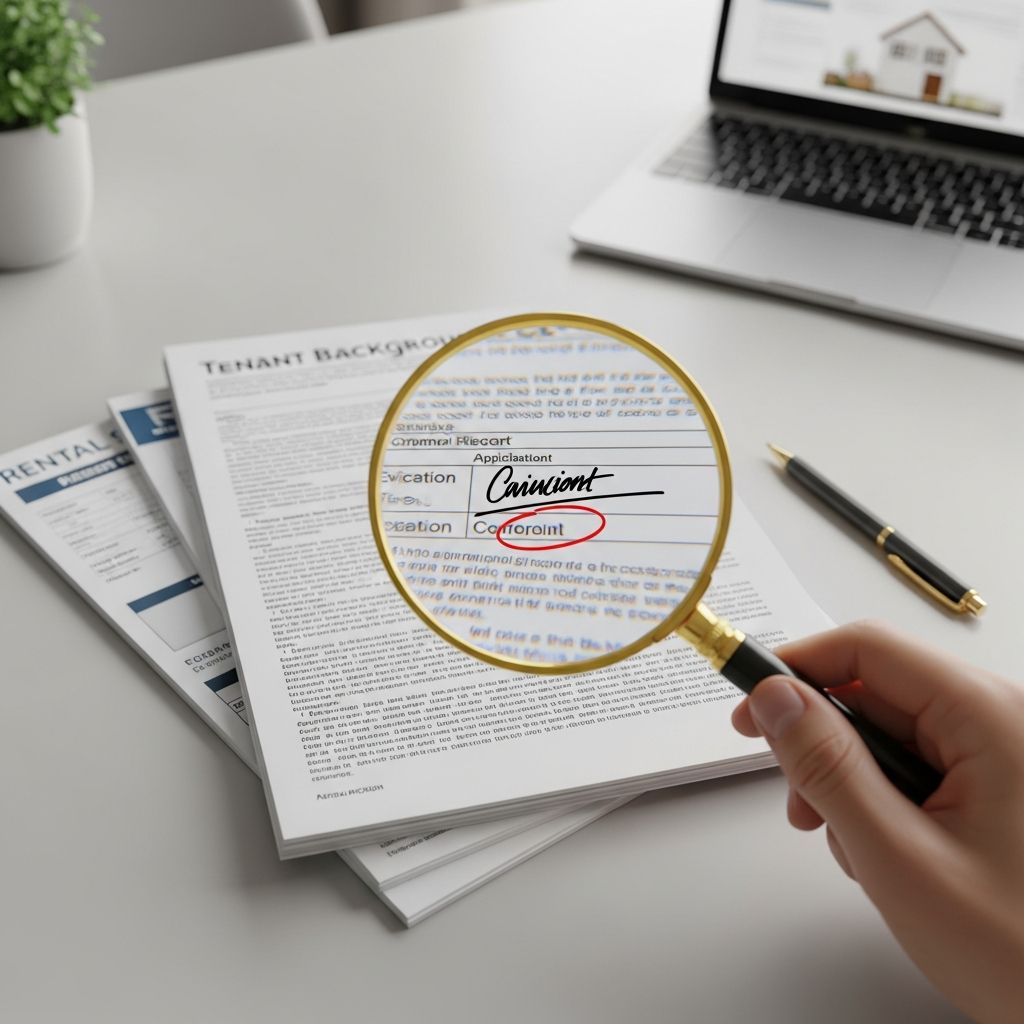
Tenant background checks play a major role in whether you are approved for housing. When those reports contain errors, the consequences can be serious: denied rental applications, higher deposits, or stricter lease terms. Federal law gives you important rights to see, challenge, and correct inaccurate information in these reports, and using those rights effectively can make the difference between losing and securing a home.
How Tenant Background Checks Work
Landlords often use tenant screening companies, also known as consumer reporting agencies (CRAs), to prepare background reports that may include:
- Credit information and payment history
- Eviction filings and rental court judgments
- Criminal records and arrest data
- Previous addresses and landlord references
These companies gather information from public records, credit bureaus, prior landlords, and other databases. Errors can occur at any point in that chain—for example, when a record is matched to the wrong person or a case that was dismissed is still reported as if you were found responsible.
Your Legal Rights Under Federal Law
Most tenant screening reports are regulated by the Fair Credit Reporting Act (FCRA), a federal law that sets rules for accuracy, access, and correction of consumer reports. Key rights include:
- Right to an adverse action notice: If a landlord denies your application, requires a co-signer, asks for a larger security deposit, or changes lease terms based on a tenant screening report, they must give you a notice that includes the name and contact information of the reporting company and explains your right to dispute errors.
- Right to a free copy of your report: After an adverse action tied to a tenant screening report, you can request a free copy from the company that prepared it.
- Right to dispute inaccurate or incomplete information: You can challenge items you believe are wrong, and the screening company must investigate.
- Right to a timely investigation: In most cases, the company has 30 days to investigate your dispute (45 days in limited circumstances).
- Right to corrected reports: If the investigation confirms an error, the company must fix the information and send updated reports to recent users of the report in many contexts.
Common Errors Found in Tenant Background Reports
Mistakes in background reports are more common than many renters realize. Typical problems include:
- Mixed files: Someone else’s criminal record, eviction, or debt appears on your report because you share a similar name, date of birth, or address.
- Outdated information: Evictions or negative records that are too old to report under the FCRA’s time limits, such as many civil judgments older than seven years in some contexts.
- Incomplete court records: Reports listing an eviction filing without showing that the case was dismissed, settled, or decided in your favor.
- Incorrect personal details: Wrong addresses, misspelled names, or incorrect Social Security number digits that can lead to further mismatches.
- Duplicate entries: The same negative item reported multiple times, making your history appear worse than it is.
Step 1: Get and Review Your Tenant Screening Report
If your rental application is denied or the landlord takes another negative action based on background screening, you should:
- Locate the adverse action notice from the landlord (paper or electronic).
- Find the name, address, and phone number of the tenant screening company listed in the notice.
- Request a free copy of the report, following the company’s instructions (online form, phone, or mail).
Once you receive the report, review it slowly and carefully. Look for:
- Records that clearly are not yours (wrong middle initial, different age, unfamiliar locations)
- Eviction cases you never had or that were dismissed
- Criminal charges you were acquitted of or that were expunged
- Debts or collections already paid or settled
- Spelling or identification errors that might cause confusion
Make a written list of each item you believe is wrong, noting page numbers, dates, and how it is labeled on the report. This list will guide your dispute.
Step 2: Gather Evidence to Support Your Dispute
Strong documentation makes it easier for the tenant screening company to correct the record. Depending on the error, useful evidence can include:
- Government-issued ID (showing your correct name and date of birth)
- Social Security card or official tax documents (to confirm identifiers)
- Court records showing a case was dismissed, vacated, or decided in your favor
- Proof of rent payments, such as bank statements, canceled checks, or receipts
- Copy of your lease or rental agreement to clarify terms or dates
- Letters, emails, or text messages from former landlords that support your account
Keep copies of everything you plan to send, and organize them so they clearly relate to the specific items you are disputing.
Step 3: File a Formal Dispute with the Screening Company
The most direct way to fix a tenant background error is to challenge it with the company that prepared the report. The FCRA requires that company to investigate your dispute.
Common ways to submit a dispute include:
- Online dispute forms on the company’s website
- Mailing a written dispute letter with copies of your evidence
- Calling to start the process and then following up in writing
Your dispute should:
- Clearly identify you (full name, date of birth, last four digits of SSN, current address)
- State that you are disputing information in a tenant screening report used for housing
- List each disputed item separately and explain why it is wrong or incomplete
- Request a reinvestigation and correction or removal of the inaccurate information
- Include copies (not originals) of documents that support your claims
If you mail your dispute, consider sending it by a trackable method and keeping proof of delivery. This helps you show when the company received your request, which matters for the 30-day investigation deadline.
Step 4: Understand the Investigation Timeline and Outcomes
After you submit your dispute, the tenant screening company must:
- Begin a reasonable investigation into each item you challenged
- Contact the sources of the information, such as courts, landlords, or data providers
- Complete the investigation in most cases within 30 days (up to 45 days in some situations)
- Send you written results, including a free updated report if changes are made
Possible outcomes include:
| Outcome | What It Means | What Should Happen Next |
|---|---|---|
| Error confirmed | The company agrees the information was inaccurate or incomplete. | They must correct or delete the item and provide you an updated report; in many contexts they must also notify recent recipients of the report. |
| No change | The company claims the information was verified as reported. | You can add a brief consumer statement to your file and consider escalating to regulators or legal help. |
| Partial correction | Some details are fixed, but other aspects remain disputed. | Review the new report carefully and decide whether to file another dispute or seek outside assistance. |
Step 5: Update the Landlord and Protect Your Rental Prospects
Fixing your report is only part of the goal—you also want landlords to know the information has been corrected. Consider these steps:
- Ask the tenant screening company to send a corrected report directly to the landlord who used the inaccurate one, once the error is fixed.
- Provide the landlord with copies of relevant documentation, especially if you are still being considered for a rental unit.
- If the original unit is no longer available, ask whether the landlord has other properties and whether they will use the corrected report instead of ordering a new one.
Being proactive and transparent with landlords can help reduce the harm caused by an inaccurate report, especially when you can show that the problem was entirely the result of a screening error.
Step 6: Escalate If Your Dispute Is Ignored or Mishandled
If the tenant screening company fails to investigate, misses the deadline, or refuses to correct obvious errors, you do not have to stop there. You can:
- File a complaint with the Consumer Financial Protection Bureau (CFPB), which accepts complaints about tenant screening and credit reporting companies.
- Submit complaints to your state attorney general or state consumer protection office, which may have additional housing or background check rules.
- Consult a private attorney experienced in FCRA or tenant screening issues, especially if you lost housing or paid extra costs because of the error.
The FCRA allows consumers to seek damages in court when reporting agencies or users of reports fail to follow the law, including failing to conduct reasonable investigations or refusing to correct known inaccuracies.
Practical Tips to Reduce Future Screening Problems
You cannot eliminate every risk of error, but you can lower the chances that background problems will surprise you during a rental application.
- Check your credit reports regularly: Order free annual credit reports from the nationwide bureaus and dispute inaccuracies early, before you apply for housing.
- Keep court records and payment proof: If you have ever faced eviction, been sued by a landlord, or resolved significant rental debt, keep copies of judgments, dismissals, and receipts.
- Maintain updated personal information: Use your full legal name on applications and make sure key identifiers (date of birth, address) are consistent to reduce mixed-file problems.
- Ask landlords which company they use: When possible, learn in advance which tenant screening company the landlord relies on. If you have had disputes with that company before, keep all prior correspondence.
Frequently Asked Questions (FAQs)
Q: How long does a tenant screening company have to fix an error?
Under the FCRA, most disputes must be investigated within about 30 days of receiving your dispute, though certain cases can take up to 45 days.
Q: Do I have to pay to get the report after my rental application is denied?
No. If a landlord takes an adverse action against you based on a tenant screening report, you are entitled to a free copy of that report from the company that prepared it, as long as you request it within the time limit stated in the adverse action notice.
Q: Can an old eviction stay on my tenant background report forever?
Many negative items, including certain civil judgments and eviction records, are subject to time limits on how long they may be reported under the FCRA, often around seven years, though details can vary by type of record and by law.
Q: What if the landlord still refuses to rent to me after the report is corrected?
Landlords generally decide whom to rent to, as long as they follow fair housing and other laws. However, once your report is corrected, you can ask the landlord to reconsider, provide proof of the changes, and, if you believe you were treated unfairly for a prohibited reason, contact a fair housing agency or legal aid for additional guidance.
Q: Should I also contact the courthouse or landlord that supplied the wrong information?
In some cases, yes. If a court record is inaccurate or a landlord mistakenly reported nonpayment, correcting the information at its source can prevent the same error from appearing again in future background checks.
References
- What should I do if my rental application is denied because of a tenant screening report? — Consumer Financial Protection Bureau. 2021-05-06. https://www.consumerfinance.gov/ask-cfpb/what-should-i-do-if-my-rental-application-is-denied-because-of-a-tenant-screening-report-en-2105/
- Tenant Rights During Rental Background Checks — SmartMove (TransUnion). 2022-03-15. https://www.mysmartmove.com/blog/tenant-rights-during-rental-background-checks
- How to Dispute Inaccurate Tenant Screening Reports — FCRA Attorneys. 2023-07-10. https://fcraattorneys.com/how-to-dispute-inaccurate-tenant-screening-reports/
- How to Dispute an Eviction on Your Tenant Screening Report — LeaseRunner. 2024-01-18. https://www.leaserunner.com/blog/how-to-dispute-eviction-on-tenant-screening-report
- What Can You Do if Your Tenant Background Report Is Wrong? — The Markup. 2020-05-28. https://www.themarkup.org/the-breakdown/2020/05/28/what-can-you-do-if-your-tenant-background-report-is-wrong
- How To Dispute A Failed Background Check — Consumer Attorneys. 2023-03-02. https://consumerattorneys.com/article/how-to-dispute-a-failed-background-check
Similar Articles








Read full bio of Sneha Tete


