
The Long Arc of Justice: Defending Civil Liberties
Exploring transformative civil rights advocacy over the last fifty years.
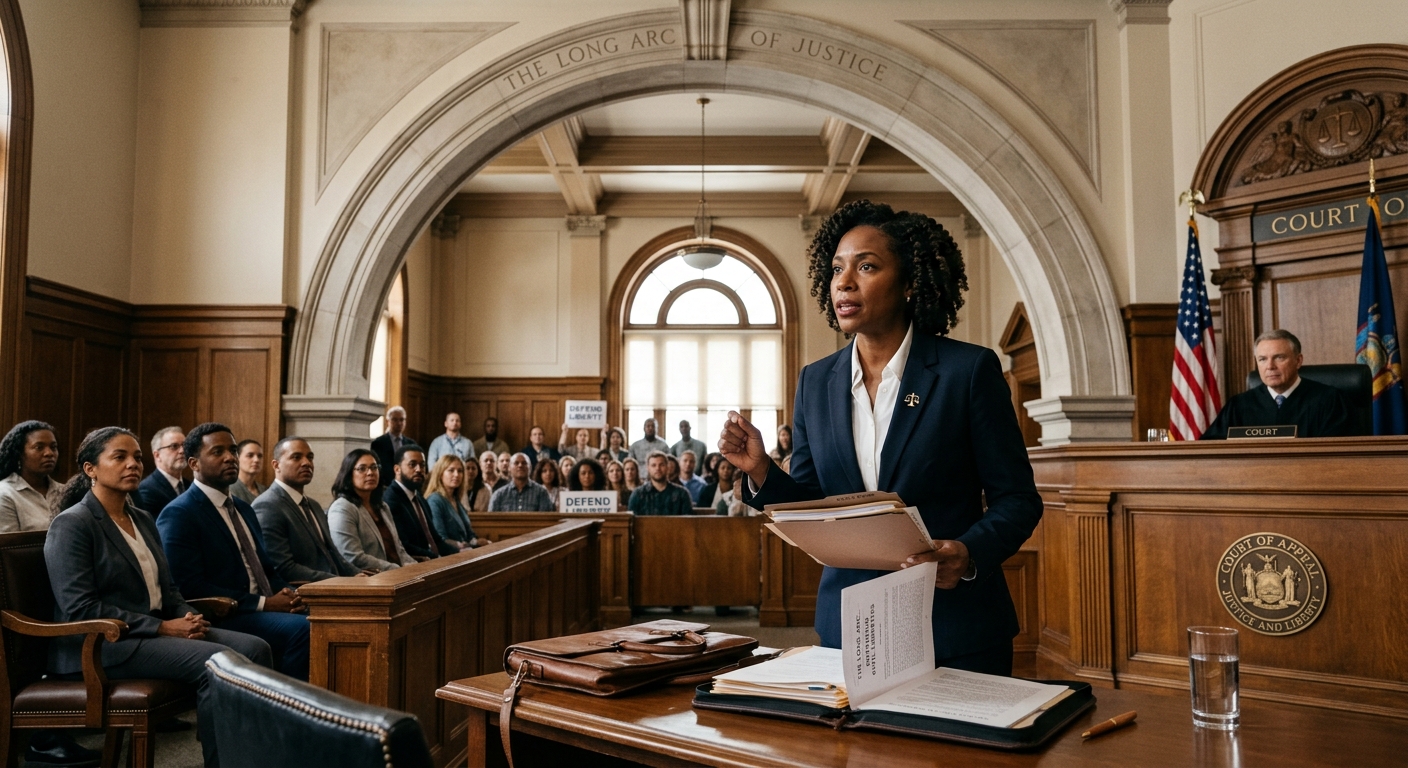
The Evolution of American Civil Rights Advocacy
The pursuit of justice and equality in the United States is not a static achievement but a continuous, rigorous defense of foundational constitutional principles. Over the past half-century, civil rights advocacy has fundamentally transformed the American legal and social landscape. While the monumental legislative victories of the 1960s—such as the Civil Rights Act of 1964 and the Voting Rights Act of 1965—laid the critical statutory groundwork for equality, the decades that followed required relentless, strategic litigation to enforce those sweeping promises. From the sprawling, marble courtrooms of the United States Supreme Court to grassroots organizing in deeply marginalized local communities, the defense of liberty has required legal advocates to actively challenge deeply entrenched, systemic inequalities that persisted long after discriminatory laws were officially taken off the books.
The post-civil rights era was defined by a necessary transition from securing basic legal recognition to dismantling the institutional mechanisms that subtly but powerfully perpetuated discrimination. Legal advocates, scholars, and civil liberties organizations dedicated themselves to an increasingly expansive vision of justice. They targeted complex issues that spanned a wide array of human experiences, from the devastating practices of the child welfare system and the inhumane conditions of the carceral state, to the protection of controversial free speech and the fight for genuine educational equity. The ongoing struggle for civil liberties over the last fifty years has proven unequivocally that liberty is not a self-executing concept; it requires vigilant, highly skilled defenders who are willing to litigate complex cases, confront hostile government actions, and champion the fundamental human rights of the most vulnerable and historically silenced populations in the United States.
Through strategic impact litigation and appellate advocacy, civil rights attorneys have managed to slowly reshape how the United States Constitution is interpreted and applied to everyday life. These efforts often required decades of patience, as single legal victories were iteratively built upon to establish comprehensive protections. The story of modern civil rights advocacy is, therefore, not just a historical recounting of past victories, but a dynamic, ongoing blueprint for how a democratic society must continuously course-correct to protect its citizens from the overreach of state power.
Safeguarding Indigenous Sovereignty and Family Integrity
One of the most profound, yet historically underrepresented, areas of civil rights advocacy over the last five decades has been the intense legal fight for Native American sovereignty and family integrity. For generations, the United States government, working in tandem with state agencies and private religious institutions, engaged in assimilationist practices that systematically devastated Indigenous communities. Throughout the late nineteenth century and well into the twentieth century, Native American children were routinely and forcibly removed from their families. They were often placed into abusive federal boarding schools or adopted by non-Native families, with the explicit goal of erasing their cultural identity.
By the 1970s, statistical evidence revealed a human rights crisis of staggering proportions within the United States borders. Investigations showed that Native American children were roughly six times more likely to be removed from their homes and placed in state foster care systems than non-Native children, despite Indigenous people representing only a tiny fraction of the overall national population. State social workers, often ignorant of or openly hostile to traditional Indigenous child-rearing practices, frequently deemed Native homes “unfit” based on biased, Eurocentric socioeconomic standards. In response to this existential threat to Native cultures, sustained grassroots advocacy and extensive congressional testimony ultimately led to the passage of the Indian Child Welfare Act (ICWA) in 1978.
ICWA was specifically designed to establish strict, minimum federal standards for the removal of Indigenous children and to mandate placement preferences that keep children connected to their extended families or tribal communities. It was a monumental civil rights victory that formally recognized the inherent political sovereignty of tribal nations and the crucial role of cultural continuity in determining a child’s best interests. However, the passage of the law was merely the beginning of the battle. For over forty-five years, legal advocates have continuously battled in state and federal appellate courts to ensure strict compliance with ICWA’s provisions. Opponents have frequently challenged the constitutionality of the act, attempting to undermine tribal jurisdiction by framing the protections as race-based discrimination. Yet, civil rights attorneys have continuously defended the statute, successfully arguing that the unique political classification of tribal citizenship justifies these distinct, necessary legal protections. Defending ICWA has remained a foundational cornerstone of broader racial justice work, ensuring that the dark legacy of forced assimilation is permanently dismantled.
The First Amendment: Unwavering Protection for Political Expression
At the very heart of American civil liberties is the First Amendment, which unequivocally guarantees the freedom of speech, assembly, and petition. Over the last fifty years, the defense of these indispensable rights has frequently required civil rights attorneys to take on highly controversial and deeply unpopular cases. The true, enduring test of the First Amendment is not whether a society protects speech that the majority agrees with, but rather whether it provides an impenetrable shield for the expression of dissidents, radical activists, and even socially ostracized fringe groups. During the intense social upheavals of the 1970s and beyond, local and federal governments frequently attempted to use the mechanisms of the criminal justice system to intimidate and silence political activists.
A landmark example of this legal and ideological struggle can be seen in cases involving prominent civil rights activists and Indigenous leaders. In the highly charged political atmosphere surrounding Indigenous protests, state authorities sometimes sought to leverage pre-trial bail conditions to completely suppress political demonstrations. In pivotal federal cases, such as the litigation involving the American Indian Movement, the courts were forced to grapple with a critical constitutional question: Could an activist have their bail revoked and be sent to prison merely for participating in a peaceful, public protest? Civil liberties advocates argued fiercely that fundamental constitutional protections do not suddenly evaporate because an individual is awaiting trial.
Furthermore, attorneys successfully established that the state absolutely cannot use restrictive bail conditions as a backdoor method to retaliate against someone for engaging in protected First Amendment activities. Rulings in favor of protecting these constitutional rights reinforced a crucial, overarching legal doctrine: the government cannot circumvent the United States Constitution to silence political dissidents through administrative or procedural loopholes. This robust principle has been applied across a wide spectrum of ideological battles over the decades. Civil rights organizations have notoriously defended the free speech rights of all groups on the underlying premise that allowing the government to censor any single group establishes a dangerous, authoritarian precedent that will inevitably be weaponized against marginalized communities pushing for social change.
Landmark Civil Rights Arenas and Legal Doctrines
| Civil Rights Arena | Core Legal Doctrine / Protection | Primary Impact on Marginalized Groups |
|---|---|---|
| Indigenous Family Sovereignty | Federal Minimum Standards for Custody (ICWA) | Prevents the unwarranted removal of Native American children by biased state agencies, heavily recognizing and enforcing tribal jurisdiction. |
| Prisoners’ Due Process | Protected Liberty Interests in Parole | Ensures incarcerated individuals receive specific reasons for parole denial, moving past the arbitrary “privilege” doctrine. |
| First Amendment Protections | Prohibition of Retaliatory Bail Revocation | Protects political activists and protesters from having their pretrial freedom arbitrarily revoked merely for exercising free speech. |
| Educational Equity | State Constitutional Guarantee of Free Education | Strikes down hidden public school fees that disproportionately bar low-income and minority students from equal academic participation. |
Redefining Prisoners’ Rights and Procedural Due Process
Perhaps no area of civil rights law has seen as much turbulent, contested evolution as the rights of incarcerated individuals. The post-civil rights era directly coincided with the tragic advent of mass incarceration in the United States, an explosion in the prison population heavily fueled by punitive “tough on crime” legislative policies and the War on Drugs. These initiatives disproportionately targeted, arrested, and incarcerated individuals from Black, Latino, and impoverished communities. For a long time in American jurisprudence, the prevailing legal doctrine was the “hands-off” approach, which essentially dictated that prisoners forfeited nearly all of their constitutional rights the moment they stepped through the prison gates. However, sustained, courageous litigation over the last five decades has slowly and methodically chipped away at this draconian legal viewpoint.
A major, hard-fought battleground in the broader prisoners’ rights movement has been the administration of state parole and the vital concept of procedural due process. Historically, parole was viewed strictly as a “privilege” or a benevolent act of grace by the executive branch of the state. This meant that parole boards wielded virtually unchecked power; they could deny a prisoner’s release arbitrarily, based on personal bias, and without providing any written or verbal explanation. This oppressive standard began to change dramatically as progressive legal advocates argued that statutory frameworks creating an explicit expectation of release actually give rise to a protected “liberty interest” under the Fourteenth Amendment.
In pivotal litigation that reached the highest courts in the 1980s, advocates achieved significant, precedent-setting victories. The Supreme Court eventually ruled in cases assessing state statutes that if a law dictates a parole board “shall” release a prisoner under certain, specific conditions, it creates a constitutionally protected liberty interest. Consequently, the Due Process Clause demands that prisoners who are denied parole must be provided with the concrete reasons for their denial, allowing them to correct false information and understand the board’s rationale. This monumental shift, along with other critical lawsuits addressing the horrific conditions of solitary confinement, deliberate medical neglect, and the severe lack of mental health care behind bars, established the baseline standard that the United States Constitution absolutely does not stop at the prison walls. While the American carceral system remains fraught with deep racial disparities and systemic abuses, the hard-won establishment of procedural safeguards has provided vital legal mechanisms for holding state power accountable and asserting the fundamental, undeniable humanity of all incarcerated people.
Educational Equity and the Promise of a Free Public Education
Education has long been recognized by scholars and jurists alike as the primary engine of economic opportunity and civic participation in the United States. Yet, the grand democratic promise of equal educational opportunity has been routinely and severely undermined by systemic underfunding, residential segregation, and highly discriminatory local policies. Civil rights advocacy in the realm of public education has required moving significantly beyond the foundational desegregation mandates of the 1950s to directly tackle the insidious, often financial ways that inequality is maintained in modern school districts.
One critical legal front in this ongoing battle has been the fight against the imposition of mandatory school fees that effectively price low-income students out of equal educational participation. While almost all state constitutions uniquely guarantee some specific form of a “free public education,” local school districts facing severe budget shortfalls have historically attempted to pass operational costs directly onto families. Districts have done this by unlawfully charging students for textbooks, basic transportation, essential course materials, or extracurricular participation. Dedicated legal advocates have brought numerous, highly successful suits under various state constitutions to permanently strike down these exclusionary practices.
By arguing persuasively that a public education cannot be considered truly “free” if mandatory, hidden fees create insurmountable financial barriers for marginalized families, civil rights lawyers have secured vital legal precedents. These classroom-focused victories established the legal norm that educational equity inherently means removing any financial obstacles that disproportionately harm communities of color and low-income populations. Such strategic litigation has paved the way for even broader, systemic challenges to the deeply inequitable property-tax funding formulas that continue to plague public school systems across the country, continuously reaffirming that equal access to a high-quality education is a fundamental civil right, not a private consumer good available only to those who can readily afford it.
A Changing Landscape: The Future of American Liberty
As we look forward beyond the legal victories of the last fifty years, the defense of civil liberties clearly faces a vast new frontier of unprecedented challenges. The underlying architecture of discrimination has evolved drastically, moving from overt, codified legal segregation to much more covert, technologically driven systemic mechanisms. Today, a new generation of civil rights advocates is fighting vigorously against algorithmic bias within the criminal justice system, where artificial intelligence and digital risk-assessment tools frequently replicate, obscure, and amplify historical racial disparities in sentencing and policing. Furthermore, the modern fight for fundamental bodily autonomy, universal voting rights, and the equal rights of LGBTQ+ individuals face renewed, highly coordinated legislative attacks across numerous jurisdictions.
The crucial work of defending liberty is, by its very nature, incredibly forward-looking. It requires legal advocates to anticipate exactly how emerging, unregulated technologies, rapidly shifting political climates, and entirely new legislative frameworks will impact the most vulnerable populations in society. The enduring legacy of the dedicated attorneys who spent decades litigating fiercely for Native American rights, prisoners’ due process, free speech, and educational equity serves as a vital, strategic blueprint for contemporary advocates. The fundamental strategy remains deeply rooted in a multifaceted, robust approach: seamlessly combining strategic appellate impact litigation with grassroots community organizing, localized legislative advocacy, and widespread public education. The remarkable, hard-won progress of the last half-century demonstrates conclusively that while the overarching arc of the moral universe may indeed be long, it does not magically bend toward justice on its own—it is bent forcefully and continuously by the relentless pressure of dedicated advocates demanding that the nation live up to its highest constitutional ideals.
Frequently Asked Questions (FAQs)
- What is the Indian Child Welfare Act (ICWA)?
Enacted by Congress in 1978, the Indian Child Welfare Act is a critical federal law that explicitly governs state jurisdiction over the removal of Native American children from their families in custody, foster care, and adoption proceedings. It grants tribal governments exclusive jurisdiction over children who reside on reservations and provides strict minimum federal standards to ensure Indigenous children remain deeply connected to their families, heritage, and tribal culture.
- How does the First Amendment protect unpopular or marginalized groups?
The First Amendment guarantees the freedom of speech and assembly for all individuals, completely regardless of how unpopular, controversial, or outside the mainstream their political views may be. Civil rights advocates frequently defend the rights of marginalized activists to ensure that the government never gains the legal precedent or authority to selectively censor political expression based on its content.
- What constitutes a “liberty interest” in the specific context of prisoners’ rights?
A “liberty interest” refers directly to an individual’s fundamental constitutional right to freedom from arbitrary, unjustified government restraint, strictly protected by the Due Process Clause of the Fourteenth Amendment. In historic appellate cases, federal courts have held that certain mandatory state parole statutes create a distinct legal expectation of release, which legally requires the state to provide basic procedural protections, such as formally explaining to the inmate exactly why their parole was denied.
- Why is educational equity considered a core civil rights issue?
Educational equity is considered central to civil rights because equal access to a high-quality education directly and profoundly impacts long-term economic mobility, active civic participation, and overall societal equality. Systemic policies that disproportionately underfund public schools in marginalized communities, or impose hidden financial fees on low-income families, act as major discriminatory barriers that perpetuate widespread racial and economic disparities across generations.
References
- 40 Years of ICWA — Library of Congress. 2018-11-13. https://blogs.loc.gov/law/2018/11/40-years-of-icwa/
- Board of Pardons v. Allen, 482 U.S. 369 (1987) — Justia U.S. Supreme Court Center. 1987-06-09. https://supreme.justia.com/cases/federal/us/482/369/
- United States ex rel. Means v. Solem, 646 F.2d 322 (8th Cir. 1980) — Justia U.S. Court of Appeals. 1980-12-30. https://law.justia.com/cases/federal/appellate-courts/F2/646/322/295326/
- Indian Child Welfare Act (ICWA) — Child Welfare Information Gateway (U.S. Department of Health & Human Services). 2023-01-01. https://www.childwelfare.gov/topics/systemwide/diverse-populations/americanindian/icwa/
- 150 Years of the Department of Justice — U.S. Department of Justice. 2025-03-14. https://www.justice.gov/about/history
Similar Articles








Read full bio of Sneha Tete


