
Firearm Purchase Guide: Legal Requirements at Pawn Shops
Navigate federal and state firearm purchase regulations when buying from licensed pawn dealers.
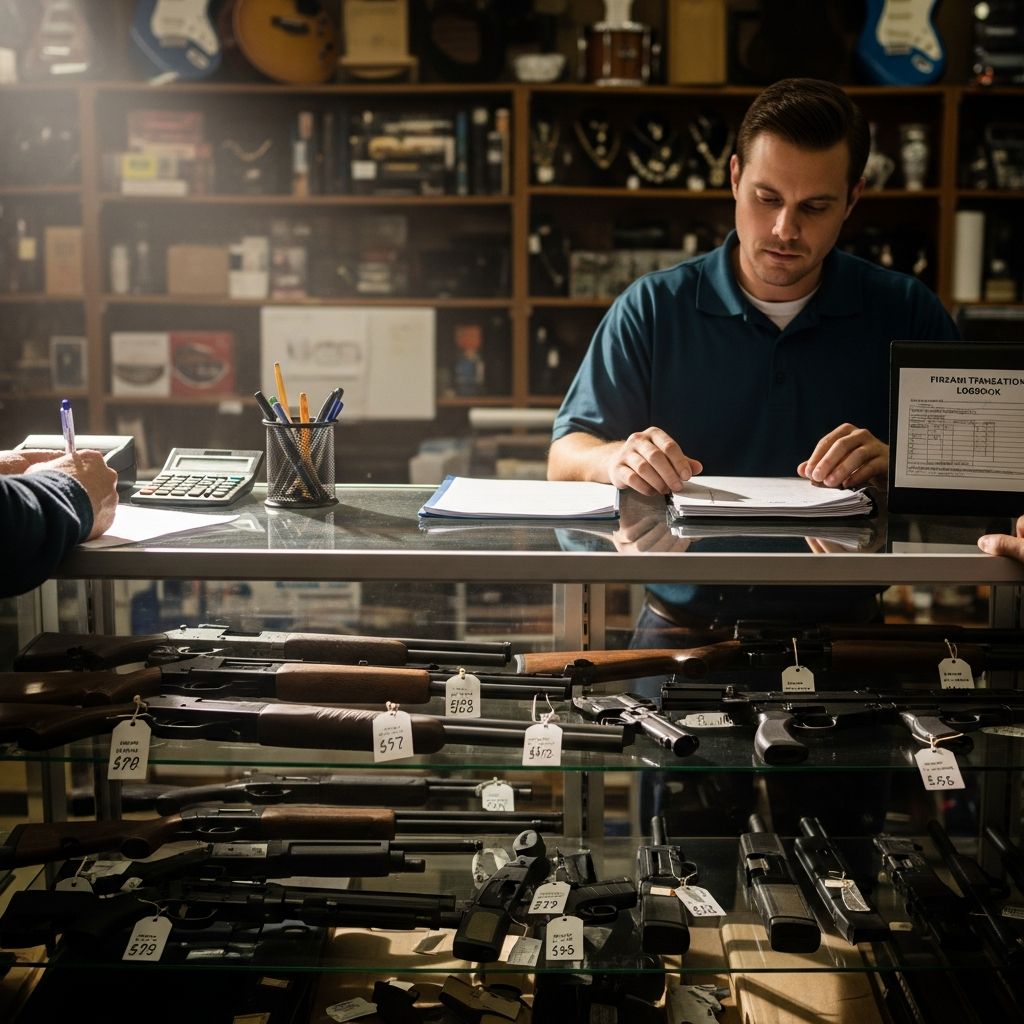
Understanding Firearm Acquisitions Through Licensed Pawn Dealers
Purchasing a firearm through a pawn shop differs significantly from private sales, primarily because pawn shops operate as federally licensed dealers bound by comprehensive regulatory frameworks. Before entering a pawn shop to acquire a firearm, potential buyers must understand the layered system of federal, state, and local laws that govern these transactions. This complexity exists to ensure public safety while protecting the rights of lawful gun owners. Unlike casual private transactions between individuals, purchasing from a licensed dealer involves extensive verification procedures, documentation requirements, and background scrutiny that protect both the buyer and the broader community.
Core Eligibility Requirements for Firearm Ownership
Age restrictions form the foundational eligibility criterion for firearm purchases. The federal framework establishes distinct age thresholds based on firearm classification. To purchase long guns such as rifles or shotguns, an individual must be at least 18 years old. Conversely, handgun purchases require buyers to attain 21 years of age. These age requirements exist at the federal level and apply uniformly across all states, though individual states may impose additional restrictions beyond these baseline requirements.
Beyond age, prospective buyers must verify they do not fall within prohibited categories established by federal law. Individuals with prior felony convictions face permanent disqualification from firearm ownership. Similarly, those subject to court-ordered domestic violence restraining orders cannot legally possess firearms. Mental health adjudications can also trigger prohibitions, particularly when individuals have been formally adjudicated as mentally ill or committed to psychiatric institutions. Immigration status matters as well—non-citizens and individuals without lawful permanent residency status cannot purchase firearms through licensed dealers.
The Mandatory Background Investigation Process
The National Instant Criminal Background Check System (NICS) represents the cornerstone of modern firearm transaction regulation. When you initiate a firearm purchase at any licensed pawn shop, the dealer must submit your information to NICS before the transaction can conclude. This federal database cross-references multiple government repositories to identify individuals prohibited from firearm possession.
The background check encompasses several critical data sources. Federal databases containing felony convictions are examined to identify individuals with serious criminal histories. State repositories supplement this information with additional conviction records and protective orders. Mental health adjudication records provide crucial information about individuals who may pose danger to themselves or others. Immigration and naturalization records verify citizenship or legal resident status. The system also identifies individuals subject to domestic violence protective orders or who have been dishonorably discharged from military service.
Buyers should anticipate that the NICS check typically completes within minutes, though certain circumstances can extend the process. Complex cases involving name matches or incomplete information may trigger additional investigation periods. Federal law permits dealers to hold firearms for up to three business days while background verification continues. In some situations, the results may come back as “delayed,” requiring continued patience. After three business days without a definitive response, some states allow dealers to release the firearm, while others maintain stricter requirements regardless of delays.
Essential Documentation Requirements
Completing the Firearm Transaction Record, formally known as ATF Form 4473, constitutes a non-negotiable requirement for any firearms purchase through a licensed dealer. This federal form captures critical information about both the buyer and the firearm being transferred. The form requires detailed personal identification information, residential address, place of birth, and physical descriptors. Importantly, the form includes specific questions regarding criminal history, mental health status, drug convictions, and restraining orders.
When completing Form 4473, absolute accuracy is essential. Providing false information on this federal document constitutes a serious crime potentially resulting in imprisonment and substantial fines. Buyers must truthfully answer all questions, even if they believe certain responses might impact the transaction. The form serves as the permanent record of the transaction and may be inspected by federal authorities during compliance audits of the pawn shop.
Valid government-issued photo identification is mandatory. Acceptable forms include driver’s licenses, state identification cards, passports, or military identification documents. The identification must clearly display the bearer’s photograph, signature, and date of birth. Expired identification may be rejected by dealers adhering to strict compliance protocols. Additionally, the address on the identification should match the address provided on Form 4473, though dealers have discretion to accept identification with different addresses if the buyer provides supporting documentation of a recent move.
State-Specific Variations in Firearm Regulations
While federal law establishes baseline requirements, individual states implement additional regulations that can significantly impact the purchasing process. Some states impose mandatory waiting periods between purchase and firearm delivery, ranging from 3 to 14 days depending on the jurisdiction. These waiting periods reflect policy judgments about reducing impulsive firearm misuse, though certain states exempt specific categories of purchasers such as licensed security professionals or current law enforcement personnel.
Permitting requirements vary substantially across states. Several jurisdictions mandate that buyers obtain a permit to purchase before visiting licensed dealers. Other states require permits to carry firearms, which indirectly regulate purchasers. Still others maintain “constitutional carry” frameworks allowing unrestricted purchases without separate permits. Some states implement universal background check requirements even for private transactions, while others restrict background checks to licensed dealer sales exclusively.
State-specific firearms classifications can affect purchase eligibility. Certain jurisdictions restrict or prohibit categories of firearms including semi-automatic rifles, shotguns with specific magazine capacities, or firearms with particular tactical features. Some states implement “assault weapons” bans with detailed specifications that buyers must understand before making purchase decisions. Magazine capacity limitations in some jurisdictions mean that certain firearms available for sale in other states may be completely prohibited within state borders.
Local municipal regulations can introduce additional complexity. Cities and counties occasionally implement stricter regulations than their parent states, creating a patchwork of requirements. These local variations might include additional waiting periods, licensing requirements beyond state mandates, storage restrictions, or ammunition purchasing limitations.
How Licensed Pawn Shops Maintain Compliance
Federally licensed firearms dealers, including pawn shops, operate under Federal Firearms License (FFL) authorization granted by the Bureau of Alcohol, Tobacco, Firearms and Explosives. This licensing status obligates dealers to maintain comprehensive records of all firearm transactions. Inventory logs must document each firearm’s serial number, type, caliber, and model. Transaction records must be maintained for years and are subject to ATF inspection without advance notice.
Licensed dealers cannot legally conduct transactions without proper FFL status. This requirement exists precisely because it creates accountability and traceability. When you purchase a firearm from an FFL-licensed pawn shop, you benefit from that established compliance infrastructure. Dealers who violate these requirements face license revocation, criminal prosecution, and substantial civil penalties.
Reputable pawn shops typically display their FFL credentials prominently and can provide documentation of their licensing status. Buyers should feel comfortable asking to see these credentials before proceeding with purchases. This verification step protects both parties by ensuring the transaction occurs within a legitimate, regulated framework.
Prohibited Persons and Disqualifying Circumstances
Federal law identifies categories of individuals prohibited from firearm possession regardless of other circumstances. These prohibitions exist based on the principle that certain individuals pose unacceptable risks to public safety. Understanding these categories helps potential buyers assess their own eligibility before visiting pawn shops.
Felony convictions represent the most straightforward prohibition category. Any federal felony conviction triggers permanent disqualification from firearm ownership. State felony convictions similarly result in permanent prohibition. Importantly, this applies to all felonies regardless of whether the crime involved weapons or violence. Non-violent felonies such as tax fraud or drug distribution carry the same disqualifying weight.
Domestic violence misdemeanor convictions create another significant prohibition category. A conviction for any misdemeanor involving domestic violence—even if it occurred decades earlier—permanently bars firearm possession. This category includes convictions involving intimate partners, family members, or household occupants.
Individuals subject to protective orders restricting contact with specific persons cannot possess firearms during the order’s effective period. Temporary orders typically last months, while permanent orders can extend indefinitely. Some jurisdictions require firearm surrender before the protective order becomes effective.
Mental health adjudications affecting firearm rights typically involve formal commitments to psychiatric institutions or court determinations that individuals are mentally ill and dangerous. Not all mental health treatment triggers firearm prohibition—outpatient therapy or voluntary psychiatric care generally does not affect purchasing eligibility. However, formal involuntary commitment or adjudication by a judge or mental health professional regarding danger does trigger prohibition.
The Transaction Timeline and Process Flow
Understanding the typical transaction sequence helps buyers prepare adequately. Initial visits to pawn shops should include verification that the dealer possesses appropriate FFL licensing. Upon identifying a desired firearm, the buyer completes Form 4473 with careful attention to accuracy. The dealer submits this information to NICS immediately or within a prescribed timeframe depending on state requirements.
The background check result typically arrives within minutes. Assuming approval, the buyer may take immediate possession in states without waiting periods. In states with mandatory waiting periods, the firearm remains in dealer custody pending the expiration of the specified timeframe. During this period, additional safety briefings or training verification may occur depending on state requirements.
The entire transaction, from initial form completion through final transfer, typically takes 30 minutes to several hours depending on how quickly NICS processing completes and state-specific requirements. Complex cases involving delayed background checks may extend this timeline substantially.
Comparison of Pawn Shop Purchases Versus Private Sales
| Aspect | Licensed Pawn Shop | Private Sale |
|---|---|---|
| Background Check Required | Yes, mandatory NICS check | Varies by state; often not required |
| Documentation | Form 4473 and permanent records | Typically no formal documentation |
| Dealer Liability | High—dealers face penalties for illegal sales | Minimal in most states; seller generally not liable |
| Traceability | Complete transaction record maintained | No formal traceability |
| Buyer Protection | Regulatory oversight ensures compliance | No regulatory protections |
| Price Transparency | Fixed pricing typically displayed | Negotiable pricing between parties |
Preparing for Your Pawn Shop Firearm Purchase
Successful firearm purchases begin with adequate preparation. Before visiting a pawn shop, gather appropriate identification documents. Ensure your ID is current and contains accurate information. If you have changed addresses recently, bring documentation of your current residence such as a utility bill or lease agreement.
Research your state and local regulations thoroughly. Understanding waiting period requirements, permit requirements, and any locality-specific restrictions prevents disappointment after selecting a firearm. Contact your state’s fish and wildlife department or attorney general’s office for current regulatory information.
Assess your eligibility honestly. If you have prior criminal convictions, mental health adjudications, or protective orders, consult with an attorney before visiting a pawn shop. Understanding your actual eligibility prevents wasted time and potential embarrassment during the background check denial process.
Visit the pawn shop with realistic expectations about timeline and cost. Budget for the firearm price plus background check fees, which typically range from $10 to $20. Plan time for the transaction completion, understanding that the process involves multiple steps and cannot be rushed.
Frequently Asked Questions
Q: Can I purchase a firearm from a pawn shop if I have a marijuana conviction?
A: Federal law prohibits firearm possession for individuals with felony convictions, including felony drug convictions. Misdemeanor marijuana possession typically does not trigger prohibition, but felony convictions do. State law may impose additional restrictions. Consult an attorney regarding your specific situation.
Q: What happens if my background check is delayed?
A: The dealer may hold your application for up to three business days. If no definitive result arrives within this period, some states allow dealers to release the firearm while others maintain stricter requirements. Check your state’s specific rules or ask the dealer about their policy.
Q: Can I have someone else purchase a firearm for me?
A: No. Federal law strictly prohibits “straw purchases” where one person purchases a firearm on behalf of another. Both the purchaser and the recipient can face criminal prosecution for this violation. Each person must independently qualify and complete their own transaction.
Q: Are pawn shops safer than private sellers when buying firearms?
A: Yes, licensed pawn shops provide regulatory oversight ensuring background checks occur and documentation is maintained. Private sales typically bypass these protections. Pawn shops offer greater assurance that transactions comply with applicable law.
Q: Must I disclose prior mental health treatment on Form 4473?
A: You must disclose mental health adjudications where a court determined you were mentally ill or a medical professional committed you involuntarily. Voluntary outpatient therapy or private counseling typically does not require disclosure, but you must answer truthfully regarding formal adjudications.
Q: Can I purchase multiple firearms in a single transaction?
A: Yes, you can purchase multiple firearms in one transaction, though additional documentation may be required. If you purchase multiple handguns simultaneously, the dealer must report this to the ATF on Form 3310.4 in certain circumstances, which is standard procedure.
Q: What identification documents are acceptable for firearm purchases?
A: Valid government-issued photo identification is required. Acceptable documents include driver’s licenses, state identification cards, passports, military identification, or tribal identification cards. The ID must be current and clearly display your photograph and date of birth.
Q: How long are pawn shop firearm transaction records maintained?
A: Federal law requires licensed dealers to maintain transaction records indefinitely. Dealers must retain these documents throughout their business operation and provide them to the ATF upon closure. These records remain available for law enforcement inquiries related to specific firearms.
References
- Federal Firearms License (FFL) Requirements — U.S. Bureau of Alcohol, Tobacco, Firearms and Explosives. 2024. https://www.atf.gov/firearms/federal-firearms-license
- National Instant Criminal Background Check System (NICS) — U.S. Federal Bureau of Investigation Criminal Justice Information Services Division. 2024. https://www.fbi.gov/services/cjis/nics
- ATF Form 4473: Firearms Transaction Record — U.S. Bureau of Alcohol, Tobacco, Firearms and Explosives. 2024. https://www.atf.gov/firearms/form-4473-firearms-transaction-record
- Gun Control Act of 1968 — United States Federal Law. Codified at 18 U.S.C. § 922. https://www.law.cornell.edu/uscode/text/18/922
- Brady Handgun Violence Prevention Act Requirements — U.S. Department of Justice. 2024. https://www.justice.gov/atf/brady-act
Similar Articles








Read full bio of medha deb


