
Filing a Car Accident Lawsuit: Complete Guide
Master the step-by-step process of filing a car accident lawsuit to secure fair compensation after a collision.
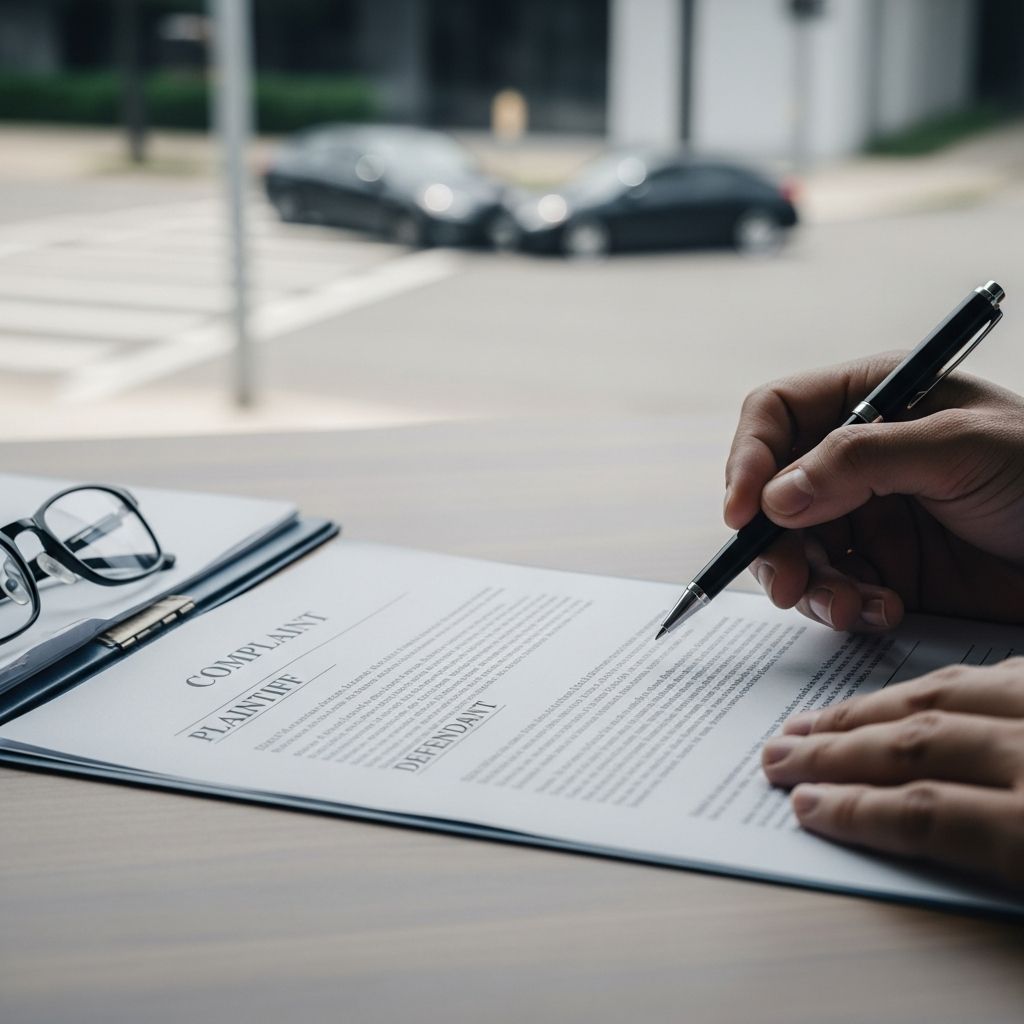
Car accidents disrupt lives, causing injuries, financial strain, and emotional distress. When the at-fault driver’s insurance company refuses fair compensation, filing a lawsuit becomes necessary to hold them accountable. This comprehensive guide outlines every phase, empowering you to pursue the damages you deserve.
Immediate Response: Securing Your Position Post-Collision
The moments following a crash set the foundation for your legal claim. Prioritize safety by moving to a secure location if possible and activating hazard lights. Call emergency services if injuries are evident or severe damage exists.
- Document the Scene: Capture photos of vehicle damage, skid marks, traffic signals, and surrounding conditions like weather or road hazards.
- Gather Participant Details: Exchange names, phone numbers, insurance providers, policy numbers, vehicle makes/models, and license plates with all drivers involved.
- Secure Witness Accounts: Obtain contact information from bystanders and request brief statements on what they observed.
- Request Police Report: File a report for official documentation, noting the officer’s name and report number.
Avoid discussing fault or signing documents on-site without legal advice, as statements can be misconstrued later.
Prioritizing Health and Medical Documentation
Even minor-seeming injuries like whiplash or concussions can worsen. Seek immediate medical evaluation to create a record linking symptoms to the accident. Follow up with specialists if pain persists, and retain all bills, prescriptions, and treatment notes as proof of damages.
Delays in care can weaken claims, as insurers may argue unrelated causes. Consistent documentation strengthens negotiations or litigation.
Notifying Insurers: The First Formal Step
Report the incident to your insurer promptly, providing factual details without admitting liability. In many states, this fulfills policy requirements and initiates coverage for medical payments or uninsured motorist benefits.
Simultaneously, notify the at-fault party’s insurer, but limit information to basics until consulting an attorney. Premature discussions often lead to lowball offers.
Engaging Legal Expertise Early
Retain a personal injury attorney specializing in car accidents immediately. They assess liability, calculate damages, and navigate complexities like comparative fault rules. Most work on contingency, meaning no upfront fees—payment comes from winnings.
| Attorney Benefits | Without Attorney |
|---|---|
| Higher settlements (up to 3x more per studies) | Insurer-favored low offers |
| Handles paperwork and deadlines | Risk of missed statutes of limitations |
| Expert negotiation/trial prep | Stressful self-representation |
Building a Robust Case Through Investigation
Your lawyer launches a thorough probe: reviewing police reports, subpoenaing traffic camera footage, consulting accident reconstruction experts, and interviewing witnesses. Medical experts may quantify long-term impacts like chronic pain or lost earning capacity.
This evidence establishes negligence—proving the other driver breached their duty of care, directly causing your harm.
Settlement Negotiations: Demand Letter Strategy
Armed with evidence, your attorney drafts a demand letter to the insurer. This formal document details the accident facts, liability proof, injury extent, and itemized damages (medical costs, lost wages, pain/suffering, property repair).
Key elements include:
- Chronological incident summary with supporting evidence.
- Comprehensive damage valuation, including future projections.
- Firm settlement demand, often 25-50% above expected payout to allow negotiation room.
Insurers respond within 15-45 days, typically with a counteroffer. Negotiations may span weeks, with your lawyer countering undervaluations. Over 95% of cases settle here, avoiding trial.
When Negotiations Fail: Initiating Litigation
If offers remain inadequate or claims denied, file a lawsuit. Your attorney prepares a complaint—a legal document naming you (plaintiff) and the defendant (at-fault driver/insurer), outlining claims and sought damages. It’s filed in the appropriate civil court, often county-level for accidents.
A summons is served, giving the defendant 20-30 days to respond. Failure to reply risks default judgment in your favor.
Navigating the Discovery Phase
Discovery uncovers facts: both sides exchange documents, witness lists, and expert reports. Expect depositions (sworn interviews), interrogatories (written questions), and requests for admissions. This phase lasts 6-12 months, building trial readiness.
Your attorney protects sensitive info while extracting insurer admissions of fault or damage extent.
Motions and Pre-Trial Maneuvers
Parties file motions to dismiss weak claims, exclude evidence, or compel discovery. Summary judgment motions seek early resolution if no factual disputes exist. Hearings refine issues for trial.
Trial Proceedings: Presenting Your Case
If no settlement, trial begins with jury selection (voir dire). Opening statements follow, then your evidence: witness testimonies, expert analyses, photos/videos. Cross-examinations test credibility.
The defense presents, potentially blaming you or third parties. Closing arguments summarize, jury deliberates on liability and damages. Verdicts can take hours to days; awards include economic/non-economic losses.
Post-Trial Options and Enforcement
Losing parties may appeal within 30 days, extending timelines by 1-2 years. Winners enforce judgments via liens or wage garnishment if payment lags. Most collect fully post-appeal window.
Timelines and Deadlines to Watch
Statutes of limitations vary: 2 years in Texas for personal injury. Miss it, lose rights. Full process: 1-3 years average, longer with appeals.
| Phase | Typical Duration |
|---|---|
| Investigation/Negotiation | 3-6 months |
| Discovery | 6-12 months |
| Trial | 1-2 weeks |
| Appeal | 1-2 years |
Common Pitfalls and How to Avoid Them
- Social Media Silence: Posts can contradict injury claims—privatize accounts.
- Premature Settlements: Wait for maximum medical improvement.
- Ignoring Deadlines: Track via attorney calendars.
- Emotional Decisions: Rely on data-driven counsel.
Frequently Asked Questions
How long after a car accident can I file a lawsuit?
Typically 2-3 years from the incident date, depending on state law. Consult an attorney promptly to preserve evidence.
What damages can I recover?
Medical expenses, lost income, property damage, pain and suffering, and punitive in egregious cases.
Do I need a lawyer for a car accident lawsuit?
Strongly recommended; they maximize recoveries and handle complexities.
How much does filing a lawsuit cost?
Contingency basis: 33-40% of winnings, no win no fee.
Will my case go to trial?
Rarely—95% settle pre-trial.
References
- What Is the Process for Filing a Car Accident Claim in Texas? — Gutierrez Law. 2024. https://gutierrez-law.com/car-accident-lawyer-bryan-tx/what-is-the-process-for-filing-a-car-accident-claim-in-texas/
- Understanding the Timeline for a Car Accident Lawsuit in Texas — Ryan Orsatti Law. 2024. https://ryanorsattilaw.com/understanding-the-timeline-for-a-car-accident-lawsuit-in-texas/
- A Step-by-Step Look at the Personal Injury Lawsuit Process — David Gordon Law. 2024. https://www.davidgordonlaw.com/blog/a-step-by-step-look-at-the-personal-injury-lawsuit-process/
- Car Accident Settlement Process: Timeline, Demand Letter, and Payouts — WKW. 2024. https://www.wkw.com/blog/car-accident-settlement-process-timeline-demand-letter-and-payouts/
- How to File a Personal Injury Lawsuit in Texas — KRW Lawyers. 2024-12. https://www.krwlawyers.com/blog/2024/december/how-to-file-a-personal-injury-lawsuit-in-texas-a/
- Filing Car Accident Claim Steps — Werner Hoffman. 2024. https://wernerhoffman.com/blog/filing-car-accident-claim-steps/
- Steps to Getting Your Insurance Claim Paid — Texas Department of Insurance. 2024. https://www.tdi.texas.gov/tips/getting-your-insurance-claim-paid.html
Similar Articles








Read full bio of medha deb


