
The Democratic Deficit: Felony Disenfranchisement in the US
Exploring the impact of felony disenfranchisement on American democracy.
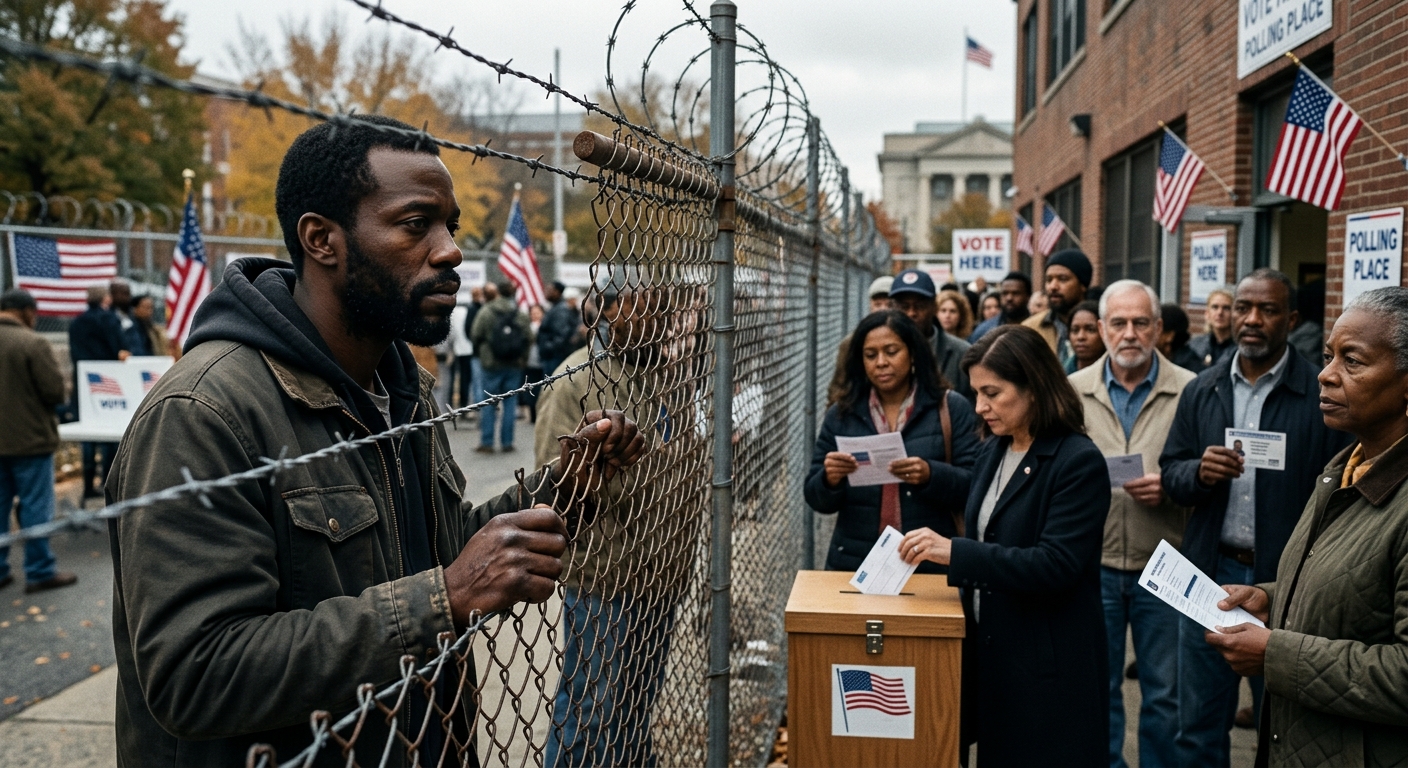
Introduction to a Fractured Democracy
Democracy thrives on the foundational premise that every citizen possesses an equal and fundamental right to participate in the electoral process. The ability to cast a ballot is not merely a mechanism for selecting leaders; it is the ultimate expression of civic inclusion and societal belonging. However, within the borders of the United States, this democratic ideal is structurally compromised by a legal mechanism that severs the civic ties of millions: felony disenfranchisement. While the United States champions itself as a global beacon of liberty, it remains a stark outlier among modern Western democracies in its practice of stripping voting rights from citizens based on criminal convictions.
The practice of barring individuals with criminal records from the ballot box creates a profound democratic deficit. It essentially establishes a tier of second-class citizenship where individuals are expected to pay taxes, abide by the law, and contribute to their communities, yet are entirely silenced in the chambers of government where laws and tax policies are written. Understanding the scope of this issue requires a deep dive into the historical origins of these laws, the incredibly convoluted patchwork of state-level policies that enforce them, the staggering demographic disparities they create, and the ongoing movement aiming to restore the fundamental right to vote.
The Historical Architecture of Exclusion
To fully grasp the current landscape of criminal disenfranchisement, one must examine its historical architecture. While the concept of “civil death”—the loss of all civil rights upon conviction of a serious crime—has roots in ancient Greek and Roman law, as well as early European common law, its implementation in the United States took on a distinctly targeted and racialized trajectory following the Civil War.
Following the abolition of slavery via the 13th Amendment and the subsequent granting of equal protection and voting rights to Black men through the 14th and 15th Amendments, a white supremacist backlash swept across the Southern states. Lawmakers sought new, constitutionally permissible methods to suppress the political power of the newly enfranchised African American population. They found their weapon in a specific clause of the 14th Amendment. Section 2 of the 14th Amendment contained a loophole that allowed states to deny the right to vote for “participation in rebellion, or other crime.”
Seizing upon this language, state legislatures across the South meticulously redesigned their criminal codes. They enacted what became known as the “Black Codes,” laws that heavily criminalized minor offenses and behaviors specifically associated with newly freed slaves, such as vagrancy. Concurrently, they dramatically expanded their felony disenfranchisement provisions. Crucially, lawmakers deliberately tailored these disenfranchisement laws to apply to crimes they believed were more frequently committed by Black citizens (such as theft or burglary), while explicitly exempting crimes more commonly associated with white citizens (such as murder or grand larceny) from the penalty of losing the vote. This insidious intertwining of the criminal justice system and electoral law laid the groundwork for a voter suppression mechanism that continues to echo powerfully into the modern era.
A Patchwork of Policies: How States Regulate the Vote
One of the most confounding aspects of voting rights in the United States is that there is no universal federal standard governing the voting rights of individuals with criminal records. Because the Constitution delegates the administration of elections primarily to individual states, the nation operates under a dizzying, 50-state patchwork of laws. This complex fragmentation means that a citizen’s right to participate in democracy is largely dependent on their zip code.
The current landscape of state disenfranchisement laws can generally be categorized into four distinct tiers:
- Unrestricted Access: In a very small minority of states, specifically Maine and Vermont, along with Washington D.C., citizens never lose their right to vote, even while actively incarcerated in a prison facility. They vote via absentee ballot from their last known address.
- Automatic Restoration Upon Release: A growing number of states have adopted policies where an individual loses their voting rights while serving a prison sentence but automatically regains them the moment they are released back into the community. This category does not require the completion of probation or parole to restore the vote.
- Restoration Post-Supervision: In many states, individuals must complete not only their prison sentence but also any accompanying periods of probation or parole before their voting rights are restored. In several of these jurisdictions, there is an additional financial hurdle: the individual must pay all court-ordered fines, fees, and victim restitution before they are deemed eligible to register.
- Permanent Disenfranchisement and Discretionary Clemency: In the most restrictive states, a felony conviction can result in the permanent loss of voting rights. In these jurisdictions, the only path to regaining the ballot is through an individual pardon from the state’s governor or a cumbersome appeal to a clemency board. For example, Virginia recently rolled back previous executive actions, rendering it a state where individuals must individually petition the government to have their fundamental rights restored .
Beyond the legal text, this fractured system creates a massive secondary problem: de facto disenfranchisement through widespread confusion. Because the laws are so intricate and vary so wildly across state lines, many individuals who are legally eligible to vote remain unregistered. The fear of making an administrative mistake and being charged with a new crime for “voter fraud” creates a severe chilling effect that suppresses turnout even among those whose rights have been legally restored.
By the Numbers: The Staggering Scale and Demographic Impact
The sheer scale of criminal disenfranchisement in the United States is staggering. According to a comprehensive 2024 report by The Sentencing Project, approximately 4 million Americans are currently barred from voting due to a felony conviction . To put this figure into perspective, it represents about 1.7 percent of the entire voting-age population of the United States. This disenfranchised population is larger than the voting-eligible populations of several entire U.S. states combined.
However, the impact of these laws is not distributed equally across the population. Because of historical biases, systemic inequities, and disparate policing strategies within the criminal legal system, felony disenfranchisement disproportionately silences communities of color. The statistics are a stark reflection of these disparities. African American citizens are vastly more likely to be stripped of their voting rights compared to the rest of the population. In multiple states, an alarming percentage of the Black voting-age population is disenfranchised, significantly diluting the political leverage of these communities .
Similarly, the Latino population faces significant rates of disenfranchisement, though precise tracking is often complicated by variations in state-level ethnic data collection. When millions of individuals from specific racial and socioeconomic backgrounds are removed from the voter rolls, it fundamentally alters the electoral calculus. Entire neighborhoods and communities are left without a voice to advocate for crucial local issues such as school funding, public infrastructure, community policing, and economic development. This dynamic creates a vicious cycle where marginalized communities remain politically powerless to elect representatives who might reform the very criminal justice systems that are disenfranchising them.
The Societal Cost: Recidivism and Civic Alienation
The debate surrounding felony disenfranchisement extends beyond abstract concepts of democratic theory; it has profound, tangible implications for public safety and the successful reintegration of formerly incarcerated individuals. From a criminological perspective, the goal of the correctional system should be rehabilitation and the successful reentry of individuals into society. Yet, permanently stripping someone of their voting rights acts in direct opposition to this goal.
When an individual is released from prison, they face monumental hurdles, including securing employment, finding stable housing, and rebuilding family ties. During this vulnerable transition, declaring them officially unfit to participate in the democratic process reinforces a powerful, stigmatizing narrative. It sends a clear message from the state that they are perpetual outsiders, permanently relegated to the status of a “second-class citizen.” This state-sponsored alienation can breed resentment and a deep disconnect from societal norms.
Conversely, research suggests that civic participation is a vital component of a “prosocial” lifestyle . When individuals are encouraged to engage with their communities, participate in neighborhood associations, and cast a ballot in local elections, they develop a stronger stake in the well-being of their society. Voting is an act of communal investment. By restoring voting rights, society signals to returning citizens that their voices matter, that their rehabilitation is recognized, and that they are once again full members of the social contract. Re-enfranchisement is, therefore, not just a matter of civil rights; it is a pragmatic strategy for reducing recidivism and fostering healthier, more cohesive communities.
The Movement for Re-enfranchisement
Despite the grim statistics, the landscape of voting rights has seen significant positive momentum over the past two decades. A robust, bipartisan movement led by grassroots organizers, civil rights groups, and directly impacted individuals has successfully pushed for legislative and constitutional reforms across the nation.
One of the most prominent examples occurred in Florida in 2018, when voters overwhelmingly passed Amendment 4, a ballot initiative designed to automatically restore voting rights to over a million residents with past felony convictions. While subsequent legislative actions by the state government complicated the rollout by mandating the payment of all court fines and fees prior to voting—a move widely criticized as a modern-day poll tax—the initial passage of the amendment demonstrated widespread public support for second chances.
Other states have made more streamlined progress. In recent years, states like New York, Colorado, and Maryland have enacted legislation to restore voting rights to individuals immediately upon release from prison, eliminating the confusing waiting periods tied to parole and probation. Executive actions by governors in various states have also been utilized to bypass legislative gridlock and mass-pardon individuals, restoring their ballot access.
Advocates continue to fight not only for state-level reforms but also for a unified federal standard. Proposals such as the Democracy Restoration Act aim to mandate that in all federal elections, any individual who is not currently incarcerated must be permitted to vote, regardless of their state of residence. Until such comprehensive federal protections are enacted, the fight for re-enfranchisement remains a grueling, state-by-state battle for the soul of American democracy.
Frequently Asked Questions
Can I vote if I have a misdemeanor conviction?
Yes. In all 50 states and the District of Columbia, a misdemeanor conviction does not result in the loss of voting rights. You can vote even if you are currently incarcerated in a local jail serving a sentence for a misdemeanor. However, actually accessing a ballot from inside a jail can present significant logistical hurdles, requiring coordination with jail administrators to secure an absentee ballot.
If my voting rights were restored in one state, do I keep them if I move?
Not necessarily. Because voting rights for individuals with criminal records are determined by state law, your eligibility depends entirely on the laws of the state where you currently establish residency. If you move from a state that restored your rights to a state with stricter permanent disenfranchisement laws, you may lose your right to vote again.
Why does the United States disenfranchise voters when other countries do not?
The United States is relatively unique among advanced democracies in its aggressive use of criminal disenfranchisement. Many European nations allow all citizens, including those in prison, to vote. The U.S. policy is deeply rooted in its specific history of post-Civil War racial discrimination and a uniquely punitive approach to criminal justice that historically emphasized permanent societal exclusion over rehabilitation.
Conclusion
The ongoing practice of felony disenfranchisement represents a deep and lingering fracture in the foundation of American democracy. By silencing 4 million voices, the system not only perpetuates historical racial injustices but also actively undermines the rehabilitative goals of the justice system. A true democracy cannot function on a foundation of exclusion. The continued efforts to dismantle these restrictive laws and re-enfranchise millions of citizens are essential steps toward realizing the unfulfilled promise of a government that is truly representative of, and accountable to, all its people. Healing this democratic deficit is imperative for the future health of the republic.
References
- Locked Out 2024: Estimates of People Denied Voting Rights — The Sentencing Project. 2024-10-10. https://www.sentencingproject.org/reports/locked-out-2024-estimates-of-people-denied-voting-rights/
- Criminal Disenfranchisement Laws Across the United States — Brennan Center for Justice. 2024-06-06. https://www.brennancenter.org/our-work/research-reports/criminal-disenfranchisement-laws-across-united-states
- Felon Disenfranchisement in the United States: A Health Equity Perspective — National Institutes of Health (PMC). 2023-07-28. https://www.ncbi.nlm.nih.gov/pmc/articles/PMC10382531/
- Chapter 11: Disenfranchisement, Reenfranchisement, and Crime — Budd & Monazzam (Cited via Academic Repositories). 2023. https://www.routledge.com/crime-and-justice
Similar Articles








Read full bio of medha deb




